
Reviewed · SICILY COOKING & PASTA CLASSES
Sicilian cooking class in the historic baglio Florio Adamo
This kitchen feels like your Sicilian aunt’s. I love the hands-on, no-machines cooking with Liliana and Vito, and I also love that you use Perciasacchi ancient wheat grown through their own farm. The only real consideration is transport: car rides are not included, even though pickup is part of the experience.
You start at the historic former Florio factory in a working baglio setting, with time set aside to explain the family business and the old winemaking spaces. Expect a small-group feel, English guidance, and a full 3.5 hours that ends with what you cook waiting for you to take home.
Key Things I’d Focus On
- Former Florio factory welcome that gets you into the setting fast, not just into a classroom
- Perciasacchi ancient wheat pasta made by hand, not with machines
- Classic Sicilian appetizers like eggplant caponata and arancine
- Garden-driven flavor using herbs like mint and basil in the cooking
- Wine with lunch while you sit down to eat what you made
- Take-home food at the end, so the class can turn into extra dinner later
Entering the Former Florio Factory at Baglio Florio Adamo
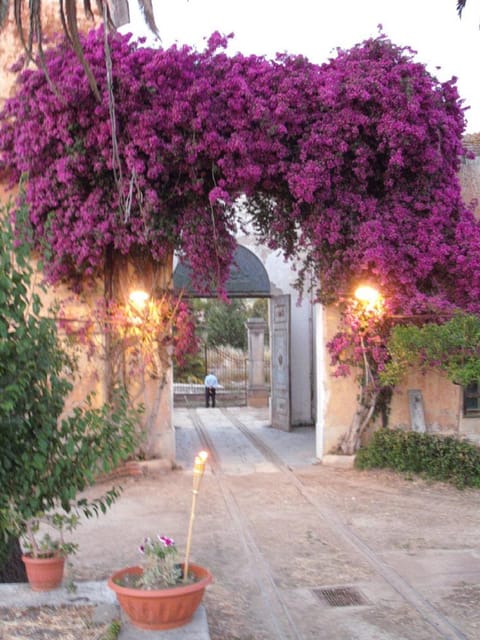
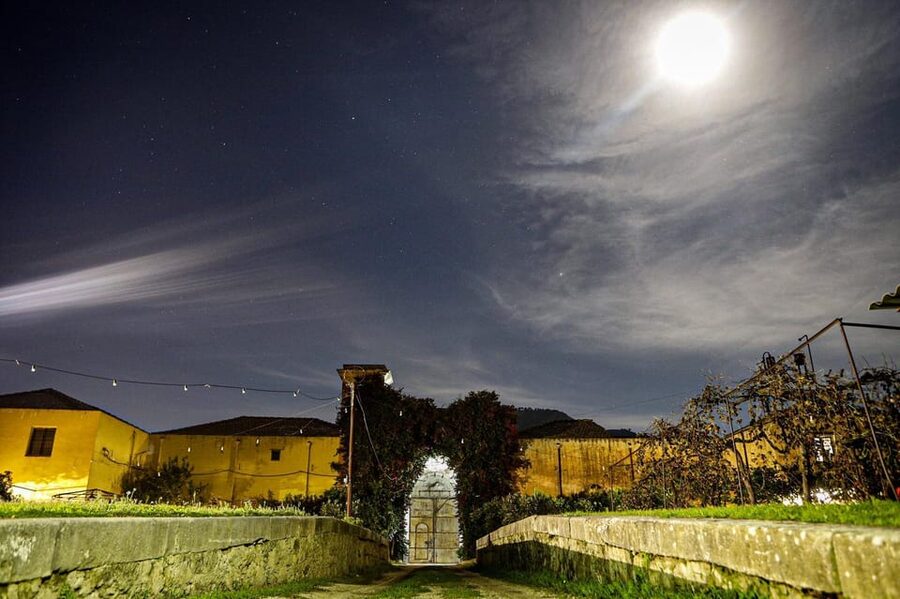
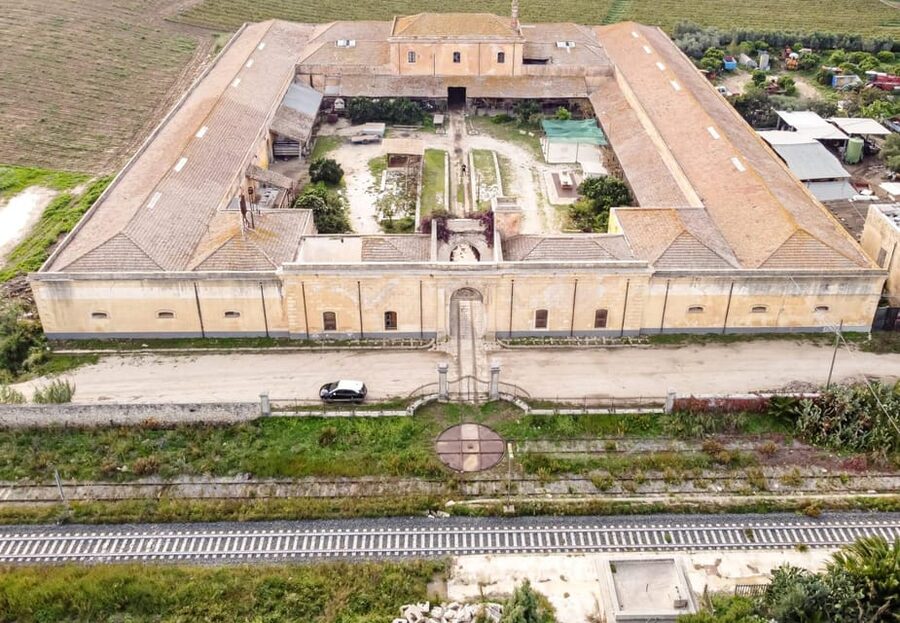
The experience begins where the story began: the former Florio factory, inside the historic baglio Florio Adamo. Liliana welcomes you there, and right away the place does the heavy lifting. You’re not dropped into a trendy kitchen with plastic menus and demo plates, you’re standing in a real family setting.
One detail I really like is that you get a sense of continuity. Guides talk about the winery’s family importance and the history tied to the estate. You’ll also see old winemaking equipment as part of the atmosphere, which makes the cooking feel grounded instead of staged.
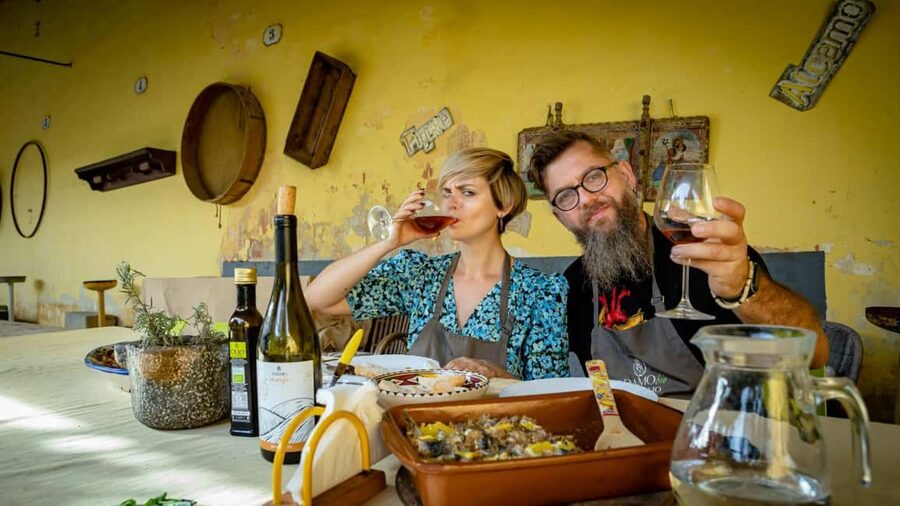
After you settle in, the action moves toward the kitchen area under the ancient porch. That porch matters. It sets the pace, keeps things comfortably outdoor in spirit, and makes the lesson feel like a lived-in workshop rather than a timed performance.
You can also read our reviews of more tours and experiences in Alcamo.
A Real Sicilian Menu, Not Just One Dish
The cooking class is built around classic Sicilian comfort food, and you’re doing more than “watch and sample.” The structure is hands-on from the start, with at least two appetizers you learn to prepare.
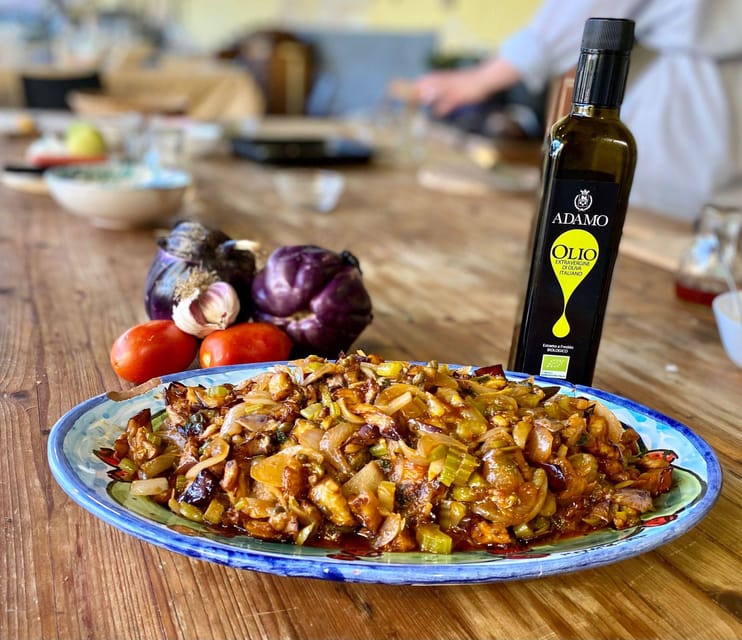
Eggplant caponata is the headline dish in the appetizer lineup, and it makes sense. It’s one of those Sicilian dishes where you can taste the balance of sweet, sour, and savory in the same bite. You’ll also make arancine, which is Sicilian street-food logic turned into a home-kitchen project. Shaping and frying (or assembling, depending on the method you’re taught) is where you learn technique, not just recipes.
From there, you move into pasta and finishing touches. The class includes fresh pasta made with Perciasacchi flour, an ancient wheat produced by the farm. You won’t be guessing how to handle the dough, because the lesson is specifically about working it and getting it to behave like fresh pasta should.
For sauce, you might make almond pesto, or another dressing based on what you’re taught that day. One of the best parts of this setup is that pasta here isn’t treated as a filler. It’s part of the same theme as the appetizers: Sicilian flavor, family method, and ingredients that show up in the kitchen because they’re actually grown or produced on-site.
And yes, you’ll also make dessert. The day includes a Sicilian dessert such as fresh ricotta cassatelle, which gives you that final sweet note that feels appropriate after savory fried and sauced dishes.
No Machines, Just the Family Method
A lot of cooking classes claim authenticity. This one puts its claim in your hands. The instruction is hands-on, and the method is explicitly taught without machines, the way the family learned it.
Why this matters for you: when you make dough and sauces by manual technique, you understand the “why” behind the texture. It changes the way you season. It changes the way you roll, fold, and shape. And it gives you a skill you can actually repeat later, at home, even if your kitchen equipment is more modern than the one in the baglio.
You’ll hear the teaching approach tied to family tradition, with Liliana and Vito guiding you through steps and correcting details as you go. In plain terms, it’s not a lecture. You’ll work.
If you like cooking as an experience, not a ticket to a meal, you’ll appreciate this. It’s also why the class tends to be a favorite highlight for repeat Sicily visitors, because the technique stays with you longer than the food smell.
Using Farm Ingredients and Garden Herbs in Real Time
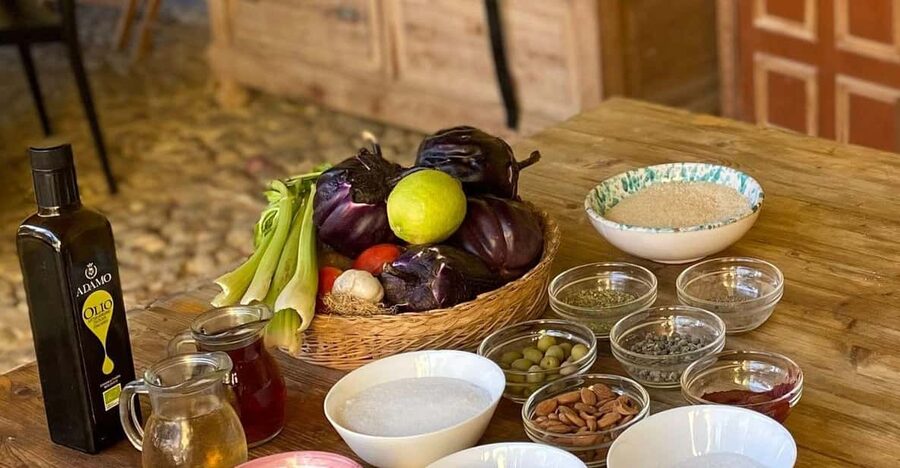
What you cook is tied to freshness. The kitchen uses seasonal ingredients from the company, and the lesson leans on the idea that Sicilian cooking is built from what’s available and at its best.
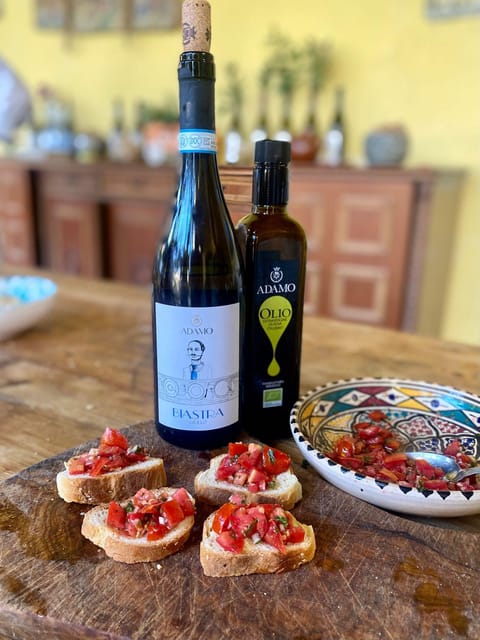
You’ll see and use produce like aromatic herbs from the garden, including mint and basil. That shows up in dishes such as tomato bruschetta, where the herbs are not just garnish. They’re part of the flavor logic that makes bruschetta taste like it was made the moment you sit down, not assembled hours earlier.
The farm element also comes through in how the wine and food feel linked. You’ll be drinking wines from the winery along with your meal, often with both white and red offered. In some cases, you might also get to taste something like Adamo rose as part of the pairing or the tasting during the day.
And a practical note: because this is farm-driven, your experience can vary slightly with what’s in season. That’s not a downside. It’s part of why the class feels alive rather than scripted.
The Cooking, the Lunch, and What You Get to Bring Home
Once cooking starts, the pace builds naturally. You’ll move between stations, and it stays active because you’re not waiting for someone else to finish. When you sit down to eat, you’re tasting the result of your work, with steaming dishes still fresh and familiar.
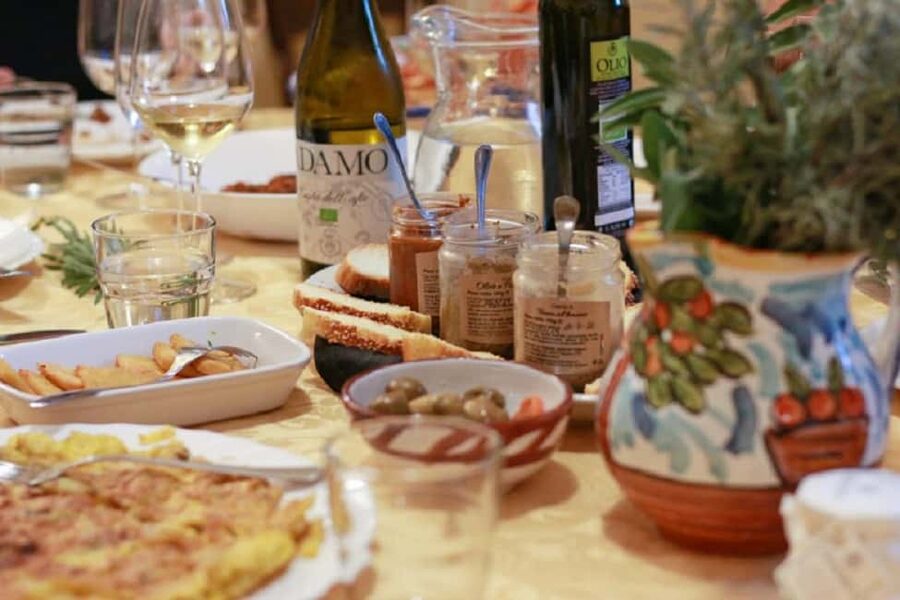
The meal is served with wines from the winery, and it’s set up as a shared lunch around the table. This is where the experience becomes more than “skills.” It turns into a social food event, with conversation that stays connected to the dishes. If you want a class where you leave with stories to tell, this portion delivers.
Then there’s the practical win: you can take what you prepared with you at the end. That’s a genuine value add in a place where food costs can add up quickly. It also means the class can turn into more than one meal for you later.
One thing I’d call out as a thoughtful detail is that the estate atmosphere is part of the experience. Some cooking takes place in outdoor areas, and that matches the setting of baglio life. It also helps you feel like you’re participating in the day, not trapped indoors for three hours.
Price and Value for 3.5 Hours of Real Skills
At $94 per person for a 3.5 hour class, you’re not buying a quick culinary souvenir. You’re paying for a full working-session kitchen experience that includes multiple dishes, plus wine with the meal.
Here’s how that value holds together:
You learn at least two appetizers, not just one.
You make fresh pasta using Perciasacchi ancient wheat, which is a specific ingredient you’re unlikely to find at every regular cooking stop.
You also make a Sicilian dessert like ricotta cassatelle.
You sit down to eat what you made, paired with wines from the winery.
You can take leftovers home, which stretches the value into your next dinner plan.
If your goal is to learn technique and cook something you can reproduce, this price feels fair. If you’re only chasing a seated lunch, you might find other options cheaper. But if you want to leave knowing how to make Sicilian staples, this is the kind of class where the cost makes sense.
Timing, Getting There, and What to Know Before You Go

The class runs 3.5 hours, with starting times that depend on availability. English is provided by a live tour guide, so you can follow the steps and explanations without translation gaps.
Transport is where you should plan ahead. Pickup is included, and they pick you up by car. Still, car travel itself is not included, and you can arrange car help separately if you need it. For you, that means you should confirm the pickup plan early, especially if you’re staying somewhere hard to find or outside the usual pick-up area.
Good news for flexibility: the experience is wheelchair accessible. If mobility is a concern, you’ll still be in a real estate setting, so it’s worth asking ahead what the route looks like from pickup to kitchen space.
Also, one practical consideration: the estate can have renovation in progress. Even with that, you still get the beauty and character of the architecture, but if you’re sensitive to construction areas, it’s worth keeping that in mind when you choose your date.
Who This Sicilian Cooking Class Suits Best
This class is best for you if you want:
hands-on cooking, not passive watching
classic Sicilian dishes like caponata and arancine
fresh pasta skills using Perciasacchi flour
- a farm-and-winery setting that makes the food feel connected to where it comes from
It’s also a great fit for food lovers who hate generic city-center lessons. The former Florio factory and the estate kitchen give you something more memorable than a standard workshop.
If you’re traveling with people who enjoy learning plus eating, this format works because everyone gets involved. You don’t spend the whole time standing around waiting your turn.
Should You Book Sicilian Cooking at Baglio Florio Adamo?
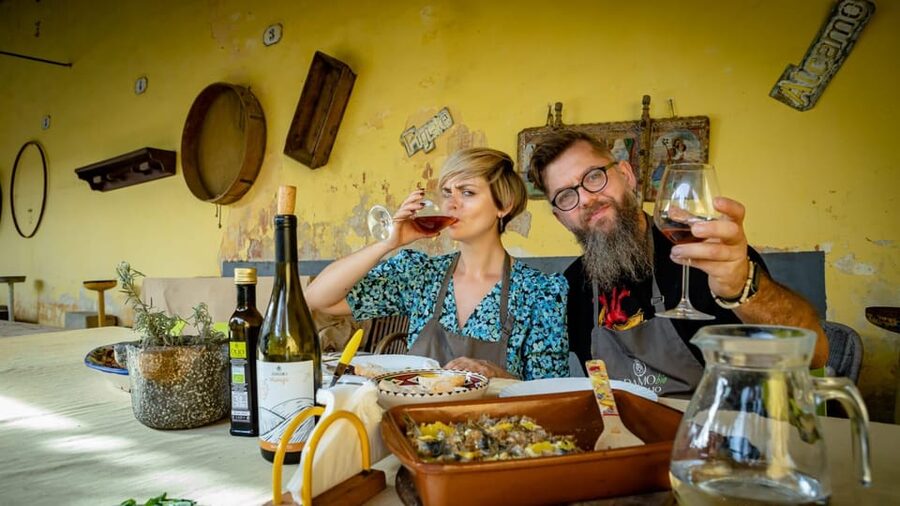
Yes, you should book if your trip to Sicily includes time in the western part of the island and you want to bring home more than a meal. This is one of those experiences where you learn multiple Sicilian staples, taste wine from the winery, and leave with food you made yourself.
Skip it only if transport logistics would be a hassle for you or if you prefer a quick, restaurant-style class where you can minimize time in a working estate environment. Otherwise, $94 for 3.5 hours with real ingredients, real technique, and real family hosting is a strong deal.
FAQ
How long is the Sicilian cooking class at Baglio Florio Adamo?
The duration is 3.5 hours.
What dishes will I learn to cook?
You will learn to prepare at least two appetizers such as eggplant caponata and arancine. The experience also includes fresh pasta made with Perciasacchi flour (and an example dressing like almond pesto), plus a Sicilian dessert such as fresh ricotta cassatelle.
Is the cooking class taught in English?
Yes. There is a live tour guide in English.
Do I need a car to get to the class?
Pickup is included. Car travel itself is not included, but you can contact the provider to arrange car help separately if you need it.
Is the experience wheelchair accessible?
Yes, it is wheelchair accessible.
Can I cancel and get a refund?
Free cancellation is available up to 24 hours in advance for a full refund.
Can I book without paying right away?
Yes. The experience offers reserve now & pay later, so you can book your spot and pay nothing today.
More Tour Reviews in Alcamo
Not for you? Here's more nearby things to do in Alcamo we have reviewed
Sicily Cooking & Pasta Classes, compared.
 ★ 4.9Palermo: Pizza and Gelato Cooking Class with Dinner and WineFrom $71951 reviews
 ★ 5.0Seaview Cooking Class & Taormina local flavors with Chef MimmoFrom $157665 reviews
 ★ 5.0COOKING CLASS in Taormina at Chef Massimo HOUSE!!From $185543 reviews
 ★ 5.0Palermo’s Delight: Unleash the Secrets of Pizza and Gelato MakingFrom $60497 reviews
 ★ 4.8Taormina: Half-Day Pizza Making ClassFrom $88353 reviews
 ★ 5.0Sicilian Cooking ClassFrom $118289 reviews
 ★ 5.0Pizza Cooking ClassFrom $90225 reviews
 ★ 4.9Taormina: Cannolo Cooking Class with Completion CertificateFrom $77212 reviews
Browse the lists this tour appears in