
Reviewed · MOUNT ETNA VOLCANO TOURS
Mount Etna: Morning Excursion with an expert Local Guide
Etna at dawn makes volcano science personal. I love the way Flavio explains how the volcano works while we walk, and I love the focus on Etna endemic flora like Astragalus Siculus. You get geology and nature together, not as a lecture, but as something you see with your own eyes.
One thing to consider first: this is a real hike on volcanic terrain, and it is not a good fit for respiratory issues, heart problems, pregnancy, mobility impairments, or wheelchair users. Also, the tour advises against contact lenses because of ash.
Key highlights you will feel in your bones
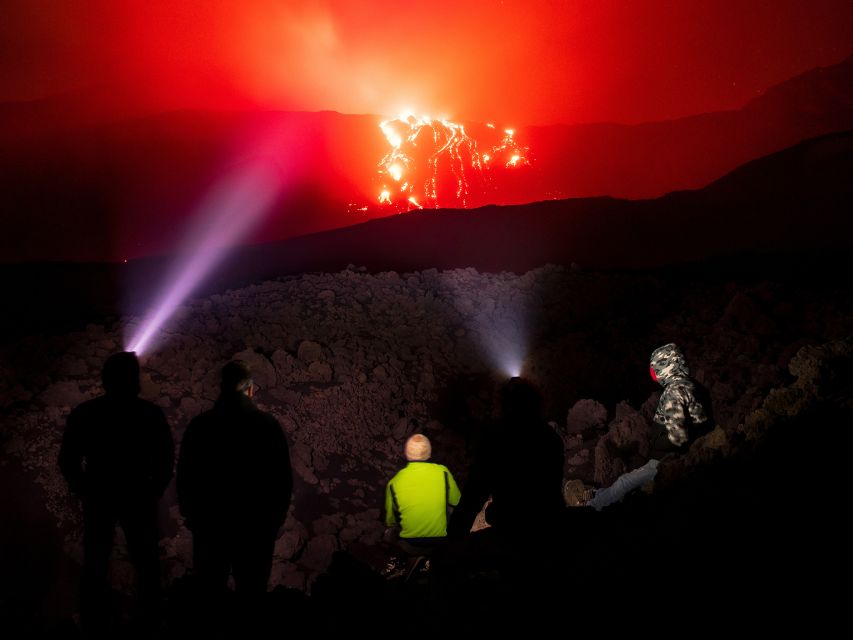
- Private, expert-led trek that can be adjusted to your interests and pace
- Astragalus Siculus and other endemic plants on Etna’s southern slopes
- Big viewpoint time over Catania, the Ionian Sea, and down into the Valle del Bove area
- Valle del Bove caldera views, with a history scale of about 10,000 years
- Volcanic features up close, including Hornitos and basaltic formations
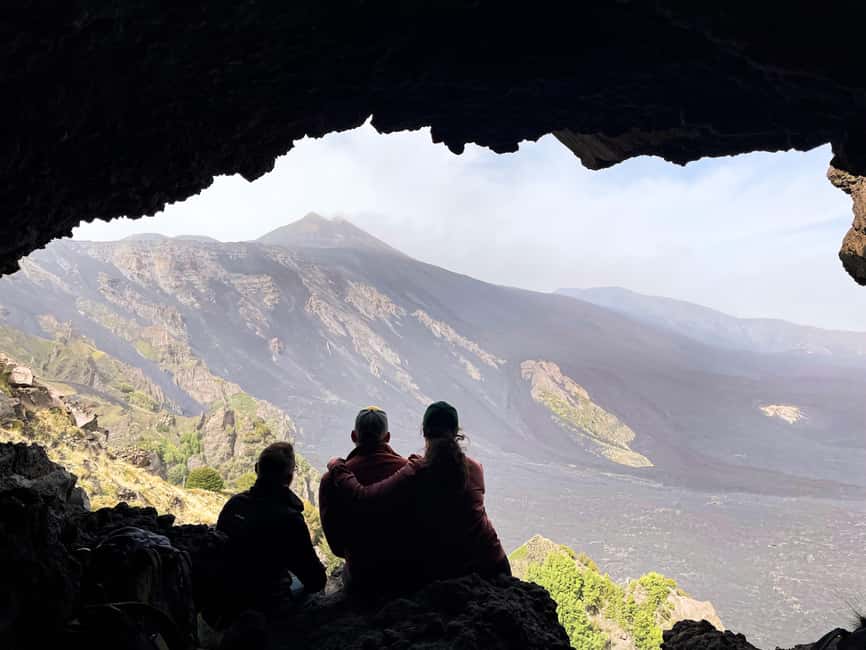
- Cave stops: Grotta Pitagora and Grotta Acqua Vitale
A morning Etna trek with Flavio, not a quick roadside stop
If you have only done Etna from viewpoints at the edge of the road, this kind of morning trip changes your perspective fast. The main difference is that you are walking through the southern slopes with an expert who pays attention to what is under your feet and what is growing on it.
In my favorite moments on this style of excursion, you pause for a view, but you also get the why behind it. That matters on Etna, because the volcano is not just scenery, it is a set of living systems, rock layers, craters, and water paths. Flavio’s approach, as you can see in how past participants describe him, is passionate and practical, with explanations that help the whole place click.
You also get the benefit of a private group format. Even on a structured 5-hour route, the idea is that your guide can tune the details to you, so the pace and what you focus on feels less rushed.
Meeting at Parcheggio Schiena d’asino, and how the start stays smooth
The tour meets at Parcheggio di Schiena dell’Asino, near the south tourist station of Etna. The meeting area is across from a crossroads where a barrier marks the start of a trail.
Two logistics details help a lot on a morning like this:
- Your guide waits at the meeting point 10 minutes before the scheduled time.
- After booking, you get the guide’s picture by WhatsApp, so it is easier to find them quickly.
The meeting coordinates are listed as 37.70131301879883, 15.014938354492188. That is useful if you are using a mapping app and want to avoid the usual early-morning confusion.
If you are prone to arriving late when you are driving on your own, plan for extra buffer time here. Not because the tour is slow, but because this hike is built around getting to the viewpoints and volcanic points before the day gets too hot or too hazy.
First viewpoint stop: quick photos, big context
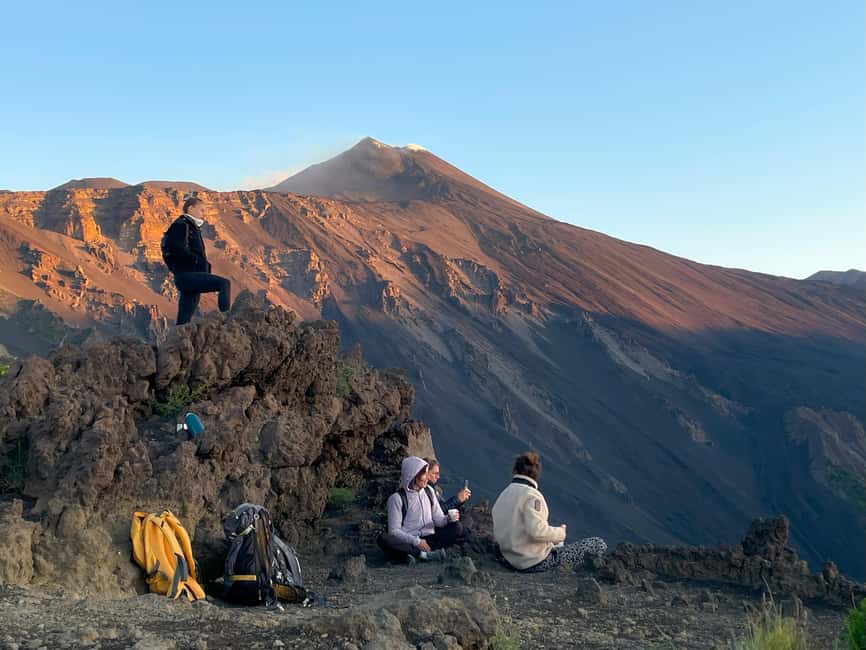
Early on, you get a short photo stop with scenic views along the way. This is not meant to be the whole show. Think of it as a warm-up for orientation.
You are headed into Etna’s southern zone, and the guide uses this early moment to help you understand what you will see later. Even if the first looks are brief, they help you connect what comes next: craters dotting slopes, water channels cutting through the terrain, and a caldera that you will later stand above in clearer perspective.
Tip for your camera brain: take a wide shot now, then take similar wide shots again later. It is the easiest way to notice how the terrain changes as you move along the route.
Mount Etna walking section: endemic flora and crater views
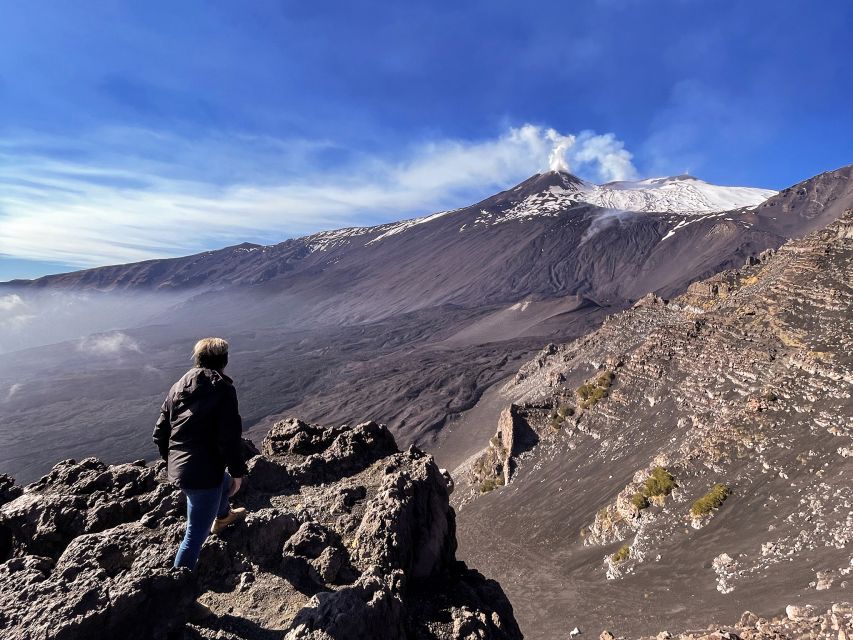
Your main Etna portion begins with a guided visit and walking time that totals about 1.5 hours. This is where the tour starts feeling truly different from a basic outing.
What you will notice on this part
You start with walks through areas of endemic flora. One plant specifically called out is Astragalus Siculus, which is exclusive to Mount Etna. When a tour highlights a plant that only grows here, it is telling you this is not a generic walk through rocks. You are moving through an ecosystem shaped by volcanic ground.
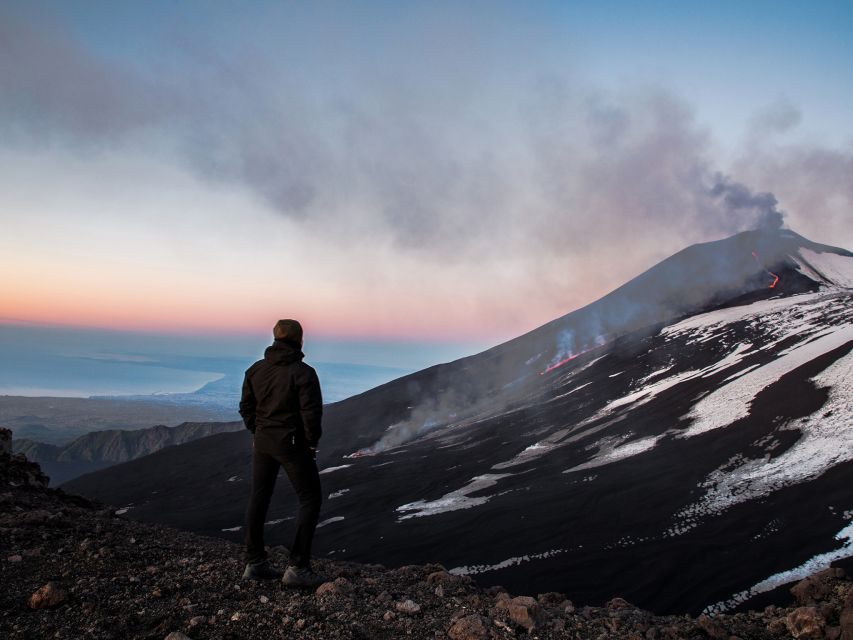
As you continue, you also get a vista of numerous adventitious craters on the volcano’s slopes. This is one of the most important visualization moments on Etna, because you stop thinking of Etna as one mountain and start seeing it as a system of repeated building phases, crater after crater.
Where the views can reach, when weather cooperates
The tour notes that with favorable conditions you might see the coastline stretching toward the Syracuse province. That is a big deal for a morning outing. When visibility is good, it turns the hike into a “map in real life” experience: you connect what you know about Sicily with what you are standing on.
Sciambro streams and the Valle del Bove view that hits hard
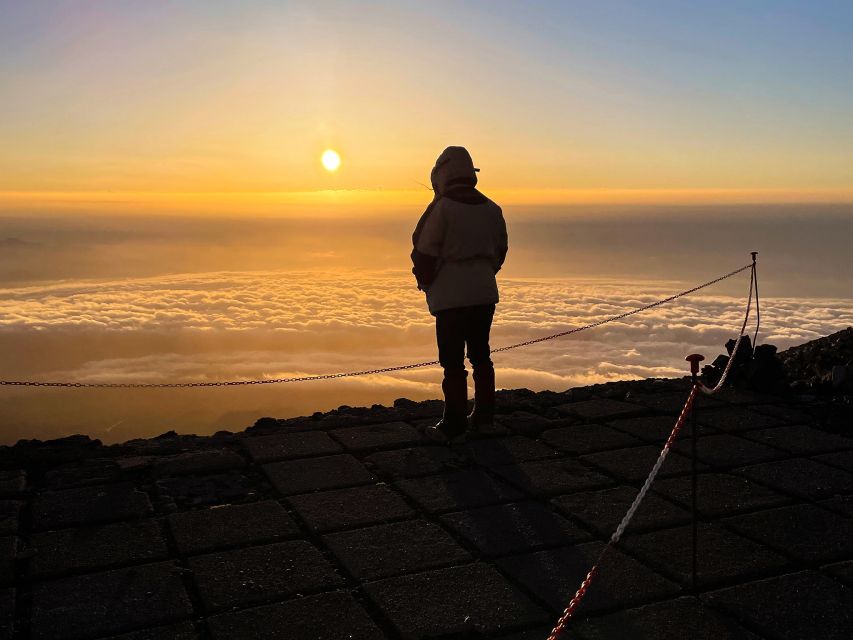
After the initial Etna walking, the route reaches the Valle del Bove area, with about 1 hour including a break, photo stop, guided time, and walking.
Sciambro: water that threads through volcanic terrain
On the way, you encounter winding streams called Sciambro, fed by snowmelt or torrential downpours. Even if you do not see a lot of water at every moment, the idea matters: Etna’s slopes collect, channel, and reshape water over time, and those paths carve the terrain.
This is where I like to stop and watch where the stream runs relative to the rock. Water on volcanic ground can look surprising, and it helps you understand why certain viewpoints are where they are.
Valle del Bove: an ancient caldera with a real scale
The big payoff is the viewpoint overlooking the Valle del Bove, described as an ancient volcanic caldera from about 10,000 years ago, stretching over 6 kilometers long and 4.5 kilometers wide.
From there, you can enjoy panoramic views ranging from the summit crater area to the southeast crater, plus views toward Calabria, Giardini Naxos, Taormina, Catania, and even the port of Catania and the Ionian Sea when conditions allow.
This is the moment that makes the earlier walking feel worth it. The terrain starts to make sense because you see how it opens and bends below you.
Snack pause: use it
There is a refreshment break with snacks, and you are meant to take a breather while soaking in the view. Do not rush through it. The viewpoint is the emotional core of the Valle del Bove section. If you are cold or tense from the climb, a short pause helps your body settle, and your brain takes in more.
Dicco magmatico, basaltic dykes, and Hornitos around you
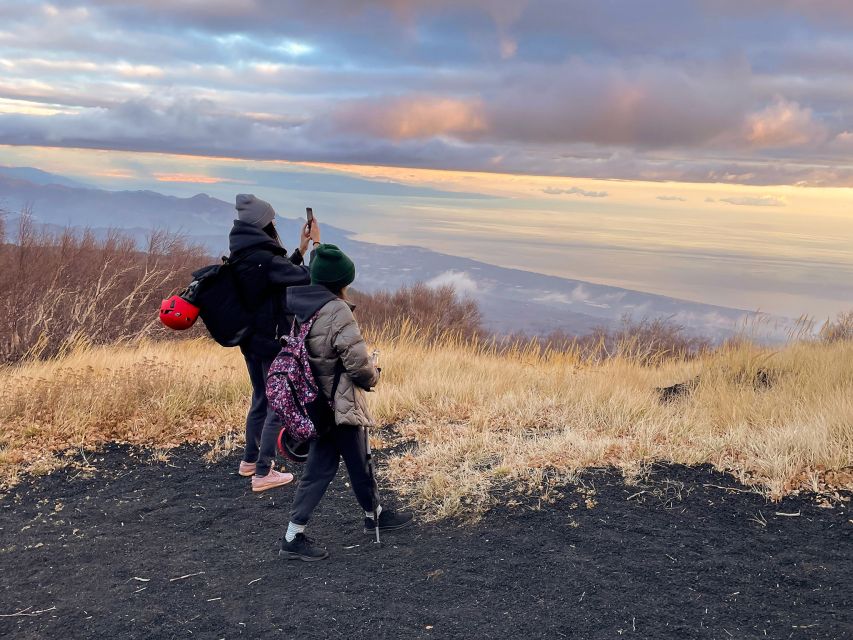
Next comes a stop at Dicco magmatico for about 30 minutes, then more time at a less-visited area for another 30 minutes. Together, these sections feel like “read the rock with a guide.”
Basaltic dykes: thin clues with big meaning
You look at basaltic dykes close by. A dyke is a volcanic feature that can tell you about magma movement. When you see it in person, it is easier to understand the volcano’s repeated activity than from a diagram.
Juniper plant and Etna Gin aroma connection
The tour also points out the juniper plant, tied to the aroma of Etna Gin. That connection is more than a fun fact. It is a reminder that people living around Etna use what the mountain grows. You are not just observing plants, you are seeing how volcanic conditions shape flavors and local traditions.
Hornitos formed around 1600
You will admire Hornitos, volcanic structures that form around 1600 from welded rocks. If you have not seen Hornitos before, they can look like small turret-like shapes rising in places where you might not expect them.
Then there is a small “window” viewpoint, a rock formation that frames a view of Catania in a way that feels almost staged, except you know it is natural. This is where you get a perfect mix of science and photo magic.
Grotta Pitagora: right-angle geometry in volcanic rock
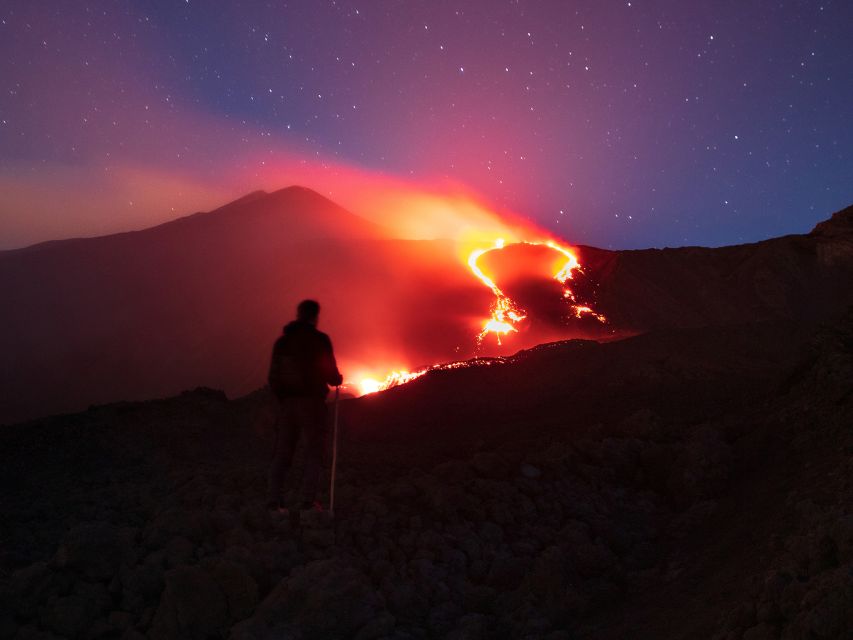
The route includes a cave stop at Grotta Pitagora, with about 30 minutes including photo time, guided info, and a bit of walking.
What makes this cave memorable is its name and entrance shape. The entrance resembles a right-angled triangle, linked to Pythagoras and his famous theorem. It is the kind of detail that instantly makes the place feel specific, not generic.
When you are underground, the guide’s context matters more than you think. Even though you are not given technical geology details here, the cave’s “geometry” theme gives you something to focus on while you listen.
I also recommend slowing down your phone habits here. Caves often feel more impressive when you put the camera away for a minute and just look.
Grotta Acqua Vitale: a final volcanic stop before the drive down
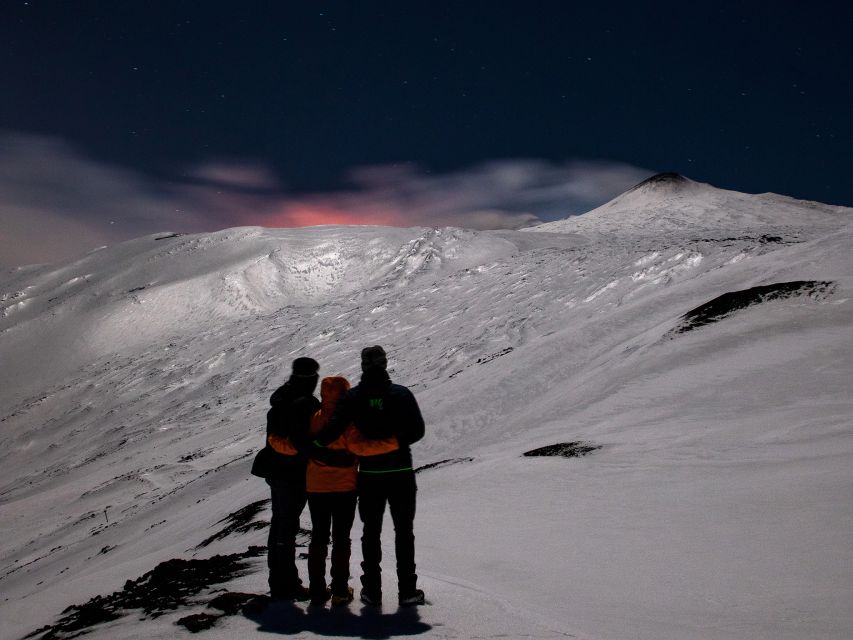
The last major site is Grotta Acqua Vitale, again for about 30 minutes with photo time, guided exploration, and scenic views on the way.
The name signals water and vitality, which fits with how Etna’s volcanic terrain interacts with streams and moisture. Even without a long technical explanation provided in the basic tour outline, the structure of the day supports this: you saw water paths earlier, you see volcanic features in the middle, and you end with another place where the mountain’s natural character shows up.
After this, you return with a scenic drive through the volcanic terrain for a final glimpse of Etna’s features before ending back at Parcheggio Schiena d’asino.
Who should book this Etna morning trek, and who should skip it
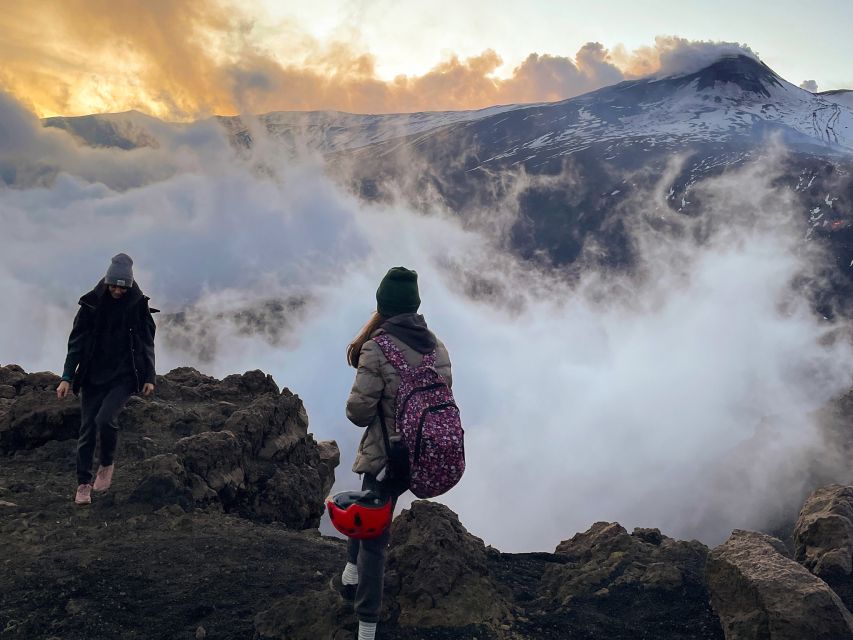
This experience is best for people who want more than a scenic look. If you enjoy:
- volcanic geology presented in plain language,
- endemic plants and the idea that a mountain can be an ecosystem,
- walking on uneven volcanic ground with frequent pauses,
…then you will probably love the format.
It is also a good fit for families in certain cases, because the guide style described in past participants’ notes sounds animated and friendly, with time to enjoy the views rather than just rush through them. One account even notes seeing a coniglio, a rabbit, in real life, which hints at how nature can surprise you on this terrain.
On the other hand, the activity is explicitly not suitable for:
- pregnant women,
- people with mobility impairments,
- wheelchair users,
- people with heart problems,
- people with respiratory issues.
And if you use contact lenses, you should know the tour advises against them due to ash. If you are sensitive to eye irritation, plan for this detail before you go.
How good value usually works on this kind of private Etna tour
I cannot quote pricing here because none is provided, but I can tell you how the value tends to show up.
You are paying for three things that matter on Etna:
- An expert guide who can explain what you are seeing, including mechanisms of the volcano and why the terrain looks the way it does.
- A tight morning time window, about 5 hours, that is long enough for real walking and multiple volcanic stops.
- A private group format that makes it easier to customize your trekking experience, rather than following a fixed script.
If you choose a cheaper, bus-only Etna option, you might see plenty. But you will not get as much meaning per step. This tour is built for meaning per step.
Should you book this Mount Etna morning excursion?
Book it if you want Etna as a living place, not a postcard. The combo of Flavio-led explanations, endemic flora like Astragalus Siculus, major caldera views at Valle del Bove, and cave stops like Grotta Pitagora and Grotta Acqua Vitale makes this feel like a complete morning on the volcano.
Skip it if you cannot handle a hike on volcanic terrain, or if you fall into the tour’s listed health and mobility limits, or if ash exposure would be a problem for you.
If you do book, arrive on time, bring the right mindset for a morning of walking and viewpoints, and ask your guide questions. A tour like this is at its best when you treat the volcano like a place you are learning to read.
FAQ
How long is the Mount Etna morning excursion?
It lasts about 5 hours total.
Is this tour private or shared?
It is a private group.
Where is the meeting point?
You meet at Parcheggio Schiena d’asino, near the south tourist station of Etna, across from a crossroads where a barrier marks the start of a trail.
When will the guide be there?
The guide waits at the meeting point 10 minutes before the scheduled time, and you also receive the guide’s picture via WhatsApp after booking.
What languages are offered?
The live tour guide speaks English and Italian.
What stops are included during the 5 hours?
The route includes a first viewpoint photo stop, a guided walk on Mount Etna, Valle del Bove, Dicco magmatico, a secluded hidden area, Grotta Pitagora, and Grotta Acqua Vitale, before returning to the meeting point.
Is the tour suitable for people with mobility impairments or wheelchair users?
No, it is not suitable for people with mobility impairments or wheelchair users.
Is it safe to wear contact lenses during the trek?
The tour advises against wearing contact lenses because of ash.
Can I cancel and get a full refund?
Yes. You can cancel up to 24 hours in advance for a full refund.
Mount Etna Volcano Tours, compared.
 ★ 4.8Catania: Mount Etna Morning or Sunset Day Trip with TastingFrom $704,028 reviews
 ★ 4.7Mount Etna: Guided Volcano Summit Hiking Tour with Cable CarFrom $1243,784 reviews
 ★ 4.8Catania: Sunset Jeep Tour of Mount Etna and Lava Flow CavesFrom $712,113 reviews
 ★ 4.7Mount Etna: Trek to 3000m with cable car and jeepFrom $621,978 reviews
 ★ 4.8Mount Etna: Summit Crater Trek with Cable CarFrom $771,875 reviews
 ★ 4.8Etna and Alcantara Gorges Full-Day Tour with LunchFrom $1051,766 reviews
 ★ 4.3Mount Etna: Roundtrip Cable Car and 4×4 Bus TicketFrom $971,602 reviews
 ★ 4.7Etna Volcano: South Side Guided Summit HikeFrom $671,545 reviews