
Reviewed · PALERMO CITY & MARKET TOURS
Palermo: Markets and Monuments City Center Walking Tour
Palermo hits your senses fast, especially on this guided walk. You get the Capo street market with its food smells and textile stalls, plus time to step inside the Palermo Cathedral and understand what you are actually looking at.
Two things I especially like are the tight mix of monuments and markets in just a couple of hours, and the way the explanations stay clear and useful. The guide, Cavallaro Fabrizio, is repeatedly noted for being prepared and answering questions without turning it into a lecture. The main drawback to plan for is the dress code for the cathedral, plus the fact that it is a walking tour with no luggage or large bags.
Key highlights at a glance
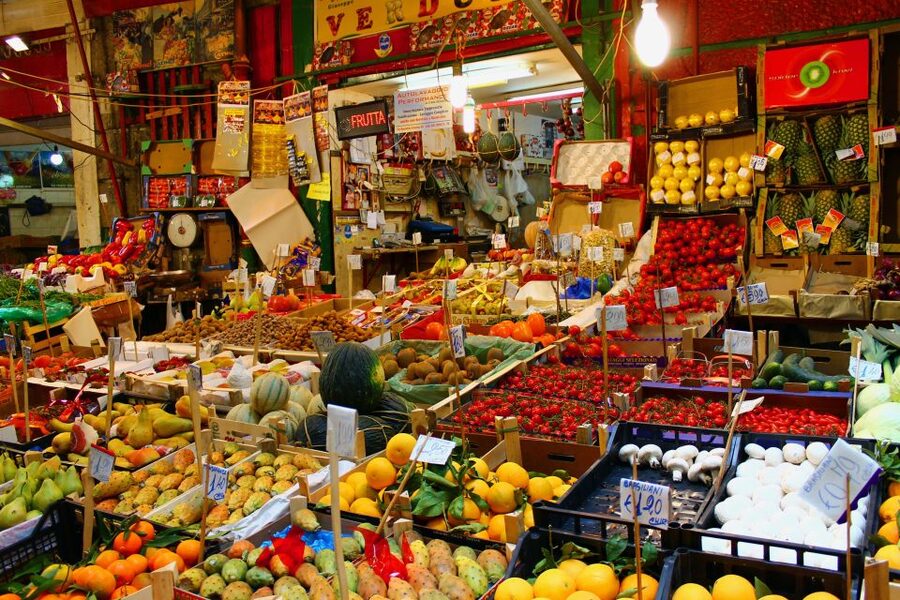
- Capo street market on foot, with guided wandering through stalls and street-life details
- Palermo Cathedral entry, including a dress-code workaround (a small jacket can be bought onsite)
- Quattro Canti (Four Corners), a must-see Baroque street crossing at the end
- Fontana Pretoria and Pretoria Square, including the fountain’s infamous nudity theme
- Martorana and San Cataldo, Norman-era church stops tied to UNESCO sites
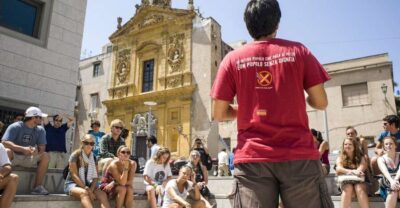
- Fabrizio’s style, rich but not overwhelming explanations and flexibility for questions
Walking Central Palermo: How the 2 to 3 Hour Pace Really Feels
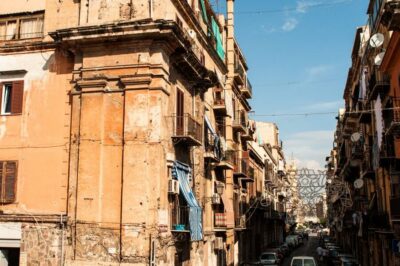
This is a short city-center walking tour, listed at about 2 to 3 hours, with enough stops to feel like you made progress, but not so much walking that you are melting before the best parts. The route is built around a core sweep of historic Palermo: major squares, key churches, and the street-market area where the city’s daily rhythm is visible.
That timing matters in Palermo. If you come here on your own, you can see beautiful buildings, but you might not know what era you are in or why the details are different from one church to the next. This tour focuses on context: what to notice and what those places meant for the city.
One practical point: this is also a logistics-light tour. You only need comfortable shoes, water, and ideally a couple of snacks. You cannot bring luggage or large bags, so pack small and plan to carry only what you need for a couple of hours.
You can also read our reviews of more walking tours in Palermo
Start at Teatro Massimo and Get Oriented Fast
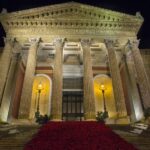
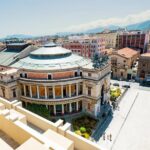
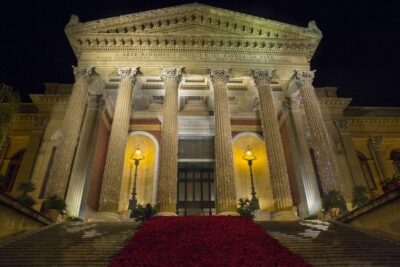
The tour often begins near Teatro Massimo, Italy’s largest opera house, and you learn what makes it famous, including its acoustics. Even if opera is not your thing, it helps to get your bearings in a city where streets curve and squares appear like stage sets.
From there, you move toward the old center. The early walking segments are mostly about positioning you for the real work: the market zone and the major monuments clustered around Palermo’s historic core. There is a good chance you will pass key street junctions without feeling rushed, which is exactly what you want when the day is already full of sightseeing.
Capo Street Market: The Best Place to Taste Palermo’s Everyday Life
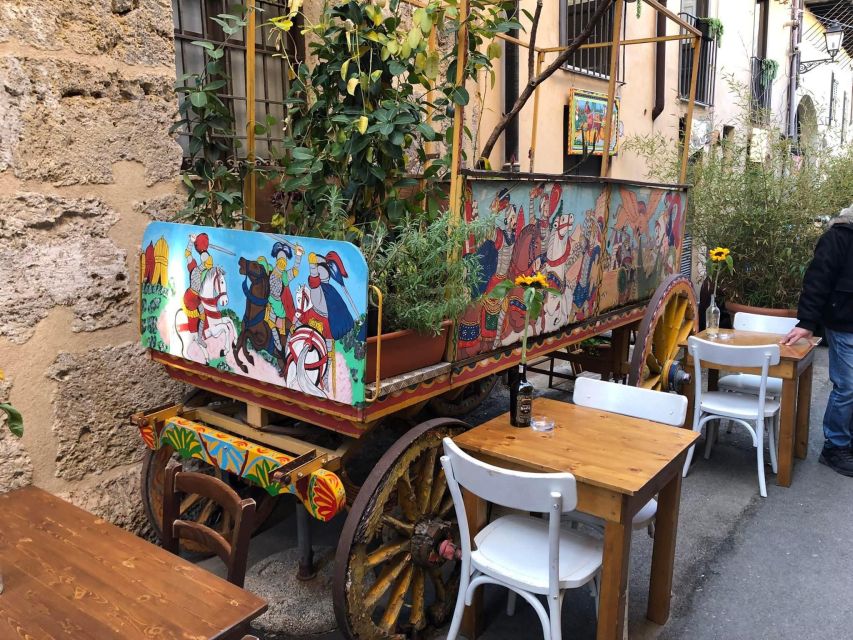
The highlight stop for most people is the Capo street market, where you walk through the stalls and the street scene. This is not a clean, curated market experience. It is real city shopping and street trade, with plenty to look at and smell as you move along.
What you should expect here:
- Stalls with textiles and everyday goods you can see up close
- People moving fast, negotiating casually, and doing daily errands
- A steady parade of food smells that make it hard to stay impartial
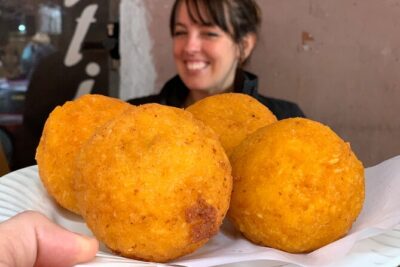
Food is where this stop becomes memorable. The tour information specifically calls out popular street snacks you can buy and taste, including panelle, crocché, sfincione, and arancina. You are not forced into a set menu. If you want one thing and keep walking, you can do that. If you want a proper sampler, you can pace yourself.
A small tip for market time: treat it like a sensory museum. Do not just hunt for the next bite. Pause for ten seconds at a stall and look at the colors, how items are displayed, and how people order. That is where the culture clicks.
Palermo Cathedral: A 12th-Century Masterwork With a Simple Dress Rule
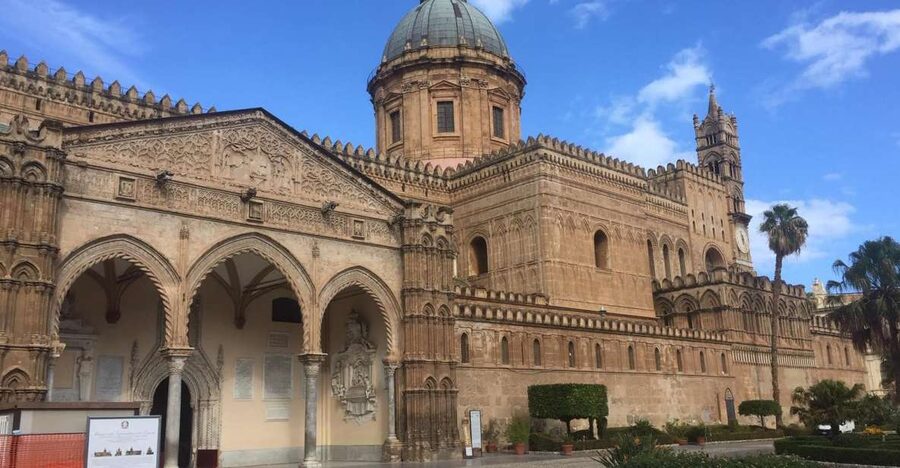
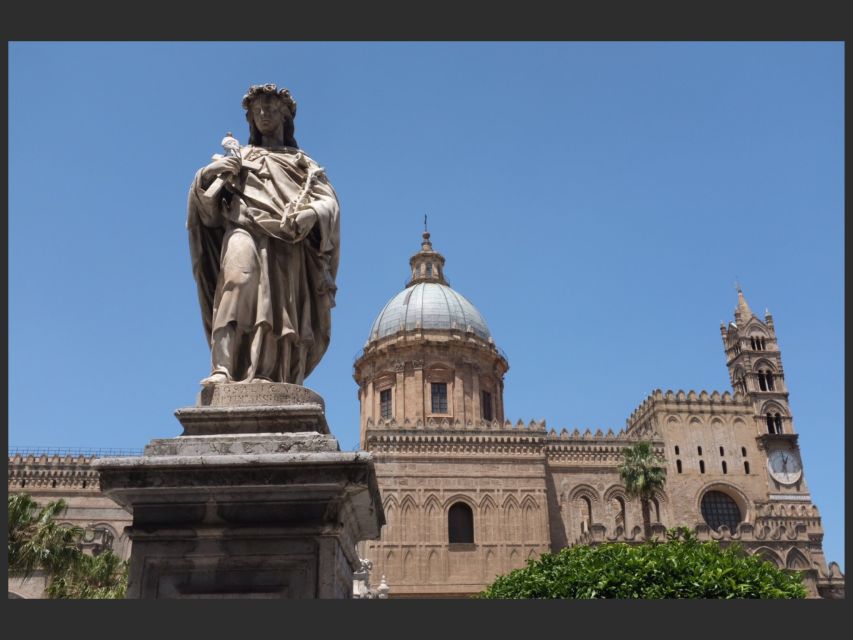
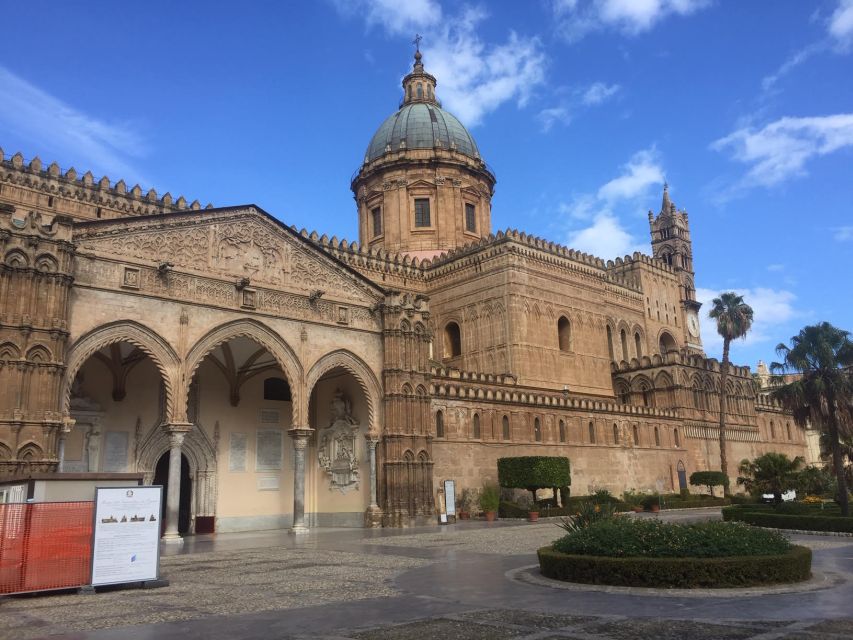
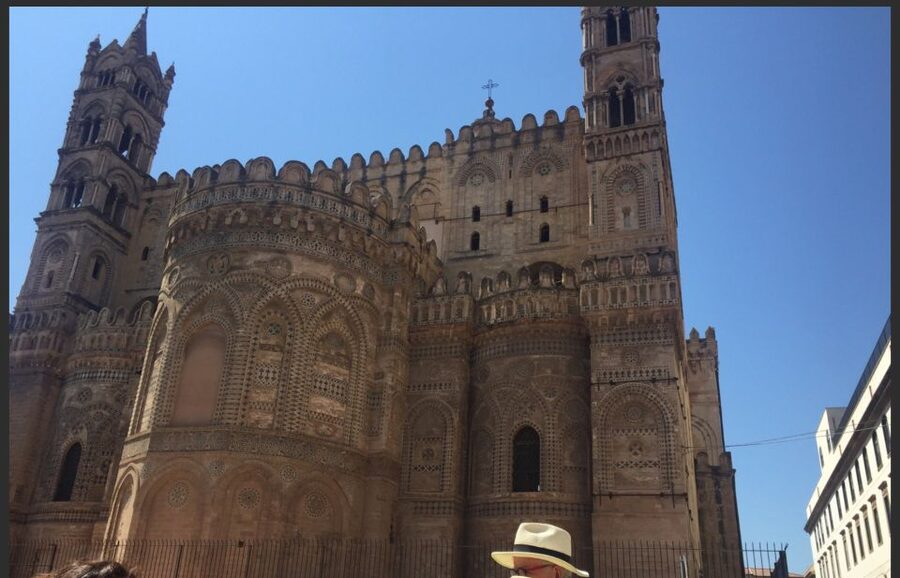
Then comes the big one: the Palermo Cathedral, dating from the 12th century and listed as part of UNESCO World Heritage. Since the tour includes entrance, you are not stuck outside waiting for tickets. What you get instead is guidance on what to look for while you are inside.
Before you go, be ready for the cathedral’s dress code. The rules are straightforward:
- Men cannot wear shorts or tank tops
- Women cannot wear shorts, miniskirts, or tops
- Bermuda shorts and T-shirts are allowed
If you show up with too-short legs or sleeveless shoulders, you can handle it onsite. At the entrance, you can buy a light jacket for 1€ to cover shoulders and legs. That small detail can save your day, especially if you are traveling with limited packing space.
Inside, the main value of the guided time is interpretation. Churches in Palermo can look similar at a glance, but the eras and influences differ. With a guide, you learn what makes the cathedral special and why it is treated as a cornerstone of the city.
Quattro Canti and the Edge of the Historic Center
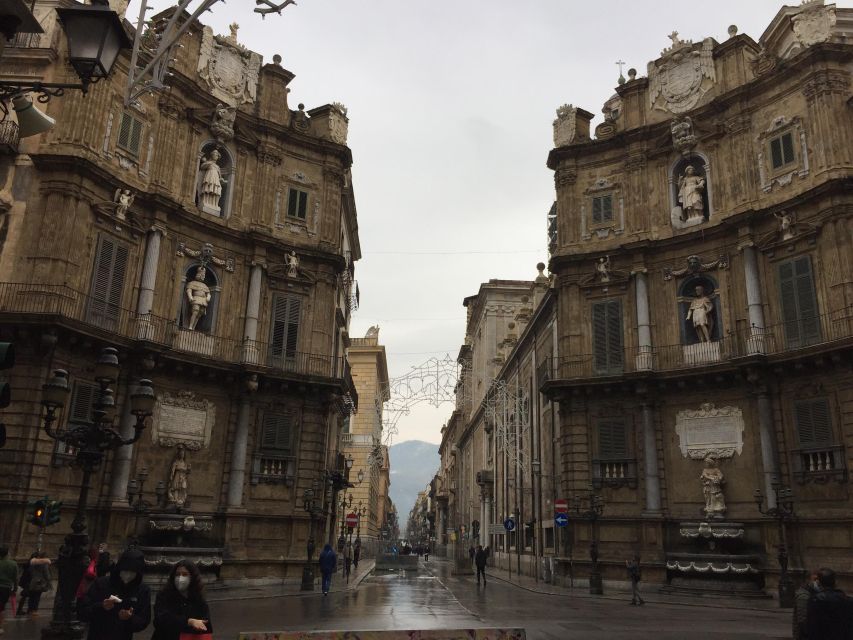
The tour ends at the Baroque Villena Square, also known as Quattro Canti (Four Corners). This is the intersection of two of Palermo’s most prominent streets, Corso Vittorio Emanuele and Via Maqueda. It was built in the early 1600s, and it has that classic Baroque trick where the architecture turns a street crossing into a set piece.
You get a guided visit here, which matters because Quattro Canti is one of those places people photograph quickly and then forget to understand. With context, you notice more: how the square functions, how it frames the streets, and how the Baroque aesthetic shapes the whole area.
There is also a good emotional payoff timing-wise. After churches and markets, you get one more polished landmark at the end, so the tour feels like a complete arc rather than a scatter of stops.
You can also read our reviews of more city tours in Palermo


Palazzo Pretorio, Fontana Pretoria, and the Square of Shame
In the historic center, you do not just see palaces and statues. You see power displayed, often with a sense of humor that people in modern times might not expect.
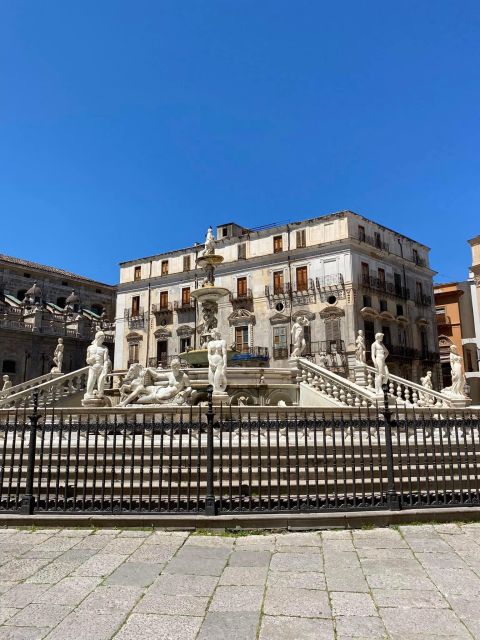
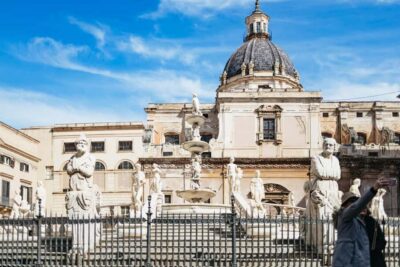
The tour includes Palazzo Pretorio (also spelled Praetorian Palace), described as an outstanding 15th-century palace. Nearby is Pretoria Square, referred to by locals as the square of shame due to the nudity of its fountain statues.
Then you see Fontana Pretoria, again with its famous nudity theme. If you have ever walked past statues and wondered why they are so talked about, this is the moment. It is a striking reminder that art and public space have always been about more than polite beauty.
Practical note: you will be looking at outdoor sculpture and fountain details, so bring your eyes. Do not rush. Palermo streets can be loud and crowded, but this square is worth slowing down for a minute or two to read what the fountain is doing.
Martorana and San Cataldo at Bellini Square: Norman Sicily in Plain Sight
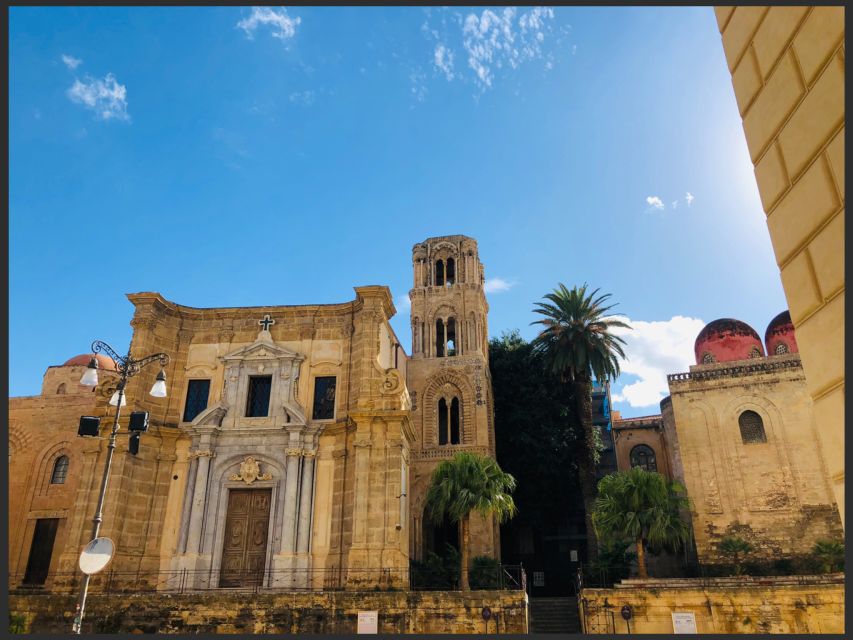
Next up is Bellini Square with Martorana Church and Church of San Cataldo, both tied to UNESCO World Heritage and described as Norman Sicily–era churches.
This is a good stop if you like architecture but hate vague explanations. Norman-era churches can be confusing if you only know the broad label. With guidance, you can spot what makes them feel connected yet distinct, and you learn how they fit into Palermo’s larger story.
The key payoff here is variety. You have already seen a cathedral from the 12th century and Baroque street-corner drama. Now you get another layer of Palermo’s religious architecture, with a different look and a different vibe. That keeps the tour from feeling repetitive.
Church of the Gesù and Santa Caterina: Why Palermo Looks Different at Every Turn
The tour route also includes Church of the Gesù, described as one of the most important Baroque churches in Palermo. Baroque churches can be visually loud, so this is where a guide helps you separate style from meaning.
You also pass by Chiesa di Santa Caterina, Palermo during the walk segments. Not every stop is equal in time, but even a quick look can be useful if you want to build a sense of Palermo as a living grid of churches and palaces rather than a checklist.
If you are tempted to think you will remember everything later, do not. You will get overwhelmed. Instead, pick one or two details from each church and ask your guide what is going on. The tour is designed for that kind of question-friendly pace.
Where the Tour Ends on Via Maqueda, and How to Roll Into the Rest of Your Day
The tour finishes at Via Maqueda, 172, 90133 Palermo. That matters because Via Maqueda is a central artery. In practical terms, it is a smart place to step off the tour and keep exploring without needing extra transit.
If you still have energy after the walk, you will be well-positioned to continue on foot through the center. If you do not, you can still use the route’s ending point to plan an efficient next move, whether that is a meal or another monument.
Price and Value: Is $41 a Good Deal?
At $41 per person, this tour is priced in the affordable, “worth it if you want guidance” range for a big-city walking experience. The value stack is clear:
- You get a professional guide
- Palermo Cathedral entrance is included
- There is a pickup option close to the port for cruise passengers
What is not included matters too. The tour notes that entrance fees to other monuments and museums and food and drinks are not included. That is common for walking tours, and it does not make it a bad deal. It just means you should budget separately if you plan to pay additional fees or eat multiple things.
My take: the tour is best value when you want the guide’s interpretation. If you already know Palermo architecture well and just want a self-guided market wander, you could do it cheaper on your own. If you want the city to make sense as you go, the guide time is what you are really buying.
Who This Tour Fits Best
This is ideal if you:
- Want a first orientation to central Palermo
- Enjoy markets and street-food stops, not just churches and squares
- Appreciate short stops with context, rather than long museum marathons
- Like asking questions and getting answers without the tour feeling scripted
It is also a good choice for couples and small groups, since the main experience is walking and learning at each site. If you struggle with dress-code rules or carrying items for a short walk, you might find it slightly annoying. But with the jacket option at the cathedral and the no-luggage rule, it is manageable if you pack lightly.
Should You Book This Palermo Markets and Monuments Walk?
I would book this tour if you want Palermo to feel readable, not random. The mix of Capo street market, Palermo Cathedral, major squares, and Norman-era churches gives you variety without dragging the day out.
It also scores well on human details. The guide, Cavallaro Fabrizio, is repeatedly singled out for being prepared and helpful, and the pacing is described as organized and punctual. In a city where you can easily get lost in beautiful chaos, that kind of structure helps.
If you only want one or two photo stops and you hate walking, you might skip it. But if you want a guided walk that links streets, food, and architecture into one coherent experience, this is a strong pick for a half-morning or early afternoon.
FAQ
How long is the Palermo Markets and Monuments City Center Walking Tour?
It runs about 2 to 3 hours, depending on the starting time.
How much does the tour cost?
The price is $41 per person.
What is included in the price?
You get a professional guide, entrance to the Palermo Cathedral, and an optional pickup close to the port for cruise passengers.
Do you include food and drinks?
No. Food and drinks are not included, though you can buy and taste street snacks in the market area.
Where does the tour start?
It can start at Feltrinelli Librerie, Via Orologio, 11, or meeting point may vary depending on the option you book (including a possible cruise port pickup).
Is there a dress code for Palermo Cathedral?
Yes. Men cannot wear shorts or tank tops, and women cannot wear shorts, miniskirts, or tops. A light jacket can be purchased at the cathedral entrance for 1€ to cover your shoulders and legs.
Are large bags allowed?
No. The tour does not allow luggage or large bags.
Can I cancel and get a full refund?
Yes. Free cancellation is available if you cancel up to 24 hours in advance.
What languages is the tour offered in?
The live guide operates in Italian and English.
More Walking Tours in Palermo

More Tours in Palermo
More Tour Reviews in Palermo
Not for you? Here's more nearby things to do in Palermo we have reviewed




Palermo City & Market Tours, compared.
 ★ 4.8Palermo: NO Mafia Walking TourFrom $402,431 reviews
 ★ 3.9Palermo: Hop-on Hop-off Bus Tour 24-hour TicketFrom $172,410 reviews
 ★ 5.0Palermo Original Street Food Walking Tour by StreatyFrom $832,105 reviews
 ★ 4.2Segesta, Erice and Salt Pans Full-Day Excursion from PalermoFrom $821,791 reviews
 ★ 4.5Palermo: Teatro Massimo Opera House Guided TourFrom $141,573 reviews
 ★ 4.2From Palermo: Monreale and Cefalù Half-Day TripFrom $711,354 reviews
 ★ 4.9Palermo: Street Food and History Walking TourFrom $541,294 reviews
 ★ 4.2Palermo: Agrigento and the Valley of the Temples Day TourFrom $771,240 reviews
Browse the lists this tour appears in