
Reviewed · PALERMO CITY & MARKET TOURS
Palermo: the city from the sea
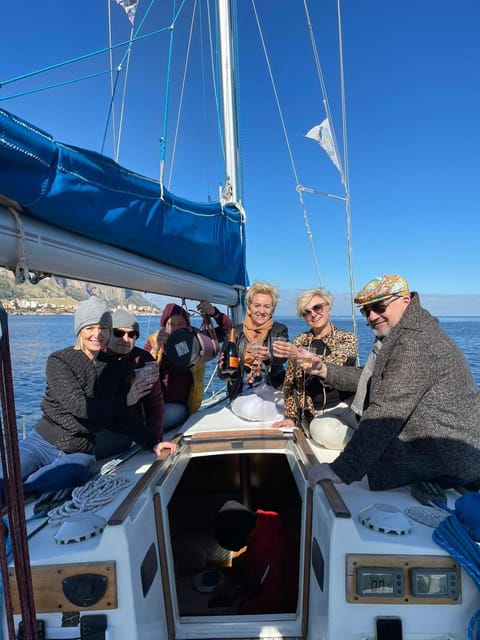
Palermo gains depth when you approach by sea. From Cala marina, this small-group boat ride turns the city’s “all-port” story into something you can actually see, from Castello Utveggio up to Porta Felice.
What I liked most is how the captain keeps things comfortable while you cruise and point out what matters. I also love that the tour ends with a real Palermitan aperitif with cannolo, almond pastries, and sips of Zibibbo and Malvasia. One consideration: the sea is part of the deal, and the optional dip only happens if weather allows.
Key things I’d bet you’ll care about
- Small group (max 6), which makes it easier to hear the story and move around on the boat
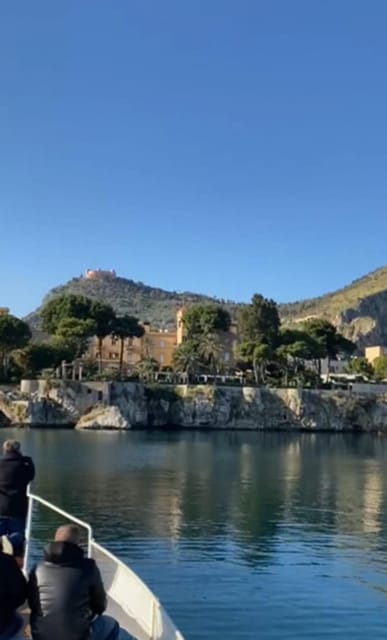
- City landmarks from the water, including Castello Utveggio and Porta Felice
- Aperitif with local treats, including cannolo and almond pastries, plus Zibibbo and Malvasia
- Queen’s Caves, Tonnare Florio, and Bordonaro viewed from a scenic route
- Villa Igiea and the Palazzina dei Quattro Pizzi seen as part of Palermo’s sea-facing identity
- Possibility of taking a dip, weather permitting, so bring a towel
Why Palermo Feels Like a Different City From the Water
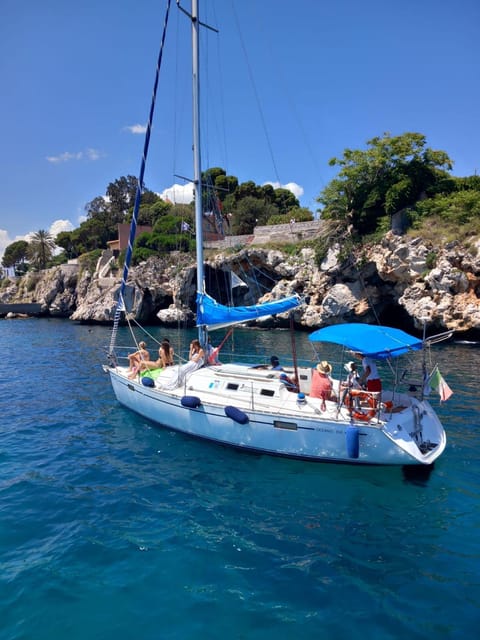
If you only see Palermo from the streets, you miss a huge piece of the city. Palermo is a place shaped by arrivals, exits, and long coastal views. This tour gives you a practical front-row seat, cruising in a way that makes the “all-port city” idea feel real, not just poetic.
You start from Seica Boat near Cala marina, and you spend the next three hours moving at a relaxed pace. That time window matters. It’s long enough to get good views and cover several major sights, but short enough that you’re not stuck all day, which is handy if you’re pairing it with churches, markets, or food stops on land.
And you can tell it’s designed for comfort. I found the whole flow easy, especially with a captain who keeps you at ease while you’re out on the water. The result is simple: you’ll enjoy the views more, because you’re not mentally battling logistics every few minutes.
You can also read our reviews of more city tours in Palermo


From Monte Pellegrino to Santa Rosalia: The Sea Meets Palermo’s Long Memory
Palermo’s story stretches back long before modern borders. The area saw early settlers as far back as the Bronze Age, with people putting down roots on Monte Pellegrino. That mountain keeps showing up in Palermo’s identity, and it makes sense. When you’re watching the coastline from the boat, the geography is obvious: the sea is right there, and the city grew around it.
Monte Pellegrino is also where you’ll find the shrine of Santa Rosalia, Palermo’s patron saint, located in a cave at the top. Even if you never climb up, the way the coastline faces the mountain gives you a new context for why the shrine matters to local life. It’s not just a religious stop. It’s a landmark tied to the city’s sense of survival and protection, and it’s woven into Palermo’s centuries of change.
And those changes were constant. Palermo was desired, then conquered, again and again, by peoples from across the Mediterranean. Romans, Greeks, Byzantines, Phoenicians, then Arabs, Spanish, and Normans all left their fingerprints. Out on the water, that history works like a map. You start to connect why the city feels layered: not one single culture, but many eras piled up along a coast that kept doing business with the world.
Castello Utveggio and Porta Felice From the Boat: Power, Defense, and City Entry
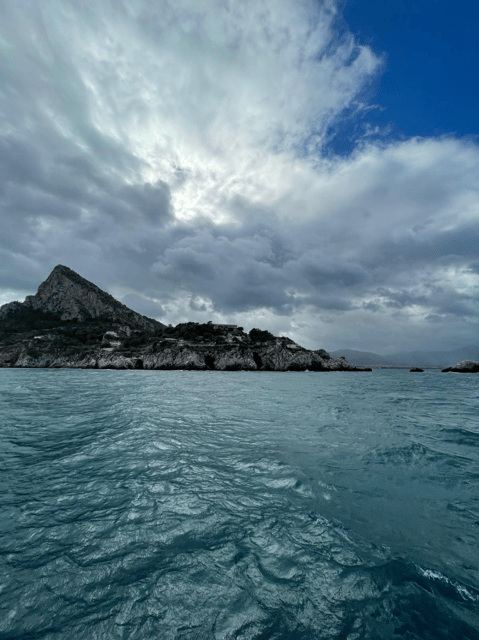
Two sights anchor the tour’s opening mood: Castello Utveggio and Porta Felice. From street level, you can miss how these structures relate to the city’s approach routes. From the water, you get an immediate sense of defense, control, and how Palermo presented itself to the sea.
Castello Utveggio reads like a statement of authority perched above the coastline. The point here isn’t to memorize dates. It’s to see how the city guarded its horizon. When you’re sailing, that viewpoint makes the architecture feel less like an isolated monument and more like a working part of a coastal strategy.
Porta Felice is a different kind of landmark. It’s tied to the idea of arrival and movement, a gateway that suggests the city kept channels open. Standing around it on land can be busy and distracting. Out on the water, the angle helps you understand it visually in context with the surrounding walls and approach routes.
This is one of the most “value for time” parts of the experience. In about three hours, you’re seeing how Palermo both protected itself and welcomed influence. It’s history, but delivered in a way that your eyes can follow fast.
Queen’s Caves, Tonnare Florio, and Bordonaro: Coastal Sites You Notice Once You Know Their Place
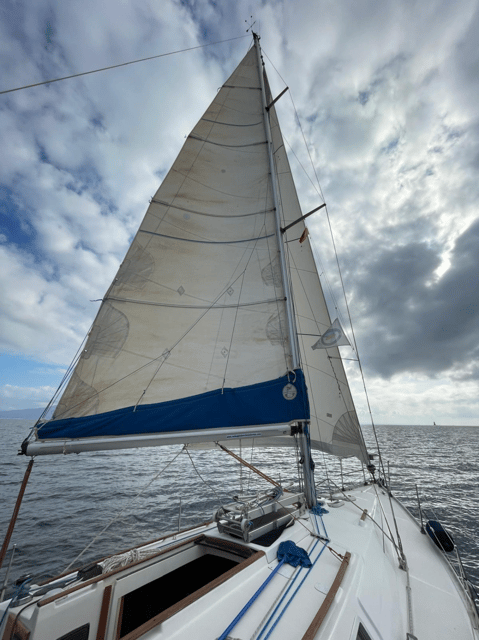
As you continue along the sea route, you’ll come across stops tied to Palermo’s coast beyond the classic city center. Queen’s Caves show up as one of the named highlights, and it’s the kind of sight that benefits from a water perspective. Caves and coastal geology are hard to grasp from a single street angle. From the boat, the surrounding environment helps you “read” the feature as part of the shoreline rather than a standalone curiosity.
Then there are Tonnare Florio and Bordonaro. These names matter because they point to how Palermo worked as a maritime city, not just a city with a coastline. Even without going deep into background details, you can still feel the theme: the coast isn’t scenery here, it’s infrastructure. It’s where livelihoods happened and where the city’s identity was built through sea-based activity.
What you should do during these parts is simple: slow down your photo-taking for a moment and actually look. If you focus, you start picking out why one structure sits where it does and how it relates to the waterline. That’s when the “all-port city” story clicks into place for real.
Villa Igiea and the Palazzina dei Quattro Pizzi: Sea Views as Status Symbol
Palermo also has a quieter side of coastal elegance, and this tour includes two spots that reflect it: Villa Igiea and the Palazzina dei Quattro Pizzi. These aren’t just pretty names. They help you understand that the sea in Palermo isn’t only about work and commerce. It’s also about leisure, display, and building a relationship with the horizon.
From the water, villas and palaces reveal themselves differently. On land, you might see them as buildings behind gates, or as background while you’re moving quickly elsewhere. From the boat, you can absorb how they face the sea and how the surrounding coastline frames them.
This is where the experience starts to feel more personal. You’ll likely notice how the city’s best views are not tucked away inland. They’re on the coast, placed where people could enjoy them. That’s a big part of why Palermo feels different from other Italian cities. It’s not trying to hide its relationship with the sea. It wears it.
The Aperitif Plan That Actually Feels Like Palermo
The tour’s final third is the payoff for your stomach. You’ll enjoy a traditional Palermo-style aperitif with local products, and it’s set up like a tasting rather than a rushed snack.
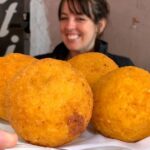
Here’s what’s included: cannolo tasting, almond pastries, and you’ll sip wines including Zibibbo and Malvasia. That combo matters because it gives you two flavors of local identity: the sweet, pastry-heavy side, and the wine side tied to Mediterranean grape traditions.
I like that this isn’t framed as a fancy gimmick. It’s a straightforward way to eat like a Palermitan for a short window, and then return to your day with energy. Also, if your idea of a great tour is one that feeds you well without turning into a long meal, this hits the mark.
If you want to make it even smoother, have a small plan before the aperitif hits: save some room. You’ll come to crave the sweetness once you’ve had time on the water, and these treats are best when you can actually taste them.
Taking a Dip, Timing Your Photos, and What to Bring
One of the highlights is the chance to take a dip, weather permitting. That phrasing is important. The ocean is the ocean, and this isn’t a guarantee. Still, it’s a great bonus option when conditions cooperate, because it turns the experience from viewing only into a more physical memory.
Plan around that possibility. Bring a towel, as the tour suggests. Also think about what you’ll keep dry. Even if you don’t swim, you’ll be on a boat, and sea spray happens.
For photos, keep your expectations practical. You’re sailing for about three hours, and you’ll have multiple landmarks to capture. The best tactic is to treat the ride as moving viewpoints, not as one fixed sightseeing stop. When you see a landmark you care about, take a few quick shots, then spend the next minute actually looking so you remember it later.
And if you get motion sickness easily, consider dressing in a way that feels comfortable and staying seated when needed. The tour is small group and designed for comfort, but water movement is still water movement.
Price and Value: What $101.96 Gets You in Three Hours
At $101.96 per person, you’re not paying for a long, multi-day program. You’re paying for a focused slice of Palermo that blends: sea views, city commentary, and a included food and drink moment.
That value starts with the most expensive part of sightseeing that people often underestimate, time. A boat ride like this can compress what might otherwise take lots of separate travel, waiting, and coordination into a single block of time. Plus, you’re seeing landmarks like Castello Utveggio and Porta Felice from a perspective you simply cannot replicate walking around the center.
Then there’s the included aperitif. Cannolo tasting plus almond pastries plus Zibibbo and Malvasia adds real value, not just as a freebie, but as part of the overall experience. Food and wine are often where tours cut corners, and here it’s clearly part of the design.
Finally, the small group size, limited to 6 participants, matters. You’ll get a more relaxed atmosphere and better chances to hear the host or greeter. For a sea tour, comfort and attention are worth paying for.
Who This Sea Tour Is Best For, and Who Might Prefer Something Else
This experience is a great match if you want:
- Landmark views with a strong sense of place, not just random photo stops
- A short, structured tour you can fit into a day
- A food ending that feels local, with a proper Palermitan aperitif
- A small-group vibe where you’re not swallowed by the crowd
You might skip it if you:
- Strongly prefer slow, walking-based sightseeing and want to explore sites on foot in depth
- Are sensitive to being out on open water, even though the group is small and the ride is designed for comfort
On the other hand, if you’re the kind of traveler who likes to understand a city through its geography, this tour will make Palermo click. The sea is the theme, and the story follows it.
Quick Practicalities Before You Go
The tour is hosted with guides or greeters in Italian and English, and the group is intentionally small, up to 6 participants. You’ll start and end back at Seica boat, departing daily from Cala marina. The duration is about 3 hours, so you’re not signing up for an all-day commitment.
Wheelchair accessibility is listed, so if that matters for you, it’s worth confirming your needs at booking time. For what to bring, the key item is simple: a towel, especially since there’s the possibility of a dip.
Price and timing can be flexible, since you’re asked to check availability for starting times. For planning, that’s a good thing. Palermo can be busy, and a sea slot helps you escape the city crush.
Should You Book Palermo: the city from the sea?
I think you should book this tour if you want Palermo to feel less like a checklist and more like a living port city. The mix of landmarks seen from the water, plus the Santa Rosalia and Monte Pellegrino context, gives the history real shape. Add an aperitif that includes cannolo, almond pastries, and local wines, and you get a three-hour experience that’s both scenic and genuinely useful.
Book it especially if you:
- have limited time in Palermo
- want small-group comfort
- like getting a city’s story through geography
Skip it if you only want street-level exploration or you know open water will be stressful for you. If you’re on the fence, consider how much you value unique viewpoints. This is one of those “you cannot get the same angle any other way” outings.
FAQ
How long is the Palermo: the city from the sea experience?
The experience lasts 3 hours.
What is the price per person?
The listed price is $101.96 per person.
Where does the tour depart from?
It departs daily from Cala marina.
What boat does the tour use?
The starting point and return are at Seica boat.
What language are the hosts or greeters?
The host or greeter speaks Italian and English.
What’s included in the tour?
You get a city tour from the sea and an aperitif with local products. There is also the possibility of taking a dip, weather permitting.
Is a swimming dip guaranteed?
No. Taking a dip is only possible if the weather allows.
What should I bring?
Bring a towel.
Is the tour wheelchair accessible?
Yes, wheelchair accessibility is listed.
What is the group size?
It is a small group, limited to 6 participants.
More City Tours in Palermo
More Tour Reviews in Palermo
Not for you? Here's more nearby things to do in Palermo we have reviewed

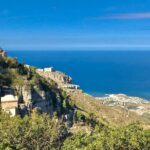
Palermo City & Market Tours, compared.
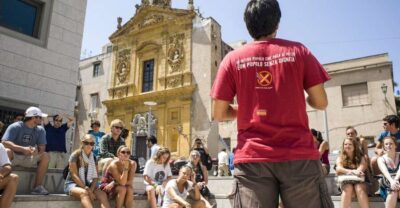 ★ 4.8Palermo: NO Mafia Walking TourFrom $402,431 reviews
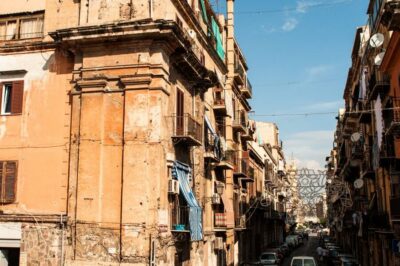 ★ 3.9Palermo: Hop-on Hop-off Bus Tour 24-hour TicketFrom $172,410 reviews
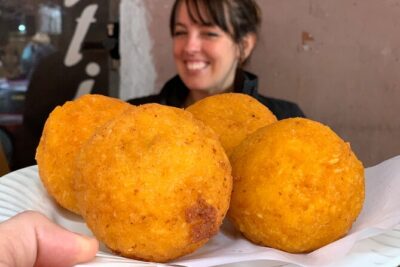 ★ 5.0Palermo Original Street Food Walking Tour by StreatyFrom $832,105 reviews
 ★ 4.2Segesta, Erice and Salt Pans Full-Day Excursion from PalermoFrom $821,791 reviews
 ★ 4.5Palermo: Teatro Massimo Opera House Guided TourFrom $141,573 reviews
 ★ 4.2From Palermo: Monreale and Cefalù Half-Day TripFrom $711,354 reviews
 ★ 4.9Palermo: Street Food and History Walking TourFrom $541,294 reviews
 ★ 4.2Palermo: Agrigento and the Valley of the Temples Day TourFrom $771,240 reviews