
Reviewed · PALERMO CITY & MARKET TOURS
Palermo: UNESCO World Heritage Sites Guided Walking Tour
Palermo feels like a timeline you can walk through. This guided route threads together the city’s most important UNESCO sights, from Piazza Pretoria to Palermo Cathedral, with expert commentary that also connects to everyday Sicilian life.
I especially like that the tour balances big monuments with street-level atmosphere, so you get the visual story and the lived-in feel. I also love that it includes a real interior stop, Cathedral entry, which makes the history feel immediate instead of just photo ops.
One consideration: it is a walking tour with no hotel pickup, so if you are limited on walking distance or timing, you’ll want to plan to reach the meeting point on time and wear comfortable shoes.
Key highlights you will actually use
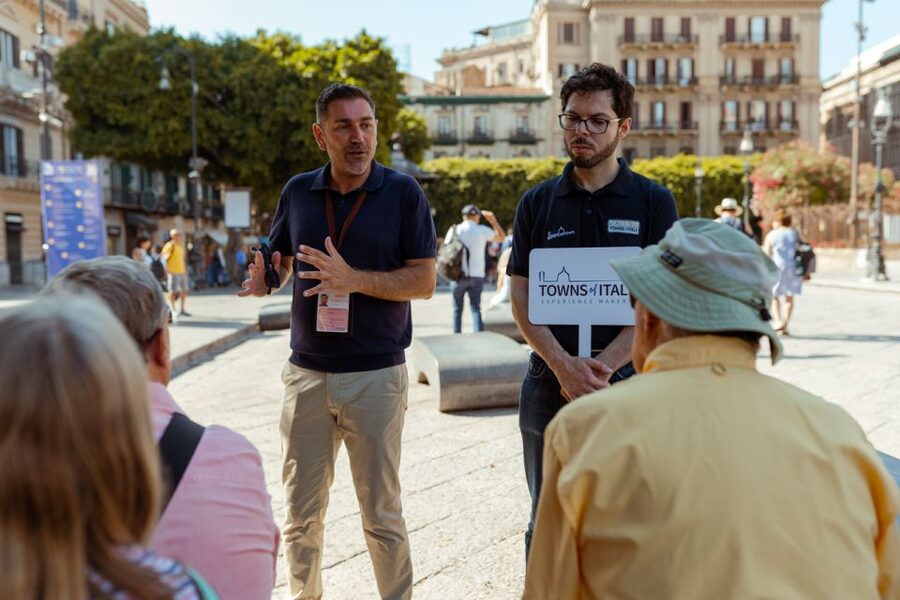
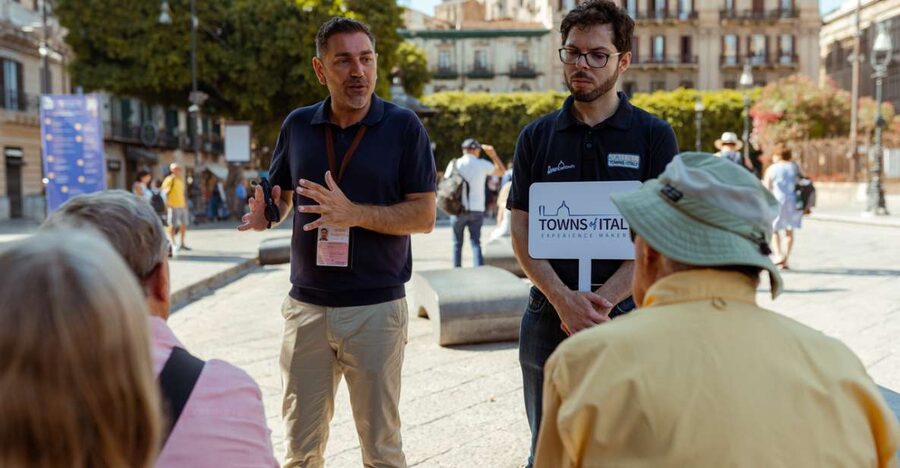
- Licensed local guide who explains what you are seeing, not just what it is called
- UNESCO core route focused on Palermo’s signature Norman-Arab and Baroque sights
- Cathedral entrance so you see style layers up close
- Golden mosaics at Martorana, a must-do visual moment
- Market street energy at Vucciria, great for context on local routines
- Sweet Sicilian treat at the end that helps you pace the experience
How this Palermo UNESCO walking tour really works
This tour is built for people who want a strong orientation fast. Instead of scattering across the city, you stay in Palermo’s historic center and concentrate on the UNESCO heart: Norman-era architecture, Baroque artistry, and the hybrid look that comes from centuries of cultural overlap.
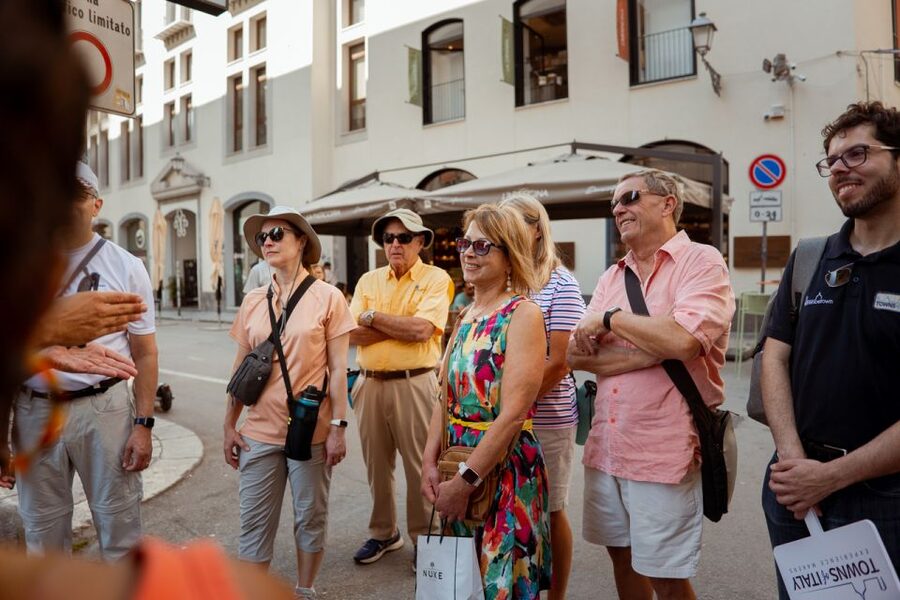
The format is simple. You meet your guide, you walk, you stop at major sites for photos and explanation, and you get one key entrance experience inside Palermo Cathedral. It runs 3 to 5.5 hours depending on the option and start time, and it works rain or shine. That matters in Palermo, where weather can change quickly and your plans need flexibility.
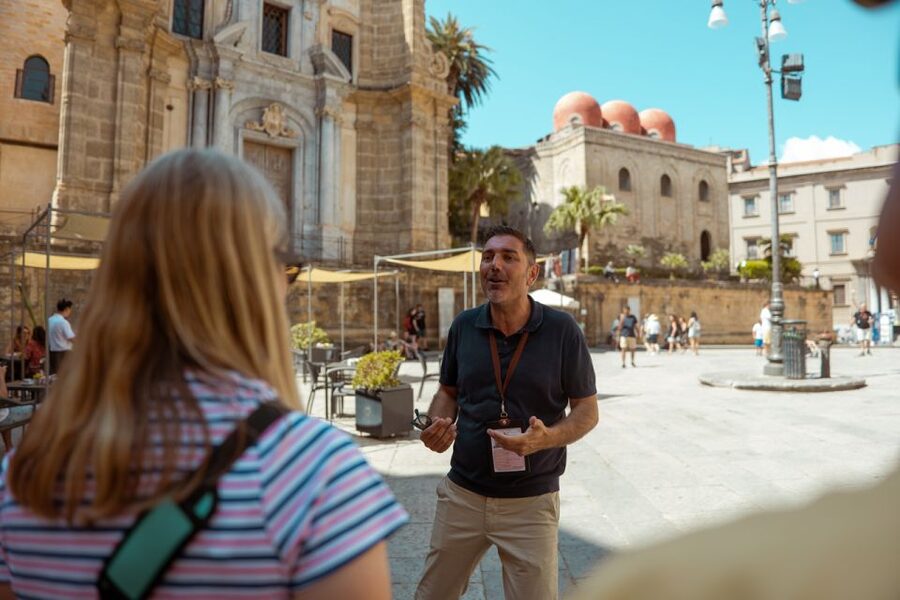
Best of all, the tour is led by people who clearly care about the city. In recent tours, guides named Simon, Simone, Renata, and Renata’s fellow locals like Stephania and Deborah came up repeatedly, and the common thread was energy plus clarity. People loved how guides mixed deep historical context with everyday details, like how locals talk about their city and what to look for as you walk.
You can also read our reviews of more walking tours in Palermo
Starting points and the end game: where you’ll begin and finish
You have two possible starting options, and it is worth checking the exact one tied to your booking. One common meeting point is Towns of Italy, the Tourist Hub and Cooking School at Via Volturno 40 in Palermo.
The end location can also vary. Some itineraries drop you near Palazzo dei Normanni, while others connect you back to the Towns of Italy area. That gives you an easy next step for the day, especially if you want to keep exploring right after the walking portion.
What this means for you: if you are planning museum entries or a later dinner, give yourself a little buffer. Even if the tour is well paced, you will want time to regroup, especially after interior stops like the Cathedral.
Teatro Massimo photo stop: get your bearings fast
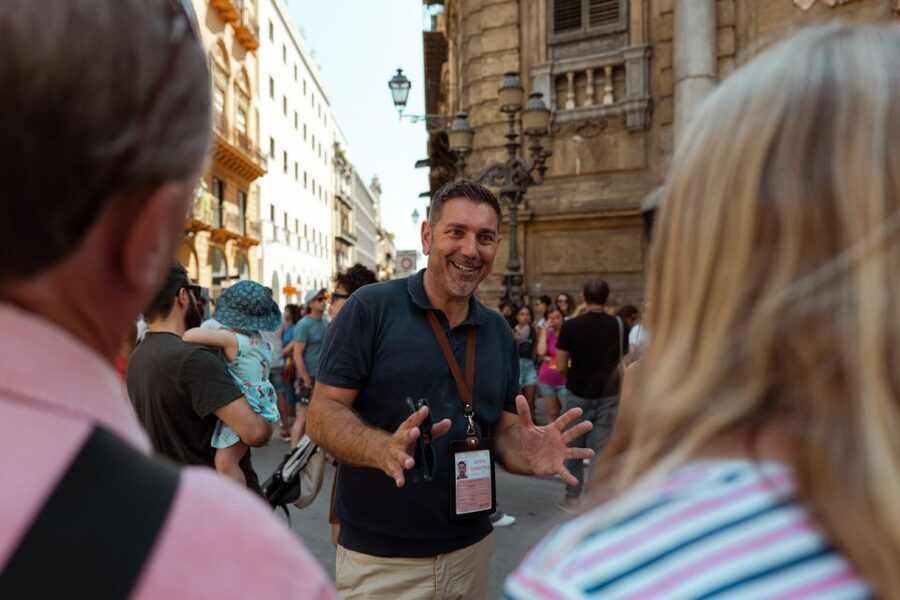
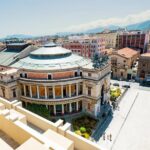
The route often includes a photo stop at Teatro Massimo. Even if you do not go inside, the building is an excellent landmark for orienting yourself. It anchors the surrounding streets and helps you understand how Palermo’s center is laid out.
What I like about starting with a recognizable sight is psychological. You immediately know you are in the right zone, and then the smaller, older churches and squares feel even more rewarding as you move closer to UNESCO core architecture.
A practical note: Teatro Massimo can put you in busy sidewalks, so be ready for traffic noise and crowds while you snap photos.
Church of Saint Dominic: a worthwhile pause for structure and detail
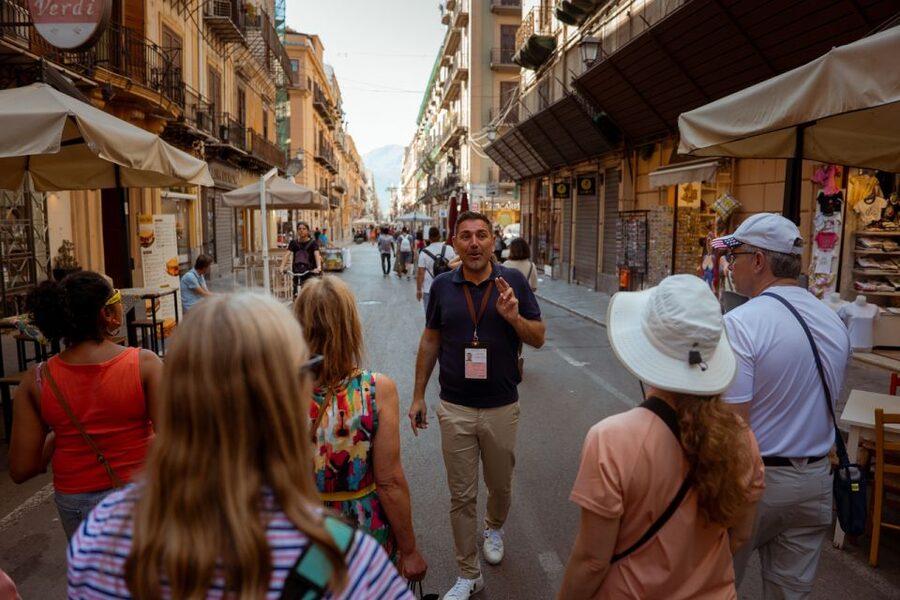
Next up is the Church of Saint Dominic, another photo-stop and guided segment. This kind of stop is important on a walking tour because it shifts you from grand squares to the architecture that fills the historic neighborhoods.
The best way to use this moment is to slow down and look upward. Even when you are not stepping inside, a good guide can point out how the building fits into the city’s bigger story, including the layers that Palermo is famous for.
If you enjoy ceilings, details, and visual clues, you will likely appreciate how some guides bring tools to make sense of what is happening above you. One guide used a laser pointer idea to help groups follow complex ceiling details, which is exactly the sort of practical trick that turns “I saw a church” into “I understood what I saw.”
Vucciria Market: street life context you can feel
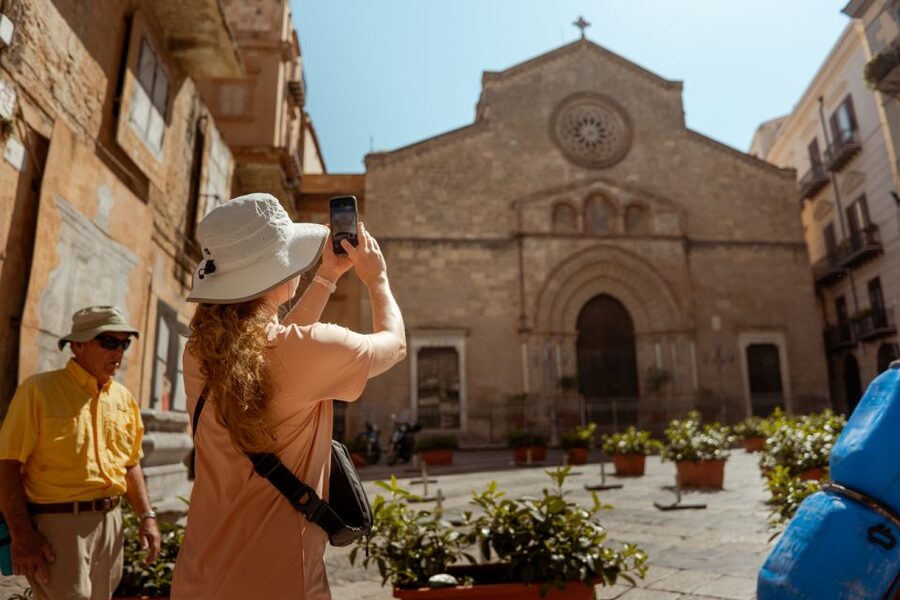
Then you hit Vucciria Market. This is one of those places where the experience is more than scenery. You are walking through an active area with market energy, vendor chatter, and that unmistakable food smell in the air.
Why it works on a UNESCO walking tour: the UNESCO sites can feel grand and removed if you only focus on architecture. Vucciria brings you back to the present. You see how daily life still uses the old city fabric.
You should expect the pace to feel lively here. It is a great place to ask your guide a question, like where locals actually go for food or which streets are worth a second pass later. Guides have done well at answering questions mid-walk, and this is a natural moment to do it.
You can also read our reviews of more guided tours in Palermo


Martorana Church mosaics: the golden moment
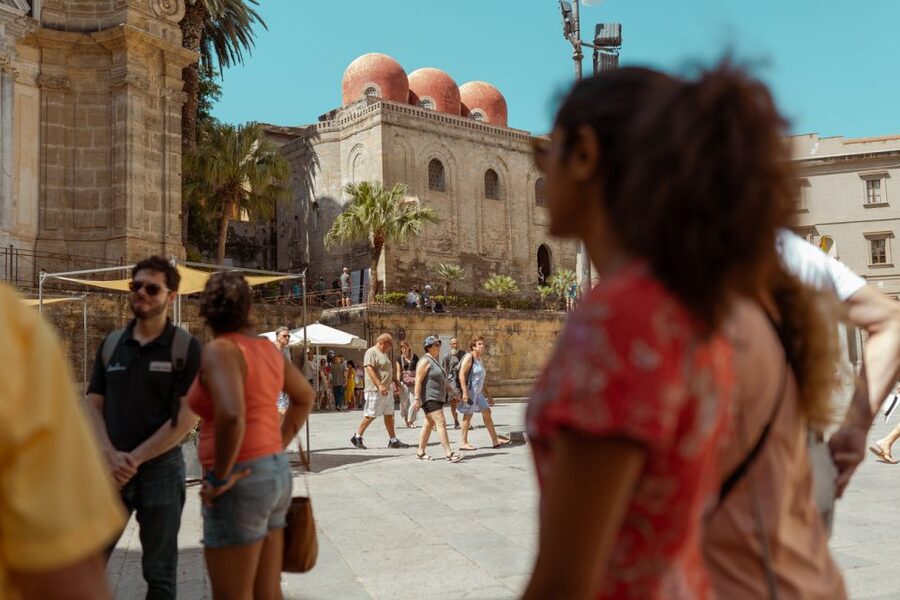
Martorana Church is one of the tour’s headline stops. You get a photo stop plus guided explanation here, and it is easy to see why it is included. The church is famous for its golden mosaics, which visually express the cultural mix that defines Palermo.
The value of a guided visit at Martorana is that you do not just stare at pretty surfaces. A strong guide helps you read the mosaics like a visual language. You connect the sparkle to faith, artistic technique, and the blend of influences that Palermo is known for.
If you are doing Palermo for the first time, this is also the moment where the trip starts to feel emotional. You go from learning names and dates to noticing patterns. Your brain starts recognizing the stylistic signatures as you move on.
Piazza Pretoria and Palazzo Pretorio: Baroque drama with Norman-era attitude
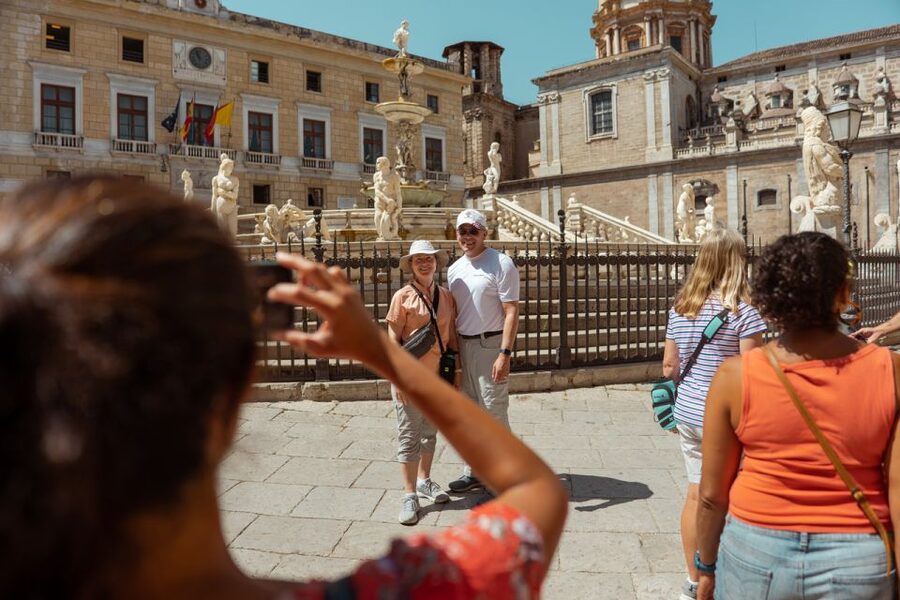
Piazza Pretoria is where the tour turns theatrical. You walk through the UNESCO heart of the square and the guided part focuses on Baroque curves, Norman-Arab elegance, and the famous marble fountain.
This is also a great stop to understand Palermo’s “why.” The fountain is visually stunning, but your guide can frame it in context so it does not feel like random decoration. You start to see how art and power played together across centuries.
You are also close to Palazzo Pretorio, the Town Hall area with deep historic roots. Depending on the route flow, the tour may include passing by the Praetorian Palace exterior and then explaining its importance to how the city functioned over time.
One benefit here: you get lots of photo time without feeling like you are stuck. This stop often hits the sweet spot between major structure and fun details. If you like to wander and notice statue shapes or marble textures, Piazza Pretoria rewards that kind of attention.
Quattro Canti: the architectural crossroads
Quattro Canti is another signature stop, typically handled as a photo stop plus guided walk-through. Think of it as a crossroads of streets and styles, where the architecture plays like a stage set.
What makes it useful on this tour is that it helps you orient yourself again for later exploring. After Martorana and Piazza Pretoria, Quattro Canti gives you a mental map anchor: you can stand there, understand the street layout, and then confidently wander the surrounding blocks on your own afterward.
If you tend to get lost easily, this is the stop that helps most. The guide points out how to interpret what you see, not just where to stand for a photo.
Palermo Cathedral: the one interior that makes the tour feel complete
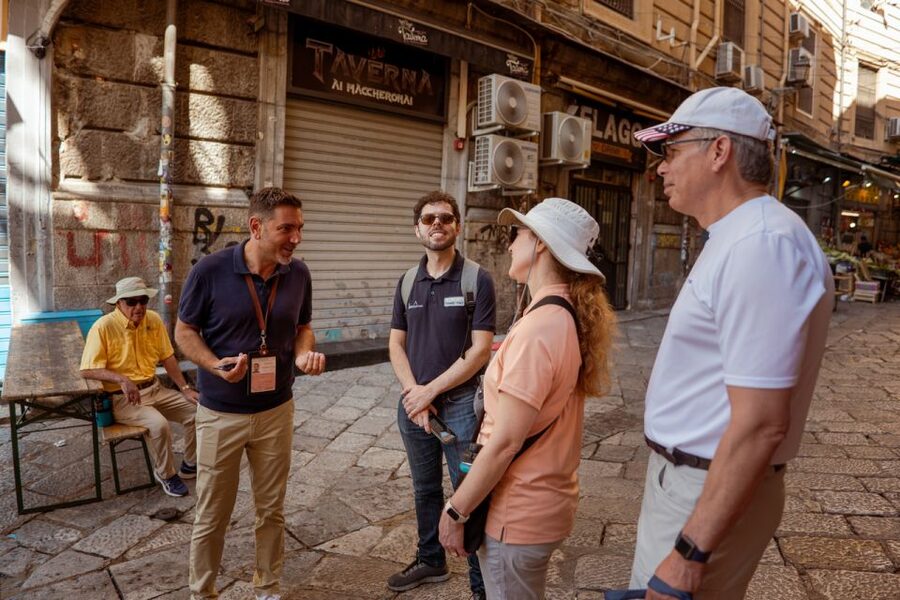
Palermo Cathedral is the tour’s key entrance. You get a photo stop, then guided tour time, and you actually go inside.
Why this matters: exterior shots are nice, but Palermo’s identity is layered. Inside a cathedral, you can see how different cultural and architectural styles overlap over time. Your guide’s job here is to connect the visible features to the bigger story.
Guides on this route have a strong track record for keeping the tour moving while still pointing out complicated details. People have highlighted that some guides are patient with steps and also pay attention to timing so everyone stays together. That is a big deal in cathedral interiors, where groups can easily slow down or spread out.
Practical tip: wear shoes you can stand in. Cathedral floors, photos, and listening all add up. If you are sensitive to heat, plan for shade pauses later, but the Cathedral stop itself can be comfortable in the sense that you are not exposed to open sun the whole time.
Palace of the Normans: see it from the right angle, then decide what’s next
The Palace of the Normans (Palazzo dei Normanni) appears as a photo stop and guided pass-by in the base tour. That means you see it as part of the UNESCO story, but you do not necessarily enter as part of this particular option.
This is still valuable because it connects you to the larger Norman presence in Palermo. It also sets you up for the optional upgrade, which is where many people go next.
If you are the type who wants to keep momentum, your guide can give you ideas for how to structure the rest of your day around the Norman sights. And since the tour may end near Palazzo dei Normanni in some options, it can be an easy handoff.
Optional upgrade: Norman Palace and Palatine Chapel add the inside magic
There is an upgrade option that pairs the walking UNESCO core with a guided visit to the Norman Palace and the Palatine Chapel. That upgrade matters for two reasons.
First, it adds the interior depth that the base tour does not fully cover. If you are drawn to mosaics, crowns of architecture, and the specific Norman-Arab blend that Palermo is famous for, the Palatine Chapel is the sort of stop that turns general appreciation into a strong memory.
Second, you may have two different meeting points for the combined experience. That sounds small, but it affects how smoothly your day runs. Before you go, confirm which meeting point applies to each part so you do not waste time backtracking.
The guide quality is the real value
The most repeated praise in recent experiences is about the guides themselves. Names like Simon, Simone, Renata, Stephania, and Deborah show up often, and what people liked was not just facts, but communication style.
Common strengths you can count on:
- clear explanations that make complex cultural layers feel understandable
- humor and local storytelling that make the walk feel like conversation
- pacing that lets you take photos without losing the thread
- extra help like suggesting places to return to
One recurring detail: guides often took shade seriously during hotter periods. If you travel in summer, this is a genuine comfort factor. It can turn a walk that would feel stressful into one that feels manageable.
Sweet treat and food smells: the tour’s built-in comfort
You get a sweet Sicilian treat during the walking adventure. In recent experiences, that treat has included favorites like cannoli and granita, depending on the guide and timing.
I like this touch because it does two jobs at once. It rewards you for walking, and it also keeps the experience grounded in real local culture. Palermo is not only about UNESCO buildings. It is also about what people eat, sip, and talk about on the street.
If you have dietary needs, the safest move is to ask your guide directly on the day. The tour data confirms a treat is included, but it does not spell out specific options or substitutions.
Who this tour suits best
This walking tour is a great match if:
- you want a structured introduction to Palermo’s UNESCO core in a half-day format
- you love architecture and want the cultural mix explained clearly
- you prefer walking with stops and commentary over museum-only sightseeing
- you are planning to come back to places later and want your second-round list
It is also a strong start on day one. Several guides and experiences emphasize that it helps you orient yourself, which makes independent exploring easier afterward.
If you want a lot of time inside multiple palaces and chapels, consider the upgrade option. The base tour includes Cathedral entry, while the upgrade adds Norman Palace and the Palatine Chapel.
Price and value: what $41 buys you
At $41 per person, the value is strongest because of the combination:
- a licensed English-speaking guide
- a walking tour that hits major monuments in an efficient route
- exterior viewing of main UNESCO sights
- entrance to Palermo Cathedral
For a city like Palermo, where important sights are spread across a dense core, paying for guided context can save you from the common problem of seeing beautiful buildings without understanding why they look the way they do. The guide bridges that gap.
If you add the upgrade, you are paying extra for additional interior access through the Norman Palace and Palatine Chapel. That can be worth it if those specific sites are at the top of your list.
Practical notes that help your day run smoother
- The tour runs rain or shine, so bring a light layer or umbrella.
- There is no hotel pickup or drop-off, so you should plan to reach the meeting point on your own.
- Your guide languages include Spanish and English. Optional audio is available in English.
- Pets are not permitted on the tour, which helps prevent allergy and comfort issues.
- The tour is walking focused, so wear comfortable shoes and expect some heat exposure on open streets.
Should you book Palermo’s UNESCO walking tour?
If this is your first time in Palermo and you want the UNESCO highlight reel with real context, I think you should book it. The Cathedral entrance plus stops like Martorana and Piazza Pretoria give you both inside and outside depth, and the guide-led explanations are what make the experience feel more like understanding than sightseeing.
I would especially recommend it if you like learning as you walk and you want your next days to be smarter. For readers whose priorities are Norman interiors, choose the upgrade for the Palatine Chapel and Norman Palace, then use the walking portion to connect the dots across the city.
More Walking Tours in Palermo
More Tours in Palermo
More Tour Reviews in Palermo
Not for you? Here's more nearby things to do in Palermo we have reviewed



Palermo City & Market Tours, compared.
 ★ 4.8Palermo: NO Mafia Walking TourFrom $402,431 reviews
 ★ 3.9Palermo: Hop-on Hop-off Bus Tour 24-hour TicketFrom $172,410 reviews
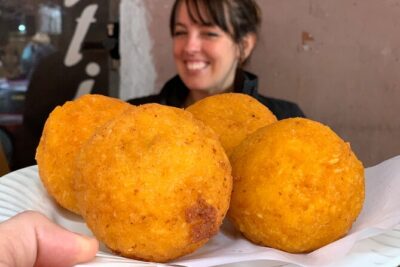 ★ 5.0Palermo Original Street Food Walking Tour by StreatyFrom $832,105 reviews
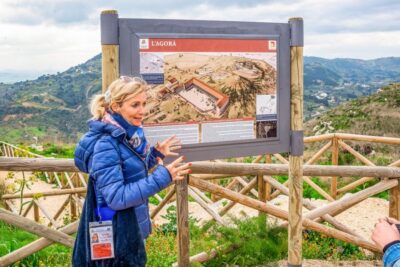 ★ 4.2Segesta, Erice and Salt Pans Full-Day Excursion from PalermoFrom $821,791 reviews
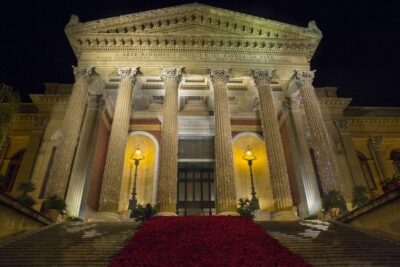 ★ 4.5Palermo: Teatro Massimo Opera House Guided TourFrom $141,573 reviews
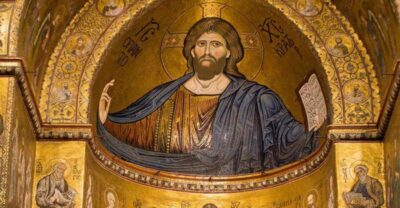 ★ 4.2From Palermo: Monreale and Cefalù Half-Day TripFrom $711,354 reviews
 ★ 4.9Palermo: Street Food and History Walking TourFrom $541,294 reviews
 ★ 4.2Palermo: Agrigento and the Valley of the Temples Day TourFrom $771,240 reviews
Browse the lists this tour appears in