
Reviewed · PALERMO CITY & MARKET TOURS
Discover Palermo
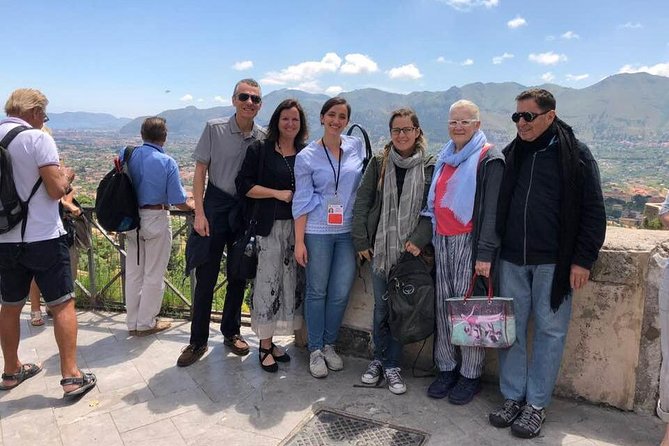
Palermo hits fast on a walking loop. This 2 to 3 hour guided stroll strings together major sights at a pace that feels easy, and I like how it balances big architecture with a hands-on stop at Capo Street Market. You’ll also see Palermo through the eyes of real guides, like Barbara, Manuela, Margarita, Lara, and Stefani, who keep the stories coming. One thing to consider: several church interiors are pay-at-the-door, so you may add a little extra if you want to go inside everything.
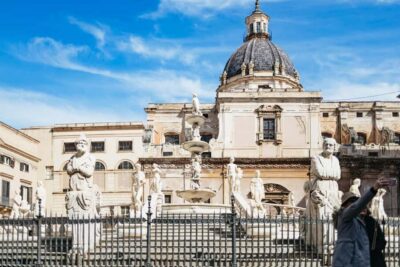
You start in grand style at Piazza Pretoria, where the white Carrara marble Fountain of Shame gives the square its unforgettable edge, then you move on to Quattro Canti, the historic center’s 17th century Baroque crossroads. The route is designed so you notice details, not just take photos.
Logistics are simple for a first day: it’s in English, it’s a small group (max 10), and you get a mobile ticket. The tour also requires good weather, so if rain rolls in, expect the pace and comfort to change.
Key highlights worth getting excited about
- Baroque “greatest hits” in hours, from Piazza Pretoria to Quattro Canti and Chiesa del Gesu
- Capo Street Market stop for food sights, smells, and local snacking culture
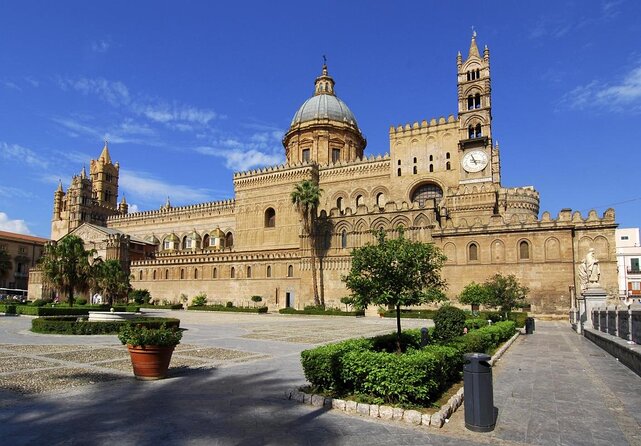
- Norman and Baroque mix at Santa Maria dell’Ammiraglio and Cattedrale di Palermo
- Giudecca, the Jewish quarter area, tied to Palermo’s history up to 1493
- Small group format (10 max) that helps you hear and ask questions
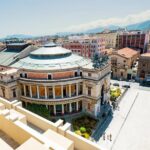
- Teatro Massimo viewpoint tied to why opera matters in Sicily
A Palermo walking loop that makes sense fast
Palermo can feel like a lot on day one. Streets twist, churches appear around corners, and markets make everything smell like you skipped lunch yesterday. This walking tour helps you get oriented fast by putting the most important Baroque and church landmarks into one logical loop.
The time window is short, about 2 to 3 hours. That matters because you’ll actually have energy left after for exploring on your own, instead of feeling like you spent your whole afternoon marching from one far-off stop to another.
You can also read our reviews of more tours and experiences in Palermo.
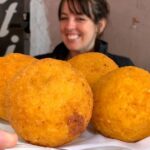
Piazza Pretoria, the Fountain of Shame, and the Baroque mood
Your tour begins at Piazza Pretoria, a square that instantly sets the theme of Palermo: impressive, theatrical, and a little cheeky. The star is the fountain made of white Carrara marble, famously called the Fountain of Shame. Even if you’ve never heard that name before, you’ll understand why people remember it.
From here, you also see the Town Hall area (Palazzo delle Aquile) and the church of Santa Caterina d’Alessandria in the mix of square scenery. The practical value of this stop is simple: it’s a visual anchor. After this, the rest of the Baroque details you see across town feel more connected, not random.
Quattro Canti: Palermo’s 17th century Baroque crossroads
Next comes Quattro Canti, right in the heart of the historic center. It’s one of those squares where the design makes you slow down without trying. You’re looking at a 17th century Baroque square built at a key intersection, so it works like a real-world map.
This stop is short, but it’s useful. When you later walk Sicilian streets independently, you’ll recognize how Palermo’s old core is organized. That makes the city easier to navigate, especially if you’re staying near the main sights.
Santa Caterina d’Alessandria cloister, confectionery, and what you might pay
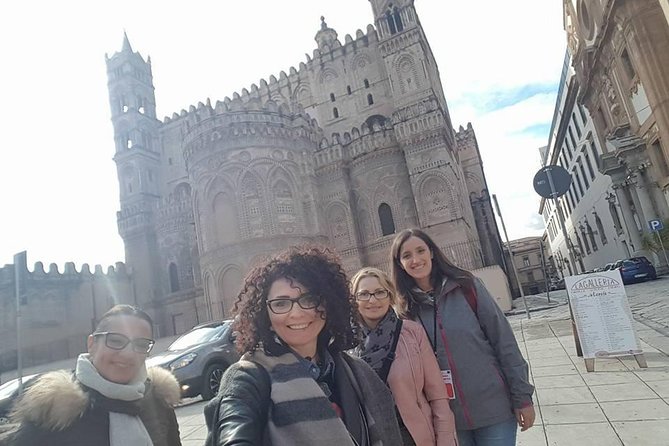
Santa Caterina d’Alessandria is where the tour gets more human scale. You’ll visit the cloister area of the former Dominican monastery, and there’s also a monastic confectionery inside. That pairing is the kind of detail I love in places like Palermo, where daily life and religion have always rubbed shoulders.
Here’s the practical part: the cloister visit is time-built into the tour, but the church interior can involve a paid ticket that you handle directly. That means you should decide on the spot if you want to go further inside. If you’re on a tight budget, you’re not forced to pay to get the main experience.
Santa Maria dell’Ammiraglio (La Martorana) and the open-site reality
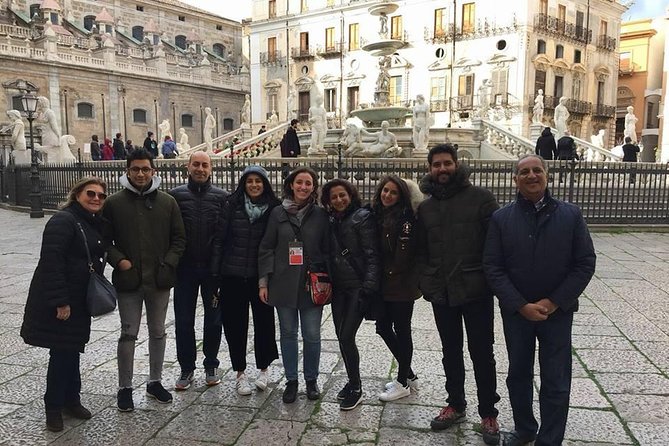
Palermo’s church history is complicated in a good way, and Santa Maria dell’Ammiraglio, also called La Martorana, is one of the reasons. You’re looking at a rare blend often described as Norman and Baroque art and architecture in the same place. In a short tour, it’s a big deal because it shows how Palermo layers cultures.
But there’s an important catch: La Martorana is visitable only when the site is open. If it isn’t available for visits, the tour route plans an alternative or an added stop, pointing you toward another church option. In real life, that flexibility is useful, because you still get the architectural payoff even when openings change.
Giudecca, the Jewish quarter area, and a history you can walk
Giudecca, the portion associated with Il Quartiere Ebraico, connects you to Palermo’s Jewish community and the history of expulsion in 1493. This stop is brief, but it adds depth to everything else you’re seeing. Without it, you might read Palermo only as Baroque churches and opera facades. With it, the city feels like a place that held many communities, not just one era.
This is also a great example of why a guided walk helps. The value here is not the street corner itself. It’s the context your guide puts around what happened in that space and why it matters.
Chiesa del Gesu: marble drama, Baroque style, and entrance fees
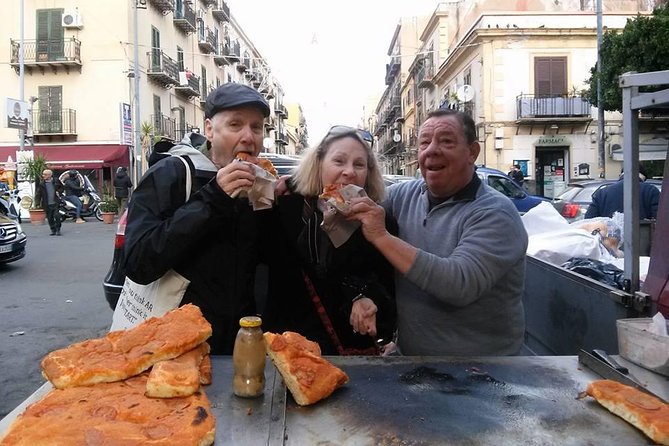
Chiesa del Gesu is the kind of church that makes you stop mid-sentence. The reason is the marble decoration. This is Palermo Baroque at full volume, and you’ll feel it the moment you look up and notice the richness of the details.
Just remember: entrance is not included for this stop. So if you want to go inside and see everything up close, budget for a paid ticket at the door. In one review experience, people paid small extra amounts for church entries, so this is the kind of tour where you should bring a little cash or card readiness for interior access.
The oldest cathedral stop: Cattedrale di Palermo and Norman kings
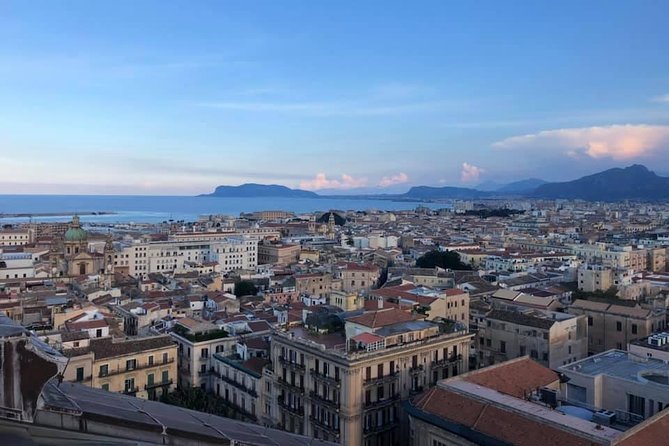
Cattedrale di Palermo is the major church moment. It’s a place of multiple styles, reflecting the fact that Palermo’s past is not one simple storyline. What makes it especially compelling is that it includes the tombs of the Norman kings, plus the silver chapel of Santa Rosalia.
This stop is a strong “connect the dots” moment. You’ve already seen squares and Baroque churches, but now you get the bigger religious and political weight. If you care about why a city looks the way it does, this is one of the most direct links between power, belief, and art.
The city’s craft street walk, palaces, and shopfront Palermo
Between churches and markets, the tour includes a walk along one of Palermo’s most ancient and important streets. Expect noble palaces outside and Sicilian craftsmanship shops along the way. Even if you don’t buy anything, this segment helps you slow down and recognize how commerce and culture share space in the historic center.
I like this part because it breaks up the church-heavy rhythm. It’s also where you’re likely to notice the textures of everyday Palermo: doorways, workshop windows, and the small details that make the city feel lived in.
Capo Street Market: where Palermo smells like dinner
Then you hit the heart of the local food world at Capo Street Market. This is the “soul of the city” stop, filled with fruit, vegetables, fish, and spices. It’s busy in the best way, because it’s not an “attraction market” that feels manufactured for tourists.
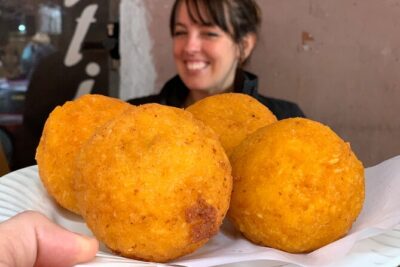
This is also one of the most enjoyable stops for families and teens. A food market is naturally engaging, and guides can help you spot what to try. In real tours like this, people often end up hunting down favorites like arancini and sweet pastries such as cannoli. You can treat this as either a sample stop or a window-shopping stop, depending on your appetite and budget.
Practical note: markets move fast. If you’re sensitive to crowds, pick a spot where you can watch the stalls without being crushed by foot traffic.
Teatro Massimo: the opera house that anchors Sicilian pride
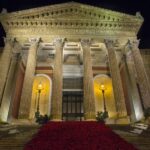
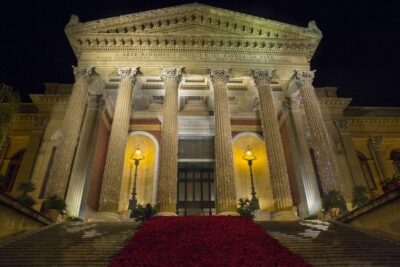
Your walk ends with a look at Teatro Massimo, the opera theater considered the largest in Italy and the third in Europe. It’s neoclassical, and it looks majestic even from the outside. This is a good final stop because it reminds you that Palermo’s creativity isn’t only religious art. It’s also performance, music, and public culture.
If you’re the kind of traveler who likes to understand a place beyond monuments, this stop gives you a shortcut. Opera is not just entertainment here. It’s a cultural identity marker, and the building reflects that.
Price and value: why $54.42 can work, if you plan for church tickets
At about $54.42 per person, you’re paying for a short, guided, small-group walk that packs together the best-known landmarks. That’s the value equation: you’re buying time efficiency and a guide who helps you interpret what you’re seeing.
One reason the price can feel fair is that you get several stops with admission marked as free. Piazza Pretoria and Quattro Canti are free-entry outdoor highlights, and Cattedrale di Palermo and the Giudecca area also fit into the tour plan without a paid ticket requirement listed.
At the same time, not every highlight is free. Church interiors at Santa Caterina d’Alessandria (depending on what you choose), La Martorana (when open), Chiesa del Gesu, and Teatro Massimo likely involve pay-to-enter items at the church door for customers. In other words, the base tour price covers the guided walk, not necessarily every interior.
If you want a smooth experience, do this mental math before you go: treat the tour price as the guide and the walking framework, then plan for a few extra tickets if you want to go inside the churches.
Group size, English guidance, and how that affects your day
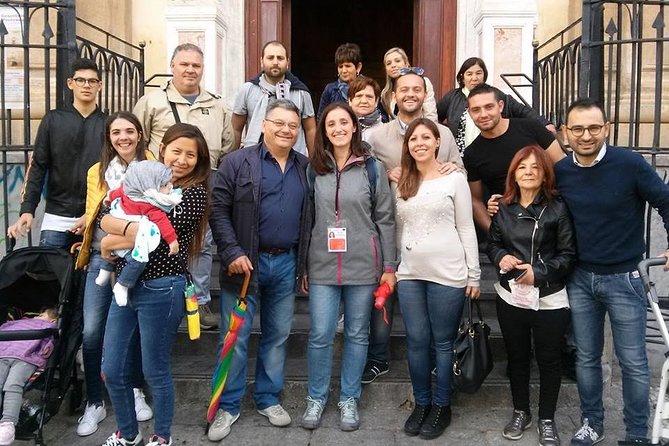
Max 10 travelers is one of the best features here. With a smaller group, you can move at a human pace, and your questions are more likely to land.
The English language offering is also a big deal. Reviews mention guides who kept teens engaged and made the walk feel like a real conversation, not a lecture. People named Barbara, Lara, Manuela, and Stefani in particular for keeping energy up and making the history feel readable.
Audio can be the one wild card. One review noted that hearing was tricky without headsets. I can’t promise how every group is set up, but if you know you struggle with sound, stay near the front and avoid standing behind taller people.
Weather and timing: when Palermo rain changes the vibe
This tour requires good weather. If you catch rain, you’ll still be walking between stops, and that can shrink the fun factor, especially in places with fine details you want to take your time with.
Timing is also built around a tight route, so plan to arrive a few minutes early at Piazza Pretoria. The tour starts at that location and finishes near Piazza Giuseppe Verdi, so you can easily keep exploring after without a long transfer.
Who should book this walk, and who should skip it
This is a strong fit for:
- First-time visitors who want a fast intro to Palermo’s Baroque and Norman-era influences
- Travelers who enjoy churches and architecture, but also want a real market stop
- Families and teens, especially if your guide keeps things lively (several guides named in feedback were praised for energy and humor)
- Anyone who likes small groups and guided context rather than solo guesswork
You might skip it if:
- You’re only interested in one or two interior sights and hate pay-at-the-door tickets
- Weather is questionable and you don’t want to risk a rain-heavy walk
- You prefer a fully museum-style experience where everything is timed inside and controlled
Should you book Discover Palermo?
If you want a short, well-structured walk that covers Palermo’s most memorable Baroque stops, plus a genuine food market, I think this is worth booking. The small group size helps, and the guide-led storytelling seems to make a difference, since people praised names like Barbara and Manuela for keeping attention high.
The only reason to hesitate is the interior ticket reality. If you want every church stop inside, budget a bit more. If you’re okay seeing the outside moments and picking only the interiors you care about, you’ll likely get a very good value.
FAQ
How long is Discover Palermo?
It lasts about 2 to 3 hours.
What is the price per person?
The tour costs $54.42 per person.
Where does the tour start and end?
It starts at Piazza Pretoria, 90133 Palermo PA, Italy, and ends at Piazza Giuseppe Verdi, Palermo PA.
Is it offered in English?
Yes, it is offered in English.
Are any admissions included?
Some stops are listed as free (like Piazza Pretoria, Quattro Canti, Giudecca, Cattedrale, and Capo Street Market), while others are marked as not included, meaning you may pay at the site for those church interiors.
Does the tour run in all weather?
It requires good weather. If it’s canceled due to poor weather, you’ll be offered a different date or a full refund.
More Tour Reviews in Palermo
Not for you? Here's more nearby things to do in Palermo we have reviewed



Palermo City & Market Tours, compared.
 ★ 4.8Palermo: NO Mafia Walking TourFrom $402,431 reviews
 ★ 3.9Palermo: Hop-on Hop-off Bus Tour 24-hour TicketFrom $172,410 reviews
 ★ 5.0Palermo Original Street Food Walking Tour by StreatyFrom $832,105 reviews
 ★ 4.2Segesta, Erice and Salt Pans Full-Day Excursion from PalermoFrom $821,791 reviews
 ★ 4.5Palermo: Teatro Massimo Opera House Guided TourFrom $141,573 reviews
 ★ 4.2From Palermo: Monreale and Cefalù Half-Day TripFrom $711,354 reviews
 ★ 4.9Palermo: Street Food and History Walking TourFrom $541,294 reviews
 ★ 4.2Palermo: Agrigento and the Valley of the Temples Day TourFrom $771,240 reviews