
Reviewed · PALERMO CITY & MARKET TOURS
Palermo No Mafia walking tour: discover the Anti-mafia culture in Sicily
One sentence hook: Mafia stories, but with hope.
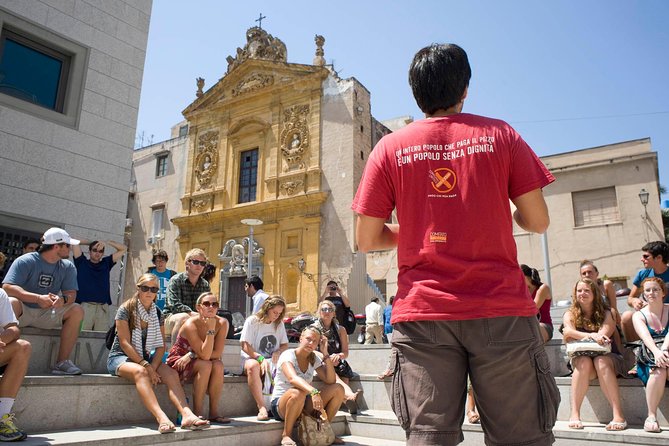
This 3-hour Palermo walk is built around how ordinary people, judges, and shopkeepers pushed back against organized crime, and it hits major sights along the way. I like the way the tour keeps you moving past real city landmarks, then slows down just enough to explain why they matter, and I also love the small group size (max 15) because your guide can actually answer questions instead of rushing everyone through. One thing to consider: the subject is heavy, and if you want pure art-history or lighter entertainment, this tour will feel more like civic history with emotion than a sightseeing stroll.
If you do it with Sylvia, you can see how much energy a passionate guide brings to the stories. I particularly liked the anti-extortion angle at the Cappadonia Gelati stop, where the message is not just what the Mafia did, but what people did instead, including support for the Addiopizzo cause. The one drawback I’d flag is that the tour is message-driven, so it can feel repetitive if you’re expecting a tightly packed, chronological historical tour of Palermo’s growth.
Key highlights to look for
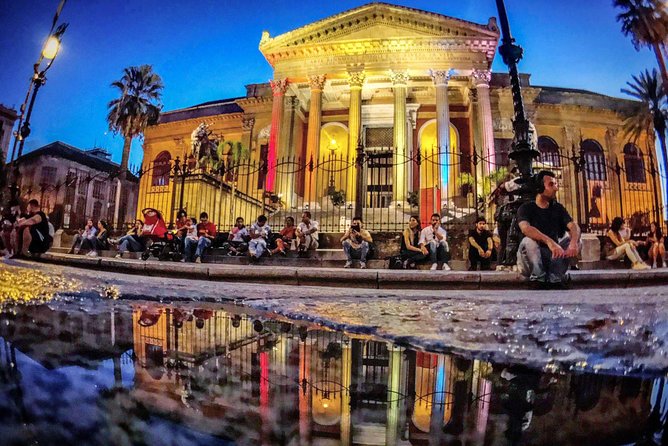
- Teatro Massimo as a rebirth symbol, tied to Palermo’s post-violence recovery
- The Wall of legality as an eye-level tribute wall for known mafia victims (and great photo moments)
- Piazza della Memoria at the Palazzo di Giustizia, a memorial to judges and prosecutors killed by the Mafia
- Cathedral stop with Church and Mafia connections, explained in plain terms
- Cappadonia Gelati and the anti-pizzo stance, where you can support the cause with a purchase
- City Hall contrast at Palazzo Pretorio, showing both corruption and resistance in one area
3 hours walking through Palermo’s anti-mafia story
Palermo has layers. This tour helps you read them fast, without drowning you in jargon. The route is set for a satisfying half-day feel, but it’s actually built for meaning. You spend the time linking specific buildings and street corners to the struggle between organized crime and the civic groups that tried to shut it down.
The pacing is walk, stop, talk, walk again. That works well in the historic center because you’re not stuck in one place for long. You also get a practical perk at the end: the tour finishes in the heart of the old town center, and you’ll receive tips to keep exploring and to taste Sicilian specialties.
You can also read our reviews of more walking tours in Palermo
Starting point: P.za Giuseppe Verdi to Fontana Pretoria
The tour begins at P.za Giuseppe Verdi, 455, and it ends at Fontana Pretoria, Piazza Pretoria. That matters because it shapes your plan for the rest of your day.
If you’re doing other sights after, you get an easy transition into the old town core when you finish. That’s useful if you like to keep your afternoon flexible, grab a snack, and then choose what to see next without backtracking.
You’ll also want to plan for time outdoors. The tour is a walking experience, and comfortable shoes are a smart call. Rain can happen, and the tour information suggests bringing an umbrella and a dry jacket if the weather turns.
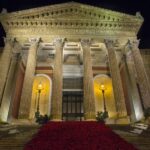
Stop 1, Teatro Massimo: opera glamour meets post-violence rebirth
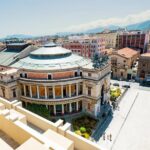
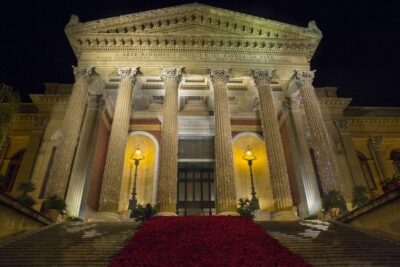
You start at Teatro Massimo, Palermo’s famous opera house. Yes, it’s tied to pop culture, with the dramatic scene from The Godfather III being filmed there. But the guide focuses on something more local: the theater as a symbol of Palermo’s rebirth after decades of Mafia violence.
Why this first stop works: it sets tone. You’re not beginning with a sad lecture. You’re beginning with a landmark people actually see and feel, then you learn how the city’s recovery story got embedded into its monuments.
Practical note: the tour doesn’t require you to pay for entry here, and the time on site is around 30 minutes. If you like photos, arrive with your camera ready, because the exterior and surrounding plaza are great for quick shots before you move on.
Stop 2, Wall of legality: 70 meters of faces and names
Next is the Wall of legality, described as the longest wall painting in Italy at about 70 meters. It’s part of an urban renovation project and it highlights known mafia victims. This is one of the stops where the tour becomes personal, because you’re looking at real faces instead of distant headlines.
It’s also one of the best photo stops on the route. You’ll be close enough to take pictures without playing “guess the composition” from far away.
This is timed at about 10 minutes. That’s about right. You get the explanation, you can read what you can, then you’re on your way. If you rush through too fast, you might miss the emotional weight of the wall, so give yourself a few extra seconds before the group moves.
The old open-air market stop: why shopkeepers mattered
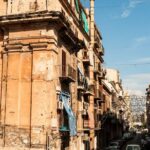
After the wall, you’ll walk into a colorful old open-air market area, a loud, human slice of Palermo life. This is where the tour connects street-level business with organized crime pressure.
The guide frames the relationship between the Mafia and shopkeepers, which is important for understanding pizzo. Pizzo is extortion, and the tour treats it as a system that targets everyday income. In other words, this isn’t just violence. It’s control through fear and forced payments.
If you’re the kind of traveler who likes to see how history plays out in daily life, this market stop is a highlight. If you’re sensitive to heavy topics, it’s still handled in a way that matches the setting: concrete, local, and grounded.
Stop 3, Palazzo di Giustizia and Piazza della Memoria
At the Palazzo di Giustizia, you’ll spend time at Piazza della Memoria, described as a memorial dedicated to judges and prosecutors killed by the Mafia.
This stop is the tour’s “state response” moment. It helps you understand that anti-mafia efforts were not just grassroots. Legal professionals also paid the price, and the memorial makes that clear without needing you to know every case name.
Timing here is around 15 minutes, and entry is free. In a short window you get the story focus, and you also get a visual anchor for the idea that justice work can be dangerous.
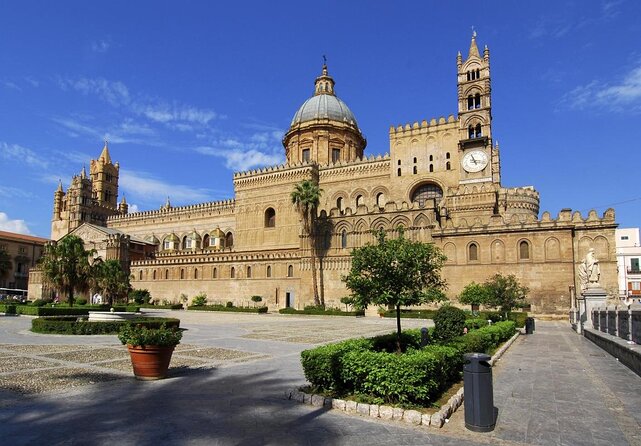
Stop 4, Cattedrale di Palermo: Church ties explained in real terms
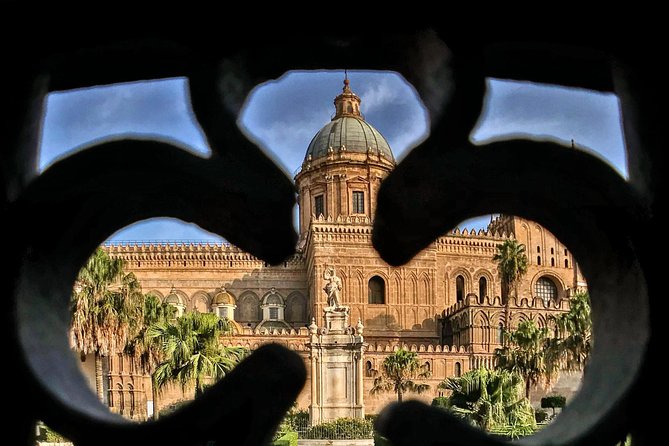
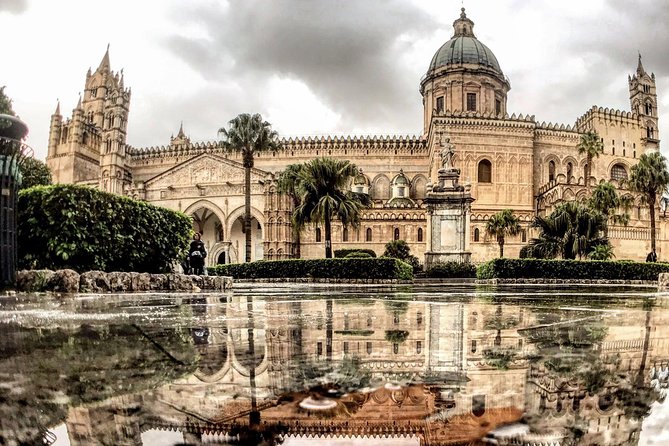
Next is the Cattedrale di Palermo, the Arab-Norman Cathedral. The guide talks about the relationship between the Catholic Church and the Mafia, which is a topic that can sound abstract until you hear it tied to specific local dynamics.
Why this stop fits the tour: it broadens the story beyond organized crime and resistance groups. It asks you to consider how institutions can shape social norms, how power can hide in respectability, and why anti-mafia culture had to fight on multiple fronts.
This stop is around 15 minutes and is free to visit. If your brain likes structure, this is a good point to mentally organize what you’ve heard so far: landmarks, victims, justice, and now the question of institutional influence.
Stop 5, along the Cassaro: Cappadonia Gelati and the anti-pizzo sticker
Walking along the Cassaro, you’ll reach Cappadonia Gelati. The tour points out an orange sticker on their windows that signals a refusal to pay the extortion racket, pizzo.
This is one of the most practical stops in the whole experience. You learn about the Addiopizzo grassroots movement and the idea of critical consumption, where support shows up through everyday choices. The tour gives you a chance to stop and support the shop with some good shopping, which can mean a simple gelato purchase.
Timing is about 15 minutes. It’s not a long break, but it’s long enough to cool down, read the message on the sticker, and decide to participate if you want.
Stop 6, Palazzo Pretorio and Palermo City Hall politics
You finish with Palazzo Pretorio, also referred to as the Municipio di Palermo (Palermo City Hall). This stop is about local power. The city hall has been described as the seat of corrupted politicians, but also of politicians who fought against the Mafia.
That contrast is the point. The anti-mafia story isn’t just villains versus heroes. It’s systems, elections, institutions, and people pushing back when corruption tries to become normal.
You’ll spend about 15 minutes here, again with free entry. And that final stop lands you right in the area where you can keep walking on your own after the tour ends at Fontana Pretoria.
What you’ll actually learn, and why it’s worth the price
The price is $39.30 per person for about 3 hours with a local guide, plus a small contribution to Addiopizzo. That’s not bargain-bin cheap, but it’s also not inflated for what you get: a guided route through multiple major landmarks plus a clear civic narrative.
Here’s where the value shows up for me:
- You get context you won’t get if you just wander. The guide connects each stop to the anti-mafia culture, not just the building’s look.
- You get personal engagement. The max group size of 15 helps keep it from feeling like a lecture.
- You get a tangible link to the cause. The solidarity quote to Addiopizzo local NGO turns the experience into more than a one-time story.
Also, English is offered, and confirmation comes at booking time. You’ll receive a mobile ticket, which is handy if you like to travel light.
Guide style: passion you can feel on the street
A recurring theme from the guides named in the experience is strong passion and strong communication. Names like Sylvia, Mariela, Frederico, Ermes, Salvador, Francesco, and Laura show up with the same pattern: guides who clearly care about the message and answer questions.
That matters because this tour deals with crime and resistance, not just dates. A guide who can make it clear, and who stays engaged, can turn a tough subject into something understandable and human.
If you go with someone who tells stories with purpose, you’ll likely walk away with a better mental map of Palermo: where power sat, where it was challenged, and why ordinary choices mattered.
A practical “how to enjoy it” checklist
This is a street-and-steps tour. To make it smoother:
- Wear comfortable shoes for uneven sidewalks and constant walking.
- If rain is in the forecast, bring an umbrella and a dry jacket.
- Bring a camera. The Wall of legality and parts of the historic center are photo-friendly.
- If you want to go deeper, keep one open slot after the tour. The route ends in the old town center, so it’s easy to continue.
One more thought: this tour is designed around civic resistance. If you’re expecting a purely chronological history lecture, you may feel the focus leans more toward the anti-mafia movement and how it reduced the Mafia’s hold. That doesn’t make it less interesting, but it does shape the experience.
Who this tour is for
This works best if you:
- Want Palermo’s story beyond postcards
- Care about modern Italy’s social issues and how they play out in daily life
- Like guided context that connects major landmarks to real events
- Prefer a small group over crowded large bus-style tours
It can also work well for families, since one of the guides is noted for keeping the message accessible. Just be aware the topic is serious, so it depends on your kid and your comfort level with heavy themes.
Should you book the Palermo No Mafia walking tour?
Yes, I’d book it if your goal is to understand Palermo as a living city with civic courage behind it. The route hits major landmarks like Teatro Massimo and the Cathedral, but the real win is the anti-mafia focus, especially the practical pizzo refusal story connected to Addiopizzo.
Skip it only if you mainly want light sightseeing, or if you’re hunting for a purely art-focused cathedral-and-opera tour with minimal politics. For everyone else, it’s a powerful way to get your bearings fast, learn the structure behind the Mafia’s grip, and see how Palermo people fought back in public.
More Walking Tours in Palermo

More Tours in Palermo
More Tour Reviews in Palermo
Not for you? Here's more nearby things to do in Palermo we have reviewed



Palermo City & Market Tours, compared.
 ★ 4.8Palermo: NO Mafia Walking TourFrom $402,431 reviews
 ★ 3.9Palermo: Hop-on Hop-off Bus Tour 24-hour TicketFrom $172,410 reviews
 ★ 5.0Palermo Original Street Food Walking Tour by StreatyFrom $832,105 reviews
 ★ 4.2Segesta, Erice and Salt Pans Full-Day Excursion from PalermoFrom $821,791 reviews
 ★ 4.5Palermo: Teatro Massimo Opera House Guided TourFrom $141,573 reviews
 ★ 4.2From Palermo: Monreale and Cefalù Half-Day TripFrom $711,354 reviews
 ★ 4.9Palermo: Street Food and History Walking TourFrom $541,294 reviews
 ★ 4.2Palermo: Agrigento and the Valley of the Temples Day TourFrom $771,240 reviews
Browse the lists this tour appears in