
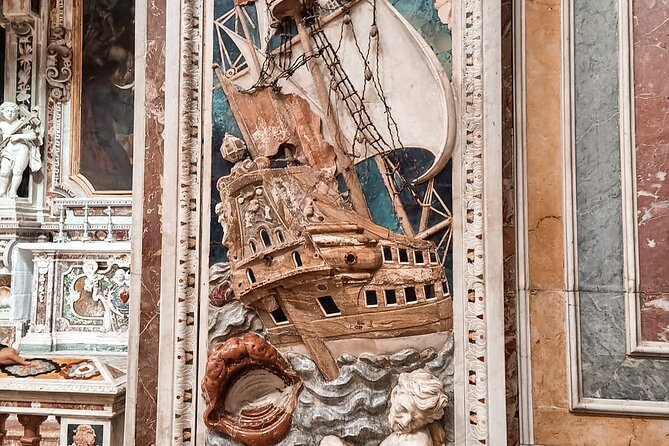
Reviewed · PALERMO CITY & MARKET TOURS
Summer Special: late afternoon tour by Palermo Wonders
Five p.m. turns Palermo into a moving postcard. I love the small group of six, because you get real conversation instead of a crowd shuffle, and I like how the route packs Palermo’s top landmarks into one smooth loop. The main drawback is practical: entrance tickets are not included, so a few stops may cost extra once you get there.
This is a 2 hours 45 minutes guided walk in Sicily, starting at 5:00 pm. You’ll meet on Via Maqueda and finish at Porta Felice, with a mobile ticket and a route built for people who do not want to wrestle with a map while they are hunting down great architecture and real street food.
Key highlights worth planning around
- Six participants for personal attention: you can ask questions, and your guide can slow down when a detail matters.
- Baroque meets Renaissance meets Arab-Norman: you’ll keep bouncing between eras without feeling lost.
- Cathedral and Martorana area focus: the tour steers you to the visual “why” behind Palermo’s mixed cultural layers.
- Santa Caterina cloister visit: the famous peaceful interior moment breaks up the streets.
- La Vucciria street market stop: you get to see Palermo’s food culture up close, not just from a distance.
- Late-afternoon timing: you catch the city in that in-between hour when shopping streets and church stops feel very alive.
Why the late-afternoon timing works in Palermo
Palermo does not just look good in bright daylight. Late afternoon changes the mood, and the streets start behaving like streets again, not like a photo backdrop. You get that sweet spot where people are out, shopkeepers are doing their thing, and the city feels social.
This matters on a walking tour. If you go too early, you can miss the energy around markets and storefronts. If you go too late, some places may feel slower to visit or it can get harder to keep the group together comfortably. This 5:00 pm start hits a practical middle, and it also pairs nicely with a day of beaches or museums before you switch into old-town mode.
You also benefit from not having to manage route decisions yourself. The whole point is to follow your guide and let them pace the experience for a small group, so you do not waste time “trying to figure it out” mid-walk.
You can also read our reviews of more tours and experiences in Sicily.

Meeting at Via Maqueda, ending near Porta Felice
Your tour starts at Via Maqueda, 199 (90133 Palermo). That street is central, so it’s usually easier to reach by public transport than meeting in a random back alley. You finish at Porta Felice, near Foro Italico Umberto I (90133 Palermo), which is handy if you plan to continue toward the waterfront afterward.
Two details make this feel easier than many old-town walks. First, you get a mobile ticket, so you are not hunting for paper or juggling printed vouchers. Second, the route is built as a connected loop, so you are not repeatedly doubling back to retrace steps.
In a city like Palermo, “where do we go next?” can eat half your enthusiasm. Here, your guide does that mental work. You can concentrate on looking up, noticing the surfaces, and paying attention to the stories behind each stop.
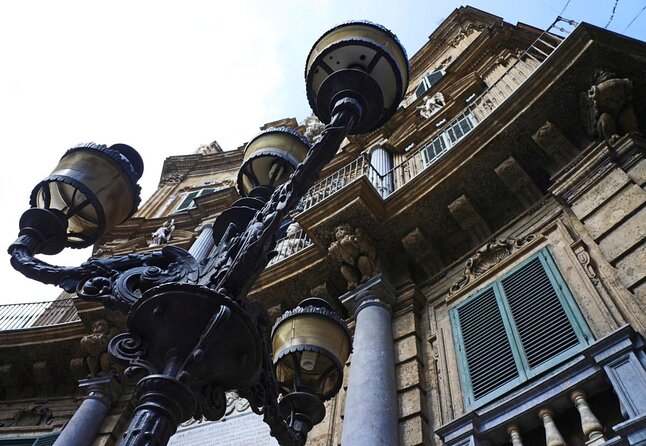
Quattro Canti and Piazza Pretoria: Palermo’s showpieces in a few steps
The tour kicks off at Quattro Canti, one of the city’s most famous baroque squares. It’s short, around 10 minutes, but it’s worth treating like a quick museum room without walls. You’ll see the square’s baroque design rhythm and get a feel for why Palermo loves theatrical street corners.
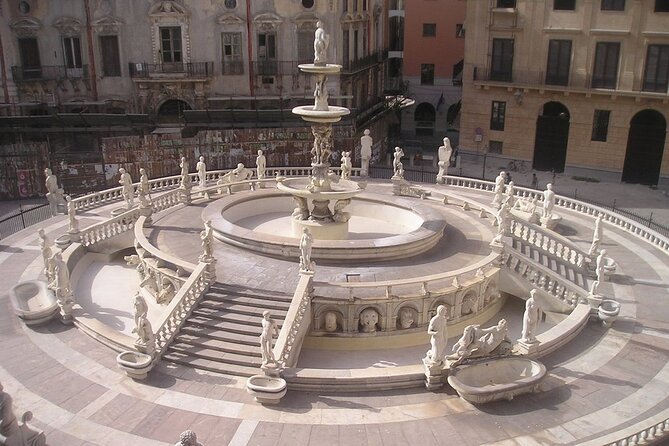
Next up is Piazza Pretoria. This is the setting for the big Renaissance fountain in front of the city hall area, and it’s another “stop for visuals” moment, around 10 minutes. The fountain gives you scale, detail, and a sense of how Palermo’s public spaces have long been about display, not just function.
A practical note: those early stops are also a good time to learn how your guide will point out details. You’ll see the same pattern again and again later, where they connect architecture to the people who shaped the city. If you pay attention right away, the rest of the walk feels smarter instead of just scenic.
The three red domes, Martorana, and the Arab-Norman mix
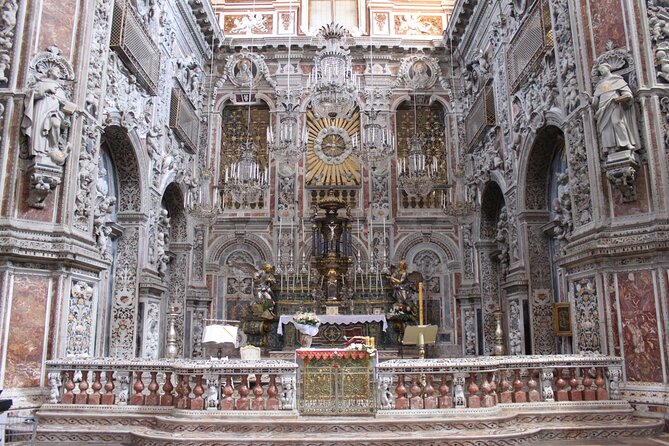
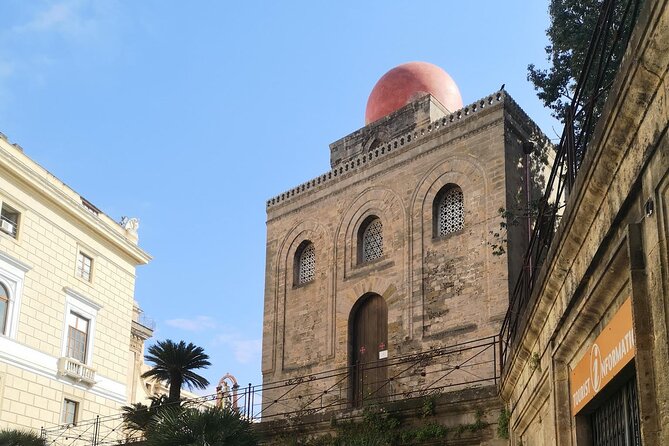
Palermo’s biggest magic trick is how it mixes cultures without turning them into one bland style. On this walk, that theme comes through around the cathedral and Martorana area, including the square of the three churches with the famous three red domes.
You’ll spend time admiring the Arab-Norman architecture, with a mention that the focus can be replaced by Santa Maria dell’Ammiraglio. Either way, the point stays the same: this is where you start seeing Palermo’s layers as living visuals, not just dates in a textbook.
Here’s what I think makes this part especially valuable. Your guide doesn’t just say the buildings are old. They explain the “live together” effect you can literally see, where gold byzantine mosaics sit alongside the Arab-Norman and then connect forward into baroque frescos. That combination can look overwhelming at first glance, so having someone frame what you are seeing makes a huge difference.
Also, this is one of those moments where a small group pays off. You can linger on a detail without holding everyone back. And if you have questions about what connects the styles, you can ask them before the group moves on.
Santa Caterina’s cloister calm, then Via Vittorio Emanuele
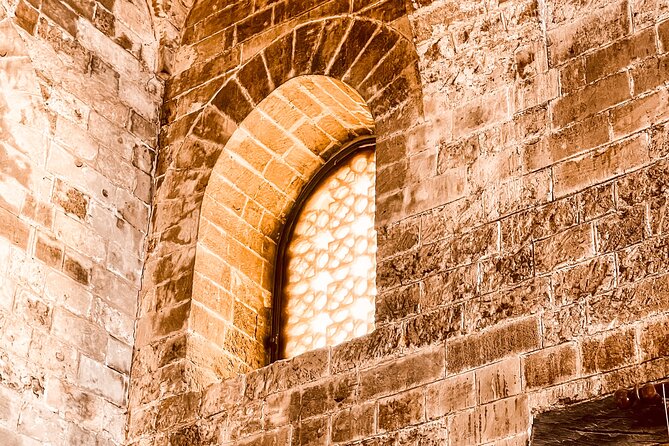
After all that architectural intensity, the tour takes you to a different kind of space: Church and Monastery of Santa Caterina d’Alessandria, including the cloister. Expect about 10 minutes, and note that entrance tickets are not included for this stop.
The cloister matters because Palermo can be loud, visually busy, and crowded in places. A cloister is the opposite. It’s the city center’s pocket of quiet, and it’s a great place to reset your brain before you head back into streets and squares.
Then you shift to Via Vittorio Emanuele, described as the oldest street of the city. This stop is longer, around 30 minutes, and it’s a helpful change of pace. Instead of one building at a time, you get to experience the urban feel, with the street acting like a corridor for history.
Your guide will also point out a picturesque square along the way. That kind of “small pause” sounds minor, but it’s how you start understanding how Palermo’s neighborhoods stitch together. You stop thinking in isolated postcards and start thinking in how people actually move through the city.
Oratorio di San Lorenzo and Piazza Marina’s garden break
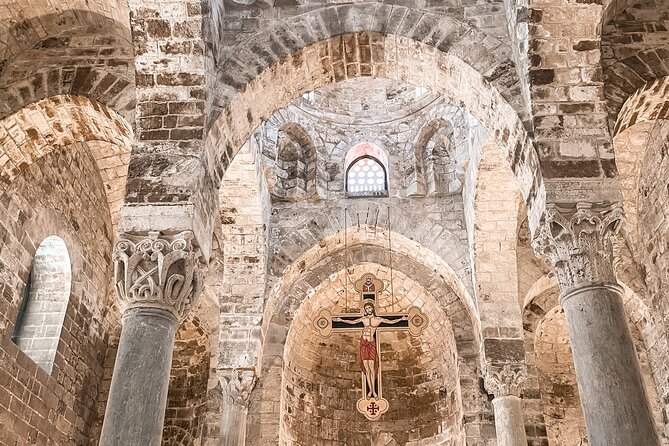
The walk keeps its surprises going with Oratorio di San Lorenzo, where the big draw is the mention of a stolen Caravaggio. Entrance is not included, so you may need to plan for ticket costs if you want to go in and see what’s inside.
This stop works best if you let the guide give you context first. With art in Palermo, the story matters, because the city’s past is tied to politics, patronage, and sometimes messy history. Even when you only have limited time, good context turns a quick visit into something you remember.
After that, you move toward the coast-side energy with Piazza Marina and the nearby Garden Garibaldi. This portion is brief, about 10 minutes, but it’s a smart reset. Gardens are where your feet stop aching and your eyes stop scanning for details, at least for a moment.
This stop also helps with timing. By the time you reach Piazza Marina, you’ve already walked through major squares and church areas, so a small green pause feels like earned breathing room instead of a detour.
Palazzo Butera and La Vucciria: culture meets food
Palazzo Butera is the tour’s longer interior-focused moment, around 1 hour, with entrance not included. The stop is described as the most innovative place in Palermo, and that’s a clue for how your guide may frame it. Instead of treating it as another old building, they can help you understand it as part of Palermo’s modern cultural life.
If you care about how a city keeps changing while still respecting its layers, this is a key stop. Palermo is not only about what happened centuries ago. It’s also about how people keep using those spaces and reinventing what they mean today.
Then comes La Vucciria, one of Palermo’s historical street markets. You’ll spend about 15 minutes here, with no admission ticket required for the market stop. This is where the tour turns from sightseeing into lived-in food culture, with you watching street food vendors at work and seeing how the market operates in real time.
Even if you do not plan to buy much, this is valuable. You get sensory context for what you see later in photos, menus, or restaurant descriptions. And because your group is small, it’s easier to stop, look, and ask a question without feeling like you’re blocking foot traffic.
Your guide, Mauro, and what the best tours actually deliver
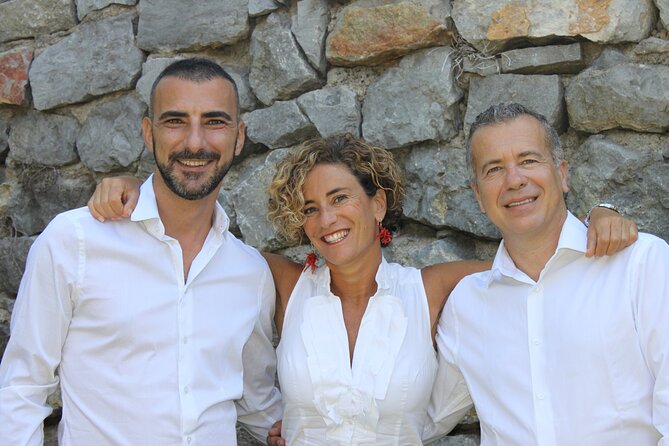
The strongest praise in the feedback centers on the guide experience, and one name comes up: Mauro. In the best cases, you get a guide who is professional and genuinely engaging, with a gentle style and a passion for Palermo’s culture. The storytelling matters, including the personal touches like family quotes that make the city feel less like a syllabus and more like a place with human memory.
That’s not just nice to have. In a city where buildings mix Arab-Norman, Byzantine, and baroque details, a good guide helps you connect dots fast. Without that, you can walk past things you technically saw but did not really understand.
This tour also benefits from the small group size. When you have room for questions, your attention sharpens. You start noticing the same motifs across different churches and squares, and the city starts making sense as a single story instead of scattered highlights.
Price and value: what $98 really buys you
At $98 for about 2 hours 45 minutes, the best way to judge value is by what you get beyond “a walk.” You get an official local guide born and raised in Palermo, plus a route that hits major A-list sights like the Teatro Massimo opera house, Quattro Canti, and Piazza Pretorio, along with cathedral and Martorana focus.
Then there is the pacing advantage. With only six participants, you are not paying for a rushed script. You’re paying for guided interpretation that helps you enjoy the sights instead of just ticking them off.
What can reduce the perceived value is also clear. Entrance tickets are not included. Since several stops specifically say tickets are not included, you should assume there may be add-on costs if you want to enter everything your guide recommends.
Still, even with that consideration, you’re not paying extra for “lost time.” The tour is built so you cover a lot of ground efficiently without you managing a route, and that’s often what makes a mid-range price feel fair.
Who should book this and who might want another option
This tour is a strong match if you want a guided old-town overview with enough time to look and ask questions. The focus on the cathedral and Martorana area, plus the cloister at Santa Caterina and the market at La Vucciria, suits people who love architecture and also enjoy everyday street life.
You’ll likely enjoy it if you:
- Want to see major Palermo sights without a map or guidebook
- Prefer small groups where conversation feels possible
- Like mixing church architecture with street markets
You might consider a different tour if you:
- Have a tight budget for entrance fees and hate add-on costs
- Want a longer, deeper museum-style visit at one single attraction
- Cannot handle walking in an old city layout, since this is a true street walk rather than a drive-and-park day
Should you book the Palermo Wonders Summer Special?
If your goal is to get your bearings fast and see Palermo’s big sights in one late-afternoon loop, this is an easy “yes, consider it.” The small group size, the official local guidance, and the mix of baroque squares, Arab-Norman architecture, cloister calm, and La Vucciria street-market energy is exactly the combo that turns a first visit into a memorable one.
My booking advice comes down to two checks. First, plan for possible entrance ticket costs at stops that say not included. Second, go with good weather when you can, because the experience requires it and can be moved or refunded if conditions are poor.
If those two items work for your trip, this tour is a smart value way to experience Palermo’s layers in under three hours.
FAQ
How long is the late-afternoon tour?
It runs for about 2 hours 45 minutes.
How much does the Palermo Wonders Summer Special cost?
The price is $98.
What time does the tour start, and where do we meet?
The start time is 5:00 pm. You meet at Via Maqueda, 199, 90133 Palermo PA, Italy.
Where does the tour end?
It ends at Porta Felice, near Foro Italico Umberto I, 90133 Palermo PA, Italy.
Is this tour private, and how big is the group?
It is described as a private tour/activity, and the experience is designed for a group of just six participants.
Are entrance tickets included?
No. Entrance tickets are not included, so some church or site visits may require an additional ticket.
What happens if the weather is bad?
The tour requires good weather. If it is canceled due to poor weather, you will be offered a different date or a full refund. You can cancel up to 24 hours in advance for a full refund.
More Tours in Sicily
More Tour Reviews in Sicily
Not for you? Here's more nearby things to do in Sicily we have reviewed




Palermo City & Market Tours, compared.
 ★ 4.8Palermo: NO Mafia Walking TourFrom $402,431 reviews
 ★ 3.9Palermo: Hop-on Hop-off Bus Tour 24-hour TicketFrom $172,410 reviews
 ★ 5.0Palermo Original Street Food Walking Tour by StreatyFrom $832,105 reviews
 ★ 4.2Segesta, Erice and Salt Pans Full-Day Excursion from PalermoFrom $821,791 reviews
 ★ 4.5Palermo: Teatro Massimo Opera House Guided TourFrom $141,573 reviews
 ★ 4.2From Palermo: Monreale and Cefalù Half-Day TripFrom $711,354 reviews
 ★ 4.9Palermo: Street Food and History Walking TourFrom $541,294 reviews
 ★ 4.2Palermo: Agrigento and the Valley of the Temples Day TourFrom $771,240 reviews