
Reviewed · TRAPANI, ERICE & SEGESTA TOURS
SALT TOUR-all inclusive: salt tour: Trapani, Paceco, Nubia
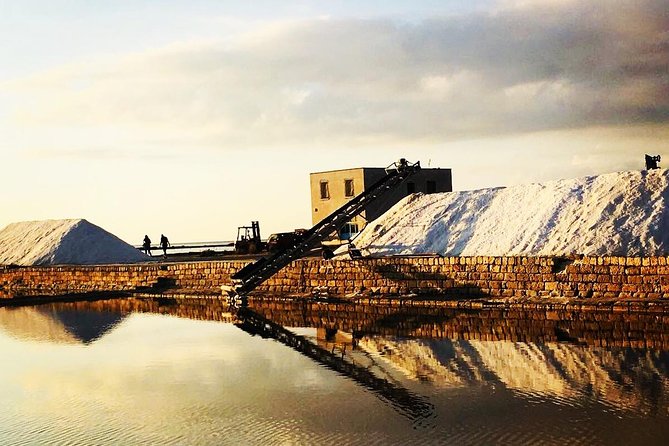
Sicily’s salt flats are more than scenery. This 2.5-hour SALT TOUR around Trapani, Paceco, and Nubia mixes guided salt-pan walking with a salt museum stop, plus tasting real crystals and fleur de sel. I love how the guide brings the process to life, and I also like the focus on practical details, like how sea water becomes salt over time.
Two things really land for me: you get three different salt pans and you taste salts at the end, including aromatized salt flower options. I also like the small group feel (the experience is described as limited to 8 people, while the overall maximum is 16).
One consideration: this is a timed tour, and if your schedule is tight, you should ask upfront whether there are any add-ons at the end. A few people have reported extra options that can stretch the day.
Key highlights to know before you go
- Small-group access to Saline di Trapani and Paceco: walking with a guide instead of just viewing from a distance
- Three salt-pan stops: Maria Stella, Salina Calcara (Salina Chiusicella), and Culcasi
- Museum time inside an old mill: a site tied to salt collection and tools, plus a salt-worker path walk
- Salt tasting built in: salt crystals and fleur de sel, including flavored salt flower
- Real bird-spotting potential: flamingos, herons, and egrets can show up in the right conditions
Why Sicily’s salt pans feel like a living workshop
Trapani is one of those places where you can still see an ancient job at work. The salt pans are not a static attraction, they are a working landscape with routines, tools, and terms locals use every day. On this tour, you’re not just looking at flat white fields. You’re learning how the whole transformation happens, step by step, and why the layout matters.
I like that the tour has a clear rhythm. You start at the port, move through working pans with named locations, and end at a historic mill and museum space. Even if you think you already know what salt is, the guide’s approach tends to make you notice the small mechanics that most casual visitors miss.
You’ll also get a straightforward payoff: salt tasting. That matters because it turns a lesson into something you can actually compare with what’s in your kitchen back home.
You can also read our reviews of more tours and experiences in Sicily.


Meeting at the port: your starting point matters
The tour meets at the Vigili Del Fuoco Distaccamento Portuale Trapani, at Via Ammiraglio Staiti 101, right by the port. This is one of those practical setups that makes the rest of the day easier. You’re not hunting around central Trapani, and you’re positioned to head straight toward the salt area.
You’ll be on an air-conditioned vehicle, which is a big deal in Sicily, especially on warmer afternoons. The vehicle setup is also described as sanitized according to COVID-19 regulations, and the tour includes mobile tickets.
Language is covered too. The experience is offered in English, and the guide role is a big part of why this tour is worth it. If you’re someone who likes to ask questions, this format is built for that.
Maria Stella: the first mill moment you can’t stop thinking about

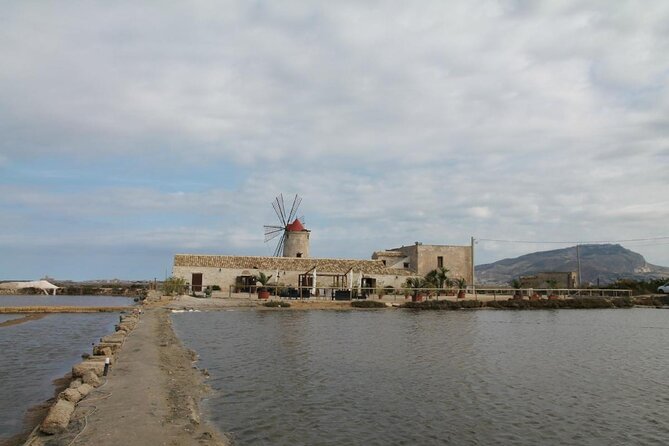
After about ten minutes, you reach the Maria Stella salt pan. This stop is your “anchor” point for understanding how old this industry is. You’ll admire the first mill built here in Trapani, dating to the end of the fifteenth century. That single detail changes the tone of the whole experience. Suddenly you’re not viewing a modern production site, you’re standing near infrastructure with centuries behind it.
What I like about this first stop is that it sets expectations early. You get oriented to the salt pans as a system, not just a view. The guide can point out how the working layout supports the conversion of sea water into salt, and it also helps you appreciate what you’ll see later at other named tanks.
A small-group tour also helps here. When people can move and listen without constant crowd pressure, you actually catch the story the guide is telling. That becomes important again when you’re deeper into Culcasi later.
Salina Chiusicella: tanks, birds, and the salt orders
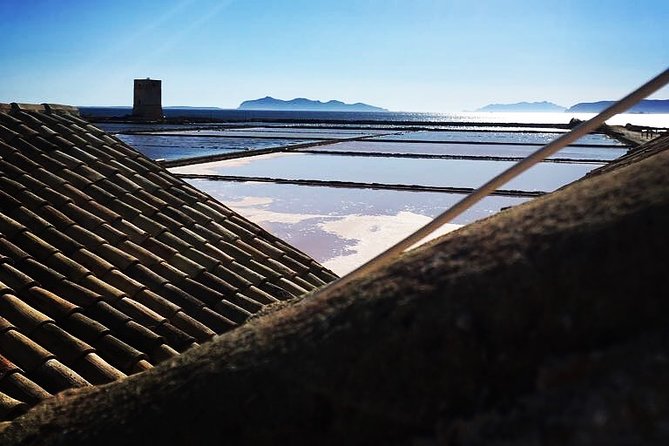
Next you head to Salina Calcara, often described as Salina Chiusicella. Here, the tour focuses on the “orders” or stages of the salt tanks. The guide walks you through how sea water is transformed into salt across different steps, each with its own logic and timing.
This is where the tour starts to feel like a real working diagram. You’ll also get bird-spotting potential. The tour description specifically points to sightings like flamingos, herons, and egrets, plus something local called horsemen of Italy. Even if you do not see every species, it’s still useful to know the pans attract wildlife, so you can watch for movement as you walk.
One smart thing to do during this stop: look down and then look out. The guide explanations connect the visuals. If you only watch the horizon, you miss the tank structure that makes the process make sense.
Also, remember this is not a long stop. You’ll have around 30 minutes here, so keep your questions short and sharp if you want time for photography.
Culcasi: 600 years of salt work, plus a museum inside a mill
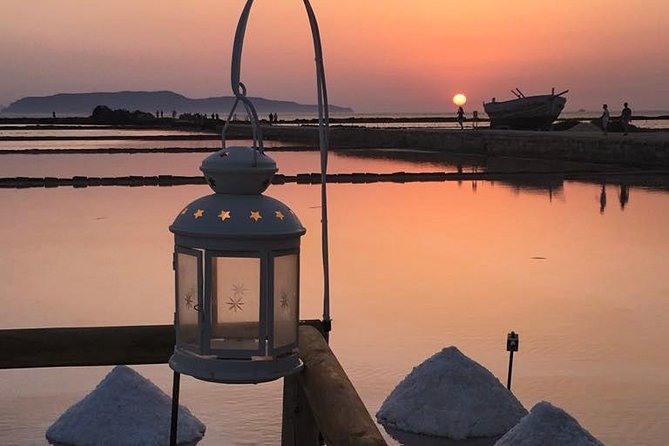
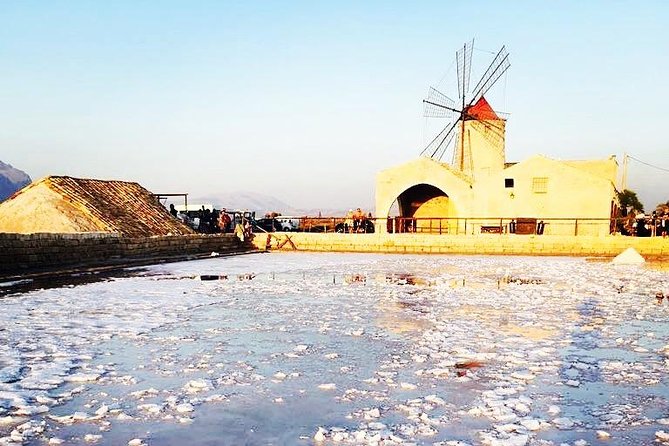
The last salt pan is Culcasi, and it’s the payoff stop. You move from open-air salt tanks into an ancient mill of over 600 years that is now a museum.
This part matters because it explains salt as a social system, not just a chemical product. You’ll learn about how salt was collected, how the mill worked, the tools used, and the hierarchies of people involved. You’ll also get a comparison between past and present, which helps you understand why certain buildings, jobs, and methods lasted so long.
Then you get tastings and a walk. The tour includes tasting different types of salt crystals and the most precious part, the salt flower. You can expect salt flower in natural form and flavored versions with orange, lemon, rosemary, and oregano. This is not just a novelty. It’s the easiest way to understand how salt changes food: not only by flavor strength, but by aroma.
Finally, you do the path of the salt worker, a suggestive walk inside the salt tanks. This is a good time to slow down. The guide gives context for what you’re seeing, and walking inside the tanks helps your brain connect process to place.
If you care about photography, this is also the section where the textures and colors tend to look most interesting, especially when the light hits right.
The salt tasting: what to expect and how to use it at home

The tasting is built into the tour, so you do not have to hunt for it later. You’ll sample:
- Salt crystals of different types
- Salt flower, including natural and flavored versions
The flavored options listed are orange, lemon, rosemary, and oregano. That set is especially practical for home cooking, because those flavors overlap with common Sicilian and Mediterranean ingredients.
Here’s how to get the most value from the tasting: think in pairs. Take one small pinch and taste it plain, then compare it to the flavored salt flower. Your goal is to notice how aroma changes the perception of saltiness. If you’re cooking fish, salads, or vegetables, this is a quick way to learn what each one might do.
Also, pay attention to how the guide talks about Trapani integrale salt and why people prize it. One review specifically calls out Alessio explaining health-benefit angles tied to integrale salt. I would keep that in the realm of food tradition and common beliefs, not medical advice, but it can still make the tasting more meaningful.
Group size, comfort, and what the small format buys you
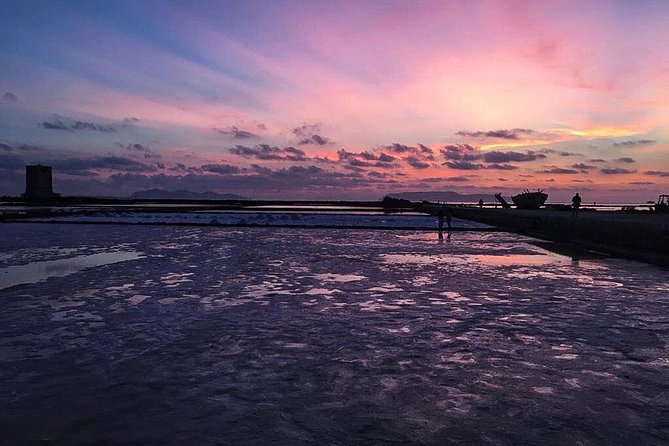
There are two numbers to keep in mind: the experience says places are limited to 8 people for intimacy, and it also says the maximum is 16 travelers. Either way, it’s clearly not a huge bus tour. That matters because salt pans require attention. Uneven ground, shallow areas, wind, and long views all reward a guide you can actually hear.
The tour is also timed, at about 2 hours 30 minutes. That’s a sweet spot. You get enough time for three different salt-pan areas plus museum time, without turning the day into a half-day marathon.
You’re not doing this by foot only. The air-conditioned vehicle handles the transfers, while the walking is focused on the key areas. That makes it a good option even if you do not want a long, strenuous trek.
If you’re sensitive to heat or sun, plan for it. The tour itself does not state a provided hat or water, so bring your own basics and dress for walking.
Price and logistics: is $60.46 good value?

At $60.46 per person for roughly 2.5 hours, the price can feel like a lot until you look at what’s included.
You get:
- A guide
- Air-conditioned vehicle
- Entry included to the salt museum
- Three different salt pans
- A path of the salt worker walk
- Tastings of salt crystals and aromatized salt flower
That mix is the real value. If you only paid for museum entry, you’d miss the guided salt-pan walking and the tastings that explain what you’re looking at. If you only booked a taxi and visited on your own, you would still see the location, but you’d likely miss the context that makes the salt pans feel like a job with roles, steps, and tools.
That said, not everyone feels it’s worth it. One person felt the experience was overpriced compared with just going to the salt museum independently. My take: if you love guided explanation, tastings, and the full salt-pan route, it’s a fair deal. If you prefer self-guided sightseeing, you might want to compare what you personally value most.
One more practical tip from the experience descriptions and feedback: if your plan includes dinner or a tight schedule, ask whether any extra add-ons are offered at the end. There’s at least one account of an additional aperitivo suggestion with a separate cost that stretched timing. You can avoid stress by clarifying up front.
Who should book this SALT TOUR?
This is a great fit if you want:
- A guided explanation of how sea water becomes salt
- A small-group feel in the open air
- Tastings that help you bring the experience into real cooking
It’s also a nice option for couples. The setting is photogenic, the walking is manageable, and the pace usually feels like a story with chapters: Maria Stella, then Chiusicella, then Culcasi plus the museum.
Families can also work well because the content is visual and the tastings are memorable. The guide style is described as entertaining by multiple people, and that usually helps keep kids engaged.
If you are traveling fast with no interest in process details, you might prefer a shorter, self-paced salt museum visit. But if you want to understand the work behind the product, this tour is built for that.
Should you book SALT TOUR Trapani, Paceco, Nubia?
I’d book it if you care about the why behind the salt pans. You get more than views: you get a guided route through three named areas, a museum inside an old mill, and tastings that actually teach you something.
I would hesitate only if your schedule is fragile. The tour runs about 2 hours 30 minutes, and while that’s usually enough, there are reports of optional end-of-tour extras affecting timing. If you have a dinner reservation or a bus connection, plan buffer time and ask questions before you go.
If you want a memorable Sicilian food lesson that also looks gorgeous in person, this one is a strong pick for Trapani.
FAQ
How long is the SALT TOUR-all inclusive?
It runs about 2 hours 30 minutes.
How much does it cost?
The price is $60.46 per person.
Where do we meet and where does the tour end?
You meet at Vigili Del Fuoco Distaccamento Portuale Trapani, Via Ammiraglio Staiti 101, 91100 Trapani TP, Italy, and the tour ends back at the meeting point.
Is the tour offered in English?
Yes, it is offered in English.
What’s included in the salt experience?
Included items are the salt museum ticket, 3 different salt pans, the path of the salt worker, the guide, air-conditioned vehicle, and tastings of salt crystals plus aromatized fine salt flower.
What if the weather is bad or I need to cancel?
The experience requires good weather. If it is canceled due to poor weather, you’ll be offered a different date or a full refund. Free cancellation is available up to 24 hours in advance for a full refund.
More Tours in Sicily

More Tour Reviews in Sicily
Not for you? Here's more nearby things to do in Sicily we have reviewed






Trapani, Erice & Segesta Tours, compared.
 ★ 4.2From Trapani: Cruise to Favignana and Levanzo with lunchFrom $532,286 reviews
 ★ 4.2Segesta, Erice and Salt Pans Full-Day Excursion from PalermoFrom $821,791 reviews
 ★ 4.3From Trapani: Day Cruise to Favignana & Levanzo with LunchFrom $461,483 reviews
 ★ 5.0Boat Tour Egadi Day discover Favignana and Levanzo from TrapaniFrom $1391,183 reviews
 ★ 4.2From Trapani: Favignana and Levanzo Mini Cruise with LunchFrom $47814 reviews
 ★ 5.0Favignana and Levanzo, Egadi islands tour by boat from TrapaniFrom $114720 reviews
 ★ 5.0Boat tour to Egadi Favignana and Levanzo islands from TrapaniFrom $102614 reviews
 ★ 5.0Egadi Islands Tour: Favignana and Levanzo from TrapaniFrom $114607 reviews
Browse the lists this tour appears in