
Reviewed · MOUNT ETNA VOLCANO TOURS
Etna North 2900mt & Craters of 2002
The Etna north side is pure wow. I love how this tour mixes real volcanic terrain with a fast, focused schedule, plus you get pushed up high by 4×4 bus instead of spending the day hiking. The second thing I really like is the hands-on learning, from walking the edge of the Craters of 2002 to identifying minerals by color. One heads-up: at 2900m it can feel cold and windy, and if visibility is limited, some of the far-off views won’t land as sharply.
What makes this excursion work is that it feels like a mini course in how Etna builds itself, without turning into a long, slow slog. You start at Piano Provenzana, ride up, do short walks, then you’re back down while the rest of your Sicily day is still intact. If you are sensitive to altitude or have certain health conditions listed by the operator, you’ll want to double-check first, because this trip is not for everyone.
Key takeaways before you go
- 4×4 transport to high altitude means you see more without giving up your whole day.
- Craters of 2002 walk on the edge gives you close-up perspective on a real eruption landscape.
- Minerals by color (yellow, red, blue) turns geology into something you can actually spot.
- 2900m viewpoint stop is your big payoff for panoramic seeing, if weather allows.
- Licensed volcanological guide keeps explanations clear in English, French, or Italian.
- Bring wind protection and water, because 2900m weather can surprise you.
Entering the Etna North zone from Piano Provenzana
The tour starts with a simple step: you exchange your voucher at the ticket counter before it begins. After that, the group heads out from Piano Provenzana and the experience quickly shifts into “mountain mode.” The heart of the trip is altitude. You’re not just looking at Etna from a distance, you’re moving through the environment where the volcano has been active.
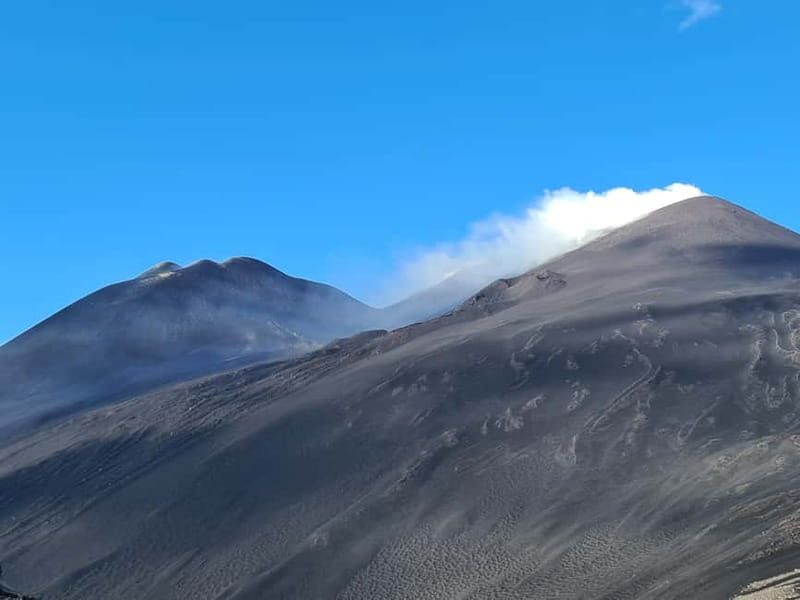
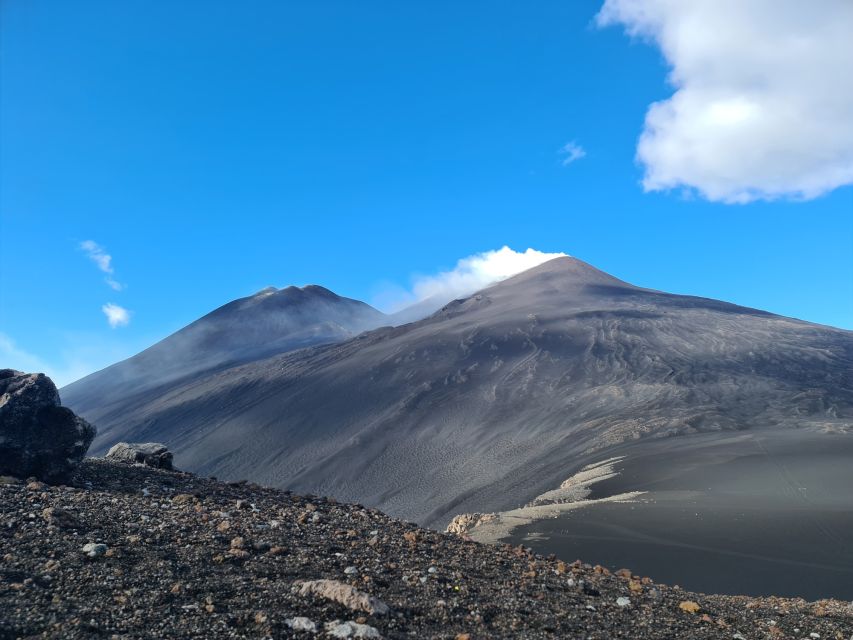
From there, you follow a mountain trail around 2900 meters. You’ll be walking on ground shaped by volcanic activity, with areas framed by lava and volcanic sand along a rift linked to the 2002 eruption. This is one of those places where you can feel why people treat Etna like a living laboratory rather than a static mountain.
You can also read our reviews of more tours and experiences in Linguaglossa.
The 2002 eruption craters: what you actually walk through
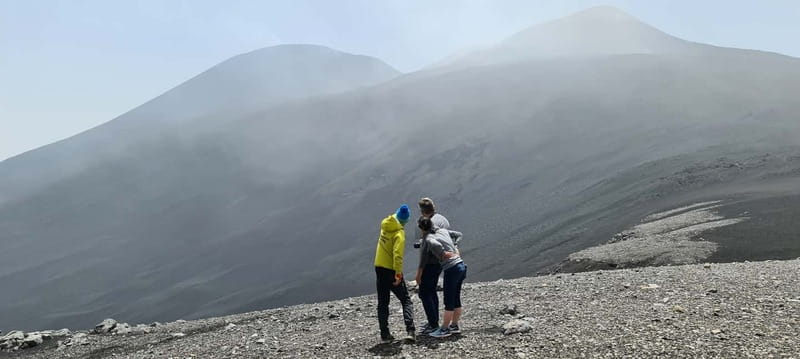
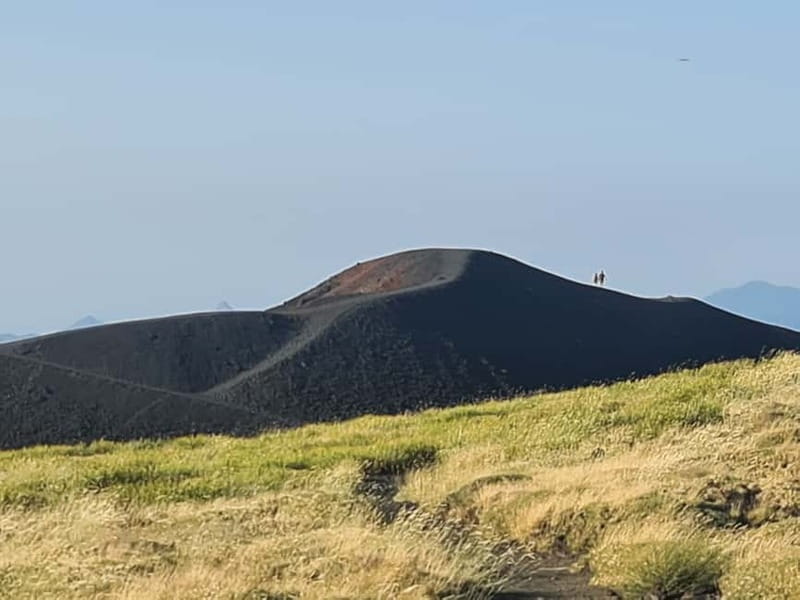
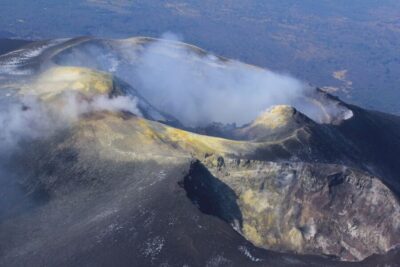
One of the best parts is how the Craters of 2002 stop is more than a photo stop. You’ll reach a high mountain slope where you can walk near the craters’ edges and see how a volcano is created, not just described. The route takes you through an area tied to the rift formed during that eruption, so the terrain you’re standing on has a direct story.
As you move along, your guide helps you identify minerals by their colors, including yellow to red to blue tones. This detail matters because it gives your eyes a job. Instead of only looking at dramatic scenery, you start learning to recognize features in the volcanic material.
If you’re coming to Etna because you like nature and dramatic terrain, this works even if geology isn’t your main hobby. You’ll get enough explanation to understand what you’re seeing, and the walking segments are short enough to keep the energy up.
Riding up by 4×4: why the vehicle time is part of the value
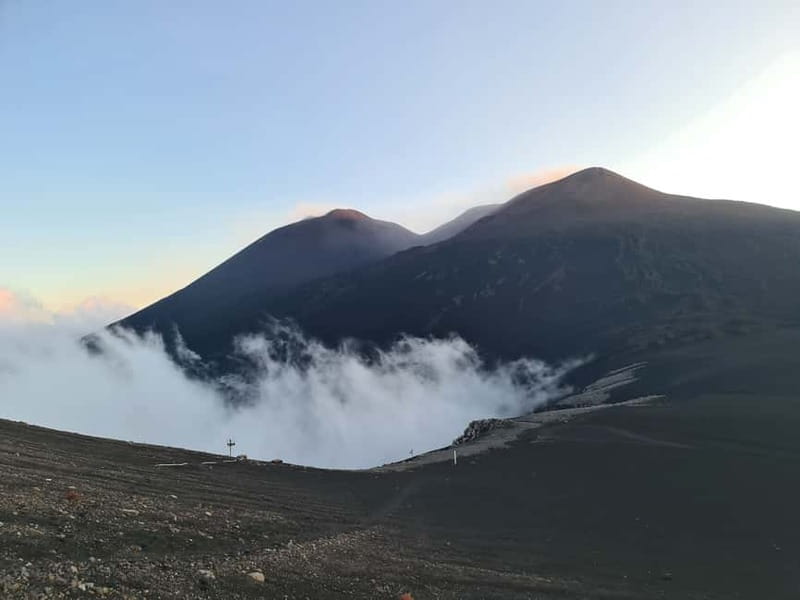
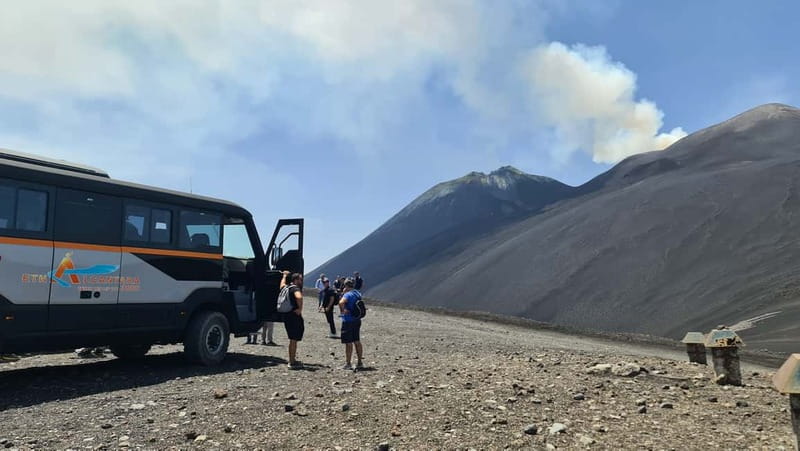
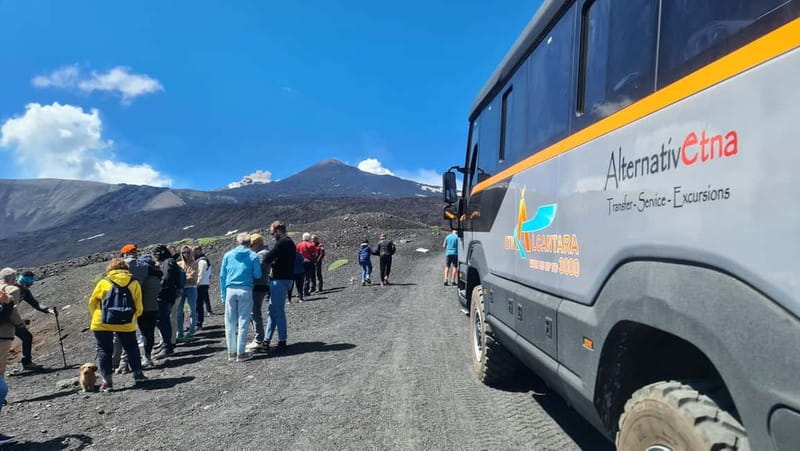
This is an ideal Etna outing if you want to go high without losing an entire day. The tour explicitly uses off-road vehicles, including a 4×4 bus style ride to reach the high slopes. That transportation choice is practical. It shortens the effort, but it also puts you in the right position to explore the crater area and the summit-zone viewpoints.
The ride is built for rough terrain, and it helps you arrive where the volcanic terrain looks most intense. One of the common surprises at Etna is how quickly the environment changes with altitude. Having the vehicle do the heavy lifting means you spend your energy where it counts, at the crater edges and viewpoints, not on long approaches.
The view payoff at 2900m, and what affects it
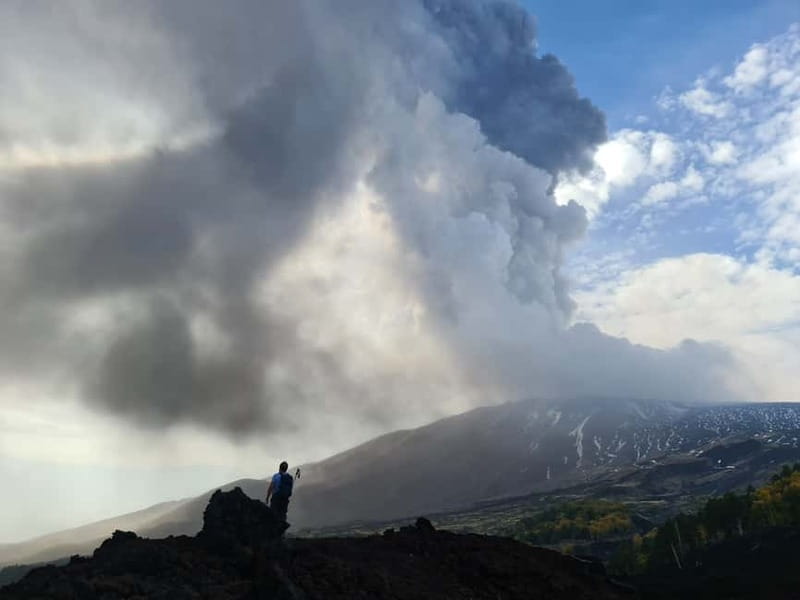
The trip’s big visual payoff is the stop at a viewpoint around 2900m. From there, the panorama is meant to cover a lot of ground: the Gulf of Taormina, the Bay of Naxos, and, on a clear day, the Straits of Messina and Calabria, plus the Nebrodi mountain range up to Rocca Novara.
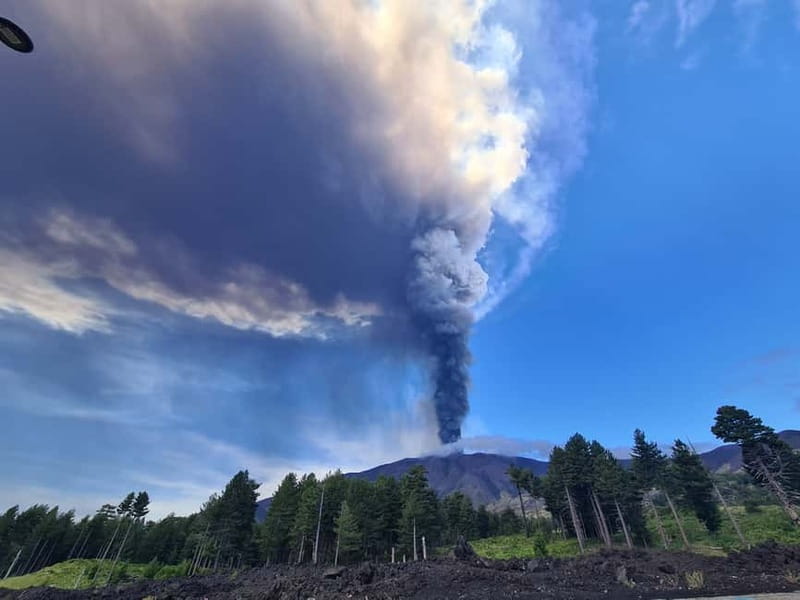
The tour also highlights the idea of a roof-of-Sicily perspective, and it mentions that in clear conditions you can see features linked to the area including the Lion and the Bove valleys. This is where weather matters. Visibility can change based on conditions or volcanic activity, so you should treat the farthest horizon as a bonus, not a guarantee.
A practical tip: if you arrive and the air is murky, don’t mentally write off the tour. You can still enjoy the lunar-looking ground made by multiple lateral eruptions along Etna’s north face. Even with weaker visibility, the textures and color contrasts in the volcanic material are often still impressive close up.
The short climb to the observatory area
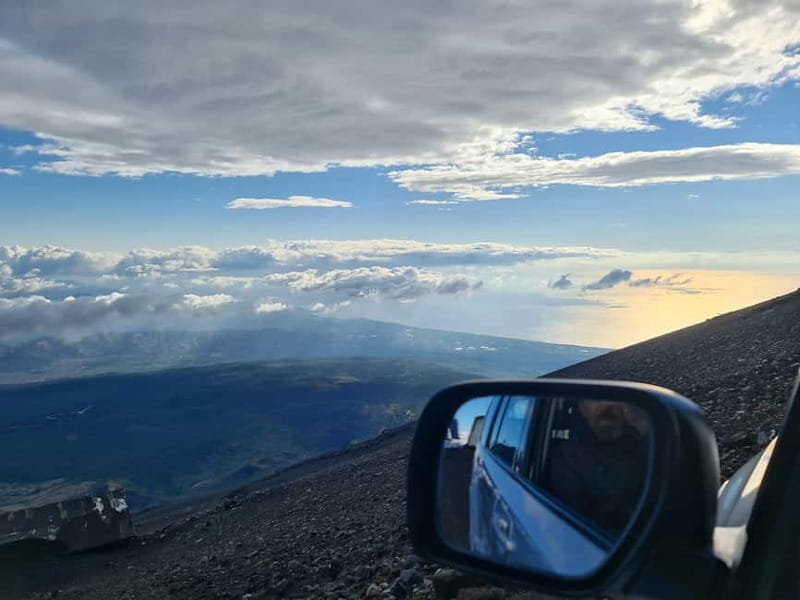
After the earlier crater segment, you continue by off-road vehicles up to an area where the North-East crater dominates, the one associated with the volcano observatory location. Then you start an ascent by foot on a path surrounded by volcanic scoria and bombs.
The total climb mentioned is about 300 meters to reach the viewpoint at 2900m. It is not described as a long trek, but at altitude, even a short climb can feel more serious than you expect. This is why the operator lists health and mobility concerns for certain travelers, including people with heart problems, respiratory issues, high blood pressure, and pregnancy, plus restrictions like no babies under 1 year.
If you want to pace it well, bring trekking shoes and take it slow on the way up. The walk is part of why the views feel earned.
How the guide style shapes the experience
A major reason this tour scores highly is the guide work. I’ve seen this pattern in comments about guides like Davide, who made a real effort to explain in English when others on the tour may have been more Italian-focused. That matters because volcanic terrain is easier to enjoy when you can follow what’s being pointed out without mental translation.
Guides also tend to give you time between segments to take photos and soak in what’s around you. The trip stays short, but it doesn’t rush so hard that you miss the meaning of each stop. In a similar way, Linda is specifically mentioned as informative and friendly, which is the right combination for a topic like Etna where questions are common.
What to wear and bring for 2900m conditions
This is not a flip-flop tour. The basics are clear: bring sunglasses, water, and a windbreaker. Weather up top can be colder and windier than you’d guess, so you’ll want a layer you can actually feel comfortable in after the vehicle ride and once you start walking.
Also follow the footwear rules: trekking shoes are required, and sandals or flip-flops are not allowed. You’ll be walking on volcanic ground, with uneven surfaces that are not friendly to soft soles.
If you’re the type who runs cold, treat the windbreaker as non-optional. That small change makes the trip feel smoother and more enjoyable, especially during pauses at viewpoints.
Timing, group vibe, and how long it really lasts
The tour duration is listed as 2.5 hours, with starting times depending on availability. That length is a sweet spot for Etna. It gives you a high-altitude taste of the volcano and the crater area, without turning into an all-day commitment.
Group size is not explicitly stated in the provided details, but comments about a small group vibe show up. The practical takeaway for you is that you should be ready to follow the guide closely and move as a unit, especially when walking near crater edges.
This is also a “plan your day around it” outing. Lunch isn’t included, so decide where you’ll eat before or after. Since it ends back at the meeting point, it’s easy to build the rest of your itinerary without a complicated return plan.
Price and value: is $77.03 worth it?
At $77.03 per person for a 2.5-hour trip, the value hinges on what’s included. You’re paying for two big things: a licensed volcanological guide and round-trip transportation by 4×4 bus. For Etna, access to the right terrain at altitude is the expensive part, and short tours add value by compressing logistics.
If you compare this to arranging your own transport and then trying to get to the crater zones safely and efficiently, the included guide becomes a major part of the bargain. You’re not only buying views, you’re buying guided interpretation, including mineral spotting and explanation of the 2002 eruption rift.
It’s not the cheapest way to visit Etna. It is a good way to get a lot of learning and altitude in a short timeframe, which is exactly what many people want when they have only a few hours to spare.
Who this Etna North tour fits best
I think this tour is a great fit if:
- you want Etna at altitude without a full-day hike
- you like nature and dramatic volcanic terrain
- you want an education component, especially how to read volcanic features
It may not be a good fit if:
- you have health conditions like heart problems, respiratory issues, pregnancy, or high blood pressure
- you are not comfortable with cold and wind at 2900m
- you want a long summit day, because this trip is designed as a shorter high-area excursion
It can also work for families, since one comment describes it as doable with children around early school age, with short walks and the 4×4 doing the heavy lifting. Still, you should judge based on your child’s comfort with uneven volcanic ground and colder temperatures.
Final call: should you book Etna North 2900m & Craters of 2002?
If you want a compact, high-impact Etna experience, I’d lean yes. The combination of 4×4 access, crater-edge walking tied to the 2002 eruption, and a licensed volcanological guide makes this feel efficient and meaningful. It’s also a good choice if you’re traveling with limited time but still want more than a quick viewpoint.
I’d think twice if you’re very sensitive to altitude discomfort or you know you’re likely to feel cold and wind easily. And if your goal is the absolute top summit experience, this one is built around the north-side high areas and viewpoints at around 2900m, not an all-day summit push.
If you do book it, wear real trekking shoes, pack a wind layer, and show up ready to learn what you’re standing on. Etna is one of those places where the details make the experience, and this tour gives you plenty of them.
FAQ
Where does the tour start and end?
You start at Piano Provenzana. The activity ends back at the meeting point, so you do not have to arrange a separate return.
Do I need to exchange a voucher before the tour?
Yes. You must exchange your voucher at the ticket counter before the tour begins.
How long is the excursion?
The duration is listed as 2.5 hours, with starting times depending on availability.
How do you get to the 2900m area?
The tour uses round-trip transportation by 4×4 bus, taking you to the high slopes and closer to the crater zone.
Is lunch included?
No. Lunch is not included.
What should I bring and what is not allowed?
Bring sunglasses, water, and a windbreaker. Alcohol and drugs are not allowed, and sandals or flip-flops are not allowed.
What languages is the guide available in?
The live tour guide is available in English, French, and Italian.
Who should not book due to health concerns?
It is not suitable for babies under 1 year, and it is also listed as not suitable for people with heart problems, respiratory issues, pregnancy, or high blood pressure.
More Tour Reviews in Linguaglossa
Not for you? Here's more nearby things to do in Linguaglossa we have reviewed
Mount Etna Volcano Tours, compared.
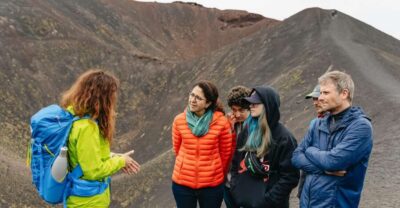 ★ 4.8Catania: Mount Etna Morning or Sunset Day Trip with TastingFrom $704,028 reviews
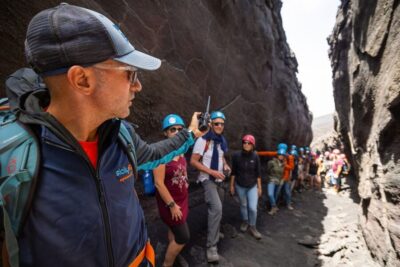 ★ 4.7Mount Etna: Guided Volcano Summit Hiking Tour with Cable CarFrom $1243,784 reviews
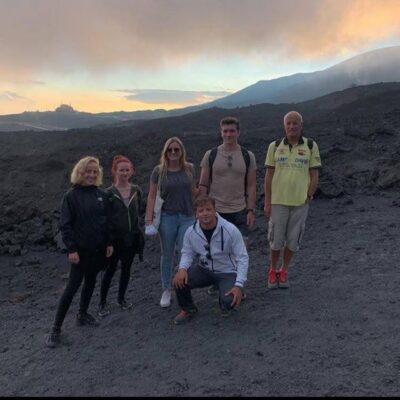 ★ 4.8Catania: Sunset Jeep Tour of Mount Etna and Lava Flow CavesFrom $712,113 reviews
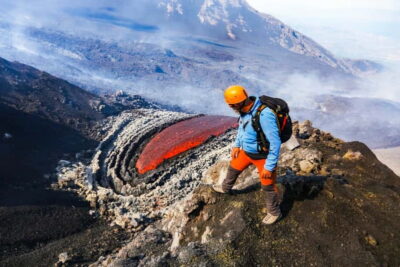 ★ 4.7Mount Etna: Trek to 3000m with cable car and jeepFrom $621,978 reviews
 ★ 4.8Mount Etna: Summit Crater Trek with Cable CarFrom $771,875 reviews
 ★ 4.8Etna and Alcantara Gorges Full-Day Tour with LunchFrom $1051,766 reviews
 ★ 4.3Mount Etna: Roundtrip Cable Car and 4×4 Bus TicketFrom $971,602 reviews
 ★ 4.7Etna Volcano: South Side Guided Summit HikeFrom $671,545 reviews