
Reviewed · MOUNT ETNA VOLCANO TOURS
Mount Etna: Central Crater Guided Hike for Advanced Hikers
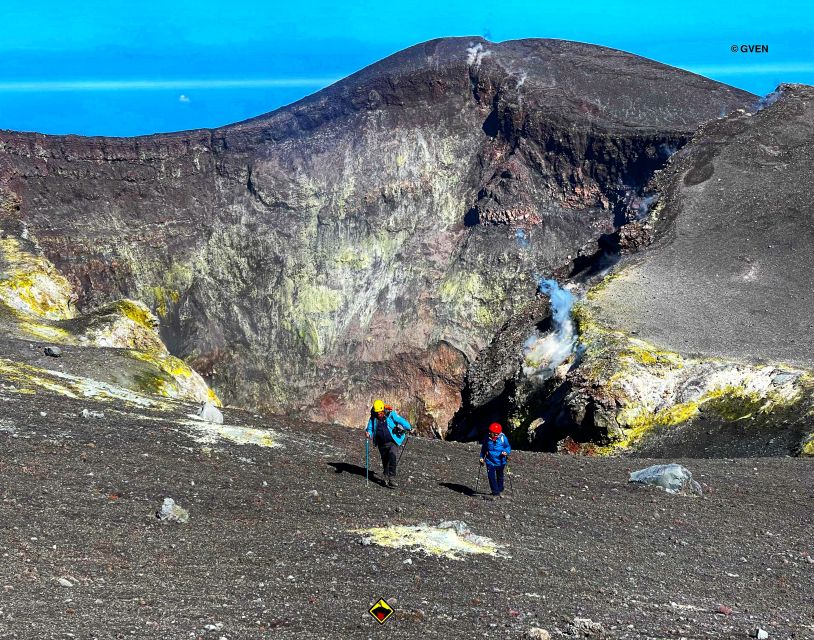
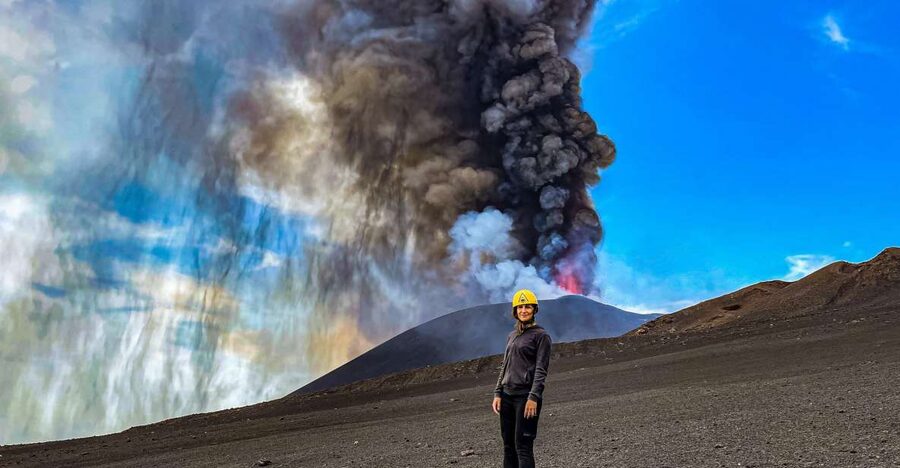
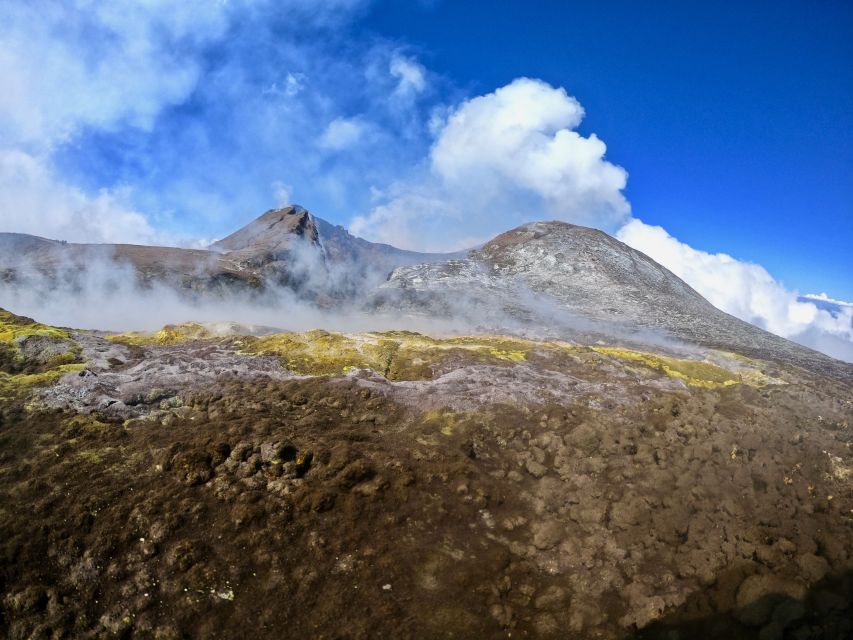
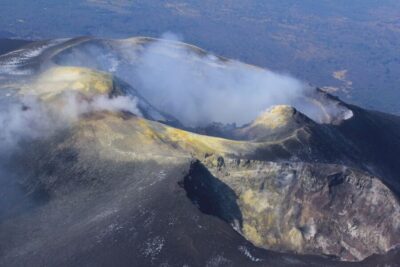
Etna feels close enough to touch. This Central Crater guided hike climbs from about 1,800 m up to the main crater area near 3,315 m, where gas vents, fumaroles, and colored sublimates make the summit feel alive and active. I love the chance to reach the true high point and stand right at the edge of Etna’s active summit craters. I also love that your guide explains what is happening as you go, so the moonscape is more than just scenery. One consideration: the long descent drops roughly 1,500 m, and it can be tough on knees and other joint issues.
The experience runs on a small group format, capped at 10 people, and it is built for expert-level hikers who are used to altitude and sustained uphill travel. You get practical gear like trekking poles, protective helmets, warm jackets, and a backpack, which matters when conditions are cold and windy near the top. Still, you should plan for an intense day even if the “up” feels manageable for you.
Visibility and comfort depend on weather and volcanic gases, and the crater-edge walking can trigger vertigo for some people. The rooftop view of Sicily only happens if conditions cooperate, so I recommend coming ready to enjoy the summit even if the sky is not perfect.
Key highlights worth knowing before you go
- Central Crater summit access at about 3,315 m, not just a viewpoint
- Licensed volcanology explanations as you observe gas emissions and fumaroles
- A 4×4 start that lifts you close to the hiking line, then you earn the summit on foot
- A moonscape hike route with volcanic slag and large bombs underfoot
- Downhill challenge with a long drop that can be harder than the climb
- Science stop for lunch near the Volcanological Observatory, then a NE-side sandy channel descent
Etna’s Central Crater hike: the real deal, not a casual stroll
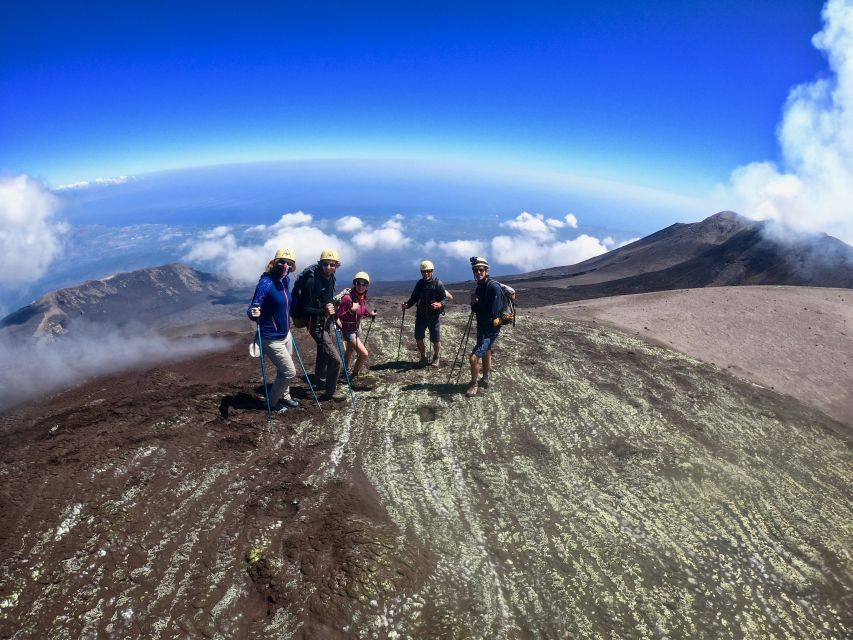
This is the kind of Etna outing that fits “advanced hiker” energy. You start at a meeting point around 1,800 m, then you do a mix of vehicle transfer and steep high-altitude walking. The route is designed so you can actually reach the edge of the Central Crater and spend time there, rather than just viewing it from far away.
What makes it especially compelling is that the summit is not only about height. You are there to watch volcanic activity in action, including gas emissions and fumaroles, and to hear scientific context about how the volcano evolves. When you combine altitude, scale, and live volcanic phenomena, it stops being a “photo stop” and turns into a focused experience.
And yes, the down part is serious. The hike includes a big negative altitude change of about 1,500 m. Even strong hikers often feel it more on the way down because your knees are absorbing gravity for a long time.
You can also read our reviews of more tours and experiences in Linguaglossa.
Price and what your €130.28 covers (and what it does not)
The listed price is $130.28 per person for a 5-hour program window, with starting times depending on availability. That price covers the volcanological guide and the guided hike, plus several items meant to keep you safe and comfortable at altitude: trekking poles, protective helmets, trekking shoes and extra socks, warm jackets, and a backpack.
What is not included is where your budget can change quickly:
- The 1-way off-road vehicle transfer costs 50€ per person, paid on the spot.
- Parking costs 3€ for the whole day, paid on the spot.
- Lunch and water are not included.
- There is an optional off-road vehicle descent (from about 2,800 m to 1,800 m) for 20€ per person, paid on the spot, if you want to reduce the final strain.
So what is the value? If you are comparing it to a basic Etna “see a crater” day, this is better value than it looks at first glance because the guide plus safety gear plus high-altitude hiking time are included. But if you know you will add the transfer and lunch on your own, treat your total day cost as higher than just $130.28. That said, the summit access and the volcanology-focused guidance are the core reason to book.
Getting to the hike start: from Chiosco Bar Mareneve to 2,825 m
Your meeting point is Chiosco Bar Mareneve di Ferraro Giuseppa, not the other Etna Nord version. It is near the ski chairlift used in winter, and it is the second house of the four in the parking lot. That detail matters because on busy days you can easily walk to the wrong building and lose time.
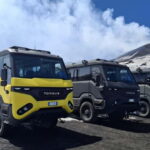
Once you meet up, the day starts with a 30-minute jeep or SUV transfer. The route uses a panoramic road on the north side of Etna and runs about 8 kilometers, taking you from roughly 1,800 m up to about 2,825 m. This is a smart design for advanced hikers, because it gets you high enough to make the summit portion realistic without turning the entire day into a slow slog.
Expect some waiting. One review experience noted lines for the 4×4 vehicles up and down. That means I would not plan to be in a rush that day. Build in slack.
Stop by stop: what you actually do on the mountain
This hike is built around multiple stops that mix movement, guided explanation, and brief recovery moments. Here is how the flow typically feels, with the key altitude and terrain cues you care about.
Stop 1: Meeting at Chiosco Bar Mareneve
You gather here and get the day organized. Since the hike starts at high altitude already, treat this as the moment to confirm your layers, eat something if you need it, and make sure your packed lunch and water strategy is ready.
You can also read our reviews of more hiking tours in Linguaglossa
Stop 2: 4×4 transfer, then you transition onto the crater edge route
That vehicle segment gets you up to about 2,825 m. From there, you begin a 5 km uphill walk on volcanic material. You should expect terrain that is not smooth hiking trail. The path is described as being surrounded by volcanic slag and large bombs, so footing can be uneven.
The uphill altitude gain is roughly 490 m from the transfer point to the crater edge near 3,315 m. For many people, the uphill is demanding but straightforward compared to the descent.
Stop 3: Cratere Centrale dell’Etna, where the summit becomes the classroom
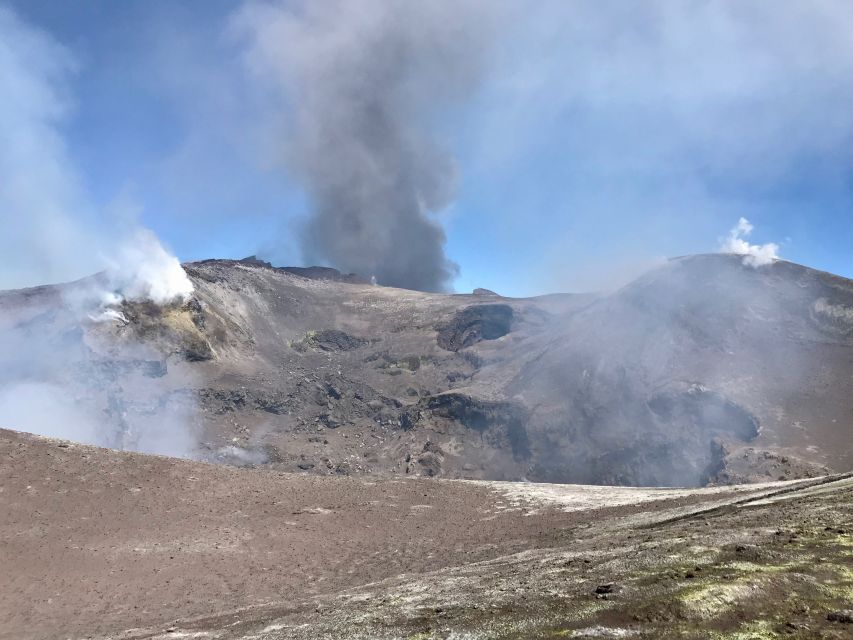
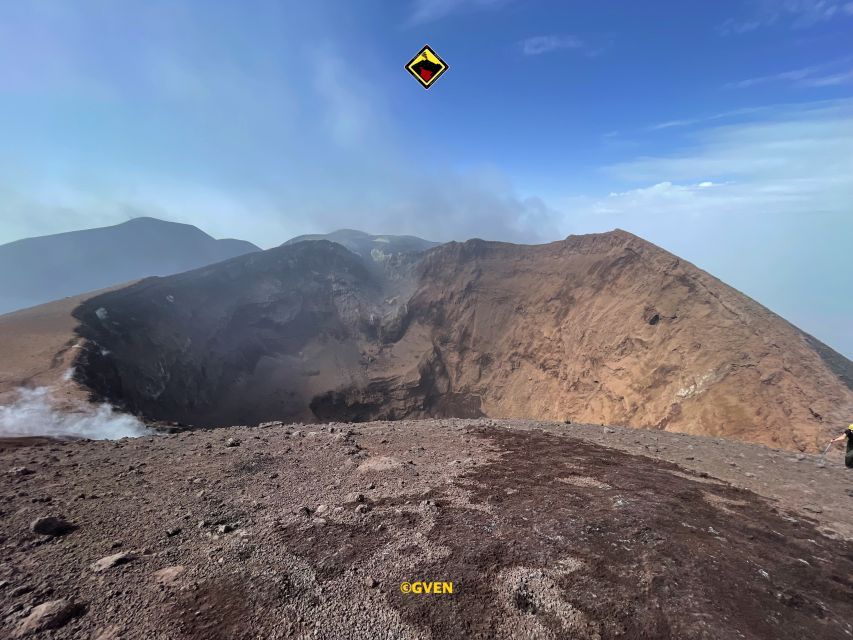
This is the centerpiece. You reach the edge of the great Central Crater of Etna, and then you spend real time there, including a guided tour, photos, and structured observation.
What you are there to notice:
- Gas emissions coming from active areas
- Low- and high-temperature fumaroles
- The colors of sublimates (the mineral-like deposits that form as gases interact with surfaces)
If conditions allow, you also get that rooftop view of Sicily. But the tour guidance is clear that volcanic gas emissions and weather can limit what you see. So I suggest not pinning your joy on a single “perfect panorama” outcome. The summit phenomena are the point.
Also be aware: walking along crater edges can cause vertigo. If you know you are sensitive to heights, this is exactly where that risk can show up.
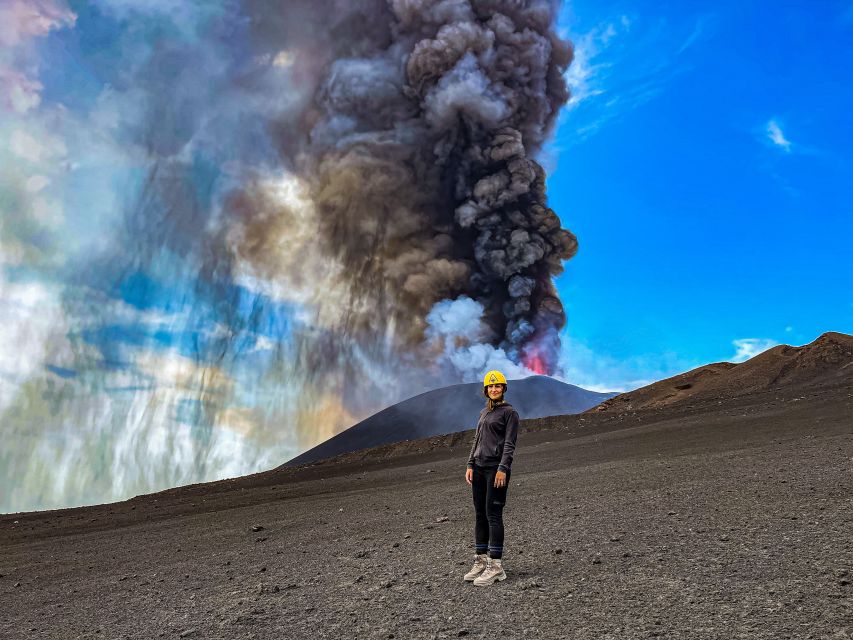
A safety note from real outings: one group experienced higher-level explosions while on the summit, and the guides took them down quickly and safely. That tells me two things. First, your guide is watching conditions continuously. Second, you should be ready for the day to adapt based on volcanic activity and local rules.
Stop 4: Piano delle Concazze, a longer break with guided context and free time
After the summit crater time, the route moves to Piano delle Concazze. This stop includes a break, guided tour, free time, and scenic views on the way. It is a place to regroup and get your breathing and legs back under you.
This part matters because you are about to shift from summit intensity into a long day arc that ends far lower. Even if you feel strong at the top, this is where you should start pacing for the whole descent.
Stop 5: Arrivo ski-lift Anfiteatro
Next you reach Arrivo ski-lift Anfiteatro, with a guided tour, a walk, and scenic views on the way. The ski-lift reference helps you picture that this is still “mountain terrain,” not a gentle path through forest.
From a comfort standpoint, plan for cold. One experience described the summit period as biting cold and extremely windy. You get warm jackets included, but wind is wind, so your windbreaker is part of the plan.
Stop 6: Piano Provenzana, the turning point to the endpoint
Piano Provenzana is where the day settles into a final phase. You get photo moments, a visit with guided context, plus a shorter walk and scenic views. The endpoint is the meeting point area again later, but this is the last major “mountain living room” stop where you feel like you are finishing your journey.
Stop 7: Back at Chiosco Bar Mareneve
You wrap back up at the start location. If you choose the optional transport shortcut for the final descent segment, ask your guide during the day. The optional descent mentioned is an off-road ride from about 2,800 m back toward 1,800 m, paid on the spot.
The descent reality: why the downhill can feel harder than the climb
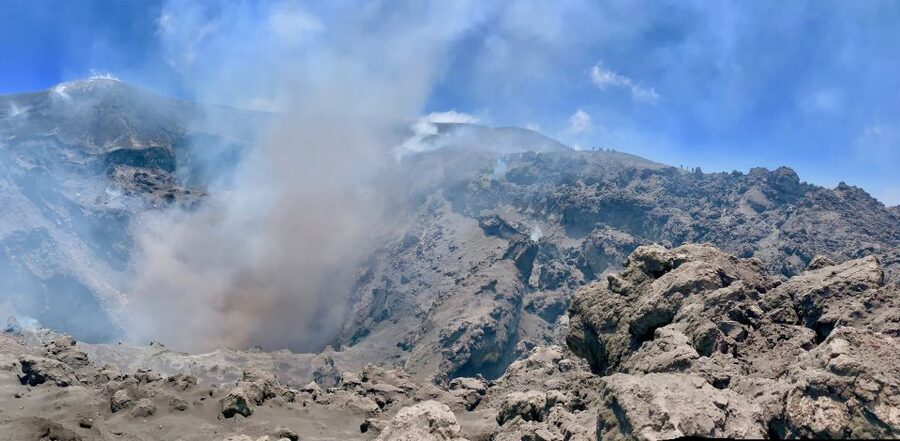
The climb includes about 5 km uphill, but the total trek is about 12 km round trip, with about 7 km downhill. The big emotional shift is that the negative altitude difference is about 1,500 m, and that can be harder than the uphill for many bodies.
This is not just a comfort issue. The tour specifically warns that a long descent may be hard for people with joint problems, and especially knee problems. If your knees are iffy on steep stairs at home, this is where you should take that seriously.
One smart takeaway from the route design is that you are descending on volcanic ash and slag, which can be loose. That means balance matters as much as muscle strength.
Lunch at the Volcanological Observatory and what to pack
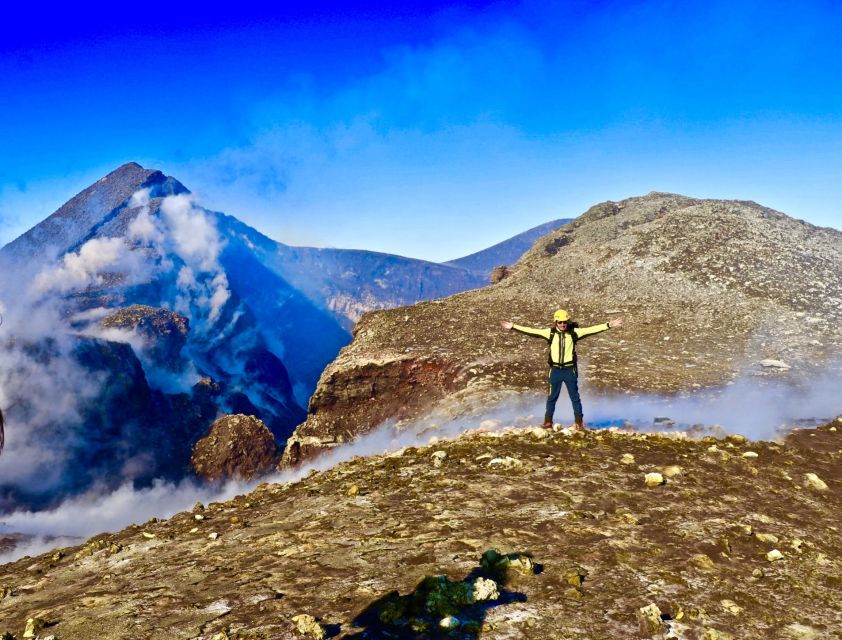
There is a lunch stop at the base of the Volcanological Observatory. Importantly, lunch is not included. So when you plan your day, treat the lunch stop as a scheduled break where you eat your own packed lunch.
Water is also not included. You will want enough water for a long high-altitude day. If you are planning to move steadily for 5 to 6 hours, plan around a realistic water routine.
Given that warm jackets are included, I would still pack a light strategy for wind and rain. The tour asks you to bring:
- Windbreaker
- Rain gear
- Gloves
- Long pants
- Hat
- Sunglasses
- Weather-appropriate clothing
The ground can be abrasive, so footwear is a big deal.
What gear you get vs what you must bring
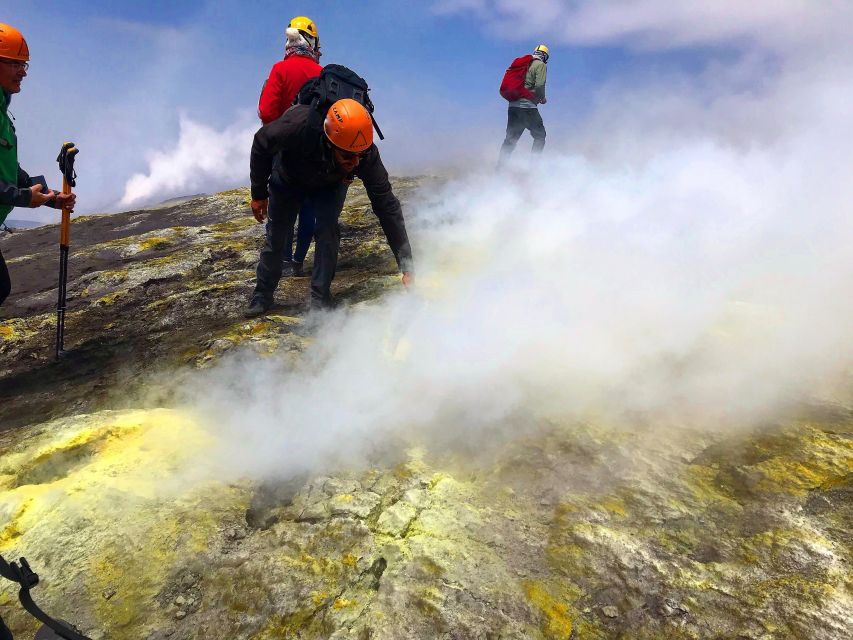
Here is the balance that I think helps most hikers: the tour supplies the “big-ticket safety and cold-weather items,” and you supply the rest of your personal comfort.
Included gear:
- Trekking poles
- Protective helmets
- Trekking shoes and extra socks
- Warm jackets
- Backpacks
- Guided hike with a volcanological guide
What they ask you to bring:
- Hiking shoes
- Packed lunch
- Food and drinks (plus snacks)
- Water
- Windbreaker
- Rain gear
- Gloves, hat, sunglasses
- Long pants
- Weather-appropriate clothing
That overlap can feel confusing because trekking shoes are listed as included and hiking shoes are also in the bring list. My practical advice: bring your own proper hiking footwear anyway. At this altitude, you want familiar fit and traction.
Not allowed items:
- High-heeled shoes, sandals, or flip flops
- Baby strollers
- Luggage or large bags
- Short skirts, sleeveless shirts, slippers
- Umbrellas
This is mostly about safety and mobility. On volcanic ground, you need secure footing and freedom of movement.
The guide factor: science, pace, and safety in real time
The experience is led by Guide Vulcanologiche Etna Nord, and the day is explicitly guided by a volcanology professional. In practice, this is the difference between seeing craters and understanding what you are seeing.
From real guide examples, you might be led by people like Edo, Vincenzo, or Daniele. The common thread in those accounts is strong passion for Etna and the ability to keep the group moving safely.
Two guide skills I think you benefit from:
- Adjusting pace so you do not get left behind. One experience noted the guide kept an older participant comfortable without slowing the group down to a crawl.
- Watching volcanic conditions and responding quickly. If activity intensifies near the summit, guides can adjust the plan to keep you safe.
Even the structure supports this. The itinerary includes guided time at the crater edge plus multiple checkpoints later. It is not just “walk until you’re tired.”
Who should book this (and who should skip it)
This is not for casual walkers. The trek is described as for trained hikers, and you should expect fatigue symptoms due to high altitude.
It is not suitable if any of the following apply:
- Pregnant women
- People with back problems
- People with mobility impairments
- People with heart problems
- People afraid of heights
- People with vertigo
- People with respiratory issues
- People with epilepsy
- People without experience
- People with pre-existing medical conditions
- People with high blood pressure
- People with low level of fitness
If you are someone who hikes regularly, has decent stamina, and your knees tolerate steep downhills, you are the target audience. I also think this is a great match for travelers who love hands-on science, not just landmarks.
And it helps if you can accept that weather and volcanic gas decide what kind of view you get. You go for the active crater phenomena first.
Value check: is $130.28 worth it?
I usually judge hikes like this by two things: what you get that is hard to DIY, and what extra costs can surprise you.
What is hard to DIY:
- Summit crater access and timing under an active volcano environment
- Explanations tied to what you see, plus structured stops
- Helmets, trekking poles, and other safety gear designed for this terrain and cold conditions
- A route that includes the Central Crater and pushes into the NE-side sandy channels
What can add to the cost:
- Off-road transfers you pay on the spot
- Parking
- Lunch and water
So is it worth it? For advanced hikers who want the real high-altitude crater experience and are comfortable with a long, serious descent, the included guide and equipment make the base price feel more reasonable. If you are sensitive to knee stress or you need an easy walking day, no. Save your energy and choose a gentler Etna option instead.
Quick practical tips that improve your day
- Wear layers you can strip quickly. Wind can swing, and you will warm up on the uphill.
- Treat the summit time as “slow and watchful,” not “power hiking.” You will want to stand still for gas and fumarole observation.
- Pack lunch and bring water. Lunch is scheduled, but it is not provided.
- Plan for waiting if 4×4 vehicles are busy. Build margin before and after the vehicle legs.
- If you know you get vertigo near heights, do not gamble. Crater edges are part of the route.
Should you book this Mount Etna Central Crater hike?
Book it if you are an advanced hiker, you can handle high altitude and a steep, long downhill, and you want your Etna day to be guided by volcanology explanations at the actual crater edge near 3,315 m. The small group size and the summit-focused stops add real value, and the gear support helps you stay safe in cold, windy conditions.
Skip it if you have knee or joint issues, vertigo, fear of heights, respiratory or heart concerns, or if you are not used to sustained mountain walking. This is an experience built for trained hikers, and the volcano punishes hesitation.
If you fit the target profile, this is one of those rare days where the mountain feels active under your feet, and the science makes the moonscape make sense.
More Hiking & Trekking Tours in Linguaglossa
More Tour Reviews in Linguaglossa
Not for you? Here's more nearby things to do in Linguaglossa we have reviewed
Mount Etna Volcano Tours, compared.
 ★ 4.8Catania: Mount Etna Morning or Sunset Day Trip with TastingFrom $704,028 reviews
 ★ 4.7Mount Etna: Guided Volcano Summit Hiking Tour with Cable CarFrom $1243,784 reviews
 ★ 4.8Catania: Sunset Jeep Tour of Mount Etna and Lava Flow CavesFrom $712,113 reviews
 ★ 4.7Mount Etna: Trek to 3000m with cable car and jeepFrom $621,978 reviews
 ★ 4.8Mount Etna: Summit Crater Trek with Cable CarFrom $771,875 reviews
 ★ 4.8Etna and Alcantara Gorges Full-Day Tour with LunchFrom $1051,766 reviews
 ★ 4.3Mount Etna: Roundtrip Cable Car and 4×4 Bus TicketFrom $971,602 reviews
 ★ 4.7Etna Volcano: South Side Guided Summit HikeFrom $671,545 reviews
Browse the lists this tour appears in