Reviewed · SICILY
At Casa Di Cilla
Sicilian cooking starts before the kitchen. You meet near Porta Carini and head into the Capo market, choosing ingredients that turn into your lunch. I especially love the hands-on pace, you shop as a group, then you actually cook under Chef Marco’s direction.
The best part for me is the way the day connects food with place, the market feels like a lived-in street scene, and the cooking comes with clear explanations you can use again later at home. I also like that the group stays small, with a max of 10 travelers, so you get real attention instead of watching from the sidelines.
One possible drawback: it takes most of your morning into early afternoon, so plan your other meals accordingly, and wear shoes for walking through the market.
Key things I think you’ll care about
- Capo market shopping first, so you understand what you’re cooking before you cook it
- Chef Marco’s instruction is hands-on, not a demo with a side of food
- Small group size (up to 10), which helps everyone participate
- A menu you shape together, from pasta to a main of fish or meat
- Classic Sicilian desserts, often including cannolo
- A home-kitchen setting near Piazza Politeama, which keeps the experience relaxed and personal
Porta Carini and the Capo Market: Your ingredient hunt in real Palermo
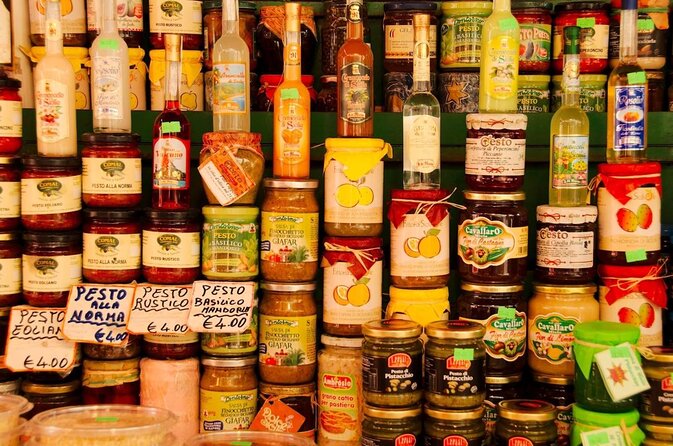
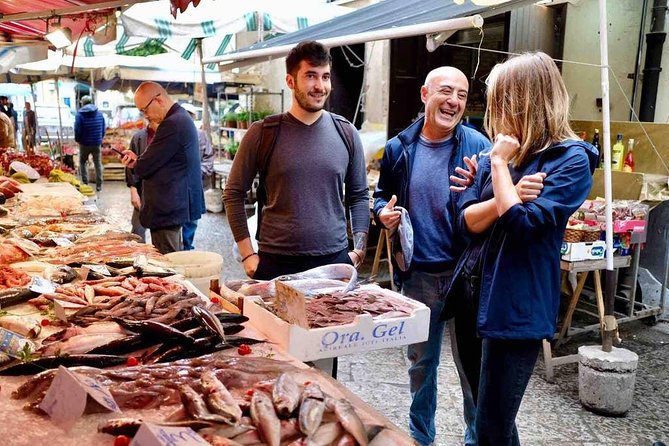
This class begins where Palermo’s food pulse is loudest, near Porta Carini, the gateway to the Capo market. From the start, you’re not just sightseeing. You’re walking the alleys, looking at stalls packed with produce and pantry goods, and learning how to pick what matters for the dishes you want to make.
What makes this market time so useful is that it sets the tone for the entire day. Instead of waiting to learn a recipe later, you’re already making decisions. You’ll buy what the menu calls for, and you’ll see how many choices exist before you commit. That’s where the locals perspective kicks in.
Also, the vibe is unmistakably multicultural. The market feels like a mix of languages, colors, and vendors, and it can remind you of the souks you see in other parts of the Mediterranean. If you like food travel that goes beyond museums, this is a strong start.
Practical tip: go with comfortable shoes. Even with a small group, you’re walking through tight market lanes and stopping to look closely at ingredients.
You can also read our reviews of more tours and experiences in Sicily.



Picking your menu together: pasta first, fish or meat, then dessert
One of the smartest parts of Casa Di Cilla is that your cooking plan isn’t fixed on day one. You go shopping for a menu you choose with Chef Marco. The sample structure is straightforward and classic: pasta first, then a typical Sicilian starter, then a second course that can be fish or meat, and a dessert such as cannolo or another Sicilian sweet.
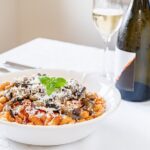
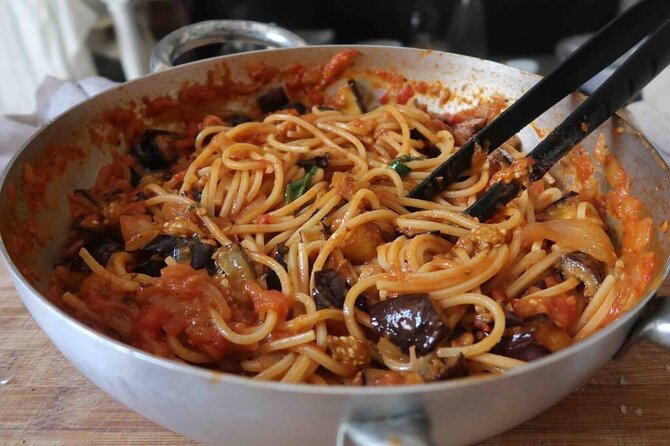
You might end up cooking dishes like ravioli, including pesto-stuffed versions, and you may make tomato-based sauces and Sicilian vegetable components like caponata. Several groups also describe hands-on work with stuffed seafood dishes, including swordfish preparations and other fish options. If you want a clear outcome, think multi-course lunch built from scratch.
Here’s the value behind this menu style: when you shop with purpose, you learn the logic of Sicilian cooking. You’re not memorizing steps. You’re building the meal from ingredients, and you’ll remember what you chose and why. That makes it easier to repeat at home, even if you adjust for what you can find locally.
Food preference note: Chef Marco asks about what you like to eat. One group even shared that he planned around unusual food allergies. If you have dietary restrictions, tell the organizer when booking, so the menu can match your needs.
Chef Marco Cillari’s home kitchen near Piazza Politeama
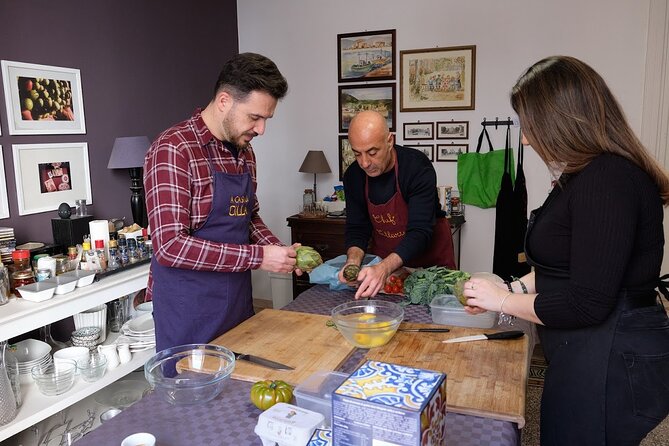
After the market, you head to Chef Marco’s home, located only a few minutes from Piazza Politeama. This shift matters. You go from public street life into a private kitchen setting where everyone can work without feeling rushed.
The home-kitchen format also changes how you learn. Instead of watching a workstation through glass, you’re hands-on at the counter. Many people describe a kitchen that feels clean, organized, and set up for real cooking, which helps if you are not used to “live” instruction.
Chef Marco’s teaching style comes through clearly in what people mention most: patient guidance, lots of laughs, and quick technique tips. You might get practical instruction on knife skills and how to manage tasks without chaos. More than one guest also notes he keeps the mood lively while still correcting small mistakes.
This is the kind of class where you walk away knowing what to do next time, not just knowing how the final plate looks.
Hands-on techniques you’ll actually use, from knife work to pasta rules
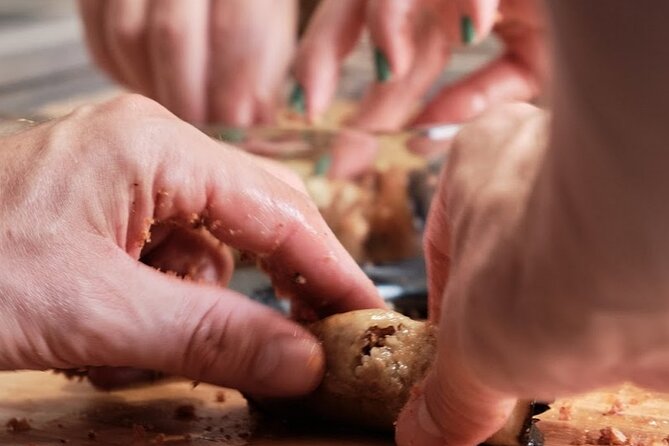
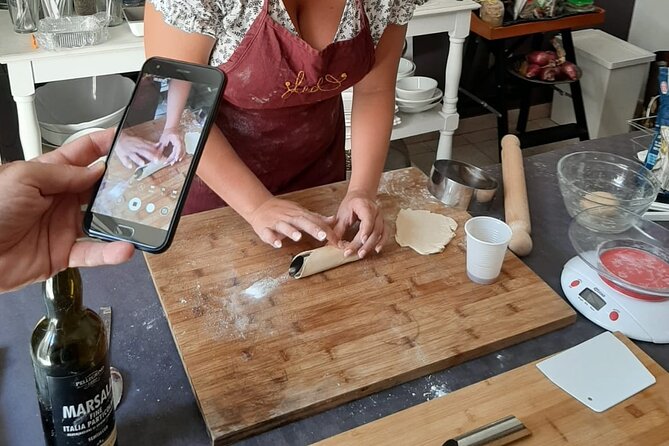
If you love cooking, this is where it gets fun. The class is described as participatory, and groups highlight that everyone in the group gets involved in real steps, not just stirring sauce in the last five minutes.
Knife skills come up repeatedly. You may be taught how to handle sharp tools safely and efficiently, with enough structure to help you improve quickly. If you’re nervous about cooking in a class setting, you should feel better here because the instruction is described as both strict when it needs to be and playful when it can be.
One detail that stuck with many guests is the lesson about pasta handling. You’ll hear a clear rule around shaping and cutting, with one recurring joke that you really should not cut your pasta. It’s funny, but it points to something practical: pasta shape and cooking behavior matter. When you cook by the “why,” your meal turns out better.
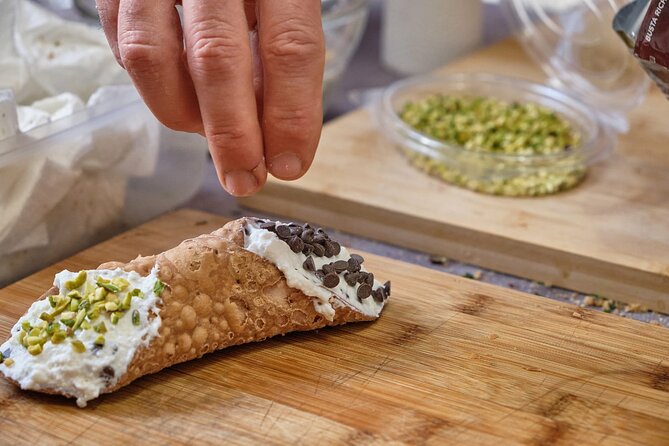
You might also use techniques tied to specific dishes, such as rolling, stuffing, sauce-building, and managing bake or pan steps for second courses. Groups mention learning how to make cannoli from scratch, which is not trivial, and learning how to prepare stuffed dishes with strong flavor combinations.
The bottom line: you don’t leave with a vague memory. You leave with skills.
What you eat: classic Sicilian plates, plus some smart cross-cultural touches
The meal is a big reason to book. You’re not just tasting a few bites. You’re cooking a multi-course lunch, and you sit down to eat what you made.
The sample structure is classic Sicilian, with pasta first, a typical starter, a second course that can include fish or meat, and dessert such as cannolo. Guests also mention finishing with sweets and sharing the table together as the day wraps up.
The standouts go beyond the obvious. Several groups describe dishes that include flavors with North African influence, especially in seafood preparations. In one example, swordfish was paired with mint, raisins, orange, and lemon. That mix sounds bold, but in Sicilian cooking it makes sense once you taste how the ingredients talk to each other.
You may also see vegetable-forward components like caponata, and you might cook things that look like everyday comfort food but taste unmistakably Sicilian due to how sauces, herbs, and citrus are used.
Wine shows up in the day-to-day experience for many groups, described as part of the meal and the cooking mood. If you’d rather skip alcohol, you can ask when you book or when you meet your host, since this is a class setting and you’re speaking directly with the chef.


Price and timing: what $119.77 is really buying you
At $119.77 per person for about 5 hours, this is not a budget “food walk and snack.” This is a small-group cooking experience with ingredient shopping, instruction, and a full lunch.
Here’s the honest value math I see:
- Your time is guided from ingredient selection to finished plates.
- You’re paying for teaching, including technique and correction while you work.
- You’re paying for the meal build, from market shopping through dessert.
You also benefit from a small group size of up to 10 travelers. That matters for the experience quality. In bigger classes, you might only do one task and watch the rest. In this format, the goal is that everyone participates.
Timing is also worth planning. The start time is 10:00 am, and multiple guests note it fills most of your day, so it’s smart to leave dinner for later. If you’re pairing this with other Palermo sights, consider scheduling your major walking day around it, then keep evening plans light.
Logistics are fairly straightforward. The start address is Via Volturno, 78, 90138 Palermo PA, Italy, and the market focus is Porta Carini by the Capo area. It’s also described as near public transportation, which is helpful if you are using buses or walking part of the route.
If you’re attending in English, you can expect the offered language is English, and the class runs with a mobile ticket.
Who this is best for, and who might want a different option
This is best for you if:
- you enjoy cooking and want real participation
- you like learning through food, not just watching
- you want a cultural angle tied to a real neighborhood market
- you travel with friends or family and want a shared task-based experience
It can also work well for families. One guest describes kids being included and motivated to try new foods, with a chef who still keeps the day moving and fun. If you’re bringing children, the key is to set expectations: it’s a kitchen day, so they will be involved in safer tasks, and you’ll want to keep an eye on patience and pace.
This might not be the best match if you:
- want a quick tasting tour instead of a cooking lesson
- have limited mobility and don’t want market walking
- prefer large-group entertainment or a restaurant-only setting
Should you book Casa Di Cilla?
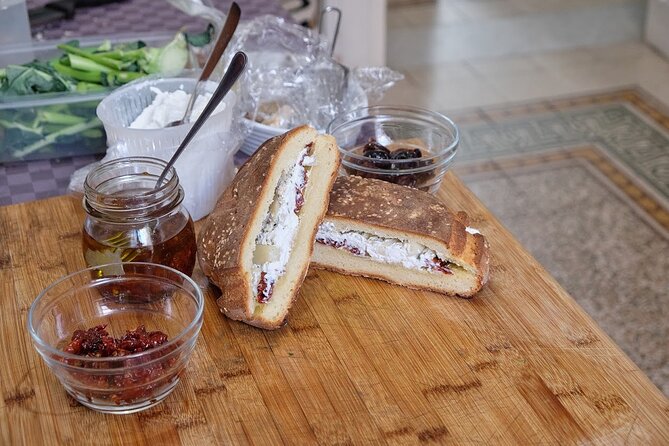
I think you should book if your ideal Palermo day includes real market shopping and you want to leave with both new recipes and cooking confidence. The strongest reasons to choose this class are the market-first ingredient hunt, the hands-on teaching from Chef Marco Cillari, and the fact that you end up eating a multi-course lunch you helped create.
Book it especially if you care about getting more than a simple sightseeing snapshot. This is a neighborhood experience, tied to Sicilian cooking rhythms, and it’s designed to make you part of the process, not just a spectator.
If you’re deciding between doing one cooking class in Sicily or skipping that style of activity, I’d lean toward booking Casa Di Cilla. It’s one of those days that turns travel into something you can repeat, and it tends to feel like a real shared meal at the end of it.
FAQ
What is the duration of the experience?
The experience runs for about 5 hours.
What time does the class start?
The start time is 10:00 am.
Where do we meet?
The meeting point is listed as Via Volturno, 78, 90138 Palermo PA, Italy. The morning begins at Porta Carini, the gateway to the Capo market.
Is the tour offered in English?
Yes, the experience is offered in English.
How large is the group?
The class has a maximum of 10 travelers.
Does it include a mobile ticket?
Yes, the experience includes a mobile ticket.
Can I cancel for a full refund?
Yes. You can cancel up to 24 hours in advance for a full refund.