
Bagheria’s Villa Palagonia is a visual prank. This Baroque showpiece mixes princely marble, mirror ceilings, and oddball sculptures into one highly designed experience you can take in at a relaxed pace. It is famous for a reason, yet it still feels oddly personal in the way it organizes space around an avenue axis.
I especially love the Hall of Mirrors, with its mirrored ceiling and painted sky effect, plus the walls dressed in fine marble and colored glass high-reliefs. I also like the garden, because it adds breathing room after the indoor drama and makes the villa feel complete rather than just decorative.
The main thing to watch is coverage: your entry ticket focuses on key rooms, while the private apartments are only accessible with a guided visit. If you want every room to feel like a full tour, plan for that expectation.
Key Points Before You Go
- A bargain entry price for one of Sicily’s best-known villas, priced around $8 per person
- Hall of Mirrors is the headline room: mirrored ceiling, painted sky, and detailed marble and glass
- Main floor highlights include the Hercules fresco in the oval entry vestibule and fine marble-and-glass decoration
- Chapel and billiard room keep the route varied, not just a single showstopper
- Guided tours can unlock more, including the enfilade private apartments
- Go early if you want a quieter visit and more room to study details
Villa Palagonia Ticket Value: One Price, Many Standout Rooms
For about $8, Villa Palagonia gives you more than a quick look at a pretty building. You are paying for access to a Baroque villa that is built like a carefully staged set: marble, glass, frescoed entry spaces, and room-to-room transitions that make you follow an intended route.
What makes the value feel real is how “complete” the experience is with the entry ticket. You will spend time on the main floor and then move through signature spaces like the chapel room and billiard room, plus you should get time outdoors in the garden. One review summary even calls out the garden as magnificent, and that matches the vibe you get from the way the villa is designed as an overall composition, not just a façade.
If you are the type who loves details, this ticket works because the villa rewards lingering. The mirrored ceiling and the marble and glass work are not just there to impress you for five seconds. You will want to slow down enough to notice how the decoration is layered.
You can also read our reviews of more tours and experiences in Bagheria.

Planning Your Timing in Bagheria: When Hours Matter
Villa Palagonia is open every day, but the hours and your best timing depend on the season. From April 1 to October 31, you have morning access from 9:00 AM to 1:00 PM, then afternoon access from 4:00 PM to 7:00 PM. From November 1 to March 30, it shifts to morning 9:00 AM to 1:00 PM, then afternoon 3:30 PM to 5:30 PM.
Also keep the rhythm of your day realistic. The last admission is half an hour before closing, so do not treat this like a “drop in whenever” stop. If you arrive late, you will feel rushed, and the villa is the kind of place where rushing is a waste.
One practical tip: aim for earlier in the day when you can. A review noted going early and having the place almost to themselves. Even if it is not that quiet for you, an early arrival usually helps you see details more clearly and take better photos without negotiating with a crowd.
Understanding the Villa’s Design Logic: Axis, Staircase, and Coordination
Villa Palagonia is one of those places where the architecture tells you how to look at it. The villa’s design follows a unitary planimetric layout, with elements arranged to coordinate with the barycentric axis of the avenue. Translation: the building is not random. It is engineered as part of a larger visual plan.
That matters because the experience feels organized even though the decoration is eccentric. You get a strong sense that the villa is built for movement, with spaces positioned to lead you from one dramatic moment to the next. If you like architecture that works like choreography, you will enjoy this.
The villa’s timeline also adds texture. Construction began in 1715 at the behest of Don Ferdinando Gravina and Crujllas, and it was designed by the Dominican friar Tommaso Maria Napoli. The work was completed in 1749 by Francesco Ferdinando Gravina and Alliata, the VI Prince of Palagonia. Knowing those names is not a trivia exercise. It helps you connect the room decorations to the families who commissioned them and to the villa’s evolution over decades.
Main Floor Route: Marble and Glass, Frescoes, and the Mirror Room
Start with the approach, because the main floor begins with an oval vestibule frescoed with scenes from the labors of Hercules. These images are described as a homage to late eighteenth century tastes, and you can feel that intent right away: it is myth mixed with theatrical interior design.
From there, one room is a clear “plan to see this properly” stop: the Hall of Mirrors, also called the Gallery or Hall of Mirrors. The ceiling is covered with mirrors, and the paintings depict a balustrade with sky above and fantastic birds. It is the kind of room where your brain keeps trying to measure distance because reflections multiply the space.
What I like most here is that the room is not just reflective. The walls include fine marble, with colored glass and marble high-reliefs that connect people, power, and identity to the villa’s decoration. You are looking at a visual program. The figures represented include the founder of the villa and the grandson who commissioned the “monsters,” with their wives, as ancestors of the Gravina house and notable figures from European ruling circles. You do not need to memorize all the relationships to appreciate the point: this is a villa using art to display lineage and influence.
You will also notice the floor decoration. There is an accurate drawing in polychrome marble of the Sicilian eighteenth century. It turns the whole place into something closer to an illustrated map than a typical interior. That makes the Hall of Mirrors feel like a gateway room, not a one-off spectacle.
Chapel Room and Billiard Room: Where the Villa Changes Mood
After the main mirror drama, the route shifts. From the Hall of Mirrors you move toward the chapel room, and then onward to the billiard room, keeping the experience varied rather than repeating the same intensity.
The chapel room matters because it gives you a different kind of Baroque atmosphere. Even without getting overly spiritual about it, a chapel interior is usually where a villa’s values get expressed. You can look at it as a counterbalance to the more playful or worldly decoration.
The billiard room adds another layer of realism to the fantasy. A billiard space is leisure, and it helps you understand this villa as lived-in by a noble family, not only imagined as a museum object. The contrast between ritual space and recreation space is exactly what makes villas like this feel human. They were not built for one mood, they were built for life in multiple moods.
Private Apartments and Guided Tours: What You Might Gain (and What You Won’t)
One important reality check: the private apartments are not always included in the baseline entry access. The villa’s private apartments can now be visited only with guided tours, and they consist of a series of posed rooms in enfilade. Enfilade simply means the rooms line up so you see the sequence in perspective, which is a smart way to keep the story visually continuous.
That does not mean you will feel cheated. The entry ticket gives you several standout rooms on the main floor plus the chapel and billiard room, and it also includes garden time. But if your goal is to see everything inside, you will want to factor in a guided portion.
There is also a helpful caution from experience shared in one booking: someone reported paying an extra supplement for a guided visit, and that the guided time lasted about an hour rather than three. I would treat that as a reminder to ask how long the guided portion is before you commit, especially if you have a tight schedule. If you hate rushing, a shorter guided segment can still be great, as long as you know what you are signing up for.
Garden Time at Villa Palagonia: Best Use of Your Outdoor Minutes
Your indoor time can be a lot, so the garden is the pressure release. It is where you can regroup and take the villa’s setting in one glance. One review explicitly calls out the garden as magnificent, and that matches what you would expect from a villa whose architecture and plan are coordinated with the surrounding approach.
In practice, I would treat the garden as a “slow stroll moment.” Do not just step outside for a quick photo and return. Take a few minutes to look back at the villa from the garden side. You can usually read the composition better outdoors because you lose the reflective interior distractions and see the overall massing more clearly.
If the day is hot or crowded, the garden can also be where you decide how much time you really want. You can spend a little extra if you love architecture and want to see the villa from different angles. Or you can keep it short if your heart is set on rooms.
Staff, Guides, and the Best Scenario for Your Language
The villa experience includes a host or greeter with Italian, French, and English support. That matters because these rooms are detail-heavy. Even if you do not want every fact, understanding a few key stories makes the decorations feel less random.
One of the most specific guide mentions from the reviews is Ignazio, described as excellent. That tells me two things. First, the guided element can genuinely improve what you notice. Second, if you are someone who wants context around names like Gravina and Napoli, you will likely appreciate a good guide.
Even without a guide, you can still enjoy the rooms because the visual cues are strong. But if you want the story of why these decorations exist, and how the villa was commissioned and finished, guidance can turn awe into understanding.
Price and What It Includes: Why Around $8 Feels Reasonable
At about $8 per person, the price is easy to justify because you get meaningful access. You are not just looking at one room. Your entry covers the villa, and the experience is designed to move you through major interior stops like the main floor areas, chapel room, and billiard room, plus access to the garden.
Food and drinks are not included, so plan to either snack before or after your visit, especially since this is a full monument stop that can swallow time if you are detail-focused. Transportation is also not included, so you will want to build your timing based on how you get to Bagheria. If you are traveling from Palermo or another base city, you will want to plan the route early rather than treating this as a spontaneous midday walk.
Who Should Book Villa Palagonia Entry Tickets, and Who Might Not
This is a great match if you love:
- Baroque interiors that are more theatrical than ornate in a typical way
- Mirror-and-marble details and room design that feels like a visual script
- Architecture and patrons, especially if you like connecting art to the families who commissioned it
It might be less satisfying if you are expecting a huge, all-access mansion without any extra options. Since the private apartments are guided-only, you could leave feeling like you saw highlights but not the full set. That is not a flaw in the villa. It is just a mismatch between expectations and access.
Also note that one review described the building as crumbling yet beautiful. Old villas can show wear. If you want everything to look perfectly restored, you may feel differently than someone who likes historic texture.
Should You Book Villa Palagonia Entry Tickets?
Yes, if you want a low-cost, high-impact monument visit with standout rooms and a garden break. The entry price is solid value for how many major spaces you can see, and the Hall of Mirrors plus the main floor decorations are the kind of things that stick in your memory.
I would book especially if you are visiting Bagheria and want one anchor stop that feels authentically Sicilian rather than generic. And if you care about the private apartments, add the guided element to your plan, and confirm the duration you will actually get.
FAQ
How much is the Villa Palagonia entry ticket?
The price is listed as $8 per person.
How long is the experience?
The duration is listed as 1 day.
What parts of Villa Palagonia can I visit with the entry ticket?
The entry includes access to Villa Palagonia and you can explore the main floor, chapel room, billiard room, and garden.
Are the private apartments included?
Private apartments are visited only with guided tours.
Do I need a reservation?
Reservations are required for weekends and holidays.
What are the opening hours?
The villa is open every day. From November 1 to March 30, it is open 9:00 AM to 1:00 PM and 3:30 PM to 5:30 PM. From April 1 to October 31, it is open 9:00 AM to 1:00 PM and 4:00 PM to 7:00 PM.
Is Villa Palagonia wheelchair accessible?
Yes, it is wheelchair accessible.
More Tour Reviews in Bagheria

Not for you? Here's more nearby things to do in Bagheria we have reviewed
Tickets, compared.
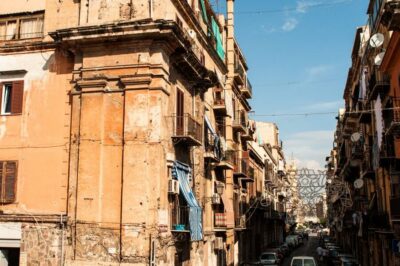 ★ 3.9Palermo: Hop-on Hop-off Bus Tour 24-hour TicketFrom $172,410 reviews
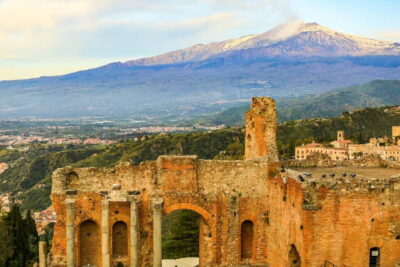 ★ 4.5Taormina: Ancient Theater Skip-the-Line Ticket & Audio GuideFrom $251,701 reviews
 ★ 4.3Mount Etna: Roundtrip Cable Car and 4×4 Bus TicketFrom $971,602 reviews
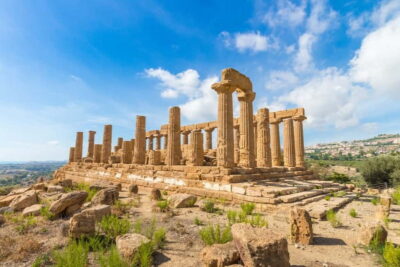 ★ 4.3Agrigento: Valley of the Temples Ticket & App AudioguideFrom $191,160 reviews
 ★ 4.6Catania: Underground Catania Tickets and Guided TourFrom $29536 reviews
 ★ 4.1Agrigento: Valle dei Templi Fast-Track Ticket & Smart GuideFrom $24344 reviews
 ★ 4.7Palermo: Norman Palace and Palatine Chapel Tour with TicketsFrom $82298 reviews
 ★ 4.1Agrigento: Valley of the Temples Entry Ticket & Audio GuideFrom $17268 reviews