
Reviewed · CATANIA CITY & FISH MARKET TOURS
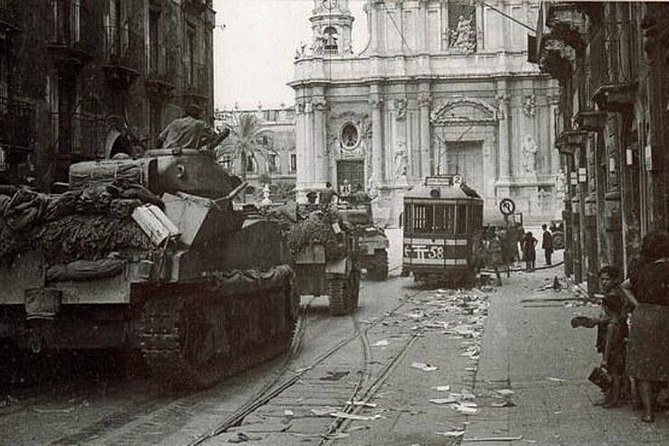
CATANIA 1943: Husky operation
Catania shows you war in plain sight. This 3-hour experience ties Operation Husky to four WWII-linked stops, so you see how the fighting touched real streets and monuments. I like that it is not just a museum lecture, it also walks you to places where damage is still visible.
Two things stood out for me. First, the long museum time gives you space to absorb the big picture, including Operation Fustian and the battle of Simeto. Second, the walk ends in the emotional calm of Piazza del Duomo, where bombing marks became a prayer spot for peace.
One possible drawback: some segments focus on devastation and memorials, and if you prefer lighter, purely scenic sightseeing, you might find the mood a bit heavy.
Key points before you go
- Museum first, so the rest makes sense: you start at Museo Storico dello Sbarco with the context for what comes next.
- WWII meets ancient Catania: the Roman amphitheater and church remains connect different eras in one small area.
- You end in Piazza del Duomo: the emotional arc finishes with a peace-focused altar in the city center.
- Private group pace: it is only your group, so you can move at a comfortable rhythm.
- Guide support that can help with getting around: in at least one case, guide Oreste arranged a car ride between key points for an elderly guest.
- English is offered: the tour runs in English, which helps if you want the story clearly explained.
Museo Storico dello Sbarco: where Operation Husky becomes a story
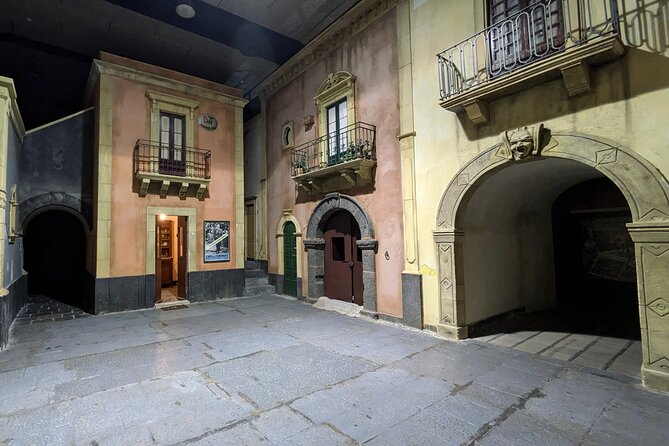
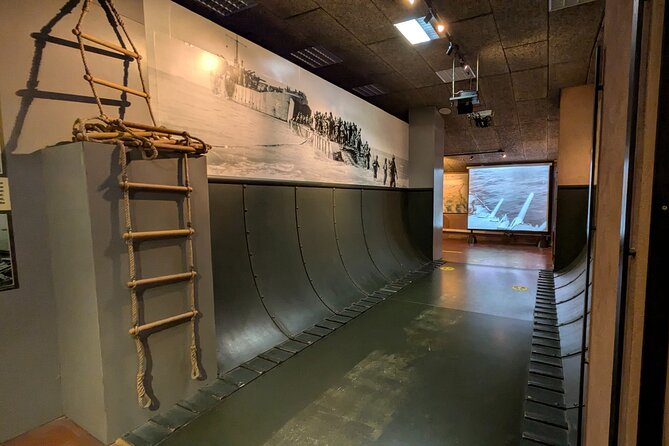
This tour begins at Museo Storico dello Sbarco in Sicilia 1943, at Piazzale Rocco Chinnici. The museum visit takes about two hours, so you are not rushed through panels and photos. Instead, you get an in-depth introduction to Operation Husky, with extra focus on Operation Fustian and the battle of Simeto.
What I like about starting here is simple. You spend your first block of time learning the names and the stakes, so when you step back outside later, the city stops feel connected rather than random. The museum also uses an accurate historical reconstruction and detailed documentation, which helps you picture what happened instead of just reading headlines.
The other practical upside: this is a good way to anchor your Catania visit. Even if you only have a short time in town, you leave with a clear sense of why certain squares and ruins matter.
Possible drawback to plan for: two hours is a solid chunk. If you get tired in indoor settings or you usually prefer quick stops, you might want to mentally pace yourself, especially if you are sensitive to WWII subject matter.
You can also read our reviews of more tours and experiences in Sicily.

Anfiteatro Romano and the April 16, 1943 memorial square
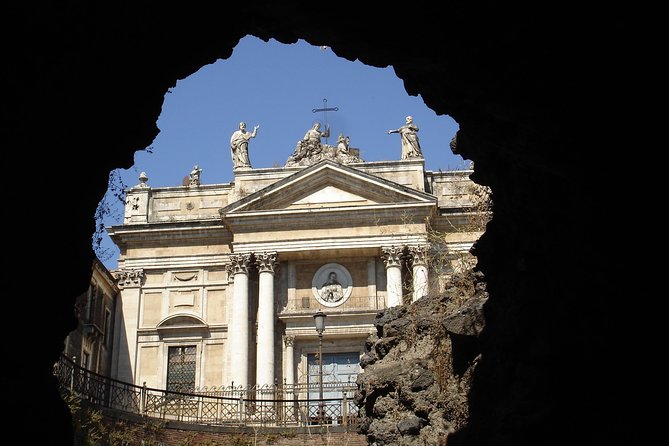
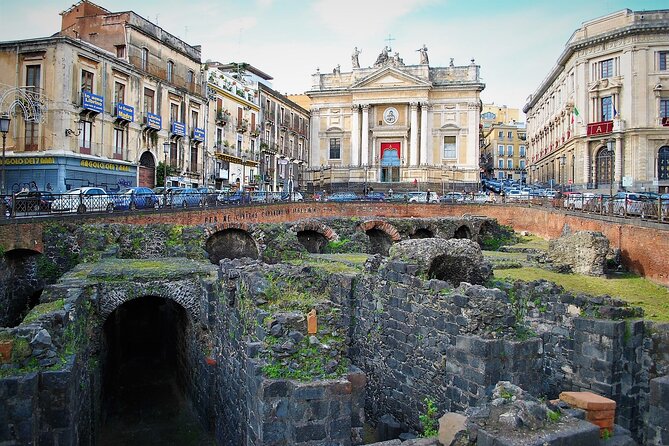
Next you head to the Roman Amphitheater of Catania. This stop runs around 30 minutes and includes admission. On its surface, it is the big Roman landmark symbol of Catania, but in WWII it had a very different role. During the war, it was used as an air raid shelter, which changes how you read the structure.
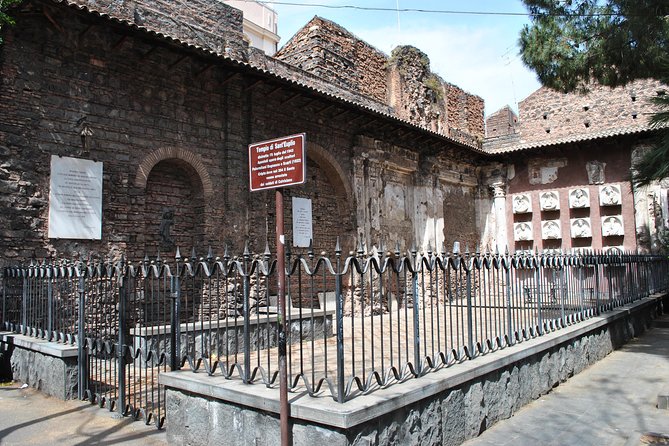
In the same square, you can also spot the remains of the church of Sant’Euplio. The museum context carries forward here. You are shown a site bombed on April 16, 1943, and it has become a symbol and memorial for victims of war and persecution.
Here is a detail that I find powerful, even for people who usually skip museum-style stops: you do not have to imagine the past from scratch. The square itself holds the evidence, and the guide can connect the dates and names to what you are seeing in front of you.
A small note for your expectations: since this is an outdoor urban area around a major landmark, it can feel busy depending on the time of day. Wear comfortable shoes, because you are combining a major monument with tight city surroundings.
Via Sant’Euplio ruins: seeing July 1943 scars in the masonry
After the amphitheater, the tour continues briefly along Via Sant’Euplio. This segment is about 10 minutes, with admission listed as free.
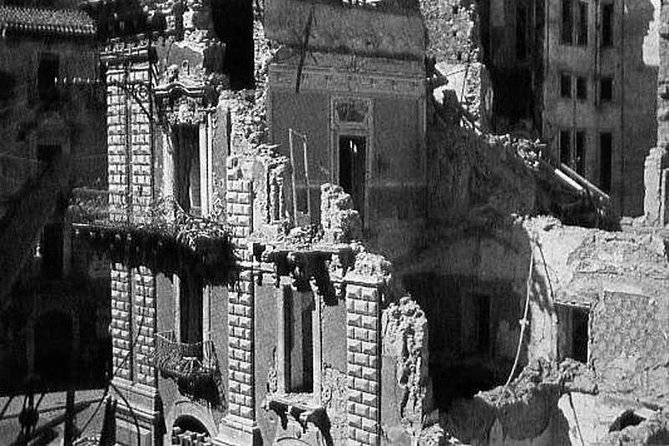
This part focuses on the ruins connected to the patron saint of Catania, Sant’Euplio. You still see the wounds from bombings from July 1943. I like how short this stop is, because it works like a visual punctuation mark. After the museum and the amphitheater, you get one more concrete, close-up reminder that the story was not abstract.
Because it is only 10 minutes, this is also a practical “pace control” moment. If you are traveling with anyone who gets worn out, this quick stop can make the overall experience feel more manageable. Still, you will want to keep an eye on footing, since ruins and uneven surfaces can be part of the experience.
Piazza del Duomo: bombing marks turned into a peace prayer
The final stop is Piazza del Duomo, about 15 minutes, also free. Ending here is a smart choice. The Duomo square holds millenary layers of city life, so the WWII thread does not swallow everything. Instead, it is folded into a much larger sense of time.
The guide points out an altar bearing signs of the bombings. After the war, that altar became a place of prayer for peace. I like that the ending is not only about destruction. You get a sense of what the city did with that history: it transformed memory into something meant to guide the future.
This is the moment where the emotional tone of the whole tour clicks. You start with operational history, then you see structures and ruins, and you end with a space dedicated to peace. Even if you are not a history buff, that arc is easy to feel.
Practical tip: since this is the heart of Catania, you will likely have other plans nearby after the tour. If you want to continue exploring, take a few minutes here to reset your energy before you dive into shops and restaurants.
The guide makes the difference, especially in the city parts
In one standout experience, our guide was Oreste, and his approach made the material feel grounded. He was able to guide the museum visit in a clear, structured way, then help connect what you saw inside to what you stood in front of outside. That connection is the whole point of this kind of tour.
Two guide-led touches were particularly helpful. First, Oreste accommodated the needs of an elderly mom by allowing a ride in his car from the museum to the next part. That kind of flexibility can turn a standard sightseeing walk into something actually workable for family members with mobility limits.
Second, the route included entry to locations in the city not accessible to the public. I love when a tour gives you access that you cannot easily replicate on your own. It is not about doing something flashy. It is about giving you a fuller view of the sites tied to the WWII story.
You should still plan as if you will be walking around city landmarks. The tour is not described as a full private driver day, even if the guide can sometimes help between points.

Price and what you are actually getting for $94.68
At $94.68 per person for about three hours, this is a mid-priced historical tour. The value comes from how the time and admissions are packaged.
Here is the practical breakdown you care about:
- Museum admission is included for the first stop (about two hours).
- Admission is also included for the Roman amphitheater stop (about 30 minutes).
- The ruins on Via Sant’Euplio are listed as free.
- The Duomo square ending is listed as free.
So you are paying for the guided experience plus the paid-entry components, not just for someone to walk you around for free. The museum time alone is long enough that you should expect more than a quick overview.
Also, the tour offers group discounts. If you are traveling with others and can coordinate your group, it is worth asking how that changes your per-person total.
One more value factor: the tour is private, meaning only your group participates. For many people, that is worth real money because it improves the chance of tailored pacing, questions, and comfort.
Best fit: who will enjoy this Husky-era Catania route
This tour fits best if you like history that connects to the street in front of you. If you enjoy WWII topics, memorial sites, and seeing how older monuments were repurposed during the war, you will likely feel satisfied by the flow from museum to city landmarks to Duomo.
It can also work well for people who are not hardcore history fans, as long as they are curious. The stops are short outside the museum, and the story is focused on specific operations and visible sites tied to bombing dates like April 16, 1943 and July 1943.
Who might want to skip or reconsider? If you want a casual day with mostly scenic sightseeing and little emotional weight, you may prefer something lighter. This one spends real time on war impacts and memorials.
How to plan your day around the 3-hour window
The tour runs for about three hours. It starts at Museo Storico dello Sbarco in Sicilia 1943 in Catania and ends at the Roman Amphitheater of Catania near Piazza Stesicoro.
If you want your day to flow smoothly:
- Plan for a longer indoor opening with the museum, then shorter outdoor stops.
- Wear shoes that work well on city surfaces near ruins and monuments.
- Keep a bit of time after the tour for a slow wander in Piazza del Duomo, because ending there is a good reset point.
The meeting point is near public transportation, and the tour uses a mobile ticket, which is convenient. If you are coordinating with an older traveler or someone who tires easily, it may be smart to mention needs when booking so the guide can plan the most comfortable pacing.
Final verdict: should you book CATANIA 1943: Husky operation?
I think you should book if you want WWII history tied to real Catania locations, with enough museum time to understand the names and then enough city stops to see what that history means on the ground. The combination of Operation Husky context, the Roman amphitheater as an air raid shelter, and the memorial ending in Piazza del Duomo makes this more than a checklist of sights.
You might skip it if you are strongly in the mood for carefree sightseeing, because the subject matter is not light and the emotional theme is deliberate.
One last practical check: the tour is private, offered in English, and you can cancel for a full refund up to 24 hours in advance. That gives you room to commit confidently and adjust if your plans shift.
FAQ
How long is the CATANIA 1943: Husky operation tour?
The tour lasts about 3 hours.
What is the price per person?
The price is $94.68 per person.
Is the tour private?
Yes. It is a private tour/activity, and only your group participates.
What languages is the tour offered in?
The tour is offered in English.
Where do I meet the tour?
You start at Museo Storico dello Sbarco in Sicilia 1943, Piazzale Rocco Chinnici, 95129 Catania CT, Italy.
Where does the tour end?
The tour ends at the Roman Amphitheater of Catania, P.zza Stesicoro, 95124 Catania CT, Italy.
Is admission included in the ticket price?
Admission tickets are included for the museum stop and for the Roman amphitheater stop. The Via Sant’Euplio and Piazza del Duomo stops are listed as free.
How does ticket delivery work?
You get a mobile ticket.
Are service animals allowed?
Yes, service animals are allowed.
What is the cancellation policy?
Free cancellation is available. You can cancel up to 24 hours in advance for a full refund.
More Tour Reviews in Sicily
Not for you? Here's more nearby things to do in Sicily we have reviewed








Catania City & Fish Market Tours, compared.
 ★ 4.8Catania: Mount Etna Morning or Sunset Day Trip with TastingFrom $704,028 reviews
 ★ 4.8Catania: Sunset Jeep Tour of Mount Etna and Lava Flow CavesFrom $712,113 reviews
 ★ 4.9Catania: Mount Etna Trekking Trip off the Tourist PathFrom $781,351 reviews
 ★ 4.8Catania: Etna Sunset Tour with Pickup and Drop-offFrom $711,348 reviews
 ★ 5.0Mt. Etna and Taormina village full day tour from CataniaFrom $1181,155 reviews
 ★ 4.7From Catania: Mount Etna Sunset Tour with Tasting and CaveFrom $451,119 reviews
 ★ 4.8Catania: Etna Morning Excursion with Tasting and PickupFrom $67820 reviews
 ★ 4.9Catania: Amazing Etna Morning Tour with Pickup and Drop-OffFrom $81799 reviews
Browse the lists this tour appears in