
Reviewed · MOUNT ETNA VOLCANO TOURS
ETNA – Sunset at high altitude
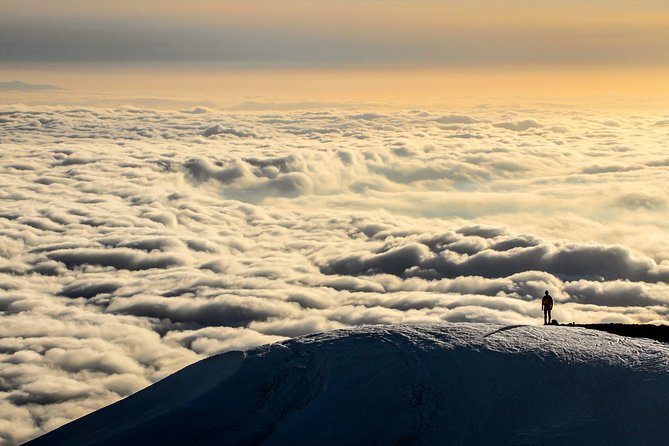
Sunset on Etna feels like another planet. This half-day trek uses the cable car to get you high fast, then pairs Etna geology with big views over the eastern flank, including Valle del Bove.
I also love that the hike is guided by people who clearly care, from guides like Pepe, and the route is paced so you can focus on the story and the terrain. The only real drawback is the effort: you go up near 3,000 m, and the long return is on volcanic sand, plus the cable car ticket is not included.
Key highlights to know before you go
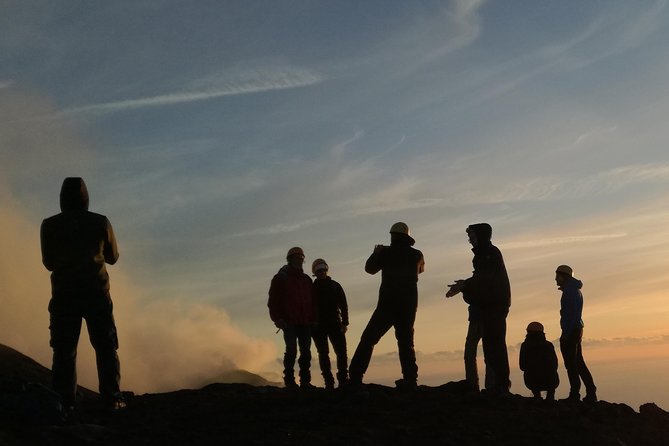
- High-altitude timing: you aim for sunset around 3,000 meters for that last-light glow on the crater rims.
- A guided eruption lesson in the field: you stop at viewpoints tied to the 2001 eruption and later crater areas from 2002/2003.
- Valle del Bove viewpoints: you look out over the massive eastern depression that defines Etna’s side.
- Torre del Filosofo climb: you gain height on the way up, making the views step-by-step.
- Volcanic sand night walk: the return is done with starlight, with a headlamp provided.
- Small group max 20: easier to hear explanations and keep together on an uneven route.
Etna at golden hour, starting from Sapienza
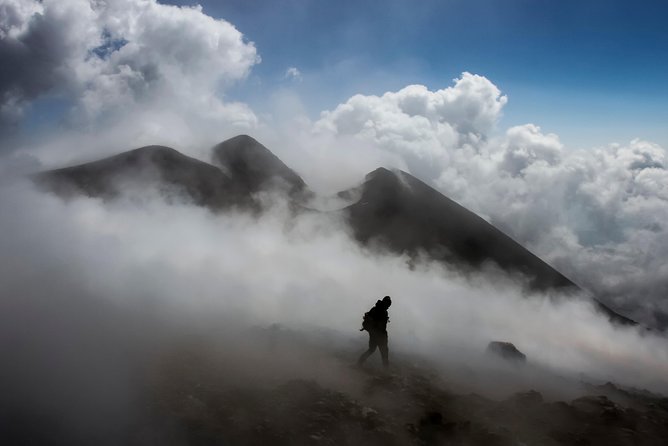
This is one of those Sicily experiences where the timing is not a bonus, it is the whole point. You meet at Piazzale Rifugio Sapienza in Nicolosi, and the day is set up to move from afternoon climbing into sunset viewing. Start time is 3:00 pm, and the whole outing is about 5 to 6 hours.
The biggest help is that you do not start from the bottom. The tour reaches altitude quickly via cable car, up to about 2,500 meters. That means more time spent at the interesting altitudes and less time slogging when your legs are still fresh.
One practical detail that matters: the group size is capped at 20. On a high-altitude hike, that is a good number. It helps with coordination when footing turns rocky or sandy and when the guide needs you close for short explanations.
You can also read our reviews of more evening experiences in Sicily


The cable car jump to 2,500 meters and why it’s smart
The cable car is listed as extra at 52€ per person. Plan on that as part of your total cost, since you will need it to reach the starting altitude of the real trek.
Why this matters for your enjoyment: once you are already around 2,500 meters, every meter you climb feels like it buys you a view. And you avoid spending your best energy on the most boring part, the long grinding approach.
It also sets the tone for the guide’s presentation. You are high enough that the terrain features become easier to read: slopes, craters, and the big drop-offs start to make sense as forms of a volcanic system, not just scenery.
Stop 1: the 2001 eruption lesson, then the Valle del Bove overlook
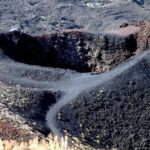
At the first main stop, you get both story and payoff. The route uses the early climbing time to explain the eruption of 2001, then shifts to a viewpoint over the Valle del Bove, the immense depression on Etna’s eastern flank.
I like this kind of guided setup. It is not just look, take a photo, move on. The guide ties what you are seeing to an event, so the terrain feels connected instead of random. When you can link the shapes in front of you to a real eruption, you start noticing details: the way the ground breaks, the sense of scale, and how the volcano’s structure controls the views.
What to consider: this phase is still early in the hike, so if you are not used to altitude hikes, you may feel breathy even before the steep part. Nothing suggests it is a casual stroll, but the pacing is meant for moderate physical fitness, not for couch-to-craters.
Torre del Filosofo climb: earning better angles as you go
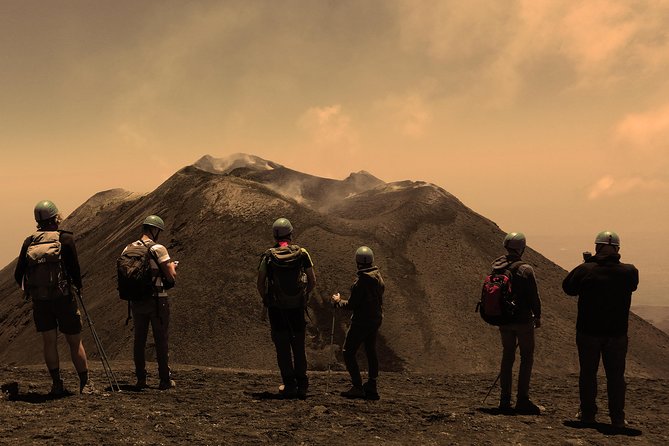
After the Valle del Bove viewpoint, the route climbs toward the famous Torre del Filosofo. This is one of those names that sounds like a landmark, and on Etna it actually works as a “marker on the climb.”
Why it’s valuable: as you gain elevation, the crater zones and the volcanic valleys start to open up. The guide’s explanations make more sense at higher viewpoints, because you can see relationships between features instead of isolated patches of rock.
The good news is that this climb is part of a longer plan built around sunset. You are not rushing to hit a single point and then leaving. You are moving through stages, so each stage feels like it improves your “position” for the next.
The drawback is also simple: you are going uphill. If you know you tire quickly on steep grades, plan your effort carefully and pace yourself. Keep your breathing steady, and do not race the group ahead of you.
Craters of 2002/2003: getting high enough for the sunset payoff
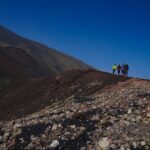
Next comes the push higher, up to the summit area of the Craters of 2002/2003, with sunset waiting for you at around 3,000 meters above sea level. This is the moment most people book for, and the reasoning is solid. At higher altitude, sunset light tends to carve shadows and make slopes feel sharper. You also get wider viewing angles over Etna’s dramatic structure.
This is not a “sit and look” stop. The tour description frames it as an even higher summit waiting for sunset, which means you earn that view with a continued climb.
If you are sensitive to cold, it is worth thinking about conditions at altitude. The tour provides a headlamp and helmet, but clothing warmth is not listed. You might want to be ready for the change in temperature that comes with climbing and evening air at elevation.
The long return on volcanic sand, lit by starlight
After sunset, the hike shifts from viewing to movement. The return is described as a long walk on characteristic volcanic sands, accompanied by starlight. That sounds poetic, and it is, but it is also practical: volcanic sand can be loose and can slow your pace.
This is where the included gear earns its keep. You get trekking poles, a helmet, and a headlamp. The headlamp matters because once the light drops, footing becomes the whole game. The helmet matters because Etna hiking can involve uneven ground and changing conditions where the guide wants you protected.
My advice: treat the descent as part of the workout, not a victory lap. Your knees and ankles will feel it, especially if the sand is soft. If you usually prefer poles on uneven trails, you will appreciate having them included instead of trying to rent or improvise.
Guides matter here, and the reviews back that up
The guide is a big piece of the value in this hike. In the feedback you can see the same pattern: people highlight how informative the briefing feels and how much personality the guide brings.
Guides named in the notes include Pepe, Max, and Massimo. That gives you a hint at what the day feels like: guided geology, not just a leader walking in front. The best part of a volcano hike is when the explanations make you see the place in a new way, and that is exactly what this format tries to deliver.
Also, a small group cap of 20 likely helps. It is easier to hear details when the group is not stretched into a long line, and it is easier for the guide to stop and regroup quickly without losing time.
Price and value: $62.47 plus the cable car at 52€
The tour price listed is $62.47 per person. Then there is the big separate cost: the cable car ticket at 52€ per person.
How I think about value here: you are paying for the guided hike at high altitude plus the included safety and comfort gear, which includes trekking poles, a headlamp, and a helmet, plus trekking shoes. That gear package is not just “nice to have” on a sunset hike. It is the difference between a confident descent and a nervous one.
But you are also paying for time. At 5 to 6 hours, you are spending a focused chunk of your day getting high and staying there long enough for sunset. If you tried to do this alone, you would likely spend more time on planning, and you would still need to get the altitude right, then figure out how to move safely after dark on volcanic sand.
Bottom line: it can be a good value if you want a structured, guided eruption story paired with a sunset viewpoint, and if you are willing to pay the cable car extra.
Who should book this Etna sunset hike
This one fits best if you like physical travel with a payoff. The tour asks for moderate physical fitness and includes a significant climb to near 3,000 meters, plus a long return on volcanic sand.
You will probably enjoy it if:
- You want a guided look at Etna’s eruptions, not just general sightseeing.
- You can handle uphill walking and a darker, slower descent.
- You like the idea of mixing big views with a guided explanation at altitude.
You might want to skip or choose something gentler if:
- You get uncomfortable on steep grades or loose sand.
- You are easily thrown off by low light after sunset, even with a headlamp.
What a good day on Etna looks like, step-by-step
Here’s the flow in plain terms, so you know what you’re signing up for.
First, you start at Piazzale Rifugio Sapienza around 3:00 pm. You use the cable car to reach about 2,500 meters, then you begin with the eruption-focused briefing tied to 2001. Right after that, you shift your focus outward to the Valle del Bove, using the height to make the volcano’s structure feel real.
Then you keep climbing toward Torre del Filosofo. It is not just a name drop. It functions as a stage on the way up, giving you better angles as you move.
Next, you go even higher to the Craters of 2002/2003 area, aiming to reach the sunset point around 3,000 meters. After sunset, the plan switches to a long walk back on volcanic sand, guided and managed under starlight, supported by trekking poles and a headlamp.
Weather, timing, and why the sunset is not guaranteed
This experience requires good weather. That is not a small detail on Etna. If conditions are poor, the tour can be canceled, and you are offered a different date or a full refund.
Because sunset is the centerpiece, weather matters for both safety and visibility. Plan the day with flexibility if you can. If you are on a tight schedule, consider whether you can handle a possible reschedule.
Also, confirmation is received at booking time, so you should expect that the operator will treat weather and timing seriously rather than leaving you guessing.
Should you book the Etna Sunset at High Altitude hike?
I think you should book if you want a structured, guided Etna experience with a real payoff at altitude. The combination of eruption explanations tied to specific places, a climb that builds toward a sunset near 3,000 meters, and a guided night return on volcanic sand is a strong package.
Pass if your idea of a volcano day is more of a short viewpoint stop and less of a physical hike. This is an outing with effort built in, not a casual stroll. The reward is big views, dark sky stargazing, and a guide who can turn volcanic features into a clear story.
If you do book, budget for the cable car extra at 52€ per person, and treat the descent as part of the work. With that mindset, you will get the experience the route is designed to deliver.
FAQ
What time does the Etna Sunset at high altitude tour start?
The start time is 3:00 pm, at Piazzale Rifugio Sapienza in Nicolosi.
Where is the meeting point?
You meet at Piazzale Rifugio Sapienza, 95030 Nicolosi CT, Italy.
How long does the tour last?
The duration is approximately 5 to 6 hours.
Is the cable car ticket included in the price?
No. The cable car ticket costs 52€ per person and is not included.
What gear is included?
The tour includes trekking shoes, trekking poles, a headlamp, and a helmet.
What fitness level do I need?
You should have a moderate physical fitness level.
What is the maximum group size?
The maximum number of travelers is 20.
What happens if weather is poor?
The experience requires good weather. If it is canceled due to poor weather, you will be offered a different date or a full refund.
What is the cancellation policy?
You can cancel up to 24 hours in advance for a full refund. If you cancel less than 24 hours before the start time, the amount paid is not refunded. Free cancellation is available up to 24 hours prior.
More Evening Experiences in Sicily


More Tour Reviews in Sicily
Not for you? Here's more nearby things to do in Sicily we have reviewed





Mount Etna Volcano Tours, compared.
 ★ 4.8Catania: Mount Etna Morning or Sunset Day Trip with TastingFrom $704,028 reviews
 ★ 4.7Mount Etna: Guided Volcano Summit Hiking Tour with Cable CarFrom $1243,784 reviews
 ★ 4.8Catania: Sunset Jeep Tour of Mount Etna and Lava Flow CavesFrom $712,113 reviews
 ★ 4.7Mount Etna: Trek to 3000m with cable car and jeepFrom $621,978 reviews
 ★ 4.8Mount Etna: Summit Crater Trek with Cable CarFrom $771,875 reviews
 ★ 4.8Etna and Alcantara Gorges Full-Day Tour with LunchFrom $1051,766 reviews
 ★ 4.3Mount Etna: Roundtrip Cable Car and 4×4 Bus TicketFrom $971,602 reviews
 ★ 4.7Etna Volcano: South Side Guided Summit HikeFrom $671,545 reviews
Browse the lists this tour appears in