
Reviewed · MOUNT ETNA VOLCANO TOURS
Excursion on the summit craters of Etna, with cable car and 4×4 bus
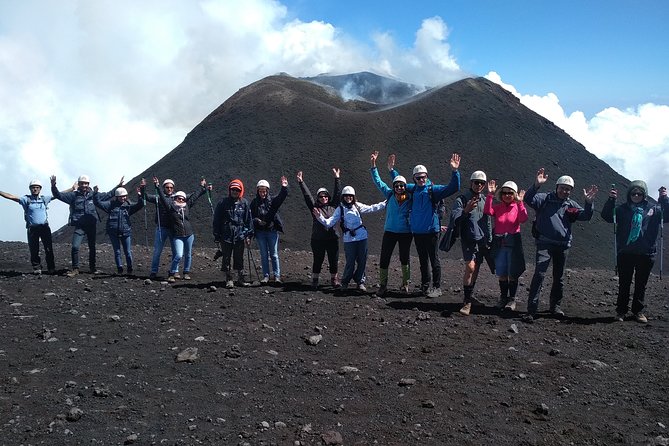
Etna turns the sky into theater. This half-day-ish climb uses cable car and 4×4 minibuses to reach the active summit area fast, then takes you on foot to see four working craters with fumaroles and ash-steam bursts. I like that it is led by Alpine and volcanological guides who are authorized to accompany people on active volcano routes, not just general hikers.
Your main variable is weather and wind. At the top, conditions can swing from clear to gritty quickly, and that affects visibility and how comfortable the final crater time feels.
You start high in the Rifugio Sapienza area at about 1,900 meters, then you build altitude in stages. I also like that they include the practical safety pieces, like a mandatory helmet above 2,900 m, plus trekking poles on request, which matters when you are walking on loose, sandy ground.
Key highlights and what they mean for you
- Cable car to 2,500 m, then 4×4 to 2,800 m so you spend more of the day at the craters, not stuck in traffic.
- Authorized Alpine and Volcanological Guides who can work within the rules of an active volcano.
- Active-crater spectacle at about 3,340 m including fumaroles and ongoing explosions.
- Descent over mostly sandy surface that is fun for many people, but it does mean good grip shoes matter.
- Mandatory helmet from 2,900 m plus protective planning for high-altitude walking.
- Maximum 15 travelers which usually keeps the pace and crowd control more human.
Etna craters feel real up close, not postcard-distance
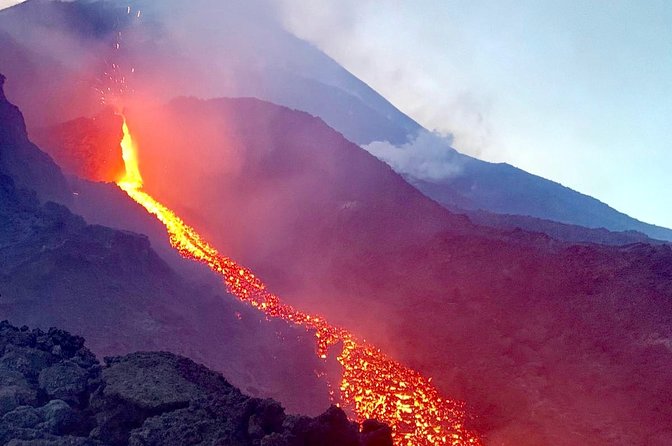
Etna is not a museum volcano. This excursion is built around getting you into the active-zone viewpoint, at elevations where you can actually feel the volcano’s presence in the air and sound.
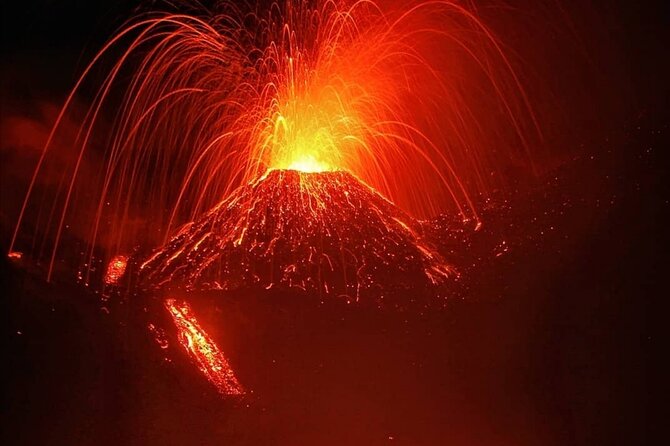
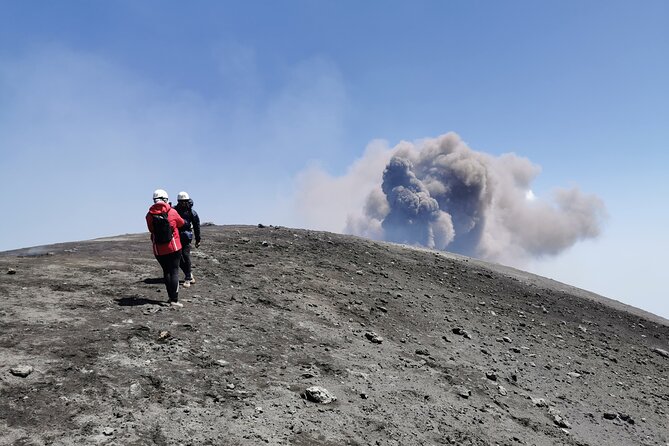
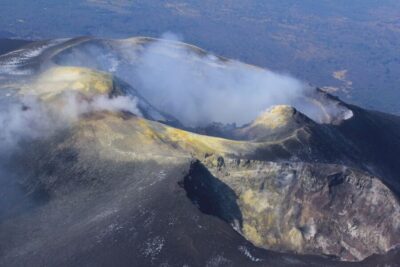
The best part is that you are not just looking at scenery from far away. Once you are up near the summit area, you get time around the four active craters, where you can see continuous fumaroles, hear the ongoing activity, and notice puffs of ash and steam. That combination is what makes the whole day click, especially if you like your travel experiences a little hands-on and a little wild.
You can also read our reviews of more tours and experiences in Sicily.
From Rifugio Sapienza to 2,500 m: starting altitude is the big deal
You begin at the Rifugio Sapienza area around 1,900 meters, in the Nicolosi Nord zone. Starting at height changes the experience immediately. You are not sprinting up from sea level, so you have a steadier first phase, and the trip stays more “walkable” for a broader range of people with moderate fitness.
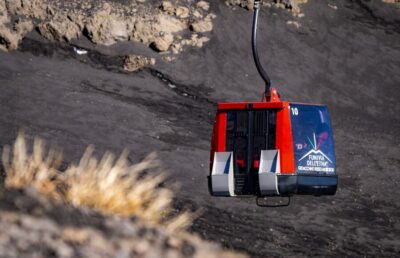
From there, the route rises via cable car to about 2,500 meters. This matters because it saves energy for the only part that truly demands your legs: the trekking. It also reduces the time you spend exposed on foot before you reach the crater area.
Practical note: you will still want to move efficiently when you switch transport modes. Even with the cable car, your body is adjusting to altitude, and that makes basic pacing feel more important.
The 4×4 minibuses to 2,800 m: more access, less slow going
After the cable car, you transfer to off-road minibuses and go up to around 2,800 meters. This is a key value step, because it moves you close enough that the real trek does not start with a long grind on rough terrain.
At this stage, you should expect the ride to feel like a working-route vehicle, not a smooth sightseeing bus. The roads are meant for access, and that is the point. It gets you nearer to the lunar-style lava surfaces and the routes that lead to the summit viewpoints.
Group size helps here. With a cap of 15 travelers, you are not fighting for space or waiting around while people regroup. You still want to listen carefully when your guide gives instructions, especially for any changes due to the volcano’s current conditions.
Stop 1: Valle del Bove and why it fits the story of Etna
One of the built-in moments is Valle del Bove, an area that adds context to what you are seeing. Even if you do not get a long classroom explanation, you get a real sense of the scale and shape of Etna’s volcanic landscape.
This is the kind of stop that makes the trek more meaningful. Instead of treating the day as a single goal, you start to connect the route you are following with how Etna has carved the terrain over time.
If you like photos, this is a good place to get your first set. Visibility will depend on weather later, so I find it smart to capture a few images early while you still have a calmer baseline view.
The trek to about 3,340 m: craters, fumaroles, and ash puffs
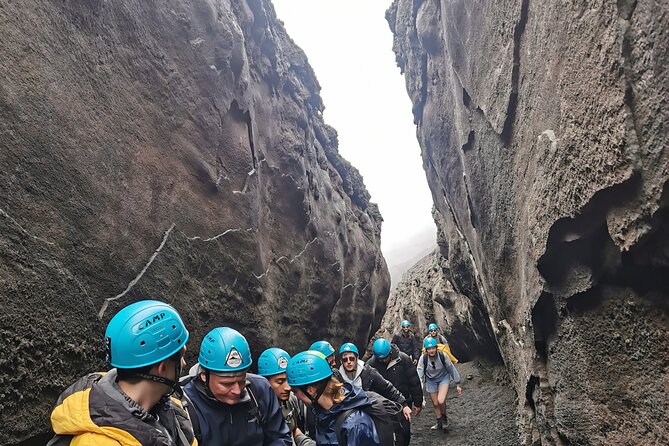
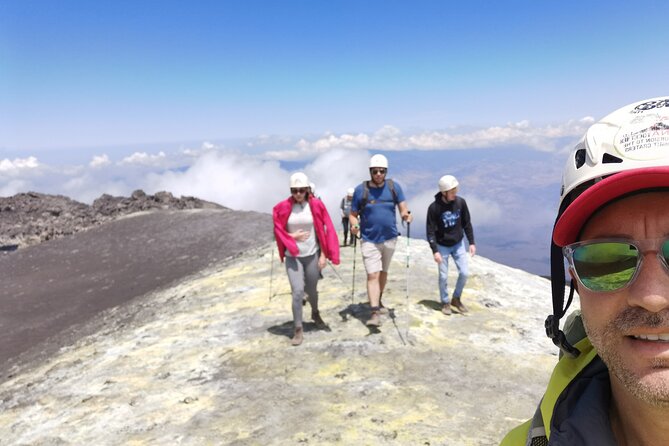
Once you reach roughly 2,800 meters, the trekking begins. This is where your day turns into an active volcano walk through very recent lava. The route you are shown includes lava flows as recent as January 2024, which adds a real-time feeling to the landscape.
As you walk, you transition through textures that can look almost lunar. The ground underfoot may be loose and sandy in parts, and the wind can turn sharply at higher altitude. Expect the route to feel changeable, depending on where your guide decides it is safest and most worthwhile given conditions.
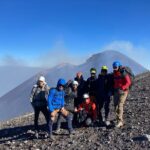
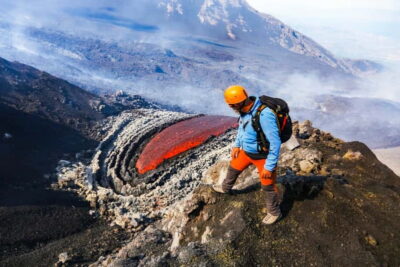
Then you reach the top viewpoint area around 3,340 meters. This is the centerpiece. You can admire four active craters with ongoing fumaroles, continuous explosions, and puffs of ash and steam. It is not just visual, either. Those signals make Etna feel alive and immediate.
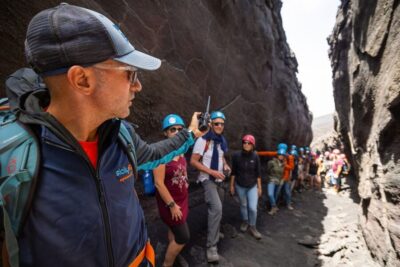
A key safety detail: protective helmets are mandatory from 2,900 meters. They are part of the plan for moving through an active environment. Even if you have worn helmets before for sports, this one is more than “gear for show.” Use it correctly and keep it snug.
Also, trekking poles are available on request. If you are unsure, I’d plan to use them. Poles help on loose surfaces and can reduce fatigue late in the walk.
How the descent works: sandy ground plus volcano-history stops
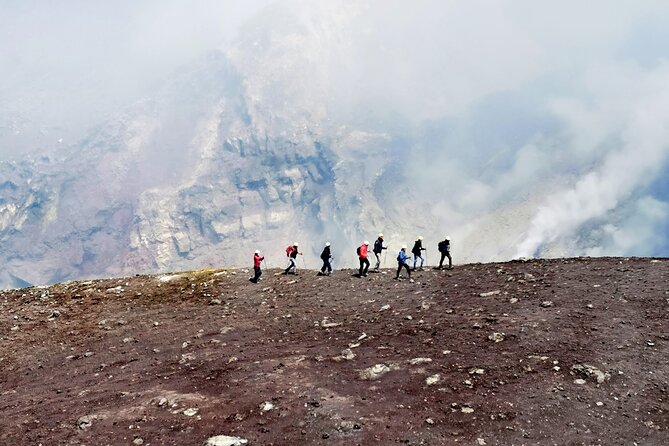
The descent is carried out on mostly sandy surface. This is one of those “could be fun, could be tiring” parts. Many people find the down-walk easier than a hard uphill push, but sand changes your stride. You want good traction and steady steps rather than rushing.
You also pass through craters connected to recent eruptions, including the 2002 to 2003 events, plus other volcanic points of interest up to about 2,500 meters. That means your feet are not just bringing you down. You are also walking past physical evidence of Etna’s ongoing story.
From around 2,500 meters, the cable car brings you back to the starting area. The whole day is structured so that the hardest walking happens in the middle, not stretched across the entire half-day window.
If you are prone to feeling chilled at altitude, treat the descent as your “warm up” phase, not an all-conditions guarantee. Wind and damp air can cling even when the route feels calmer.
Guide quality and the language reality check
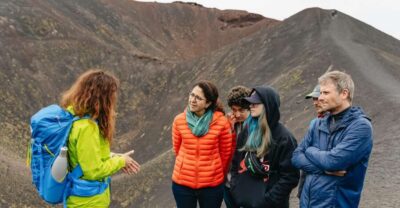
The tour runs with Alpine and volcanological guides who are explicitly qualified and authorized to accompany people on active volcanoes. That is a big deal for an excursion like this, where the environment is dynamic and the safest route can change.
In a perfect world, you get both safety and strong storytelling. In reality, what you understand can depend on guide language and how your group moves. The official offering includes English, but you should still be ready for moments where the explanation is shorter or more Italian-heavy than you would hope.
My advice: come with a flexible mindset. If you want to learn, ask direct questions and focus on what you can see in front of you, like fumaroles and ash-steam puffs. You do not need a lecture to appreciate what is happening.
Price and value: what you are really paying for at $168.58
At $168.58 per person, this is not a budget add-on. But it is also not just a ticket to ride up a mountain.
You get return cable car access, 4×4 minibus transport up to the high staging area, Alpine and volcanological guide leadership, trekking poles on request, and a mandatory-gear approach with protective helmet requirements. Insurance is included too.
You are also paying for the time and risk management that comes with active-volcano guiding. Cable car and 4×4 access are expensive to organize and operationally complex, and the guide authorization is a key cost driver.
For value, I think the question is simple: do you want to be at roughly 3,340 meters around active craters, for about 5.5 hours, with built-in high-altitude transport and professional guidance? If yes, the price starts to look reasonable.
If you are the type who wants an easy hike with minimal wind exposure and lots of indoor breaks, this may feel like too much effort for the payoff.
What to pack for Etna’s summit crater day
The tour recommends hiking footwear with good grip and windbreakers. That is not a generic suggestion. At high elevation, wind and cold can change quickly, and the summit crater time can be the least comfortable part if you show up unprepared.
I’d also plan for layers. Even if it starts mild at the lower altitude, your body can feel the temperature shift as you climb.
A few smart “do not regret it later” ideas:
- Wear shoes you trust on sandy and loose ground.
- Bring a wind layer you can pull on fast.
- Keep a small kit for quick weather shifts, like a hat or lightweight gloves if you run cold.
Lunch is not included, but there is a possibility to buy food at the meeting point before leaving. This is a useful option if you want to avoid carrying a full meal. Still, I recommend having a snack ready earlier, so you are not hungry while you wait for transports.
Timing, group size, and how to plan your day in Sicily
The tour runs about 5 hours 30 minutes. The start time is 9:00 am, and the activity ends back at the meeting point.
The group is capped at 15 travelers, which tends to keep things organized. It also helps you feel less like you are part of a conveyor belt.
Average booking happens about 25 days in advance. That is a clue to plan ahead if Etna weather windows matter to your itinerary. Also, confirmation comes at booking time, so you should be able to map the day without long uncertainty.
The meeting point is in Nicolosi (near public transportation). If you are doing self-guided days in Sicily, Nicolosi is a practical base for Etna access, and this tour fits that pattern.
Weather and wind: the make-or-break factor
This excursion requires good weather. If it gets canceled due to poor conditions, you are offered a different date or a full refund.
That matters because wind and visibility are not minor issues at the summit. One experience can go from dramatic crater views to a frustrating “you can hear it, but you cannot see much” scenario if clouds and wind roll in.
So how do you plan? Keep your Etna day flexible if you can. If Etna fits only one day on your trip, choose it early in your schedule so you have room to adjust if the organizer moves you to another date.
And dress for wind, always. Even if the lower areas feel comfortable, higher altitude can be a different planet.
Should you book this Etna summit crater excursion?
Book it if you want the closest practical experience of Etna’s active summit, with serious guiding, and you are comfortable walking at altitude for about 5.5 hours. The combination of staged transport, authorized volcano guides, and time around four active craters makes this one of the more value-driven ways to do Etna without turning the trip into a long slog.
Skip or reconsider if you have cardiovascular problems. The tour is absolutely forbidden for anyone with cardiovascular issues, and that rule is not negotiable.
Also, be honest with your tolerance for wind and possible low visibility. Even with good planning, you are choosing an active-volcano excursion, so conditions can shift. If you know you will be disappointed by that unpredictability, you might prefer a more sheltered mountain day instead.
FAQ
How long is the Etna summit craters excursion?
It runs for about 5 hours 30 minutes.
What is included in the ticket price?
Included are the return cable car ticket, the 4×4 minibus ticket, an Alpine and volcanological guide, trekking poles on request, a protective helmet (mandatory from 2,900 m), insurance, and recommended equipment guidance.
Is pickup from my accommodation included?
Pickup is offered as an extra service for an additional cost of 30 euros per person.
Do I need a helmet?
Yes. A protective helmet is mandatory from an altitude of 2,900 meters.
What fitness level do I need?
You should have a moderate physical fitness level.
Is the tour offered in English?
English is listed as the offered language, and you should plan around that when booking.
What happens if weather is bad or I cancel?
The experience requires good weather. If it is canceled due to poor weather, you will be offered a different date or a full refund. You can cancel for a full refund up to 24 hours in advance of the start time.
If you cancel less than 24 hours before the start time, the amount paid is not refunded.
More Tours in Sicily

More Tour Reviews in Sicily
Not for you? Here's more nearby things to do in Sicily we have reviewed






Mount Etna Volcano Tours, compared.
 ★ 4.8Catania: Mount Etna Morning or Sunset Day Trip with TastingFrom $704,028 reviews
 ★ 4.7Mount Etna: Guided Volcano Summit Hiking Tour with Cable CarFrom $1243,784 reviews
 ★ 4.8Catania: Sunset Jeep Tour of Mount Etna and Lava Flow CavesFrom $712,113 reviews
 ★ 4.7Mount Etna: Trek to 3000m with cable car and jeepFrom $621,978 reviews
 ★ 4.8Mount Etna: Summit Crater Trek with Cable CarFrom $771,875 reviews
 ★ 4.8Etna and Alcantara Gorges Full-Day Tour with LunchFrom $1051,766 reviews
 ★ 4.3Mount Etna: Roundtrip Cable Car and 4×4 Bus TicketFrom $971,602 reviews
 ★ 4.7Etna Volcano: South Side Guided Summit HikeFrom $671,545 reviews
Browse the lists this tour appears in