
Reviewed · TRAPANI, ERICE & SEGESTA TOURS
Guided tour of the Trapani Salt Pans and Salt Museum
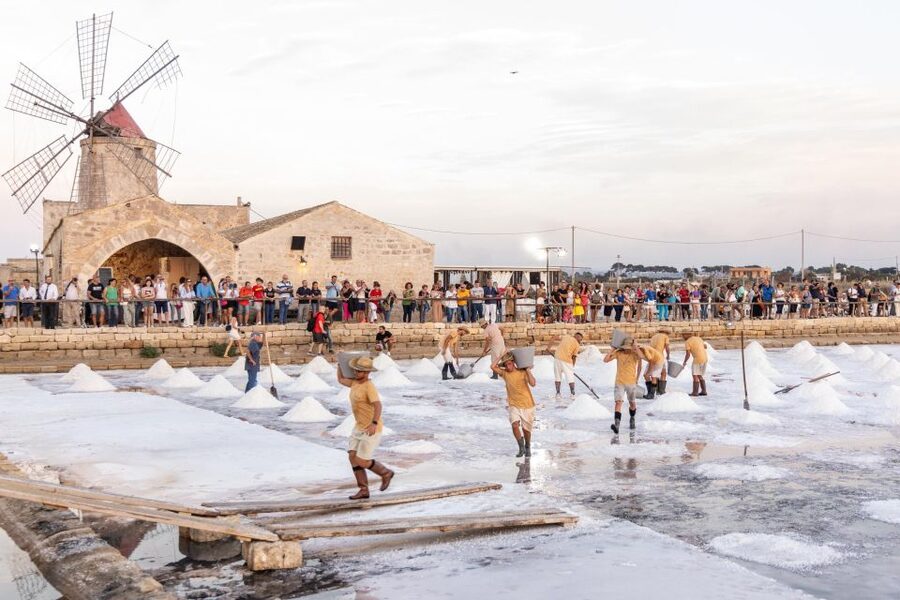
Salt turns into history fast in Trapani. The guided walk between the Saline Culcasi of Trapani and the salt museum is a rare combo of nature, food, and family-run production, with salt workers who have worked these flats for four generations. I particularly like the chance to taste fleur de sel in different aromas and then touch salt right where it’s produced, plus the museum’s guided look at the work and the 1400s mill. One thing to watch: it includes a 1-hour hike, so you’ll want comfortable shoes and basic fitness.
This is one of those tours that feels practical, not performative. You get English and Italian live guiding, you can reach the meeting point by the windmill area at Via Salina Chiusa, 1, and the visit runs about 75 minutes. After the tour, you may also have an aperitif with sea views and/or dinner at the onsite restaurant, which is handy if you want to keep the momentum instead of scrambling for your next stop.
Key things you should know before you go

- Only Culcasi-family tour option in the area, tied directly to the salt works you’re visiting
- WWF reserve walk with protected plants and birds, plus big views across the sea and salt pools
- Hands-on salt collecting from the tanks, not just looking at equipment
- Fleur de sel tasting including flavored varieties linked to a Slow Food Presidium
- Ancient salt museum + 1400s mill, set inside an old farmhouse and focused on the family story
Trapani salt pans: why this feels different than a typical museum stop
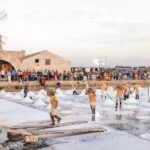
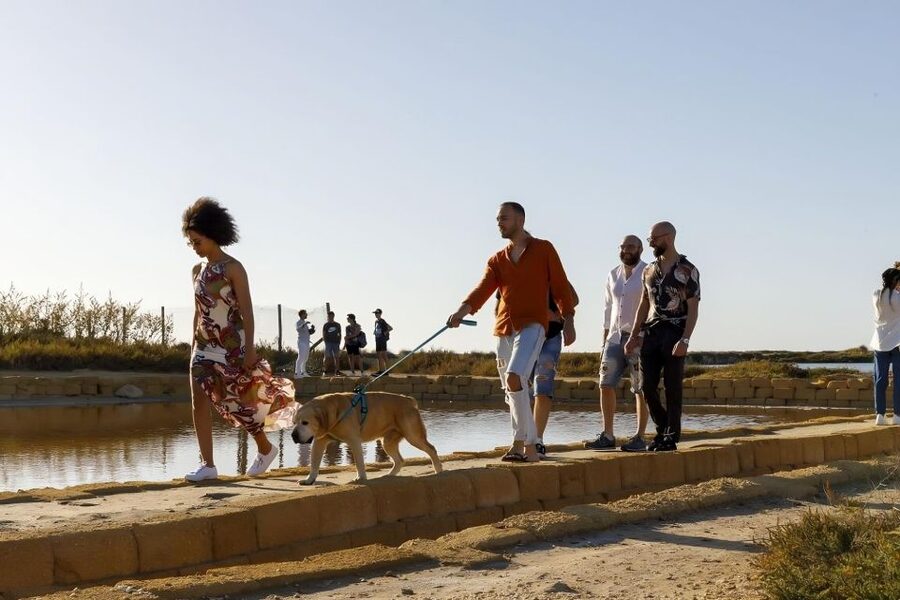
If you’ve ever visited a “salt museum” that mainly shows photos, this tour will likely feel more real. The salt pans are the main character here, and the museum is the follow-up that explains what you just saw. You start outside, walking the perimeter where the colors change constantly: white salt crusts, blue sea, grey clay, and pools that can look pink depending on conditions. That color mix does something helpful. It makes salt feel alive, like part of the landscape instead of a stored product.
I also like that this isn’t a generic history lecture. The guide connects the production process to the people who did it for generations, so the story stays grounded. You’re not just learning about salt as a commodity. You’re learning how seawater becomes harvestable salt, and why that work shaped a family and a place.
There’s also a nature angle you shouldn’t ignore. The walk takes place within the WWF reserve area, where you might spot protected plants and birds. Even if you’re not a serious bird person, it changes the mood. The salt pans become a working ecosystem, not a dusty backdrop.
You can also read our reviews of more guided tours in Trapani
Getting there and finding the meeting point under the windmill
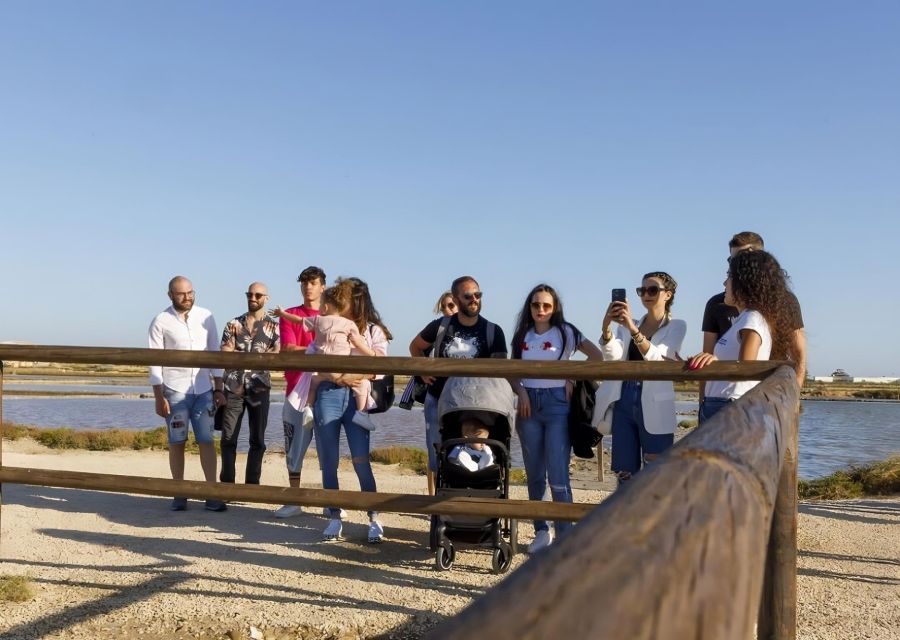
Start at Via Salina Chiusa, 1. It’s a straightforward address, but the key is where you line up. The meeting point is the ticket office in the forecourt below the windmill area. Look for the guide behind the salt sales counter, and arrive a bit early so you can get your bearings before the group sets off.
This matters because the tour runs about 75 minutes and the walking portion has a time rhythm. If you’re late, you can miss the easiest part, which is the calm start and the first views across the pans.
Before you go, pack for sun and traction. You’ll want comfortable shoes, a hat, and comfortable clothes. The walk is a basic level hike, but salt flats can be uneven and you’ll be walking along the perimeter of the salt pans.
The 75-minute salt pan walk: colors, birds, and that water-mirrors-sky moment

The tour is split into two parts, and the first one is the outdoor walk. You’ll start with a relaxing route around the salt pans perimeter. The goal is simple: help you see how the salt area works, before you start touching and tasting anything.
As you walk, you’ll notice how the salt flats create a set of visual “layers.” The whites of salt stand out against the blue sea. The grey clay and the pink-toned pools provide contrast. And at the banks of the salt pans, the water can mirror the sky, which makes photos look almost unreal even without special effects.
This walk is also where the tour becomes hands-on in a believable way. You follow the production flow step by step, so when you later hear about collection and the tanks, it makes immediate sense. The WWF reserve setting helps here too. It’s easier to pay attention when you’re not just marching from one point to another.
Fitness note, plain and simple: you’ll be walking for about an hour. The tour is described as a 1-hour hike with a basic fitness level required. If you have limitations, don’t assume it will feel like a flat stroll. If you’re unsure, it’s smart to plan for slower pacing and ask for guidance on where the route may feel easiest.
Hands-on salt: collecting from the tanks and touching the real thing
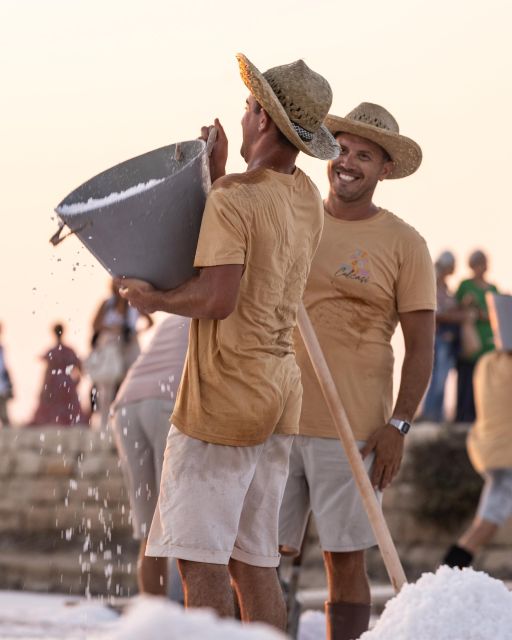
Here’s where this tour moves from “nice” to memorable. You can collect salt with your hands as part of the process. And you can touch the salt inside the salt production tanks. That’s not a gimmick. It’s the clearest way to understand how harvested salt differs from sea water and why the timing matters.
Salt texture teaches fast. If you’ve only ever used salt from a shaker, your brain expects something uniform. Here, you’re meeting salt as a substance that forms, dries, and changes with its environment. That makes the later museum explanations click, because you’ve already made a mental map from material to method.
Then there’s the tasting, which is tightly linked to the “production equals flavor” idea. It’s not just a sample. It’s an education tool for your palate.
Salt tastings that food lovers will actually care about
The tasting part is one of the best reasons to book this tour. You get to taste whole salt and fleur de sel in different aromas connected to the production. One standout is the flavored fleur de sel associated with a Slow Food Presidium.
What I like about this approach is that it gives you a language for salt beyond “salty or not.” Aroma matters. Different salts can feel different on your tongue, and the experience helps you understand why chefs and producers pay attention to variety.
Practical advice: go in with an open mind and a sense of humor. Some flavored salts are intense, and that’s part of the point. If you’re salt-sensitive, you can take smaller bites. The tour gives you a tasting experience, not a meal.
And because you’re tasting during a guided visit to the pans and museum, the flavors feel earned. You’re not trying to remember a food label. You’re connecting taste to what you just walked past.


The ancient salt museum and the 1400s mill: where the family story fits in
After the walking portion, the tour shifts into the second part: a guided visit to the salt museum and an ancient mill from the 1400s. The museum is inside an ancient farmhouse, so the setting already signals that this was never a modern “visitor attraction” first. It’s a working-world preserved for understanding.
This is where you get the history that explains the day-to-day effort behind what you saw outside. The tour retraces the tiring work of the salt pan and then places it inside the bigger story of the family that ran it for generations. It’s a simple framework, and it works. Salt production is labor. Family knowledge is what keeps the process going year after year.
I also like that the visit ties salt and sea together rather than treating them as separate topics. The museum is described as part of the official European Union guide, which is a helpful signal that it’s recognized as more than a small local display.
What to expect in the museum segment depends on your guide pacing, but you can plan for a more explanatory tempo than the outdoor walk. This is where you’ll learn the “why,” not just the “what.”
After the tour: aperitif or dinner with sea views
The experience doesn’t have to end when the guided portion does. At the end of the tour, you may be able to have an aperitif with a breathtaking view and/or have dinner at the restaurant. This is a smart setup if you’re touring the Trapani area and want to stay in one place.
Even if you skip the food, this option can be a travel advantage. It saves you from the classic problem of tours ending right when you need transportation and reservations.
Price and value: is $21 worth 75 minutes of salt work and museum time?
At $21 per person for a 75-minute guided experience, this tour can be good value if you care about more than a quick photo stop.
Here’s why. Your ticket isn’t just admission. It includes:
- Entrance with guided tour of both the salt pan and the salt museum
- Tasting of whole salt and fleur de sel in different aromas, including flavored varieties linked to a Slow Food Presidium
- The hands-on salt moments, where you can touch salt in the production tanks and collect salt with your hands
That combination is rare. Many tours show you salt production but don’t let you interact with it. Many food tastings happen without tying the flavors to where they come from. This tour tries to connect the full chain, from seawater to harvest to flavor.
Value also comes from time. 75 minutes can fit into a day in Sicily without swallowing your entire schedule. If you’re pairing Trapani with other stops, this is a manageable commitment.
Who should book this tour, and who should reconsider
This tour is a strong fit if you’re one of these people:
- You like nature walks with a clear purpose, not just scenery
- You’re a food person who wants to taste salt varieties and understand why they differ
- You enjoy family-run craftsmanship stories, especially ones tied to a specific place
- You want history that connects directly to what you’re looking at outside
It may be less comfortable for you if you strongly dislike hiking. The tour includes a 1-hour hike and basic fitness is required, plus you’ll be walking on the salt pan perimeter route. The good news is the tour is wheelchair accessible. The even more practical news is that “accessible” doesn’t automatically mean “effort-free,” so if you have mobility concerns, it’s wise to ask in advance how the route will work in your case.
Should you book the Guided Tour of the Trapani Salt Pans and Salt Museum?
I’d book this if you want a memorable Trapani experience that mixes WWF reserve nature, hands-on salt learning, and a guided museum visit under one ticket. The combination of salt tastings, including flavored fleur de sel linked to a Slow Food Presidium, makes it especially worth your time.
I’d also choose it if you’re the kind of traveler who likes to leave with something you can use later, like a better sense of salt flavors and how they connect to production. This tour makes salt feel personal.
Skip it or plan carefully if you know you’re not comfortable with a 1-hour hike. Bring the right shoes, bring your hat, and give yourself a little extra buffer at the meeting point below the windmill so you start relaxed.
FAQ
How long is the guided tour of the Trapani Salt Pans and Salt Museum?
The tour duration is 75 minutes.
What is included in the ticket price?
Your ticket includes the entrance with a guided tour of the salt pan and the salt museum, plus a tasting of whole salt and fleur de sel in different aromas.
Are there tastings during the tour?
Yes. You’ll taste whole salt and fleur de sel in different aromas, including flavored fleur de sel associated with a Slow Food Presidium.
What languages are the guides speaking?
The tour is guided in English and Italian.
Is the tour wheelchair accessible?
Yes, it is wheelchair accessible.
Will I need to walk a lot?
You should expect about a 1-hour hike, and a basic level of fitness is required.
Where do I meet the guide?
Meet at the ticket office in the forecourt below the windmill. The guide will be behind the salt sales counter.
What should I bring?
Wear comfortable shoes, bring a hat, and dress in comfortable clothes.
More Guided Tours in Trapani
More Tours in Trapani


More Tour Reviews in Trapani

Not for you? Here's more nearby things to do in Trapani we have reviewed




Trapani, Erice & Segesta Tours, compared.
 ★ 4.2From Trapani: Cruise to Favignana and Levanzo with lunchFrom $532,286 reviews
 ★ 4.2Segesta, Erice and Salt Pans Full-Day Excursion from PalermoFrom $821,791 reviews
 ★ 4.3From Trapani: Day Cruise to Favignana & Levanzo with LunchFrom $461,483 reviews
 ★ 5.0Boat Tour Egadi Day discover Favignana and Levanzo from TrapaniFrom $1391,183 reviews
 ★ 4.2From Trapani: Favignana and Levanzo Mini Cruise with LunchFrom $47814 reviews
 ★ 5.0Favignana and Levanzo, Egadi islands tour by boat from TrapaniFrom $114720 reviews
 ★ 5.0Boat tour to Egadi Favignana and Levanzo islands from TrapaniFrom $102614 reviews
 ★ 5.0Egadi Islands Tour: Favignana and Levanzo from TrapaniFrom $114607 reviews
Browse the lists this tour appears in