
Reviewed · NOTO, MODICA & RAGUSA BAROQUE TOURS
Noto Baroque Masterpieces: small-group tour (max 6 Guests)
Baroque Noto hits fast. In about 90 minutes, you get a tight, small-group tour that links Noto’s standout churches with the people and stories behind them, all guided in English by Dr. Enrica De Melio.
What I like most is the focus on real details you can see in front of you, not just dates. The second big plus is how fast she turns a short stop into real understanding, so you do not feel rushed.
One possible drawback: this is a concentrated walking route with several church interiors and facades, so you’ll want comfortable shoes and patience if doors or lighting make it tricky to look closely.
Key Things to Know Before Your Noto Baroque Walk
- Max 6 people keeps questions easy and the pace human, not herding-cat.
- English mobile ticket means you can travel light and show your ticket on your phone.
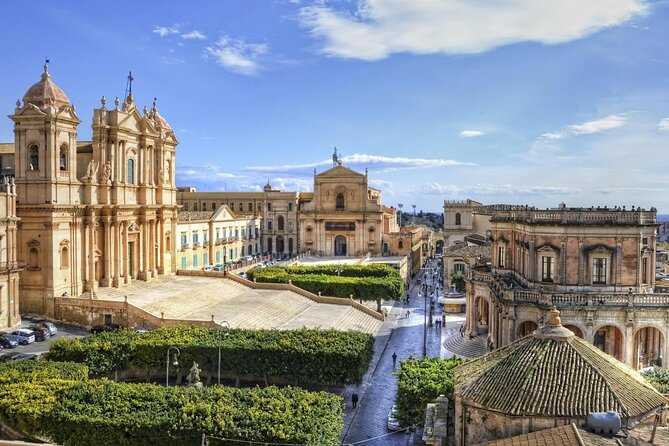
- Seven curated stops cover churches, a palace facade, and a working theatre, all connected by Baroque design and local tradition.
- Cattedrale di San Nicolo entry is included, while the rest of the listed stops are marked free.
- Good weather matters since it’s an outdoor-to-indoor walking route through town.
Baroque Noto in 90 Minutes With a Max of 6
If your Sicily wish list includes Noto, this format is smart. You do not need a full day to start seeing why Noto is famous for Baroque architecture. Instead, you get a short route that stays concentrated on the most teachable details: shapes, facades, painted effects, and how history shows up in rebuilding.
The group size, up to 6, is a quiet advantage. You can ask a question, hear the answer, and still keep moving. It also helps the guide control pacing inside churches, where people naturally slow down.
The time window is about 1 hour 30 minutes, which also means you can do other things the same day. You’ll likely have energy left for a gelato stop, or a later wander through town streets, at your own pace.
You can also read our reviews of more tours and experiences in Sicily.

Meet Dr. Enrica De Melio, PhD Archaeologist Guide in English
This tour is led by Dr. Enrica De Melio, a licensed tourist guide and PhD archaeologist. That mix matters. You get someone who can talk about art and architecture with structure, then bring it to life with context that makes the buildings feel less like museum pieces and more like real places people used every day.
From what’s consistently described, she’s not just about facts. She communicates with warmth and empathy, and she manages to keep attention even when you’re touring as a family. In other words, you should expect clear explanations that match what you can actually see, like an oval church plan or painted trompe-l’oeil effects.
Because the tour is offered in English, it’s a relief if you do not want to play translation guessing games in stone corridors.
Stop 1: Chiesa Santa Chiara and Its Ovale Plan
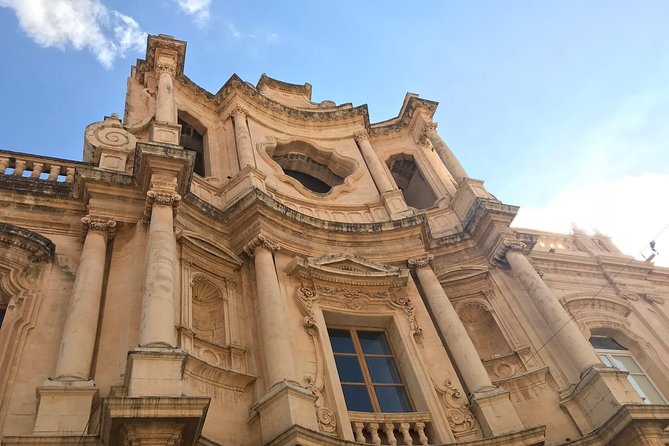
You start with Chiesa Santa Chiara, where the interior is the point. You’ll have about 15 minutes here, with admission listed as free.
What makes this stop worth your time is not just the paintings. It’s also the layout. The church is known for an unusual oval plan, and seeing that shape in person helps you understand how Baroque designers thought. Instead of one stiff, boxy direction of travel, the space gently guides your eye and body.
Practical tip: spend a minute looking before you rush in deeper. Baroque interiors can be visually noisy, in a good way. Give your eyes a second to settle so you can spot the painted works the guide points out.
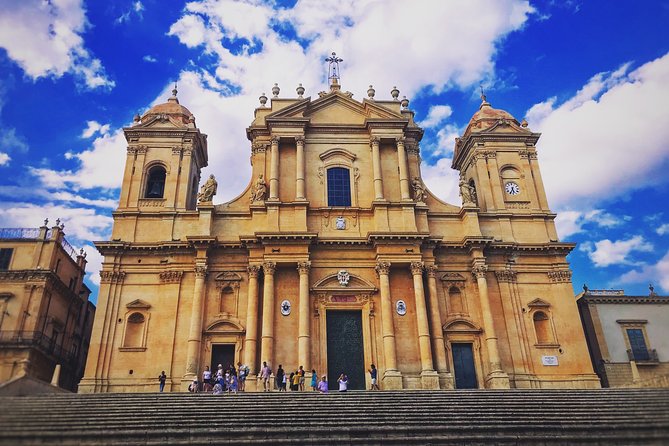
Stop 2: Cattedrale di San Nicolo After the 1996 Dome Collapse
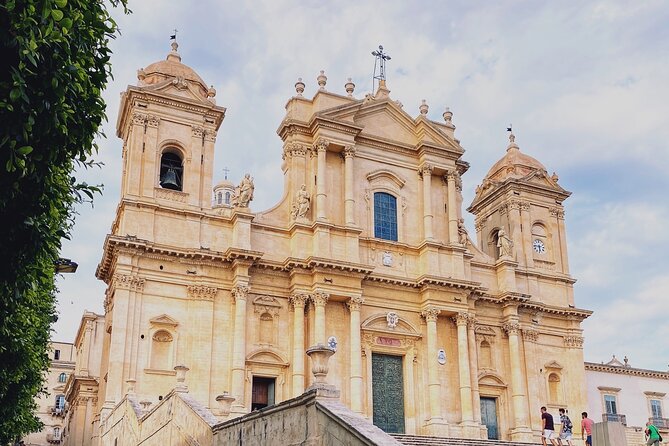
Next is Cattedrale di San Nicolo for about 15 minutes. Admission is marked as not included in the general stop note, but it’s specifically listed as included for the overall tour. So you should not arrive expecting to pay again for this one.
The cathedral has a real “history you can see” angle. It was partially reconstructed after the dome collapse in 1996. That means the building tells two stories at once: the original Baroque ambition, and the later choices made to rebuild.
You’ll want to keep your eyes open for differences in materials, forms, or how parts of the structure meet. When a building has been repaired, the design choices become part of the narrative.
Stop 3: Via Corrado Nicolaci and the Annual Infiorata
Then you move onto Via Corrado Nicolaci for around 10 minutes. This is a quick stop, but it matters because it connects architecture with local tradition.
Here, the guide talks about the famous Infiorata, held in Noto every year. Even if you’re not visiting during the festival dates, the idea helps you read the street differently. Baroque city planning is not just about grand buildings. It’s also about how public space becomes performance space.
Practical tip: at street stops like this, pick one direction to look first, then rotate your head slowly. You’ll see more relationships between facades that way.

Stop 4: Palazzo Nicolaci, the Facade and the Family Behind It
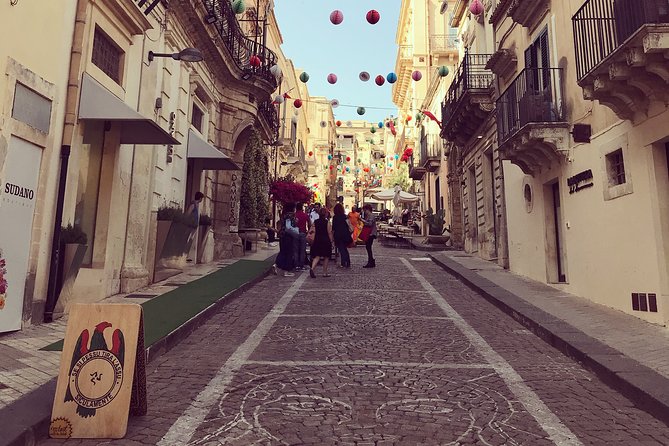
Your next key stop is Palazzo Nicolaci for about 15 minutes, with admission marked free.
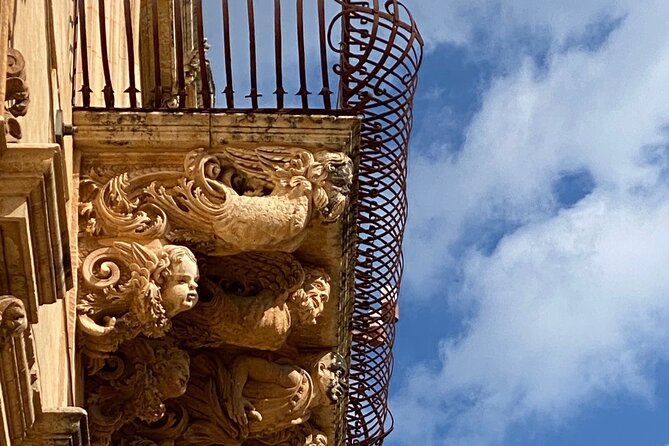
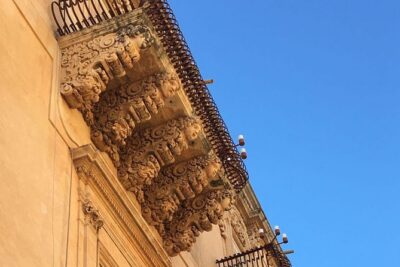
This is where the Baroque “stage set” feeling comes in. You’ll focus on the facade and the family associated with it. The point of a palazzo stop is to understand power and pride made visible in stone and ornament.
If you tend to skim facades yourself, this is a good place to slow down. Baroque style has patterns, repeated choices, and deliberate contrasts. A guide can help you notice what looks decorative but is actually designed to communicate status.
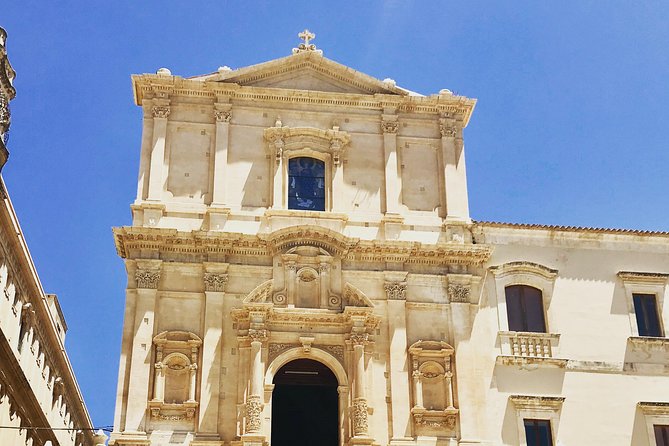
Stop 5: Chiesa di San Carlo Borromeo and Trompe-l’oeil Chapel Paintings
Now you enter Chiesa di San Carlo Borromeo for around 10 minutes. This church features two side chapels with painted decoration using trompe-l’oeil techniques.
“Trompe-l’oeil” is basically the art of making you feel like something is more dimensional than it is. In real life, those effects are often easiest to appreciate from a specific angle. If you stand in the wrong spot, it can look flatter than expected.
So do what the guide does: pause where you’re directed, tilt your head slightly, and compare what you see with what you expected to see. It turns a quick photo stop into a real visual puzzle.
Stop 6: Chiesa di San Domenico by Gagliardi, Recently Restored
Next up is Chiesa San Domenico for about 10 minutes, also marked free.
This stop has two important clues for what to watch. First, it was built by the Gagliardi. Second, it’s had a recent restoration, so you get a sense of a living monument, not just something frozen in time.
Restoration can change color balance, texture, and clarity. You might notice surfaces look “cleaner” or more defined than you expect from an older building. That’s part of the experience too, because restoration is how cities keep their art readable for the next generation.
Stop 7: Teatro Tina Di Lorenzo Built in 1880, Still in Use
Your final stop is Teatro Tina Di Lorenzo for around 15 minutes, admission listed as free.
This theatre is built in 1880, and it’s still used for Noto’s seasonal theatre and concert calendar. That’s a great last stop because it shifts you from sacred spaces to civic culture, from stone devotion to community entertainment.
It also gives you a fuller picture of Noto. Baroque city beauty isn’t only about churches and palaces. It’s also about how people gather. A functioning theatre means the city’s artistic life continues beyond the walking tour.
If you have time after the tour, you can treat this as your cue to look for other cultural stops nearby.
What You’ll Actually Get From This Format
Here’s why this tour works for most people. You’re not just “seeing Baroque.” You’re learning how Baroque design reads in three categories:
1) Shape and space
You get the oval church plan at Santa Chiara, which helps you feel how design guides movement.
2) Surviving history
The cathedral reconstruction after the 1996 dome collapse turns architecture into a story about risk, rebuilding, and continuity.
3) Art tricks and public life
Trompe-l’oeil chapel paintings, plus the Infiorata tradition and a working theatre, show that Noto’s Baroque identity is both visual and social.
This combination is useful if you’re visiting for the first time. It also helps if you’ve been to other Sicilian Baroque towns like Siracusa, because you can compare what each place does with similar artistic language.
Logistics That Affect Your Experience (Small Details, Big Impact)
Because this is a walking route, the “small” logistics are worth planning:
- Meeting point: Porta Reale or Ferdinandea on Corso Vittorio Emanuele 182 in Noto.
- End point: Piazza XVI Maggio.
- Dress code: smart casual. Comfortable layers help, since church interiors and streets can feel different.
- Mobile ticket: you’ll use it on your phone.
- Near public transportation: helpful if you’re connecting from elsewhere in Sicily.
Also keep in mind the tour requires good weather. If it’s canceled due to poor weather, you’ll be offered a different date or a full refund.
Value: What’s Included, What Isn’t, and Why It Matters
The tour includes the guide, and it includes the admission ticket to the Cattedrale. Everything else on the listed stops is shown as free.
That matters because church entry costs can add up when you DIY. Here, you’re paying for expert interpretation plus at least one key ticket that you would otherwise handle yourself. And since the route covers several free sites, you get good bang for the time.
Transportation is not included, so you’ll want to plan how you’ll reach the meeting point and return afterward. The meeting and end locations are in central Noto, so for many people, a short walk or quick local connection is the easiest approach.
Who This Tour Suits Best
This is a great match if you want:
- A high-impact first look at Noto’s Baroque.
- A tour led by someone with both field credentials and clear communication, like Dr. Enrica De Melio.
- A format that keeps pace reasonable for a mixed group, including families who still want meaningful explanations.
It’s also a solid choice if you’re short on time but do not want to treat the buildings like a checklist. The route is short enough to fit into a busy day, but varied enough to feel like a real education.
If you prefer slow wandering with lots of free time, this may feel a bit structured. But if you want guidance that helps you see what matters, you’ll likely like the pace.
Should You Book This Noto Baroque Masterpieces Tour?
Book it if you want a tight, guided route through Noto’s key Baroque sights, led in English by Dr. Enrica De Melio. The included cathedral entry and the way the stops connect art, architecture, and local tradition make it efficient and genuinely informative.
Skip it only if you have very limited mobility or you want long unstructured time inside each site. This tour is built for movement and interpretation within set windows.
If you’re visiting Noto for the first time, I’d treat this as your foundation walk. After it, you’ll have a mental map that makes independent wandering much more satisfying.
FAQ
How long is the Noto Baroque Masterpieces tour?
It lasts about 1 hour 30 minutes.
What is the group size limit?
The tour has a maximum of 6 travelers.
What language is the tour offered in?
The tour is offered in English.
Where does the tour start and end?
It starts at Porta Reale or Ferdinandea, Corso Vittorio Emanuele 182, Noto and ends at Piazza XVI Maggio, Noto.
Is there an entry ticket included?
The tour includes the admission ticket to the Cattedrale di San Nicolo. The other listed stops are marked as free.
What are the main stops on the route?
The itinerary includes Chiesa Santa Chiara, Cattedrale di San Nicolo, Via Corrado Nicolaci, Palazzo Nicolaci, Chiesa di San Carlo Borromeo, Chiesa di San Domenico, and Teatro Tina Di Lorenzo.
What is not included in the tour?
Transportation to/from attractions is not included.
What kind of dress code should I follow?
The dress code is smart casual.
What happens if the weather is poor?
This experience requires good weather. If it’s canceled due to poor weather, you’ll be offered a different date or a full refund.
What is the cancellation policy?
There is free cancellation. You can cancel up to 24 hours in advance for a full refund.
More Tours in Sicily


More Tour Reviews in Sicily
Not for you? Here's more nearby things to do in Sicily we have reviewed






Noto, Modica & Ragusa Baroque Tours, compared.
 ★ 4.6Catania: Syracuse, Ortigia, and Noto Tour with BrunchFrom $112404 reviews
 ★ 5.0Syracuse, Ortigia and Noto walking tour from CataniaFrom $129273 reviews
 ★ 4.7From Catania: Neapolis of Syracuse, Ortygia, and Noto TourFrom $130234 reviews
 ★ 3.9From Catania: Syracuse, Ortygia, and Noto Tour140 reviews
 ★ 4.8Noto, Modica and Ragusa: The Baroque Tour from CataniaFrom $124133 reviews
 ★ 4.4Catania: Noto, Modica and Ragusa Ibla Baroque TourFrom $101106 reviews
 ★ 4.3From Taormina: Syracuse and Noto Guided Day Trip by BusFrom $68101 reviews
 ★ 4.5Syracuse, Ortygia & Noto small group Tour from Catania with lunchFrom $12698 reviews
Browse the lists this tour appears in