
Reviewed · MONREALE & NORMAN PALERMO TOURS
Palatine Chapel: Private Walking Tour & Sicilian Lunch
Palermo can look like a maze until you walk it with a plan. This private half-day route is built for getting your bearings fast, with Arabic neighborhoods, major landmarks, and the Palatine Chapel payoff, followed by a proper Sicilian lunch. I especially like how the walk connects streets and stories, from Politeama Square to the Royal Palace. I also like that you end up fed, not just shown things, with a buffet-style meal in a historic setting. One consideration: Palatine Chapel entry and audio guide are not included, so you should budget for those tickets separately.
You get a lot into about four hours, but it is still a walking tour through narrow lanes, and it is not wheelchair-friendly. Also, religious sites require modest clothing to cover your body, and the operator notes they are not responsible for unusual closures at the Massimo Theater or churches.
Key highlights you will feel immediately
- Palatine Chapel inside the Royal Palace, a top example of Arab-Norman art in Palermo
- Teatro Massimo stop, the largest theater in Europe, with a guided look at the building
- Arabic Palermo atmosphere, from red domes at Martorana to the old quarters tucked in narrow streets
- Vucciria market time plus a targeted stroll through Saint Dominic Square
- A 16th-century Spanish building lunch with classic Sicilian dishes, wine, and dessert
- Private group format, so the pace stays human and the guide can focus on your questions
Why Palermo works so well on foot
Palermo is one of those cities that rewards slow attention, even when you only have a few hours. The street pattern is part of the experience: narrow lanes, sudden openings, and whole neighborhoods that seem to fold into each other. That is why a walking tour makes sense here. You can actually notice the changes in architecture, street life, and religious buildings as you move.
This tour also keeps you moving between the city’s main axes and the older, more maze-like quarters. You start around Piazza Verdi, then cross through the heart of the modern center before turning toward the older fabric of the city. You will get both the big picture and the street-level details, without needing to figure out every turn yourself.
You can also read our reviews of more walking tours in Palermo
Getting your bearings: Politeama Square to Teatro Massimo
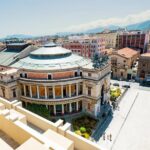
You start by crossing Politeama Square, where Palermo’s major avenues meet. It is a useful first step because it sets the grid of the city in your mind, even if you will soon be ducking into much tighter streets.
From there you follow Ruggero VII Street, often described as the lounge of Palermo. It is a good artery to walk early in the day because you can sense the city’s daily rhythm without the pressure of a market crowd. As you move, you pass the Church of St. Lucia. It is the kind of stop that helps you understand why Palermo feels layered, not uniform. One church can connect you to a different era, even if the street keeps changing.
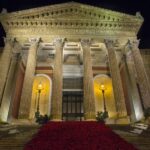
Then comes Teatro Massimo. The highlight is simple: it is the largest theater in Europe, and Palermo builds its identity around big cultural spaces. Your guide brings context as you approach and look around, and the stop gives you a strong mental landmark for the rest of the walk. Just note the practical detail: entry to Teatro Massimo is not included. So plan on a guided viewing visit rather than a full independent inside ticket experience.
Via Maqueda and Quattro Canti: Palermo’s commercial spine
After Teatro Massimo, you move along Via Maqueda, one of those streets that feels like a spine. It is full of historic buildings and churches, so the architecture is doing the talking as you go. The value of this part is that you are not just walking past facades, you are learning how Palermo’s religious buildings sit inside its commercial life.
As the route continues, you reach Quattro Canti, meaning four corners. This is where the city divides exactly into four parts, a tidy way to understand how Palermo is organized. Standing near this intersection is helpful because it gives you a reference point you can return to mentally later, even if you wander.
The older quarters: Candelai, Arabic domes, and hidden communities
Here is where Palermo starts to feel like itself. The tour takes you to Candelai, described as the heart of Palermo’s nightlife. Even if you are visiting in daylight, it tells you something important: these streets are not museum streets. They are living streets.
You also get a strong sense of Arab-influenced neighborhoods. The city’s inner structure is shaped by that history, and you can see the imprint in the way streets compress, open, and reveal religious landmarks. You will also pass areas associated with St. Clare, an old community tucked into the inner-city fabric.
Two image-based stops anchor the Arabic-Norman vibe:
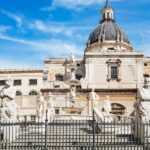
- The Square of Shame, where nude statues appear as part of the monumental sculpture program you will see in Palermo’s classic baroque zones.
- The Martorana, recognized for its red Arabic-style domes. Even if you do not know the dates yet, your eyes pick up the style blend quickly, especially once you have been walking for a while.
This is not “one big photo moment” sightseeing. It is more like learning the language of Palermo’s visual mix, so you can recognize the story even after the tour ends.
Cathedrals and St. Joseph of the Theatine
As you work your way onward, you visit St. Joseph of the Theatine and the Cathedral of Palermo. These stops matter for two reasons.
First, they ground the walk in the religious architecture that dominates so much of Palermo’s identity. Second, they help you understand how earlier influences, including Arab-Norman art, ultimately sit next to later styles. Palermo is famous for blends, but you only appreciate the blends once you see the timeline in person.
This section also helps you take a break from pure street-level motion. Churches slow your pace naturally. Just remember the practical part: wear clothing that covers your body when visiting religious sites. This is one place where being prepared pays off, because getting turned around or forced to cover up last-minute can ruin your flow.
You can also read our reviews of more private tours in Palermo
Royal Palace and Palatine Chapel: the Arab-Norman jewel
After the cathedral zone, you reach the Royal Palace. This is where the tour’s “big payoff” becomes real.
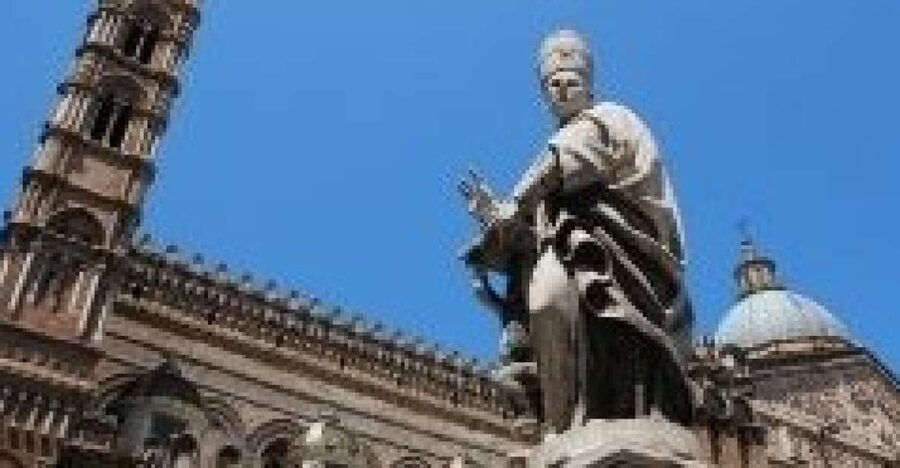
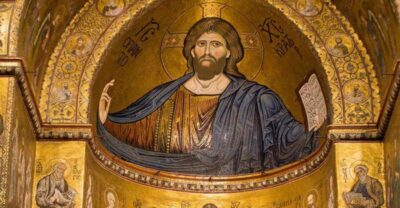
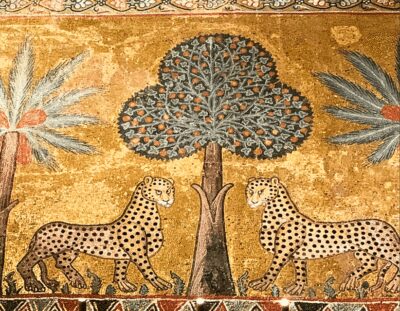
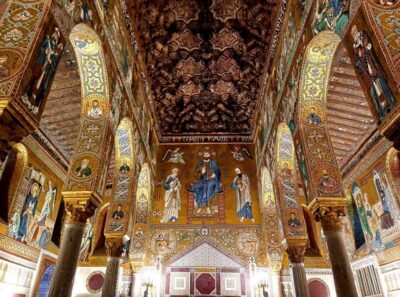
The Palatine Chapel is described as the jewel of Arab and Norman art, and the placement matters. It sits inside the Royal Palace complex, not in isolation. So your guide can connect what you have already learned from street style and neighborhood cues to a concentrated artistic statement inside.
If you are going for the chapel experience, the practical details are important too:
- Palatine Chapel entry ticket and audio guide are not included.
- The tour includes skip-the-ticket-line help, which is a real time saver when you hit a popular site.
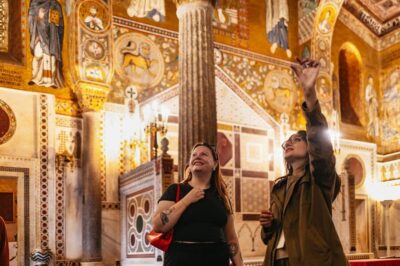
You will feel the value here even if you are not an art historian. The chapel is the kind of place that rewards attentive looking, and arriving without a long wait makes that attention possible.
Vucciria market and Saint Dominic Square: shopping and snacks before lunch
Before lunch, the tour gives you a chance to shop and soak up everyday Palermo life at the Vucciria market and near Saint Dominic Square. This part is not just busy for the sake of being busy. It is where you see local rhythm: vendors, shoppers, and the quick decisions that shape a market day.
If you like souvenirs that feel local, this is the moment to look. Food stalls and small shops also make sense here because you can browse, sample only if you want, and then move on without committing to a full sit-down snack.
This timing is clever for another reason. You are still walking, so the market gives you a sensory reset before you sit down for a meal. When lunch hits, you will actually be hungry.
A Sicilian lunch in a 16th-century Spanish building
Lunch is a standout, mainly because it is structured, plentiful, and tied to the culture of eating in Palermo. The meal happens inside a 16th-century Spanish building, which adds atmosphere without turning lunch into theater.
You get a Sicilian buffet with dishes such as:
- panelle
- sfincione
- anelletti al forno
- caponata
- cassatelle
You also get traditional Sicilian wine plus a dessert of almond biscuits and mocha espresso. The value of this menu is that it gives you a spread of flavors and textures. You are not stuck on one type of food, and it is a good way to taste regional staples without needing a full food quest.
One practical point: since the lunch is included and served as part of the tour, you do not have to gamble on finding a good sit-down option on your own during a short stay. That matters in Palermo, where choosing the right place can take time.
Price and value for a private Palermo half-day
At $192.58 per person for a 4-hour private walking tour, you are paying for two things: focused local guiding and the convenience of a timed route that strings major sights together.
Here is how I judge value for this kind of tour:
- You save decision time. Instead of planning a route across Palermo’s neighborhoods, you get a connected walking plan that makes geographic sense.
- You get a structured cultural arc. The tour moves from major squares and streets to Arabic-influenced quarters, then toward the concentrated art of the Palatine Chapel.
- Lunch is included, with wine and dessert. That is often the hidden cost when you plan your own day.
- Line time is minimized by skip-the-ticket-line support for the Palatine Chapel.
What is not included changes the math a little. Since the Palatine Chapel ticket and audio guide are separate, and Teatro Massimo entry is not included, you should plan on paying for those components on your own. Still, because the tour helps you move quickly and keeps you on route, the overall experience tends to feel efficient rather than rushed.
Meeting point, pace, and what to wear
This tour starts at Piazza Verdi, at the stairs of the Theatre, and it ends back at the meeting point. That is a nice setup if you want to avoid the stress of figuring out a new end location.
The pace is walking-focused, and you should be comfortable on uneven streets and narrow lanes. It is also marked as not suitable for wheelchair users, so plan accordingly.
For clothing, the biggest rule is modesty for religious sites. Even if the day is warm, you will want light layers that cover your body when you enter churches.
Who this tour fits best (and who should pick something else)
This is a strong fit if you want:
- a private guided day in Palermo, with room for questions
- a route that explains why the city looks the way it does, especially the Arabic-Norman mix
- a guided stop at major landmarks, with lunch as part of the experience
It may not be the best fit if you:
- need wheelchair accessibility
- hate walking on narrow streets
- want every interior ticket included, because Palatine Chapel entry is not included and audio guide is also not included
Should you book this Palermo Palatine Chapel plus Sicilian lunch tour?
I would book it if your goal is a half-day that feels cohesive. You get the sense of Palermo’s Arabic-influenced layout, the big cultural landmarks like Teatro Massimo, and then the concentrated wow factor of Palatine Chapel inside the Royal Palace. The lunch is also genuinely practical, because you do not have to hunt for a good meal while you are trying to see a lot.
Choose a different option only if you strongly prefer to do everything independently with included tickets, or if walking through narrow historic streets is a challenge for you.
FAQ
How long is the tour?
The tour lasts about 4 hours.
Where does the tour start?
It starts at Piazza Verdi, at the stairs of the Theatre.
Does the tour include Palatine Chapel tickets?
Palatine Chapel entry ticket is not included, and the audio guide is also not included.
Is entry to Teatro Massimo included?
Entry to Teatro Massimo is not included.
What lunch is included?
You get a traditional Sicilian buffet including panelle, sfincione, anelletti al forno, caponata, cassatelle, plus wine and a dessert of almond biscuits and mocha espresso.
What languages do the guides speak?
The guide can speak Italian, English, French, Spanish, Russian, and German.
Is this tour wheelchair accessible?
No, it is not suitable for wheelchair users.
Does the tour help with skipping lines?
Yes, there is skip-the-ticket-line support.
What should I wear for churches and religious sites?
Wear appropriate clothing that covers your body while visiting religious sites.
More Walking Tours in Palermo

More Tours in Palermo
More Tour Reviews in Palermo
Not for you? Here's more nearby things to do in Palermo we have reviewed



Monreale & Norman Palermo Tours, compared.
 ★ 4.2From Palermo: Monreale and Cefalù Half-Day TripFrom $711,354 reviews
 ★ 4.7Palermo: Norman Palace and Palatine Chapel Tour with TicketsFrom $82298 reviews
 ★ 4.8Palermo: Cappella Palatina and Palazzo dei Normanni TourFrom $45214 reviews
 ★ 4.8Tour Cappella Palatina e palazzo Reale: patrimonio UnescoFrom $14183 reviews
 ★ 3.5Monreale And Cefalù Half Day ExcursionFrom $7783 reviews
 ★ 4.5Palermo: Norman Palace & Palatine Chapel – Small Group or PrivateFrom $8173 reviews
 ★ 5.0The Godfather Origins of Mafia: Corleone & Visit Monreale DuomoFrom $29873 reviews
 ★ 4.6Capuchin Catacombs and Monreale Cathedral Private TourFrom $24963 reviews
Browse the lists this tour appears in