
Reviewed · PALERMO CITY & MARKET TOURS
Palermo Walking Tour with Audio and Written Guide by a Local
UNESCO Palermo, in one phone-powered walk. I like the audio guide with map links, because it keeps you moving without feeling locked into a rigid group schedule. I also really like that it includes local restaurant advice, so you’re not stuck Googling when you’re hungry. The main drawback to plan for is that several top sights have separate ticket fees, plus you’ll need a smartphone and internet to run the guide.
This is an easy way to see the city’s big story in the right order, from Arab-Norman landmarks to Palermo’s lively street life. The route is designed for a long half day, roughly 6 to 7 hours, with shorter stops in between the bigger entries. It’s offered in English, and the audio and text support multiple languages, so it can work well even if your group has different comfort levels.
Because it’s self-guided, you can pause for photos, step into a side street, or linger at a square. The experience is capped (maximum 104), but you’ll be walking independently through the sights. Just keep in mind that one of the practical “gotchas” is that you may need to access audio through a website or passcode provided in your voucher.
Key highlights you’ll actually feel on the route

- Audio that follows your route with connections to Google Maps, so you spend less time figuring out where to go next.
- Built-in time control, you can shorten a stop or stretch it without breaking the whole day.
- A smart mix of paid and free sights, cathedrals and squares help balance the ticket costs.
- Palermo atmosphere, not just monuments, you’ll hit the historic market scene at La Vucciria.
- A satisfying finale for design lovers, ending with the majolica collection at the Museum of Majoliche Stanze al Genio.
- Restaurant and history tips included, helping you go beyond postcard trivia.
A phone-powered walk with real structure
This Palermo walking tour is designed around a simple idea: you get the structure of a guided route, but you control the pace. Instead of meeting a guide at every turn, you start at the Church of Saint John of the Hermits and the guide directs you stop by stop, with audio and written notes.
What makes it work well is the combination of audio + maps. The guide is connected with Google Maps, and you can hear it either through your phone speakers or headphones. So you can keep your hands free while you walk, and you can also switch off and on when you want a quiet moment.
You also get a digital guide to visit the city on your own, plus “best advice” for local restaurants with authentic food. That matters in Palermo, because you don’t just want the landmarks, you want where to eat nearby when the day starts dragging.
The practical thing to know: you’ll need a smartphone with internet connection to use the guide. If you hate dealing with logins, passwords, or activation links, this self-guided format may feel like a small extra chore.
You can also read our reviews of more walking tours in Palermo

Chiesa di San Giovanni degli Eremiti: a UNESCO opener
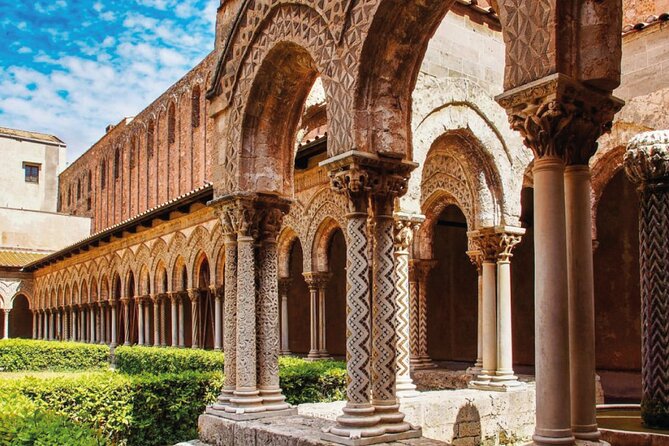
Stop 1 is Chiesa di San Giovanni degli Eremiti, also called the Church of Saint John of the Hermits. It’s part of the UNESCO itinerary Arab-Norman Palermo and the Cathedrals of Cefalù and Monreale, and the place gives you an instant sense that Palermo is layered, not one-dimensional.
Plan for about 25 minutes here. The complex has a long religious tradition: it began with a monastery dedicated to Saint Hermes, then under Muslim domination it became a mosque, and later it was entrusted to the Benedictines. One detail that’s worth noticing is the way the abbot served as the King’s confessor during the Benedictine period, which connects religion and power in a very tangible way.
The ticket for the church is not included (listed at 7€), so decide early if you want to pay right at the start or budget those paid entries for later. Either way, the emotional payoff is front-loaded. You’ll be standing in a site that has literally changed faith roles across centuries, and the architecture reflects that kind of cultural mixing.
Norman Palace and its underground Punic hints
Next up is the Norman Palace, also known as the Royal Palace. This is a heavyweight stop, and the route gives you around 2 hours, which is generous for a complex building.
The big headline is that it’s the oldest royal palace in Europe, but the reason it’s so fascinating is what sits underneath. The Norman Palace stands on older structures dating back to the Punic-Roman period. Even in the underground areas you can still visit, there are remains tied to the first Punic settlements.
If you like history that you can almost picture in layers, this is the best place on the route to slow down. Pay attention to why the site feels “used over time,” rather than preserved like a museum set. You’ll also appreciate having audio here, because it gives context without forcing you to constantly read every label.
Admission is not included (listed at 17€). So bring your patience for entry procedures and plan your schedule with that cost and time in mind. If you’re trying to keep your budget tight, this is one of the paid stops that tends to feel most worth it because of the underground story.
Palermo Cathedral and the Norman kings’ resting place
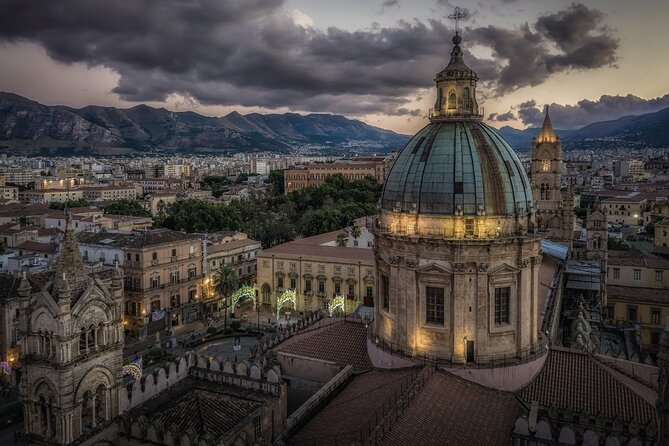
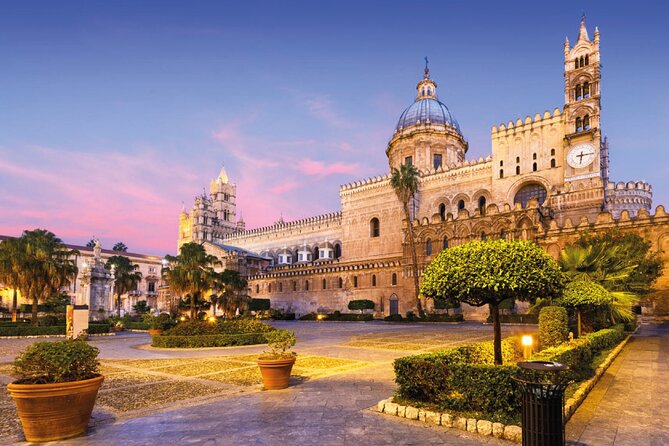
Stop 3 is Cattedrale di Palermo, Palermo Cathedral. You get about 25 minutes, and that short window is enough if your goal is to absorb what makes this cathedral unique and then move on.
This cathedral is recognized as a UNESCO World Heritage Site, and it’s known for combining Byzantine, Islamic, and Latin elements. That mix is the point. It’s not just a church with decorative style, it’s a snapshot of Palermo’s crossroads identity.
Inside, it houses the Diocesan Museum and a Chapel with relics of Santa Rosalia, Palermo’s patron saint. The cathedral also has tombs of the Norman kings. And since admission for this stop is listed as free, it’s one of the best ways to control ticket spending while still hitting major cultural weight.
If you’re photographing, try to keep one mindset for the outside and a separate one for the inside. Outside, look for how the building presents itself in the city. Inside, focus on what the guide cues you to notice, because the key details are easy to miss when you’re just scanning quickly.
Teatro Massimo, Quattro Canti, and the city plan you can feel
This route brings you from opera grandeur to one of Palermo’s most important crossroads.
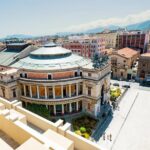
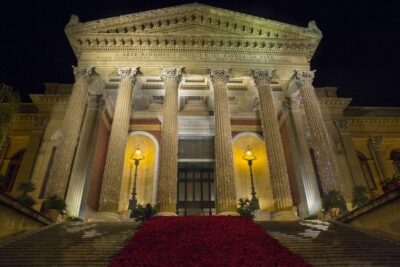
Stop 4 is Teatro Massimo, the largest opera house in Italy and the third in Europe. You’re given about 1 hour, and the building itself was designed by Giovanni Battista Filippo Basile. If you’re the kind of traveler who enjoys grand public buildings, this is where your walk becomes a bit more cinematic.
Admission is not included (listed at 12€). If you’re on a budget, treat it as optional, because the rest of the route still delivers major free scenery. Still, even outside, Teatro Massimo is worth the time because of its size and position, right where older Palermo meets northern expansion.
Stop 5 is Quattro Canti (Piazza Villena), and this is a short stop you’ll remember. It’s a 15-minute visit with free entry, and it’s known as the intersection that divided the city into four districts, called Mandamenti.
The intersection comes from where Via Maqueda (commissioned by the viceroy, named for him) met Via Vittorio Emanuele, also known as the Cassaro. When you stand at Quattro Canti, the city grid becomes easier to understand. It’s one of those places where a small pause helps you navigate the next parts of Palermo with less guesswork.
You can also read our reviews of more guided tours in Palermo



Piazza Pretoria and La Vucciria, where the day gets loud
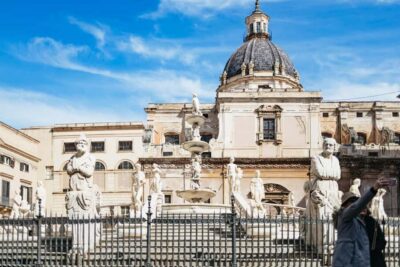
Stop 6 is Piazza Pretoria. You’re there for about 15 minutes, and it’s free. The square has a nickname tied to the fountain in the center, Piazza della Vergogna, or Square of Shame. The reason is straightforward: the fountain is visually striking enough to have earned a reputation, even if it’s not everyone’s preferred aesthetic.
This is a great place to take a breath. From the monuments and museums, you move into the open-air heart of the historic center, where you can watch daily life at a comfortable distance.
Stop 7 is La Vucciria, one of Palermo’s historic markets. This is another free stop with about 25 minutes, and it’s the most “sensory” part of the route. The market is located in the historic Loggia district, between Via Roma, Piazza San Domenico, and Via Vittorio Emanuele.
One fun detail to keep in mind is where the name comes from. It derives from the French boucherie, meaning butcher’s shop, because meat was originally sold here. When you’re walking through, you’ll understand why a market like this forms an identity for a whole city block, not just a place to buy food.
Use your included restaurant advice when you’re ready to eat, but also stay practical. Markets are busy and sometimes a bit chaotic, so keep your phone secure and move steadily. If you’re planning snacks, you’ll have an easier time choosing what you want when you give yourself a few minutes to understand how the stalls are organized.
Kalsa charm, Palazzo Abatellis, and the majolica museum finish
Stop 8 is La Kalsa, a neighborhood with an unmistakable mood shift. You get about 15 minutes, and it’s free. Kalsa dates back to the era of Islamic domination, and it still carries an oriental atmosphere, helped along by Arab-Norman style monuments.
If you’re trying to understand Palermo beyond the big-ticket buildings, this stop does that job. Neighborhoods teach you more about a city’s daily identity than a single landmark can. Look for how the streets feel, and notice any architectural hints the guide tells you to watch for.
Stop 9 is Palazzo Abatellis in Piazza Magione. You have around 1 hour, and the admission ticket is not included. It’s a 15th-century building built for Francesco Abatellis, a Sicilian nobleman, and it was designed by Matteo Carnilivari. The building combines Gothic elements with Renaissance influences, so it rewards travelers who like seeing how styles overlap in the same structure.
If you paid attention to Kalsa and cathedral architecture earlier, Palazzo Abatellis feels like a bridge, showing how Palermo’s cultural mixing continues into the visual language of the elite.
Stop 10 is where the tour ends: Museo Delle Maioliche Stanze Al Genio. This is your 1-hour finale and a smart payoff if you enjoy design, material culture, and decorative art. It’s a private collection spread across eight rooms, organized by era and geographical origin.
The tiles are mainly from Campania and Sicily, spanning the 15th to 19th centuries. They were produced for floors in noble and bourgeois homes, which makes the museum feel more tangible. You’re not just looking at patterns, you’re seeing what everyday elegance looked like.
Admission for this stop is also not included, but since the route ends here, you can treat it as your “capstone” experience. If you love visual details, this ending keeps the day from ending on a rushed note.
Tickets, time, and value for a $7.21 self-guided day
At $7.21 per person, the base price is low enough that you should think of it as paying for the route, the audio, and the context. What’s included is the digital guide, audio and text in multiple languages (English, Spanish, Italian, German, French), and the local restaurant advice. It also includes tips for monuments, history, and curiosities, plus Google Maps connectivity and a mobile ticket.
The key value tradeoff is that several stops require extra admission tickets. From the information provided, you should budget for at least:
- Chiesa degli Eremiti, 7€
- Norman Palace (Palazzo dei Normanni), 17€
- Teatro Massimo, 12€
Cattedrale di Palermo is free, and the squares and neighborhood walks are free too. La Vucciria and Quattro Canti and Piazza Pretoria are all listed as free, and Kalsa is free. That mix matters because it keeps the total cost from exploding, even if you decide to skip one or two paid entries.
For timing, the listed duration is 6 to 7 hours. In a day like this, that usually means you’ll spend a little longer at the bigger “anchor” sites. Norman Palace has the biggest time block, and it’s the one that benefits most from going a bit slowly rather than rushing through.
Comfort wise, plan for a lot of walking, plus stops that are inside controlled spaces. Bring comfortable shoes, and consider using headphones if the open air is loud. The guide gives you that flexibility. Also, since the guide relies on a smartphone and internet connection, make sure your battery is healthy before you start.
Should you book this Palermo walking audio guide?
Book this if you want a structured Palermo day without the pressure of staying with a group. I’d especially recommend it if you like the idea of UNESCO sites plus street-level atmosphere, because the route balances paid monuments with free squares and the historic market scene at La Vucciria. The audio format and Google Maps connection are a strong match for first-timers who want to get their bearings fast.
Skip it, or at least reconsider, if you strongly prefer a live guide or if you hate dealing with access steps for audio. One thing to keep in mind is that you may need to connect to a website with a password to run the audios, so this is not a pure plug-and-play experience. Also, if you want every single major sight included in one price, you’ll need to accept the extra ticket costs listed for several stops.
If you’re traveling in English and you appreciate self-paced travel, this is a solid value at $7.21. Just plan your budget for the ticketed highlights and treat the smartphone setup as part of the day.
FAQ
How long is the Palermo walking tour?
The route is listed as about 6 to 7 hours.
What is included in the $7.21 per person price?
You get a digital guide, with audio and written text in multiple languages, tips for monuments and history, and restaurant advice. It is connected with Google Maps and includes a mobile ticket.
Are entrance tickets included for each monument?
No. Tickets are not included for the Chiesa degli Eremiti (7€), the Norman Palace (17€), Teatro Massimo (12€), Palazzo Abatellis, and the Museum of Majoliche Stanze Al Genio. Palermo Cathedral is listed as free, and several squares and the market are free too.
Do I need internet on my phone to use the guide?
Yes. You will need a smartphone with an internet connection to use the digital guide, and activation details are provided in your voucher.
What language is the experience offered in?
It is offered in English, and the audio guide and text are available in multiple languages including English, Spanish, Italian, German, and French.
Where does the tour start and where does it end?
You start at the Church of Saint John of the Hermits, Via dei Benedettini, 16, Palermo. You end at the Rooms at the Museum of majolica Genius, Via Giuseppe Garibaldi, 11, Palermo.
More Walking Tours in Palermo
More Tours in Palermo
More Tour Reviews in Palermo
Not for you? Here's more nearby things to do in Palermo we have reviewed



Palermo City & Market Tours, compared.
 ★ 4.8Palermo: NO Mafia Walking TourFrom $402,431 reviews
 ★ 3.9Palermo: Hop-on Hop-off Bus Tour 24-hour TicketFrom $172,410 reviews
 ★ 5.0Palermo Original Street Food Walking Tour by StreatyFrom $832,105 reviews
 ★ 4.2Segesta, Erice and Salt Pans Full-Day Excursion from PalermoFrom $821,791 reviews
 ★ 4.5Palermo: Teatro Massimo Opera House Guided TourFrom $141,573 reviews
 ★ 4.2From Palermo: Monreale and Cefalù Half-Day TripFrom $711,354 reviews
 ★ 4.9Palermo: Street Food and History Walking TourFrom $541,294 reviews
 ★ 4.2Palermo: Agrigento and the Valley of the Temples Day TourFrom $771,240 reviews
Browse the lists this tour appears in