Reviewed · SICILY
Scuola di Cucina tipica Siciliana con Pranzo Incluso
Messina smells like eggplant magic. I love the hands-on kitchen time and I love that you make a full Sicilian meal, then eat what you cook right away. In a small group, you learn the rhythm of local flavors while working through dishes that make Sicily feel personal and real.
One big consideration: this class is not suitable if you have food allergies or lactose intolerance, and it also is not for kids under 8 or people with diabetes. The menu leans into classic Sicilian ingredients, including dairy, so you need to be sure it fits your needs before booking.
Key highlights you will care about
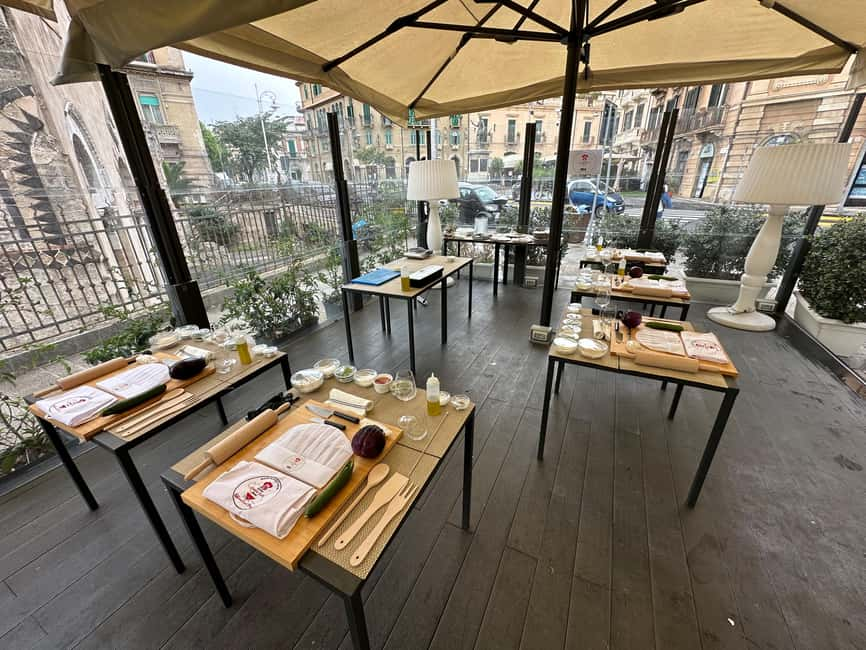
- A small group in Messina with a maximum of 10 participants
- Professional cooking gear (apron and hat) you can take home as a memory
- A complete Sicilian menu: antipasti, pasta, a main course, and cannoli
- Lunch with local drinks including wine, limoncello, and water
- Chef-led technique practice with step-by-step guidance in Italian and English
Where You Start: Ristorante Noa in Historic Messina
This experience kicks off in the center of Messina, at Ristorante Noa. You meet there before heading into the cooking flow, and the setting matters because you are not in a big tourist hall. You are in the heart of the city, near the Chiesa dei Catalani, which gives the day a grounded, local feel from the start.
The first moments are paced like a proper meal begins at home. You are welcomed with a brindisi from the chef, then you get a clear preview of what you will cook and why those dishes show up again and again in Sicilian kitchens. That helps you pay attention in a smarter way, not just follow steps.
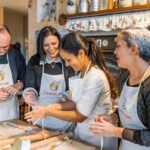
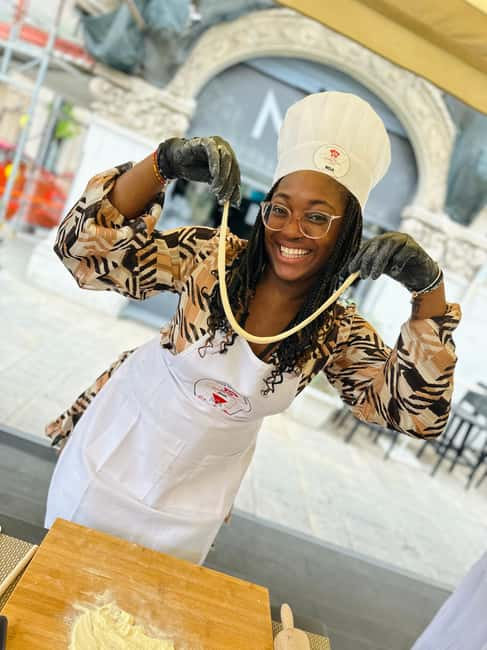
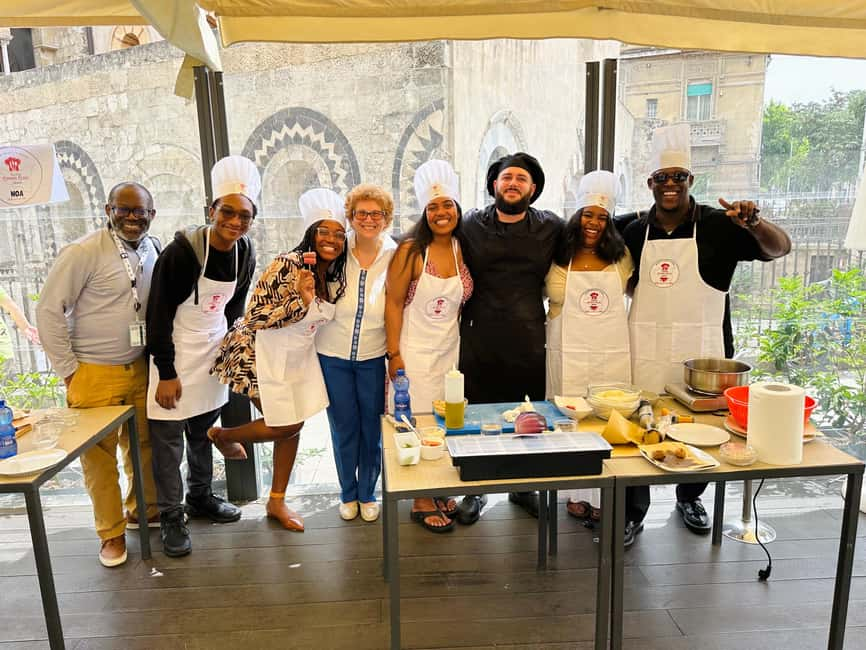
You also get some practical perks right away. The class provides cooking equipment, plus an apron and hat meant for real work in the kitchen. The hat in particular is a fun souvenir because it is not a random photo prop. It signals that you are learning like a cook, not just watching from a chair.
You can also read our reviews of more tours and experiences in Messina.


The Chef-Led Plan: 2.5 Hours of Real Cooking, Not Just Watching
The class lasts about 2.5 hours, which is a sweet spot. Long enough to actually get your hands in the food, short enough that you are done before the day gets too hectic. For many people, this feels like the easiest way to get a true food experience without losing half a vacation day.
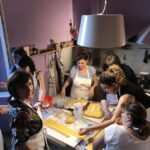
You work with the chef and the team using professional kitchen tools, and you receive explanation of typical Messinese and Sicilian dishes as you go. The teaching style matters because you are not just doing one dish. You move through multiple courses, which means you learn technique patterns, like how Sicilians build flavor with eggplant, herbs, baked components, and hearty meat dishes.
The group size is capped at 10, so you are more likely to get attention if you need clarification. That is a big deal in cooking classes, because even when you know the basics, hands-on moments can move quickly.
Language is another practical factor. The instruction is available in Italian and English, so you should not feel lost if you are not fluent. You can listen for the key steps, then match them with what you see in front of you.
Antipasti Round One: Parmigiana di Melanzane and Polpettine alla Messinese
Your first course focus is classic Sicilian comfort food, centered on eggplant and homemade-style flavors. You start with two different antipasti, and the combination is smart because it covers both vegetable richness and bite-sized satisfaction.
First up is Parmigiana di melanzane. In a short time, you learn how eggplant becomes the star. Instead of treating it like a side, Sicilian parmigiana treats it like the base of the dish’s personality. You also get practice with the basic logic behind the layers, so when you see the final result, it makes sense beyond taste.
Then you make a tris of polpettine alla messinese. Meatballs might sound simple, but this is where technique matters. You learn how to shape and season for a Messinese style, so the meatballs are not just filling. They are meant to be flavorful bites with personality.
This opening matters for your overall enjoyment. When you start with familiar dishes, you build confidence fast. And when you learn the first two styles back-to-back, you notice how the chef thinks: vegetables first, then handheld comfort, then everything flows into the pasta course.
Pasta alla Norma: Fresh Pasta and the Melanzane and Ricotta Logic
Next comes the famous first course: maccheroni di pasta fresca alla Norma, with melanzane and ricotta al forno. This is one of those Sicilian dishes you hear about because it is iconic for a reason, but it can still feel abstract until you stand at the counter and make the components.
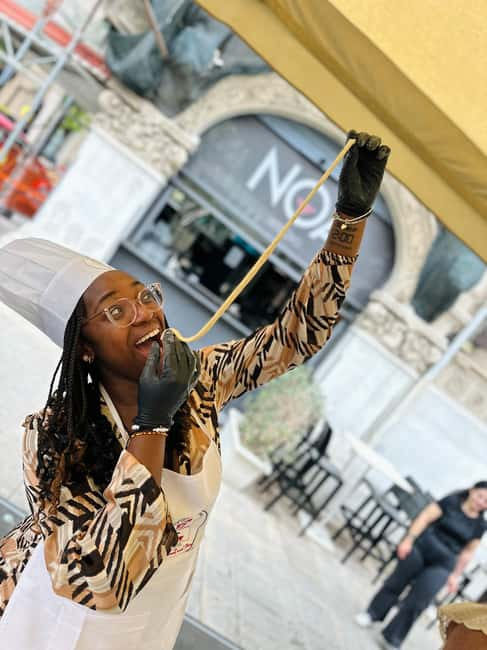
What you will do here is more than assemble. You get the chance to impastare, meaning you work the dough in a way that follows tradition. That is a rare thing in vacation experiences, where most people only eat. Here, you get a feel for the dough, and that makes the final dish easier to appreciate later.
The chef also explains the ingredients in a way that connects to flavor and technique, not just trivia. Eggplant brings sweetness and depth when it is cooked properly. Ricotta, baked, becomes something more than a soft ingredient. It turns into part of the dish’s structure and comfort.
Even if you do not consider yourself a pasta person, you will probably enjoy this section because you get a clear outcome. You are working toward a dish that looks and tastes like something you would order again without hesitation.
Braciole alla Messinese: The Unique Second Course You Can Repeat at Home
Then you get the “this is so Sicilian it feels special” moment: braciole alla messinese. It is not just a generic meat course. It is described as unique, and the class treats it like a signature move.
This is the part where you learn how Sicilians think about fillings and how meat becomes more interesting when prepared with technique. You are not simply cooking meat. You are working on a dish built for flavor layers.
The value here is that you likely leave with at least one method you can reuse. Even if you cannot perfectly recreate every ingredient at home, you will understand the structure: what gets mixed, what gets wrapped, and how the dish is meant to taste as it finishes cooking.
And because you are doing it in the middle of a cooking class, the learning is practical. You do the work, then you see the chef’s explanation snap into place. That is how cooking sticks with you.


Cannoli Dessert and the Best Part: Eating Your Work
After the main courses, it all comes together with dessert: il cannolo, Sicily’s most famous sweet. You finish your meal with the final reward, and you get to enjoy the cannoli as part of the same flow as everything else you made.
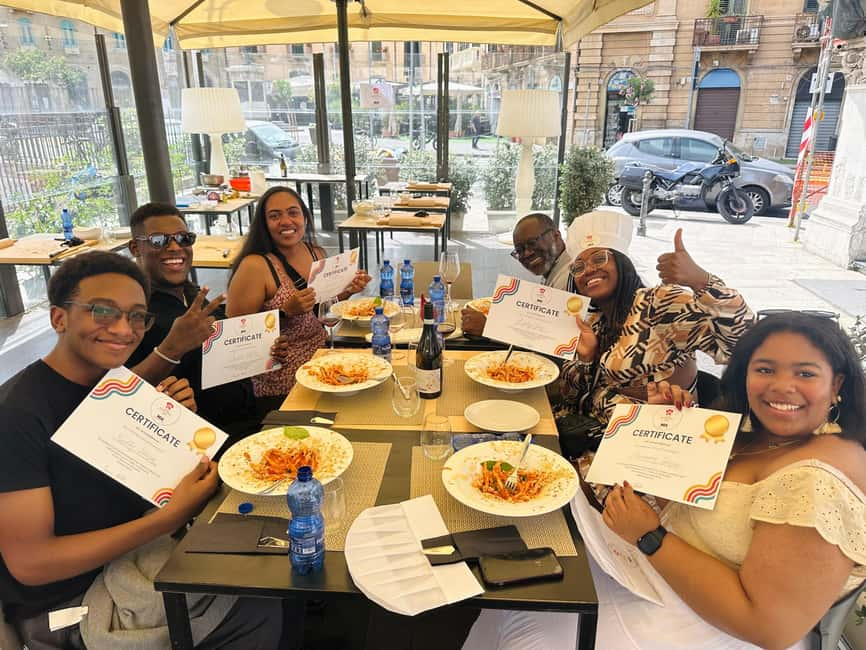
Then comes the part I think matters most: you relax and eat. The course is not structured like a show where you watch chefs plate everything and walk away. You get to sit down with what you helped create, then enjoy it while it is still fresh.
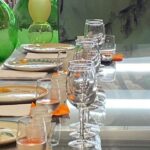
Drinks are included with the meal: water, local wine, and limoncello. That pairing turns your meal into a real Sicilian lunch. It also helps you slow down and appreciate the dishes in context, like you are not in a classroom, you are in a restaurant meal that happens to teach you how it is made.
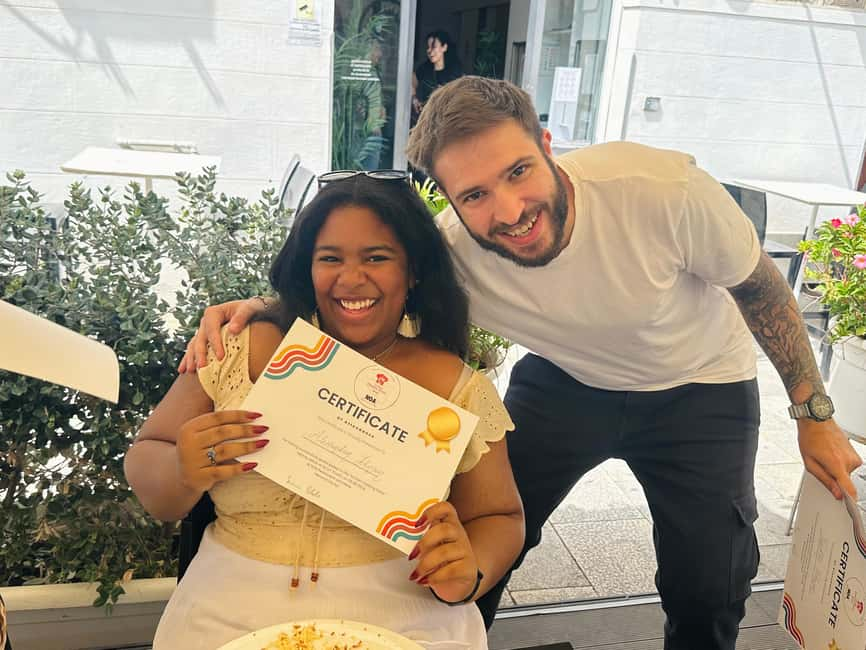
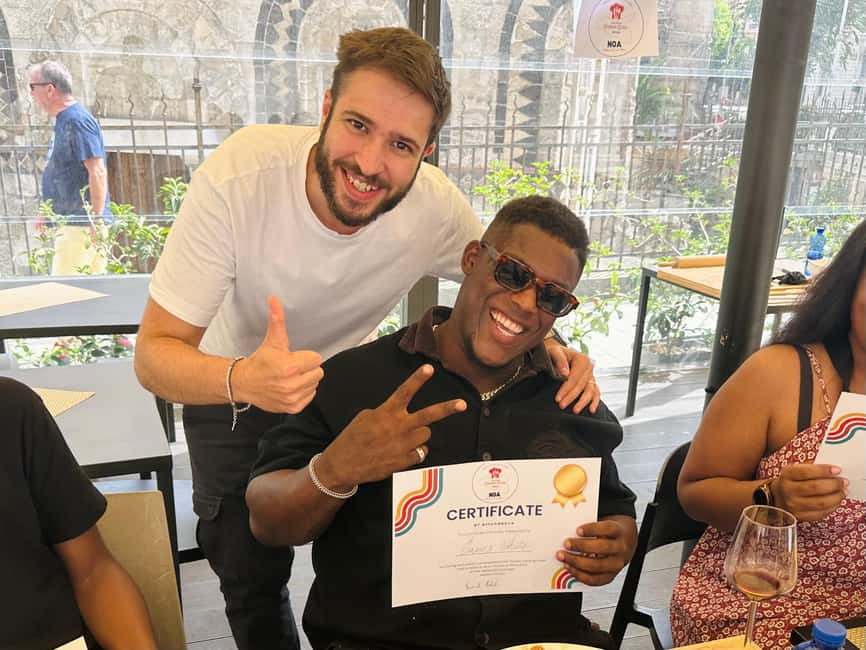
There is also a small memory bonus. You receive an attestato di partecipazione, a participation certificate that gives the experience a clean end point. It is simple, but it helps you remember that you did more than just eat.
What Makes the Experience Great Value for $105
At $105 per person for about 2.5 hours, this class is priced like a premium food activity. The question is whether you get enough substance for the cost.
You do, because you are getting:
- A full multi-course meal you prepare yourself
- A chef-led teaching format that includes explanation of ingredients and technique
- Provided equipment, including apron and hat you can keep
- Included drinks, not just water
In other words, you are paying for instruction plus the meal. Cooking classes can get pricey when you mainly watch and then snack lightly. This one is built around actual output, and you do not leave hungry or empty-handed.
The small group size of up to 10 also supports the value. When a class is larger, the experience can turn into queue time. Here, the format is set up for hands-on learning and smoother attention.
If you care about authentic experiences, the structure helps. You are not doing a generic Italian menu. The focus is Sicilian and specifically Messinese, with dishes that feel tied to local identity, like parmigiana di melanzane, maccheroni alla norma, braciole alla messinese, and cannoli.
A Realistic Note on Fit: Who This Class Is For
I would book this if you:
- Want a hands-on Sicilian food experience in Messina
- Enjoy learning from a chef and not just tasting
- Like the idea of a full meal with wine and limoncello included
- Prefer a small group setting (max 10)
I would be cautious or skip if you:
- Have lactose intolerance. Ricotta appears in the pasta course, and cannoli also typically uses dairy components.
- Have food allergies. The class includes multiple ingredients across meat, dairy, and eggplant, and the menu is traditional.
- Have diabetes. The tour data specifically says it is not suitable.
- Are traveling with children under 8. The class is not designed for that age group.
One more thing. The dishes are traditional and ingredient-driven, so if you need highly specific substitutions, the tour data does not mention that option. In situations like that, it is worth checking with the provider before you commit.
Extra Touches That Make It Feel Like a Meal With Friends
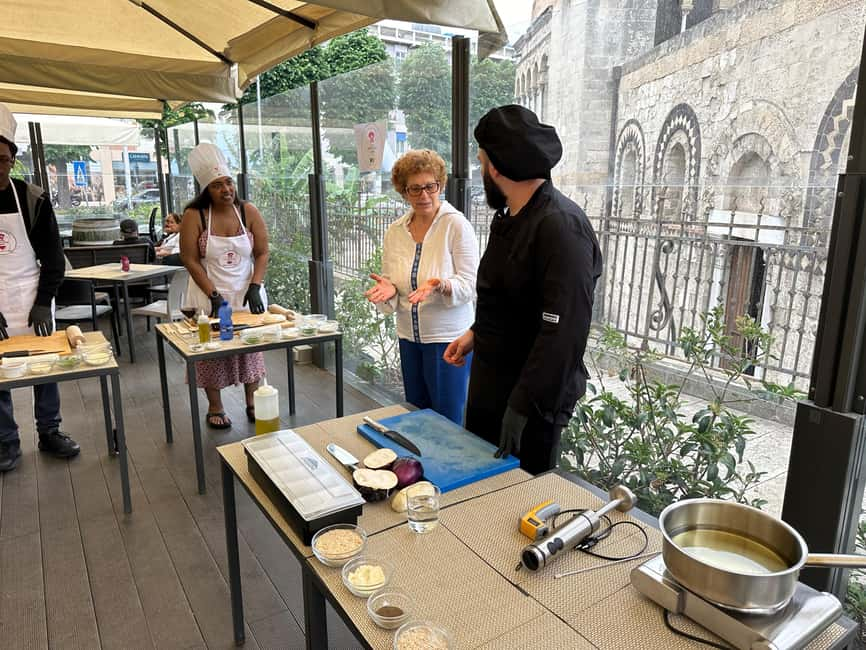
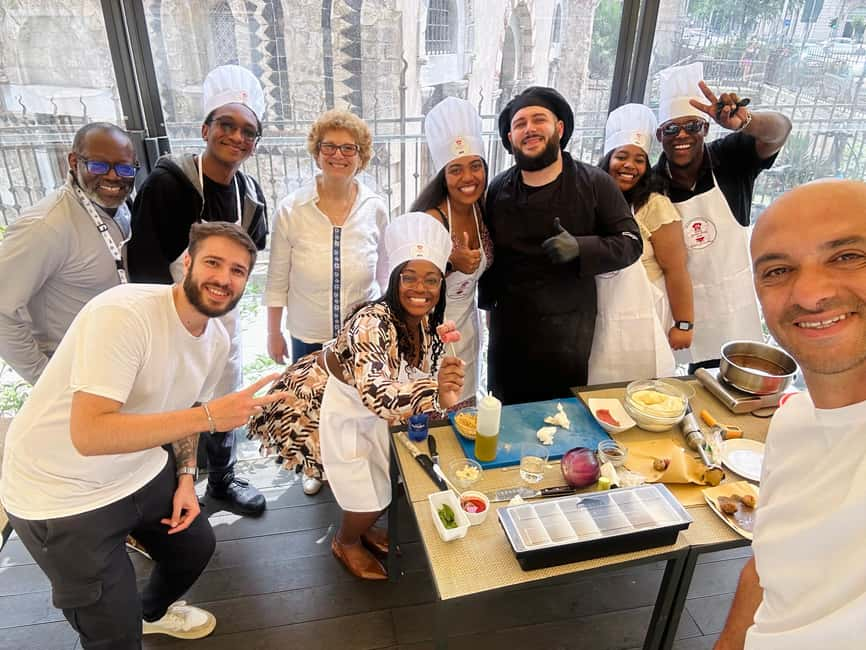
A few details can make or break a cooking class. This one seems to score well on the human side. In one experience, Francesco and the staff made the group feel like family. That kind of atmosphere matters when you are cooking and learning in close quarters. It keeps you relaxed enough to focus on technique.
There is also a practical extra: the restaurant takes photos and videos and shares them with you, so you can spend less time fiddling with your phone and more time cooking.
Should You Book This Messina Sicilian Cooking Class?
Book it if you want a true, structured Sicilian food day, with real kitchen time and a full lunch you helped make. The mix of dishes is excellent for coverage, from parmigiana and polpettine to pasta alla norma, then braciole, and finishing with cannoli. It is a compact way to experience Sicily’s flavors without needing culinary background.
Skip it if your dietary needs are strict, especially around lactose intolerance or allergies, or if your situation makes the class unsuitable (kids under 8 or diabetes, based on the tour details). Also, if you dislike meat or eggplant, note that both show up prominently in the described menu.
If you are flexible and want an authentic Messina meal with hands-on learning, this class looks like a strong pick for the money and the time.
FAQ
How long is the cooking class?
The experience lasts about 2.5 hours.
What is the meeting point?
You meet at Ristorante Noa.
Where in Sicily does the class take place?
The class takes place in Messina, Sicily, in the historic center near the Chiesa dei Catalani.
What dishes do you cook during the class?
You prepare parmigiana di melanzane and polpettine alla messinese as antipasti. Then you cook maccheroni di pasta fresca alla norma with melanzane and baked ricotta. Next is braciole alla messinese, and you finish with cannoli.
What is included in the price?
The price includes preparation of Sicilian dishes, a chef who explains and demonstrates, ingredients, cooking equipment, an apron and hat, a full meal made during the class, water, wine, limoncello, and a participation certificate.
Are drinks included with lunch?
Yes. Included drinks are water, local wine, and limoncello.
Is this class a small group?
Yes. It is a small group limited to 10 participants.
What languages are used for instruction?
The instructor speaks Italian and English.
Is the experience wheelchair accessible?
Yes, it is listed as wheelchair accessible.
Who should not book?
It is not suitable for children under 8, people with diabetes, people with food allergies, or people with lactose intolerance.