
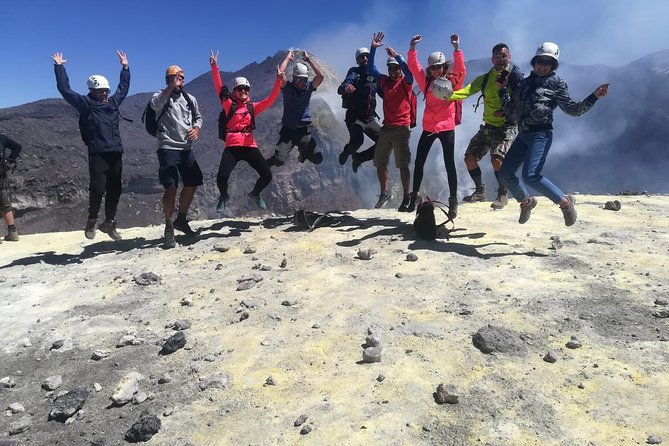
Reviewed · ETNA SUMMIT HIKES & CABLE CAR TOURS
Summit Craters Excursion (3357 m.)
Etna at 3,357 meters changes your frame of mind. This 5 to 7 hour Sicily excursion pushes you toward the summit craters of a live volcano with a volcanological guide and a small group feel, plus the tour is offered in English so you can actually follow the science.
Here’s the one thing to think through first: this is real trekking on volcanic terrain. The activity is best for people with moderate physical fitness, because you’ll be on uneven ground for a good chunk of the tour.
Key Highlights You’ll Actually Care About
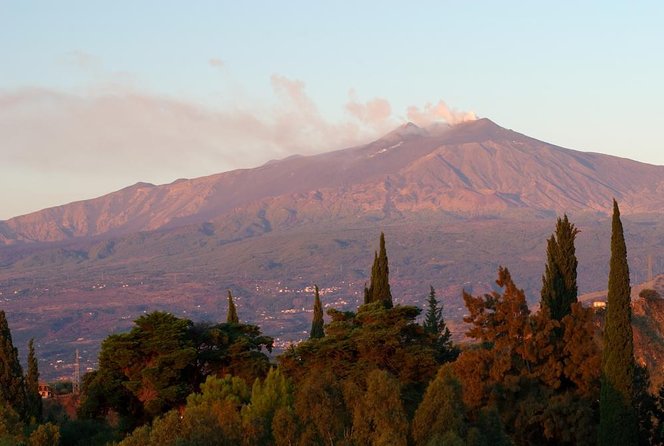
- Summit craters focus up around 3,357 m, not just a quick look from the parking lot
- Small group size, up to 20 people, which helps your guide keep an eye on everyone
- Volcanological guide-led trekking, with clear explanations in English
- Optional extra 4×4 transport listed at 60 EUR for Etna North to Piano Provenzana
- Classic routes often include observatory area around 3,000 m, then walking down toward roughly 1,800 m
- You may see volcanic features up close like lava caves and volcanic bombs, depending on conditions
Etna’s Summit Craters: What Makes This Excursion Special
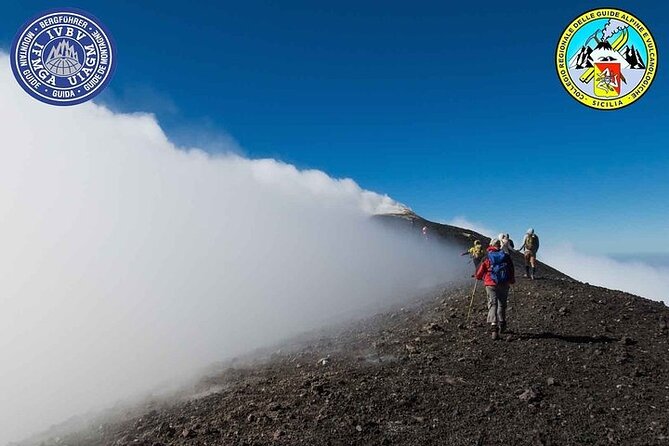
Etna doesn’t feel like a museum volcano. It feels like something breathing, because you’re walking in an active volcanic zone with a guide who can explain what you’re seeing while you’re seeing it.
The big win here is the combination of altitude and interpretation. You’re not just collecting photos, you’re learning what the crater area means and how the volcano builds and reshapes itself. On top of that, the small group size helps the pacing, and it makes it easier to ask questions when something catches your attention.
Also, you’re going high. The tour is labeled as a summit craters excursion with a top height of 3,357 m, which is serious elevation for a day trip.
You can also read our reviews of more tours and experiences in Sicily.
Your Timing and Meeting Point Reality Check
This is a 5 to 7 hour excursion, and it ends back at the meeting point. That loop matters, because you’re not left trying to figure out logistics after you’re tired and sweaty and possibly foggy from the crater air.
The start time is listed as 12:00 am in the details. That looks like a data entry oddity, so I’d treat it as “confirm your exact departure time in your confirmation.” The important part for you is that this is a fixed-schedule outing, not a flexible hike.
The tour uses a mobile ticket, which is convenient. You also know in advance the language is English, so you can plan around it if you prefer guided commentary over guessing at signage.
Trekking With a Volcanological Guide, How It Usually Plays Out
You’re doing trekking as the core activity, and that’s the part the price supports: trekking with a volcanological guide. Expect a structured walk with stops for explanation, not a free-for-all hike.
From how this experience is described, a typical pattern looks like this: the group may climb by 4×4 up from the Etna North side toward Piano Provenzana, reach an area around the 3,000 m observatory zone, then walk back down toward roughly 1,800 m. In some cases, the walking includes the crater zone view and then a longer descent that gives you a sense of the height change.
What I like about this style is that it turns the mountain into a guided lesson. You can look at a feature, then hear what it is and why it looks the way it does. That’s especially helpful because Etna terrain can look similar from one angle to the next if you don’t know what you’re looking for.
The Mount Etna Stop: Summit Craters and What You Can See
The excursion centers on Mount Etna, with the summit crater focus. The details list a Mount Etna segment with an admission ticket that’s marked free for the stop.
What you might actually see depends on volcanic activity and weather, because crater travel is not “always the same.” But the themes are consistent.
In descriptions of this route, people talk about:
- crater mouths and the power of the terrain close up
- volcanic formations such as lava caves and volcanic bombs
- different landscapes visible along the climb and descent
One person also noted that a north-side starting point felt less crowded than other approach routes, and that the trek gave them time to observe formations rather than rushing through a viewpoint circuit.
If conditions permit, your guide may try to take you nearer to more of the crater area so you can understand the scale, not just spot craters from a distance.
North Side Route and Piano Provenzana: Why It Matters
This tour specifically mentions the Etna North area and Piano Provenzana in the details for the optional 4×4 transport. That isn’t trivia. Where you start changes the feel of the day.
Starting from the north side tends to create a more “journey” vibe. Instead of only climbing on foot from the base, you can get higher quickly, which matters because the walking part becomes more manageable and more focused on the crater zone.
When the route described in this style is followed, getting up to around the observatory zone can feel dramatic, almost like you’ve stepped into a different world. Then, the walk back down gives you contrast, because you’re watching the terrain change as elevation drops.
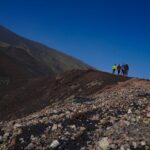
The 4×4 Question: Included or Extra?
Here’s a practical point you should plan for: transport with a special 4×4 vehicle (Etna North to Piano Provenzana) is not included, and it’s listed at 60 EUR.
So what does that mean for you? It means the base tour price supports the guiding and trekking component, but the easiest route up from Etna North may cost extra unless your specific booking bundle includes it.
In plain terms: if you’re budgeting, don’t assume the full day cost is only the listed price. If you want the classic north-side approach described by many people, pencil in that 60 EUR.
Also, note that the group format is designed for efficiency. People describe the 4×4 portion as a big part of the day, and small groups make that smoother.
Price and Value: Is $101.85 a Good Deal?
At $101.85 per person, you’re paying for a guided summit-crater trekking experience with a volcanological guide, plus the structure to make a high-altitude hike make sense.
But value on Etna is never just about the base price. It’s about what’s included versus what isn’t. Here’s the honest breakdown from the given details:
- Included: trekking with volcanological guide
- Not included: lunch
- Not included: private transportation
- Not included: special 4×4 transport to Piano Provenzana, listed at 60 EUR
So the real value question is: do you want and need the extra transport? If yes, you should expect your total outlay to rise. If no, you might spend more time coordinating a different way to reach the higher starting areas, which can make the day feel longer and less like a guided excursion.
That said, people rate this experience highly, and the consistent theme is that the guides handle safety, pacing, and explanations well. For many visitors, that’s what makes the price feel justified, because Etna is not a place where you want to freestyle your learning or your timing.
The Guide Factor: Names You Might Be With
This kind of tour lives or dies on the guide. And in the experience descriptions you provided, the guiding is repeatedly praised, with multiple named examples such as:
- Marco (credited for creative, memorable explaining)
- Daniele (noted for careful group handling and a complete look at Etna’s specifics)
- Arturo (mentioned as kind, engaging, and professional, even for a child participant)
- Davide (described as reassuring and very professional)
- Luca (named as an organizational contact who was available)
Even if you don’t get one of these specific people, the takeaway for you is that the tour’s guiding team is used to leading mixed groups, keeping people together, and translating volcano science into plain talk.
What to Wear and Bring for a Summit Crater Trek
You’re dealing with altitude, wind, and volcanic ground. The details call for moderate physical fitness, so plan like you’re hiking, not like you’re doing an easy nature walk.
I’d pack with these realities in mind:
- solid hiking shoes with grip
- layers, because crater areas can feel colder and windier than lower elevations
- water (lunch is not included, so you’ll want something to eat and drink)
- sun protection, even if you think cloud cover will save you
- a light rain layer, just in case the weather flips
Also, service animals are allowed, so if that applies, you can plan without surprises.
Weather and Volcanic Conditions: The Part That’s Out of Everyone’s Control
Etna requires good weather for this experience. And because this is a summit craters excursion, conditions can change the plan.
Sometimes you may still go, but the exact crater access can shift depending on safety and visibility. If the tour is canceled due to poor weather, you should expect an offered different date or a full refund.
What you can control is your mindset and planning. I’d treat the day as “crater trekking with Etna conditions,” not “guaranteed top-of-crater access.” The goal is the guided hike experience, and the crater parts are the prize.
Who This Tour Fits Best (and Who Might Prefer Something Else)
This works best for:
- people who like guided science explanations while hiking
- anyone comfortable with moderate trekking and uneven volcanic terrain
- groups that prefer a small group format (max 20 people)
- visitors who want Etna’s summit crater area, not just a viewpoint stop
It might be less ideal if:
- you’re looking for a super casual walk with minimal effort
- you’re not comfortable trekking at altitude
- you want lunch provided and don’t want to plan your own food
If you’re traveling with a child, one description notes the tour was done with a nearly eight-year-old, but that doesn’t mean it’s automatically easy for every child. Use the moderate fitness guidance as your anchor and ask questions before committing.
Should You Book the Etna Summit Craters Excursion?
I think you should book this if you want a guided, high-altitude Etna experience with real trekking, not just a quick crater photo stop. The value is strongest when you’re excited to learn with a volcanological guide and you’re okay paying attention to what Etna is doing that day.
Book it especially if you like small groups. With a maximum of 20 people, you get more guide attention and a more controlled pace, which matters on a volcano.
One decision point: budget for the possible extra 60 EUR 4×4 transport to Piano Provenzana if that’s part of the route you want. If you plan that in advance, the day tends to feel like a focused Etna summit crater outing, not a puzzle of “what’s included.”
If the weather is unstable in your travel window, aim to book with flexibility and keep your expectations about crater access realistic.
FAQ
Is the Summit Craters Excursion offered in English?
Yes. The tour is offered in English.
How long does the excursion last?
It lasts about 5 to 7 hours.
What’s included in the tour price?
The tour includes trekking with a volcanological guide. A Mount Etna admission ticket is listed as free for the Mount Etna stop. Lunch is not included.
Is lunch included?
No. Lunch is listed as not included.
Do I need to pay extra for 4×4 transport to Piano Provenzana?
Yes. Transport with a special 4×4 vehicle for the Etna North to Piano Provenzana segment is listed as not included, at 60 EUR.
What happens if bad weather cancels the tour?
If the tour is canceled due to poor weather, you’ll be offered a different date or a full refund.
How many people are in the group?
This activity has a maximum of 20 people.
More Tours in Sicily

More Tour Reviews in Sicily
Not for you? Here's more nearby things to do in Sicily we have reviewed






Etna Summit Hikes & Cable Car Tours, compared.
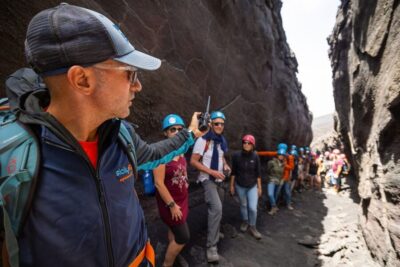 ★ 4.7Mount Etna: Guided Volcano Summit Hiking Tour with Cable CarFrom $1243,784 reviews
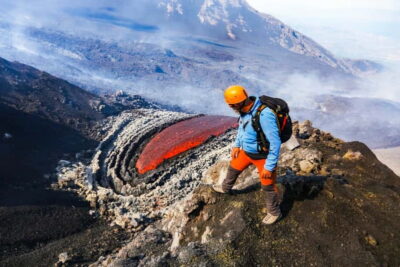 ★ 4.7Mount Etna: Trek to 3000m with cable car and jeepFrom $621,978 reviews
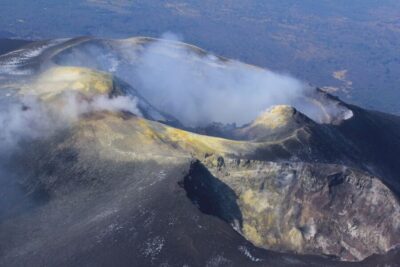 ★ 4.8Mount Etna: Summit Crater Trek with Cable CarFrom $771,875 reviews
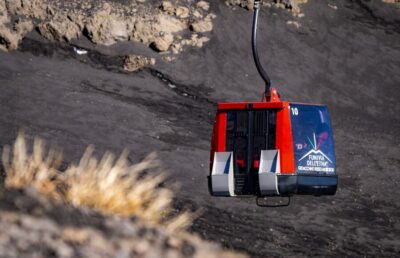 ★ 4.3Mount Etna: Roundtrip Cable Car and 4×4 Bus TicketFrom $971,602 reviews
 ★ 4.7Etna Volcano: South Side Guided Summit HikeFrom $671,545 reviews
 ★ 4.6Stromboli: Sunset Trekking at Sciara del FuocoFrom $351,372 reviews
 ★ 4.9Catania: Mount Etna Trekking Trip off the Tourist PathFrom $781,351 reviews
 ★ 4.7From Taormina: Etna Tour with Hiking, Cave Visit, & TastingsFrom $83518 reviews
Browse the lists this tour appears in