
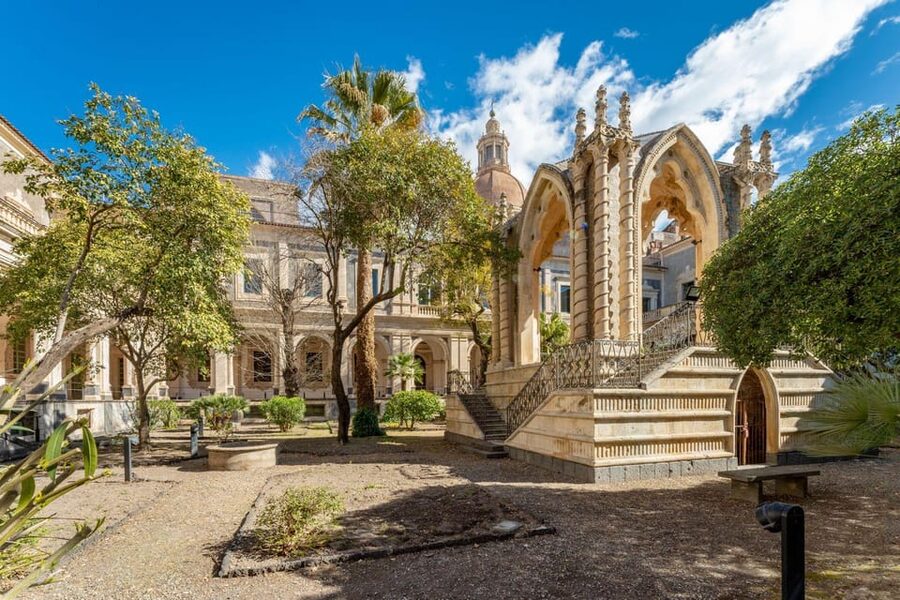
Reviewed · CATANIA CITY & FISH MARKET TOURS
Benedictine Monastery of Catania – English Guided Tour
History lives underground in Catania. This English guided tour moves through Benedictine spaces that run from Roman traces to today’s university, with architectural standouts like the cloisters and a cellar built on lava. Guides such as Carmen and Giovanni are especially praised for making the place feel understandable, not just impressive.
I especially like two things: the access to areas not normally open and the way the tour connects art and daily life, from kitchens and dining rooms to libraries. Second, the English delivery tends to be clear and lively, with time for questions and even humor that keeps a 75-minute schedule from dragging.
One possible drawback is simple timing. The tour is 75 minutes, so you will move on before you feel fully settled. Also, access to a viewing platform (when offered) can depend on the exact tour route or time slot, so do not count on it.
Key takeaways before you go
- Extra access, not just sightseeing: You get into parts of the monastery that are usually off-limits.
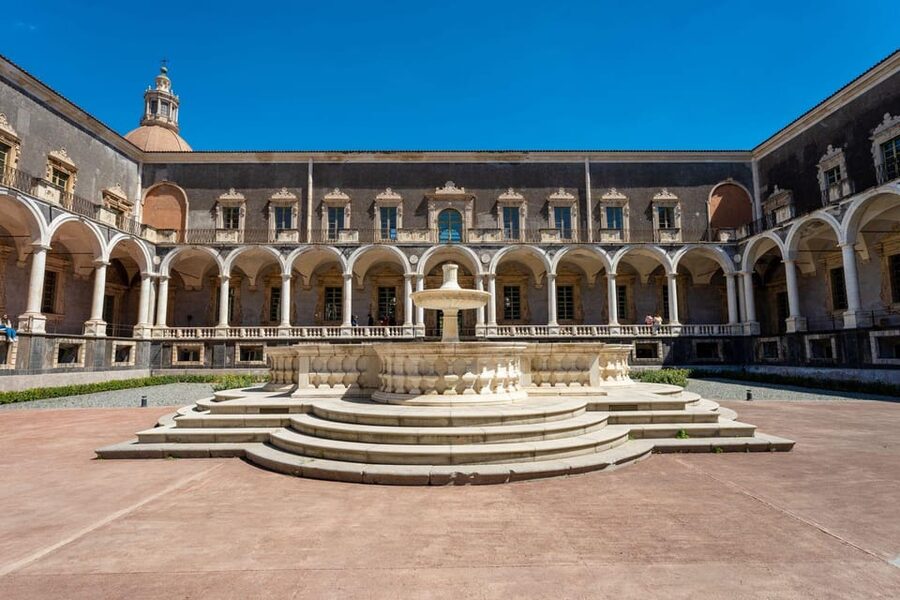
- Two cloisters and a monumental staircase: The monastic layout becomes easy to appreciate once you see how it flows.
- Lava cellar and 16th-century spaces: You can picture how materials and power shaped monastic life.
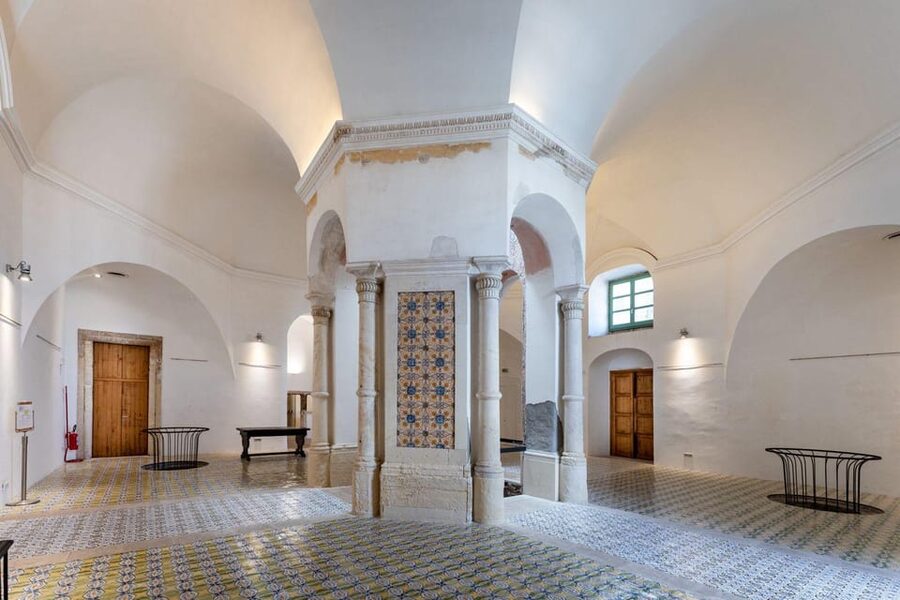
- Roman houses under a modern mezzanine: The layers of Catania show up right where students now study.
- Strong, question-friendly English guides: Many guides are praised for clear answers and an engaging pace.
- Perfect for a short stop: At 75 minutes, it fits neatly when your Catania day is packed.
Where to Start at San Nicolò l’Arena (and what “skip the line” means)
You start at the Benedictine Monastery of San Nicolò l’Arena, and the meeting point is on Piazza Dante. As soon as you pass the main gate, the info point sits in the courtyard on the right. It is a good idea to arrive a few minutes early so your group can settle before heading inside.
One practical win: this tour includes admission plus skip-the-ticket-line access. That matters here because monasteries are popular, and the complex is big, so you want those minutes spent walking, not waiting.
If you have a small bag, baggage storage is available at the meeting point. That lets you keep your hands free for photos and for moving through tighter corridors without constantly checking what you carry.
You can also read our reviews of more guided tours in Catania

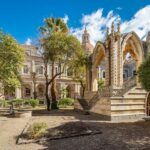
Baroque Scale and the Monastery’s 2,000-Year Layers
This monastery is famous for size and for layers. You are not just looking at one era, you are walking through a place that changed hands, purposes, and styles over 2,000 years, from Roman age traces to a modern university campus.
The visual hook is the late Baroque architecture. Think big, formal, and theatrical, the kind of design that signals wealth and influence. But what I like about this tour is that it does not stop at aesthetics. You learn how the Benedictine order’s wealth shows up in the building scale and in the way spaces were designed for living, eating, and work.
The restoration story is also a core theme. The refurbishment took more than 30 years, and the tour explains how that long effort helped bring the complex back into public view. You also hear the names behind key architectural contributions, including the work associated with Vaccarini and the contemporary refurbishment project by Giancarlo De Carlo.
Cloisters and Corridors You Will Actually Understand
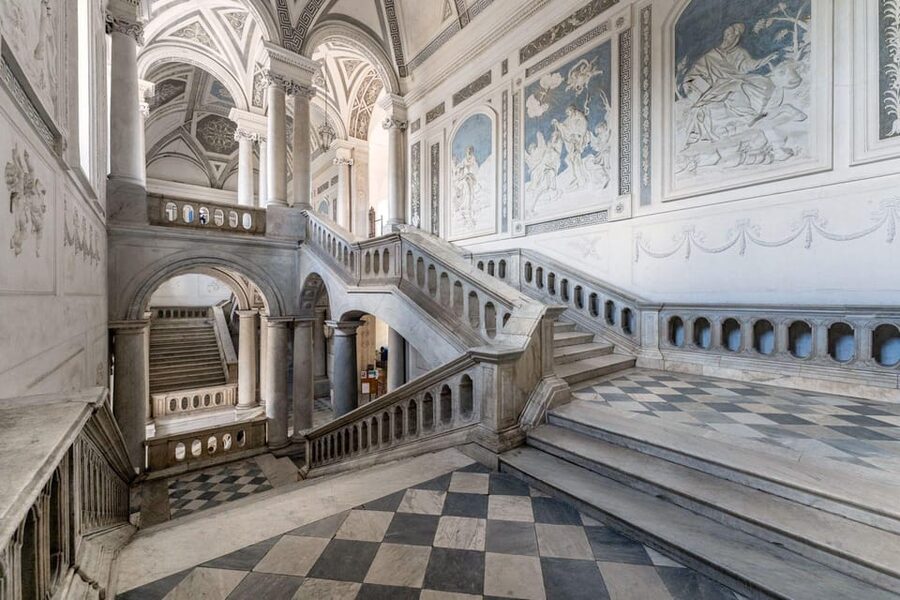
The tour focuses on the monastic layout, and that is the difference between reading about a monastery and grasping it on your feet. You visit two cloisters, which is a major clue to how the monastery organized movement, privacy, light, and daily routines.
Cloisters are often hard to appreciate from a quick glance. With a guide, you start seeing them as functional spaces, not just pretty courtyards. The guide walks you through the labyrinthine corridors, and suddenly the floor plan makes sense: rooms connect in logic, not randomness.
One reason this part gets such high praise is pace and storytelling. Many guides are described as entertaining and patient, and that matters because you are moving through corridors where the building can otherwise feel like a maze. If you like architecture explanations that actually help you place what you see, this is where the tour starts paying off.
Kitchen, Novices’ Garden, and Dining Rooms: Where Daily Life Comes Through
The monastery’s kitchen and eating-related spaces help you understand Benedictine life in concrete ways. You get to see the famous 18th-century kitchens and cellars, and the tour connects them to how a large religious community functioned day to day.
I like that this does not just paint a romantic religious picture. It shows a system that required organization: feeding people, storing food, and managing resources. That is where you can see the Benedictine order’s wealth in real terms, because the scale of these working spaces reflects how much effort went into sustaining the community.
You also visit the Garden of the Novices. Even if you only get a short look, it changes how you picture the monastery. It makes the complex feel like it had roles and stages, where new members learned routines inside a structured environment.
If you want a tour that feels practical, these rooms are your best bet. They make the building human, not only grand.
Sicily’s Major Library and the Roman Houses Under the Mezzanine
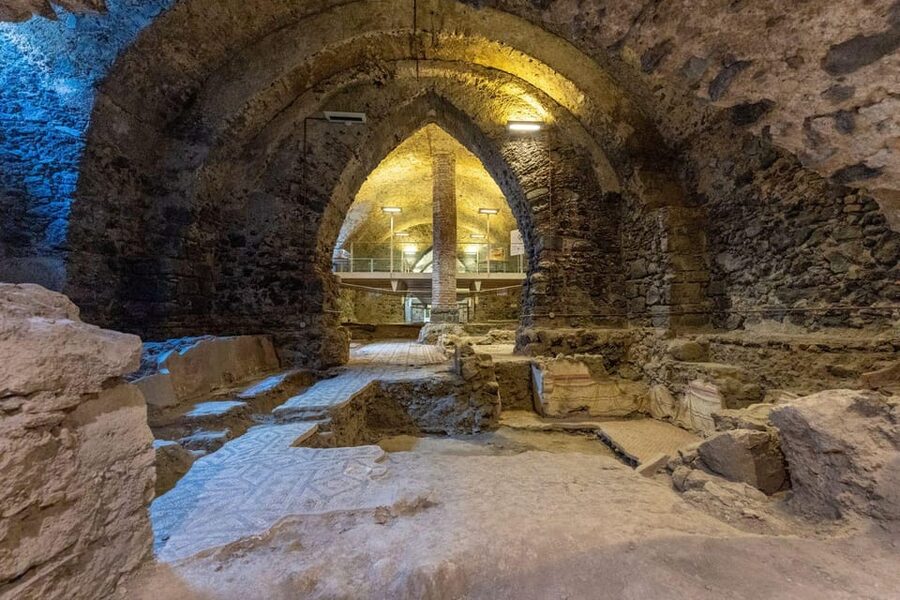
One of the tour highlights is the library area. The 16th-century cellar is now used as the Library of the Department of Humanities at UNICT, and that fact alone is a clever time-warp. You are standing in old underground space that today holds books and study.
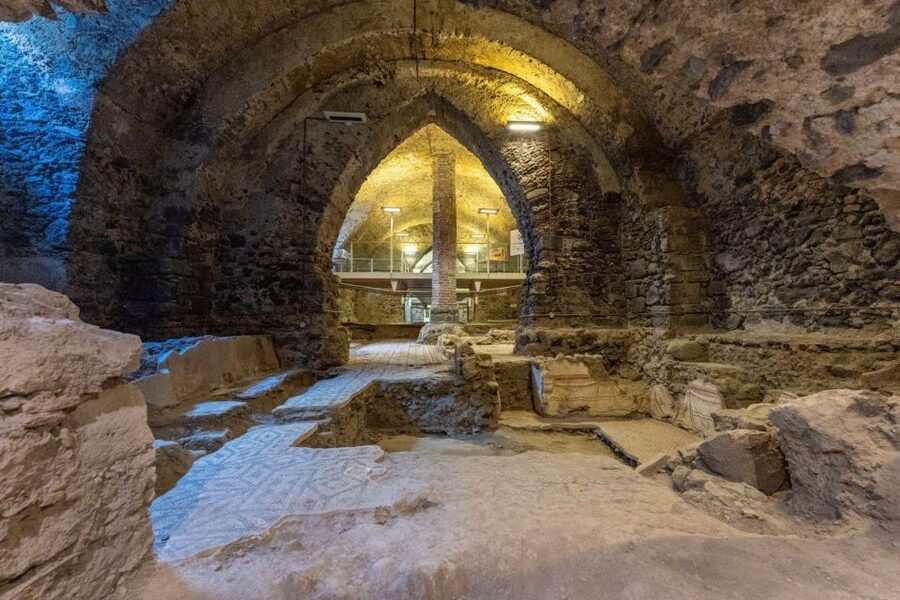
But the most fascinating visual moment for many people is the Roman house visible under a modern mezzanine. You can literally see the older city beneath the campus level, where students use parts of the library space. It is one of the clearest ways to understand how Catania built over itself, layer by layer.
The tour also explains why this library matters in Sicily. You are seeing one of the region’s most important library spaces, and the guide helps connect that to the monastery’s long evolution rather than treating the books as an isolated museum object.
If you are the type who likes modern use of old buildings, this is a strong stop. The building is still doing a job, not just posing for photos.




The Lava Cellar: Cooling Down in a 16th-Century Underground World
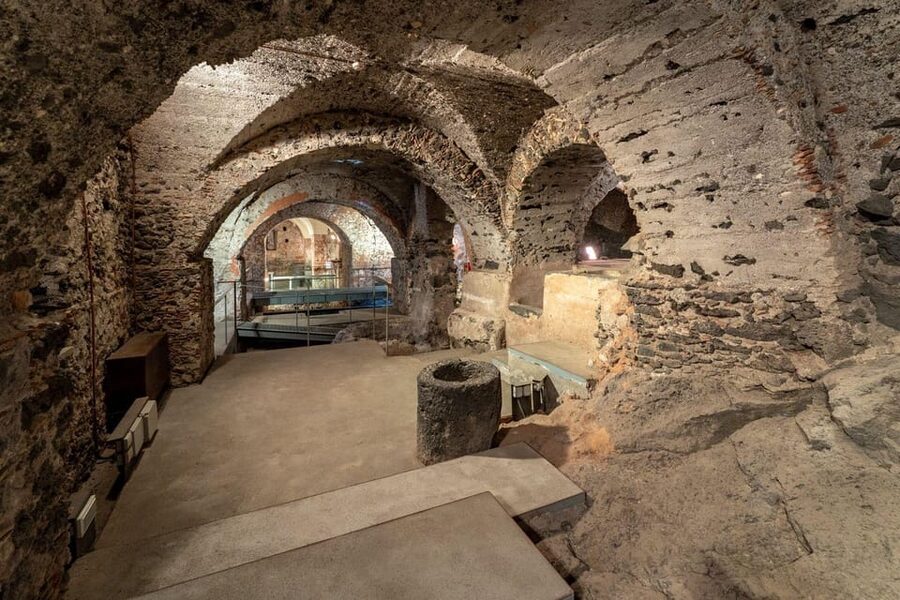
The monastery includes a cellar built on lava, and that detail is not just trivia. Catania’s geology is part of its identity, and seeing how the building uses lava gives you a physical sense of where the city came from and how people adapted.
The tour takes you into the cellar built on the lava, including 16th-century underground spaces that now have a new life as part of the library environment. On hot days, that underground stop can be a welcome break. One visitor noted that the bottom floor felt refreshing in warm weather, which makes sense for an underground route.
Why this matters: it shows you that architecture is problem-solving. The monastery needed stable, functional spaces for storage and daily operations, and the lava provided a dramatic base. With a guide, the symbolism becomes concrete, not just atmospheric.
If you want one unmistakable “wow” moment that also teaches something, the lava cellar is where you usually feel it.
Vaccarini, De Carlo, and the Real Meaning of a 30-Year Restoration
Restoration can feel abstract until you know what you are looking for. This tour keeps the restoration story grounded by naming key figures and explaining why the project took so long.
You hear about the work associated with the architect Vaccarini, and then how the contemporary refurbishment project by Giancarlo De Carlo made the complex usable and visitable again. That includes access to areas that are not ordinarily open to the public, which is a big part of the tour’s value.
The longer restoration timeline, more than 30 years, also tells you something important: this was not a quick facelift. This was careful work in a complex structure that had to be stabilized, adapted, and respected while still allowing modern functions like study spaces.
I like that the tour treats restoration as part of the monastery’s history, not as a boring footnote. It helps you appreciate why the building looks the way it does today.
And if you care about architecture, hearing these names and intentions makes the tour feel more than a checklist.
Guide Style in English: Lively, Humorous, and Built for Questions
This tour rises or falls on the guide, and the feedback here is remarkably consistent. Guides are repeatedly praised for excellent English, clear explanations, and a pace that keeps a 75-minute schedule from feeling rushed.
Names that come up often include Carmen, Giovanni, Nicola, and others mentioned in different bookings. Carmen is described as professional and capable of handling questions with knowledgeable answers, while Giovanni and Nicola are noted for being engaging, funny, and able to connect monastic life with Catania’s larger story.
Here is how you can use that strength to your advantage. Come with one or two questions you actually care about, like how the monastery became a university space or how the lava cellar fits into the building’s original purpose. Then let the guide steer you through the rest.
Also, keep in mind the tour stays lively. If you prefer silent tours, you might find the narration more talk than you want. But if you like context and personality, this is a strong match.
Price and Value: Is $11 for 75 Minutes a Good Deal?
At $11 per person for a 75-minute guided tour, you are paying for two things: expert guidance and access. The tour includes admission, a live guide, and entry into areas that are not normally accessible. It also includes baggage storage at the meeting point, plus a skip of the ticket line.
For Catania, that pricing feels especially fair because the monastery is huge and the tour includes multiple key spaces: cloisters, kitchen and dining areas, the novices’ garden, library-linked areas in a 16th-century cellar, Roman houses under a mezzanine, and the cellar built on lava.
This is also a smart value if your time is limited. Seventy-five minutes is long enough to understand the logic of the complex, but short enough to fit between other Catania stops without derailing your whole day.
If you want a low-cost way to get a high-impact “I get it now” moment about the city, I’d put this near the top of the list.
Who Should Book This Monastery Tour (and who might not love it)
Book it if you enjoy architecture with explanations, religious history that is tied to real spaces, and a place where the past is still in active use. This tour is particularly good for people who like seeing how a building functions: corridors connect, cloisters serve purposes, and underground rooms have a reason.
It is also a good choice if you want a structured overview. Many people find it hard to interpret a huge complex on their own, especially when sections are not always open.
Skip or think twice if you want a self-paced, slow museum experience. Seventy-five minutes means you will see a lot, but you will not linger. Also, if you specifically care about a viewing platform, plan for the possibility that access depends on the particular route and timing.
FAQ
FAQ
How long is the Benedictine Monastery of Catania English guided tour?
The tour lasts 75 minutes.
Where exactly do I meet the group on Piazza Dante?
Meet at the monastery area near Piazza Dante. After you pass the main gate, the info point is in the courtyard on the right.
What areas of the monastery are included in the tour?
The tour includes the cloisters, kitchen, novices’ garden, dining rooms, the library areas (including spaces linked to the 16th-century cellar), the Roman houses visible under a modern mezzanine, the cellar built on the lava, and other key architectural areas such as the monumental staircase.
Is the tour only in English?
The tour is in English. Written translations in French or Spanish can be provided if English is not your main language.
Is the tour wheelchair accessible?
Yes, the tour is wheelchair accessible.
Does the tour help me avoid lines?
Yes. The activity includes skip-the-ticket-line access.
Can I store baggage at the meeting point?
Yes. Baggage storage is included at the meeting point.
Should you book this tour?
Yes, if you want a short, well-priced way to understand why this monastery matters, both architecturally and culturally. The best reason to book is the combination of live English guidance and access to areas you would likely miss if you went on your own, including the lava-related cellar spaces and the Roman houses below the modern campus level.
If you have limited time in Catania, this is a smart use of an hour. If you prefer quiet sightseeing, you may find the narration and movement a bit more active than you want, but for most people it is exactly the right balance.
More Guided Tours in Catania



More Tours in Catania


More Tour Reviews in Catania

Not for you? Here's more nearby things to do in Catania we have reviewed






Catania City & Fish Market Tours, compared.
 ★ 4.8Catania: Mount Etna Morning or Sunset Day Trip with TastingFrom $704,028 reviews
 ★ 4.8Catania: Sunset Jeep Tour of Mount Etna and Lava Flow CavesFrom $712,113 reviews
 ★ 4.9Catania: Mount Etna Trekking Trip off the Tourist PathFrom $781,351 reviews
 ★ 4.8Catania: Etna Sunset Tour with Pickup and Drop-offFrom $711,348 reviews
 ★ 5.0Mt. Etna and Taormina village full day tour from CataniaFrom $1181,155 reviews
 ★ 4.7From Catania: Mount Etna Sunset Tour with Tasting and CaveFrom $451,119 reviews
 ★ 4.8Catania: Etna Morning Excursion with Tasting and PickupFrom $67820 reviews
 ★ 4.9Catania: Amazing Etna Morning Tour with Pickup and Drop-OffFrom $81799 reviews
Browse the lists this tour appears in