
Reviewed · PALERMO CITY & MARKET TOURS
Discover Palermo in 3 hours. Art, history, markets and street food
Palermo in three hours, with stories to match. This tight walk is built around Palermo’s layers of art and history and then hands you the city’s food culture at the Capo street market. You’ll hit major monuments, but the real value is how the guide connects them to Palermo characters, legends, and local habits, all in Italian.
One thing to plan for: this is only in Italian. If your Italian is basic or you prefer English explanations, you may feel shut out, even if the stops and sights are world-class.
Key points worth your time
- Capo market entry plus free tastings, so you can snack without turning the tour into a food bill
- Norman-Arab Cathedral of Palermo with royal tombs and the Santa Rosalia focus
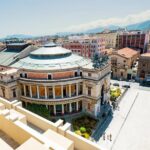
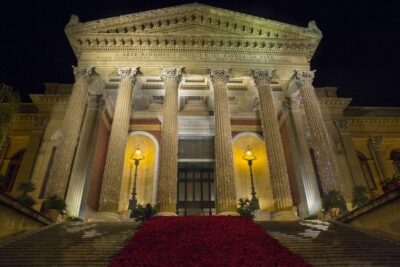
- Teatro Massimo (Piazza Giuseppe Verdi) tied to the Belle Epoque and the Florio family
- Quattro Canti and Fontana Pretoria, baroque geometry plus the famous Fountain of Shame nickname
- Piazza Olivella and Piazza Bellini, where churches and monuments stack like a timeline
- Opera dei Pupi and the Cassaro streetscape, a look at Palermo’s street-level culture
Why This 3-Hour Palermo Walk Works
Three hours sounds short until you see what the route is doing. It strings together the big landmarks of the historic center, but it also keeps things moving at a pace that lets you actually notice details, not just pose for photos.
I like that the tour is set up for people who need direction fast. You start in the central historic streets, then you end near another major square, which makes it easier to explore on your own afterward without guessing your way around.
The other smart choice is that you do not treat Palermo like a museum only. You get the Cathedral, baroque squares, and opera-world references, then you fold in a real market stop where food is part of the story, not an optional add-on.
Starting on Via Cavour and Ending at Piazza Bellini
The tour begins at Via Cavour, 135 (near public transportation) and finishes in Piazza Bellini. That matters because Piazza Bellini is a convenient launch point for later wandering, coffee runs, and lingering near historic churches after the guide wraps up.
The start time is 10:30 am, so you’re out before the afternoon shift and before many places feel like they’re in full “line-up” mode. With a walking tour like this, I also think earlier starts help you enjoy the streets at a calmer tempo.
Also note the group size. With a maximum of 16 people, you are less likely to get lost in a crowd during the talking parts, especially when you’re stopping at tight corners and square entrances.
You can also read our reviews of more food & drink experiences in Palermo

Capo Street Market: Arab-Origin Market Energy and Snack Breaks
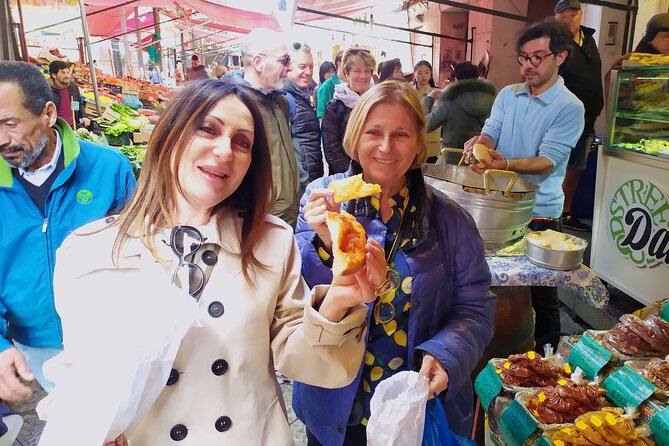
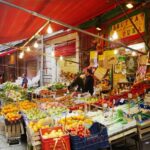
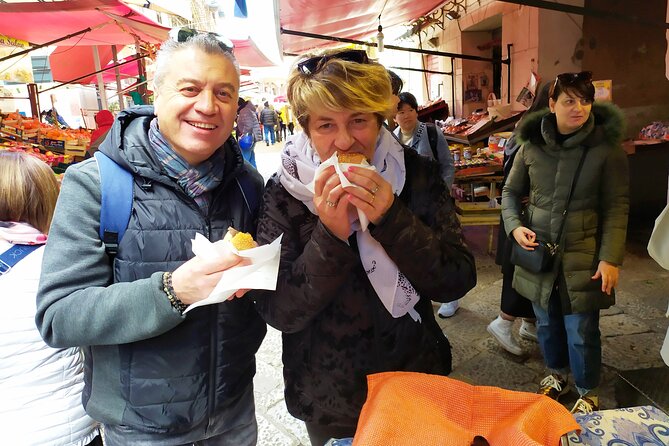
Your first stop is the Capo street market, an ancient food market connected to Arab-origin traditions and active along Via Porta Carini and Via Bandiera. Even when you are not shopping, markets like this give you the real Palermo rhythm: vendors, chatter, and the sense that daily life is happening in the same streets as the monuments.
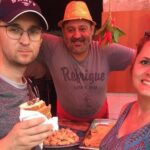
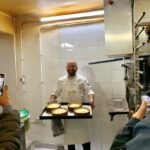
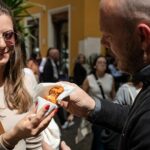
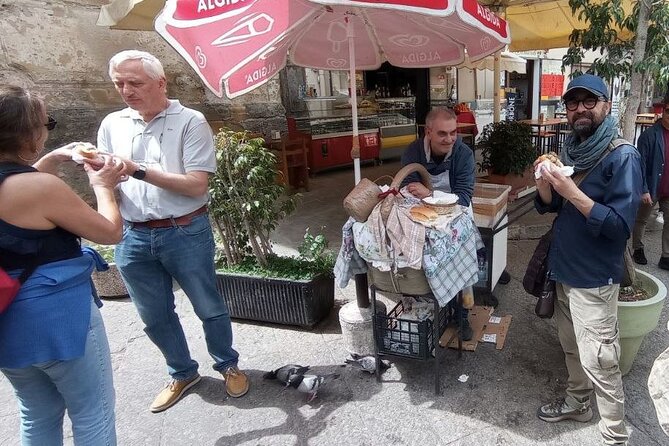
What you get here is more practical than most market “tours.” Admission to the market is included, and there are free tastings of food and drinks during the stop. That’s a great balance if you want to taste without committing to a full meal right away.
You’ll also pass through the area linked to Porta Carini, part of the older city walls zone, which helps you understand that Palermo’s market streets are not random. They are woven into the city’s structure and movement patterns.
If you have a sensitive stomach or strong food preferences, pace yourself. Free tastings are meant to be small, but markets can still pack strong smells and flavors in close quarters, so it helps to go in expecting variety.
Palermo Cathedral: Norman-Arab Art, Royal Tombs, and Santa Rosalia
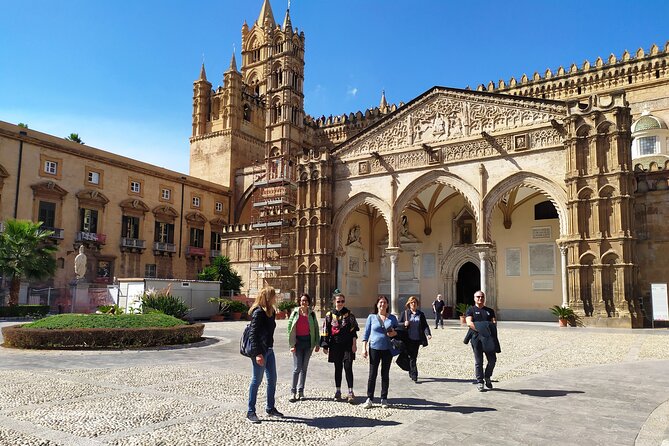
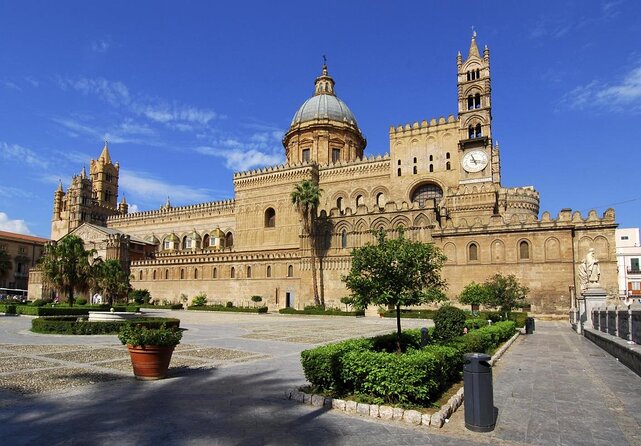
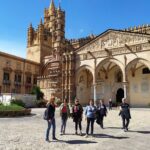
Next comes Cattedrale di Palermo, described as a masterpiece of Norman-Arab art, built in 1185. This is one of those places where the architecture feels like a conversation between cultures instead of a single style copied from somewhere else.
The Cathedral visit focuses on the must-see highlights you’d otherwise need to research: royal tombs, the Chapel of Santa Rosalia, and an extraordinary sundial. Even if you only spend a short amount of time inside, the guide’s explanation helps you see what you’re looking at, not just where it is.
You also get the broader context. Since 2015, the Cathedral belongs to the UNESCO World Heritage listing for the Arab-Norman itinerary, linked with Monreale and Cefalù. That UNESCO connection is useful because it frames the Cathedral as part of a larger cultural story, not a one-off stop.
One consideration is time. Your Cathedral segment is relatively short, so if you want to slow down for every side chapel and artwork detail, you may enjoy the tour first and then return later with your own pace.
Teatro Massimo at Piazza Giuseppe Verdi: Belle Epoque Meets the Florios
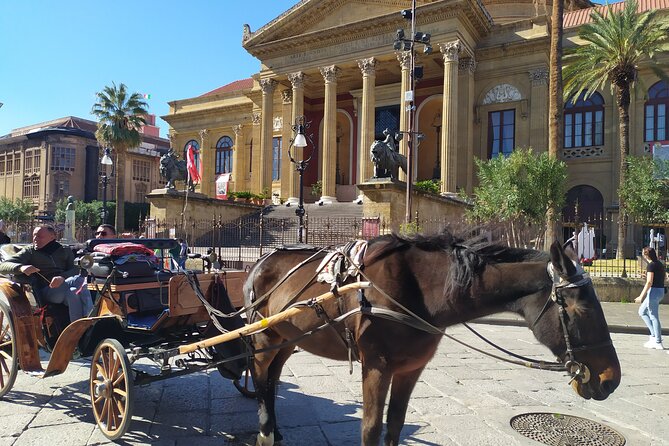
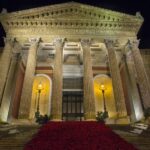
From the Cathedral you move toward Piazza Giuseppe Verdi (also known as Piazza Massimo) and the imposing Teatro Massimo. This is the kind of sight that instantly gives you the scale of Palermo’s grand ambitions, especially when the guide connects it to the Belle Epoque and the Florio family.
The Teatro Massimo stop is not just about the exterior look. The tour is set up so the “why” lands with the “what.” You’re hearing about the events connected to the theatre and the Florio dynasty, which turns the building into a character in the city’s story.
This is also a good reminder that Palermo has more than just churches and squares. You’ll get a sense of the city’s social power and cultural confidence, the same way you’d read it in a family saga.
Quattro Canti: The Baroque Square That Shows You the City’s Layout
Quattro Canti is a scenographic baroque square, and it works as a visual anchor for the old city. In a few minutes, you can understand why baroque design is more than decoration: it helps organize movement and makes the street grid feel like architecture.
Because you are stopping here on a guided route, you learn how the square connects to what comes before and after. It’s not a random photo spot. It is a key intersection point in the historic center layout.
If you tend to ignore plazas, this is one to keep your attention on. The guide’s framing makes it easier to read the buildings around it as part of a planned city stage.
More Sicily island tours, Etna days, coastal boat trips, and food experiences to compare
Piazza Pretoria and the Fontana Pretoria, Why It’s Called Shame
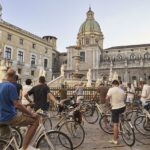
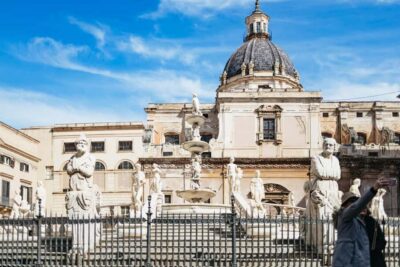
Then you hit Piazza Pretoria, home of Fontana Pretoria, which is considered one of the most beautiful Italian fountains. The fountain is made up of 48 statues of white Carrara marble, sculpted in the Renaissance by Tuscan sculptors, and it was purchased in 1573.
The reason this stop is fun is that the nickname lands as part of the experience. The fountain is called the Fontana della Vergogna, and the guide explains why locals use that name. That turns the fountain into a story about perception, humor, and local attitudes, not just a sculpture display.
Also, look at the statues as you walk around. From different angles, it’s easier to see how the fountain is arranged, which helps you enjoy it more even with a short stop.
Piazza Olivella and Piazza Bellini: Churches With Time Built In
After Pretoria, the route moves toward Piazza Olivella, known for the Baroque church of Sant’Ignazio and the nearby Archaeological Museum. You get enough time here to connect the baroque architecture with the sense that Palermo is layered above older eras too.
Then you shift to Piazza Bellini, one of the most important monumental squares in the center. This is where the tour becomes a walking timeline, because the square sits around multiple landmark churches. Expect the guide to point out the Church of the Martorana (12th century), the Arab-style San Cataldo, and the Church and Monastery of Santa Caterina.
Even if you don’t go inside every building, you’ll leave better at recognizing what you’re seeing. The value is pattern recognition: Norman-Arab influences, baroque power, and older medieval forms all reappear in different ways as you walk.
If you care about religious art and architecture, this is a strong stretch. If you just want the main sights without too much talking, you might find yourself glad the guide keeps things moving.
Teatro dell’Opera dei Pupi and the Cassaro Street That Links It All
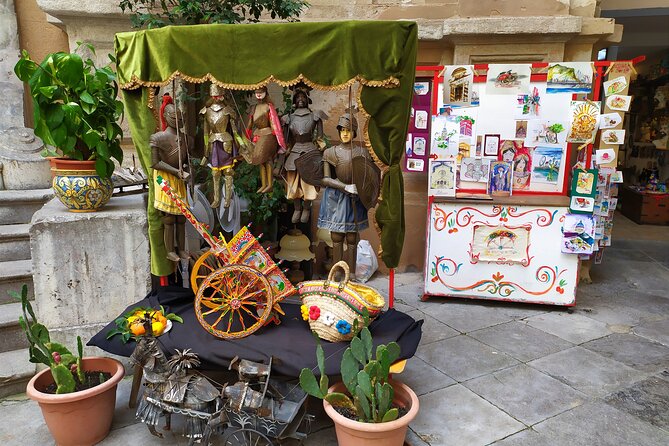
One of the most distinctive stops is Teatro dell’Opera dei Pupi, associated with Mimmo Cuticchio. This is Palermo’s typical Opera dei Pupi show, a tradition dating back to the 1800s, and it’s recognized as UNESCO Heritage.
What I like about including this is that it prevents Palermo from turning into only architecture. Puppet theatre might sound like a side note until the guide connects it to cultural identity and storytelling traditions in the city.
The tour then takes you along the Cassaro, described as the oldest street in Palermo, lined with palaces, churches, and convents. The Cassaro part is a good reminder that you are walking through a living historic corridor, not hopping between isolated sites.
Finally, you loop back near Mura, Bastione e Porta Carini, with a look at ancient walls from the first half of the 16th century and Porta Carini itself, which is tied directly to the market area. This is where you get a clearer sense of how the city protected itself and how the gates connected everyday life with power structures.
Food and Coffee: How the Tour Helps You Eat Like a Local
The tour includes free tastings, but it also gives you something more useful: guidance on where to eat the best cannoli and drink the best coffee. That’s a big deal in Palermo, where food is not just food, it is part of your daily experience.
So here’s the practical angle. Use the tour tastings to decide what you like, then take the cannoli and coffee recommendations and follow them later on your own time. You’ll be more confident choosing a place because you’ll know what to look for and what to expect.
Also, because food and drinks are not fully included, you stay in control of your spending. You can snack during tastings, then decide later if you want a full meal or something lighter.
Price and Value: What You’re Really Paying For
The price is $34.76 per person for about 3 hours, with a mobile ticket. That cost is reasonable when you factor in what you actually receive: market entry, free tastings, and Cathedral entry included, plus a guide who’s handling the storytelling and route logic.
For me, the value comes from the mix. If you only paid for monuments, you’d still need to piece together how they connect. If you only paid for food, you might still miss why certain streets and squares matter. This tour gives you both, and it does it quickly enough for short stays.
It’s also a strong option for cruise passengers because the start is centrally located and it’s described as being a short distance from the port. If you have limited time, a tight route is safer than trying to plan multiple museum tickets and long transfers.
Language and Pace: The Only Real Trade-Off
The major drawback is not the sights. It’s the format. This is only in Italian, and that affects how much of the narrative you can absorb.
The other small consideration is group size and walking density. The walk is short per stop, with each segment designed to fit the route, but you are still in classic historic center territory: narrow lanes, sudden corners, and square crossings. Comfortable shoes matter.
One theme in the positive feedback is that the guide keeps energy high and explanations clear. I’d still go in with realistic expectations. You won’t have time to go deep into every side chapel, museum room, or opera reference. You’ll get the big story beats plus the moments that make Palermo click.
Who Should Book This Tour
This one makes sense if you:
- Want a first-orientation walk through the historic core
- Like your sightseeing paired with stories and local context
- Plan to eat during your stay and want guidance on cannoli and coffee
- Are visiting for a few days and need a compact plan that still feels real
It’s also appealing if you’re traveling with kids, since the route is manageable and the pace is meant to stay engaging.
Should You Book Palermo in 3 Hours?
If you want an efficient, story-led introduction to Palermo, I think this is a smart booking. The combination of Capo market tastings, Palermo Cathedral, and baroque squares like Quattro Canti and Fontana Pretoria gives you a tour that feels like the city’s full personality, not just a checklist.
The main reason to skip would be language. If Italian-only explanations are a problem for you, you’ll likely feel like you’re watching rather than understanding.
If Italian works for you, and you want to get your bearings fast while also learning what to do next, this is the kind of short walk that can improve the rest of your trip.
FAQ
Is the tour conducted in Italian only?
Yes. The tour and guide commentary are only in Italian.
How long is the Palermo walk?
It runs for about 3 hours.
What costs are included in the ticket price?
Entrance to the Capo Market, free tastings of food and drinks, and entrance to Palermo Cathedral are included. A guide in Italian is also included.
Are food and drinks included?
Food and drinks are not included, but the tour includes free tasting stops.
What are the main sights you will visit?
You’ll visit the Capo street market, Palermo Cathedral, Teatro Massimo area at Piazza Giuseppe Verdi, Quattro Canti, Piazza Pretoria, Piazza Olivella, Piazza Bellini, Teatro dell’Opera dei Pupi, and you’ll also cover the Cassaro street and Porta Carini area.
Where does the tour start and end?
It starts at Via Cavour, 135, Palermo and ends at Piazza Bellini, Palermo. The start time is 10:30 am.
What is the cancellation policy?
Free cancellation is available if you cancel at least 24 hours before the start time for a full refund. If you cancel less than 24 hours before, the amount paid is not refunded.
More Food Experiences in Palermo
More Food & Drink Experiences in Palermo
More Tour Reviews in Palermo
Not for you? Here's more nearby things to do in Palermo we have reviewed


Palermo City & Market Tours, compared.
 ★ 4.8Palermo: NO Mafia Walking TourFrom $402,431 reviews
 ★ 3.9Palermo: Hop-on Hop-off Bus Tour 24-hour TicketFrom $172,410 reviews
 ★ 5.0Palermo Original Street Food Walking Tour by StreatyFrom $832,105 reviews
 ★ 4.2Segesta, Erice and Salt Pans Full-Day Excursion from PalermoFrom $821,791 reviews
 ★ 4.5Palermo: Teatro Massimo Opera House Guided TourFrom $141,573 reviews
 ★ 4.2From Palermo: Monreale and Cefalù Half-Day TripFrom $711,354 reviews
 ★ 4.9Palermo: Street Food and History Walking TourFrom $541,294 reviews
 ★ 4.2Palermo: Agrigento and the Valley of the Temples Day TourFrom $771,240 reviews
Browse the lists this tour appears in