
Reviewed · CATANIA CITY & FISH MARKET TOURS
Catania: Private Cooking Class at a Local’s Home
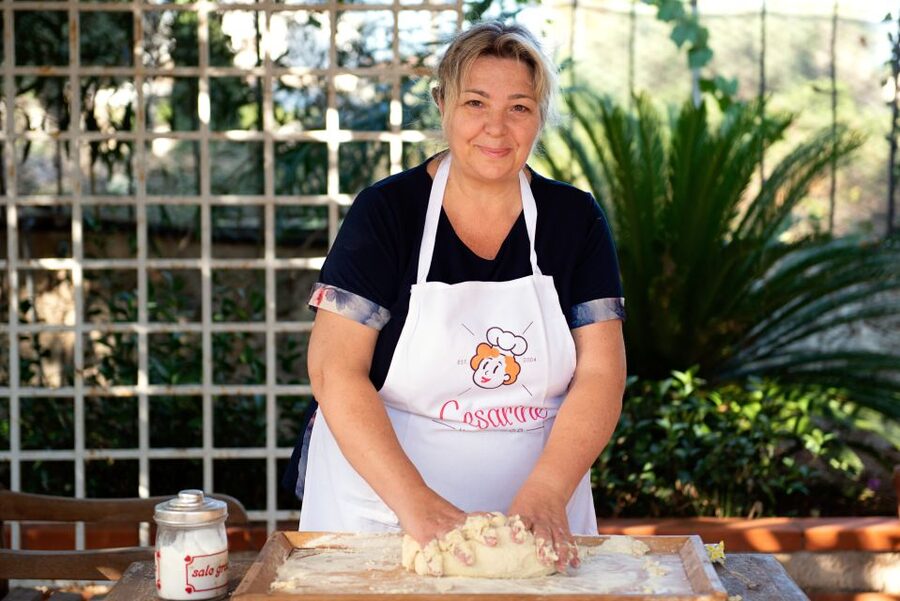
Sicilian home cooking is a small-time magic trick. In Catania, this private class brings you into a local family home with a certified Cesarina cook, learning three generations-style recipes and sitting down to eat what you make. It is hands-on, food-first, and far more personal than any restaurant lesson.
I especially like the pace and the setup. You get your own workstation with utensils and ingredients, and the lesson stays practical, not theoretical. I also love the meal part, tasting everything you cooked at one table with local red and white wines, plus coffee.
One consideration: you have to be okay with a home setting and the fact that the address is shared only after booking for privacy. It is not a classic “meet at a landmark” experience, so you’ll want to follow the host instructions closely.
Key things to know before you go
- A private class in a real home: You are cooking with the host in their space, not in a studio kitchen.
- Three recipes you actually make: The lesson centers on 3 authentic local dishes, then you taste them all.
- Hands-on workstation setup: Utensils and ingredients are provided, so you can focus on cooking.
- You eat with the wines: Tastings come with local wines (red and white), plus water and coffee.
- English or Italian instruction: The host can teach in English or Italian, depending on your group.
- Hosts are patient and practical: If pasta shaping or tricky steps feel awkward, the lesson is built for real learners.
Why a Cesarine class in Catania feels different from a restaurant meal
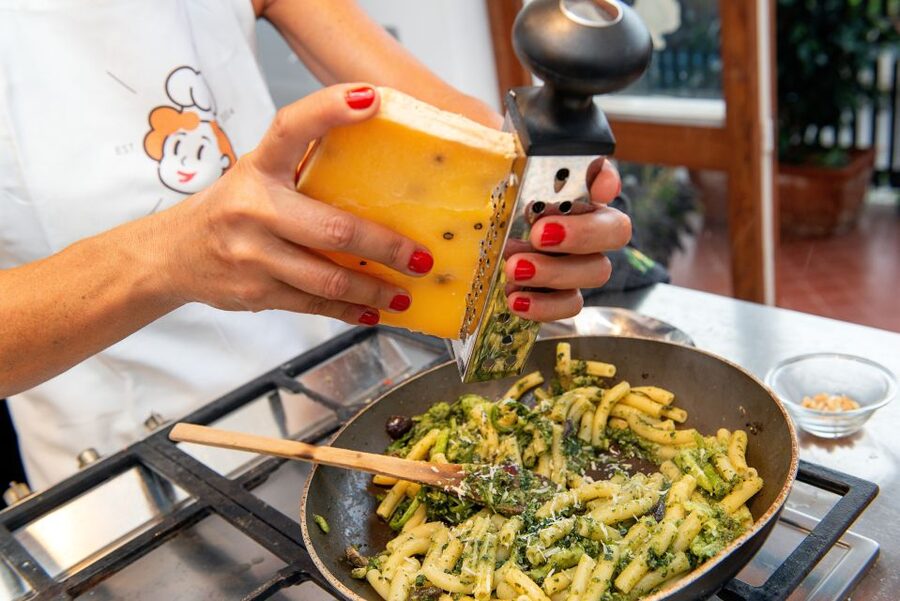
Most food experiences in Catania come with a script: you order, you eat, you move on. This one flips the order. You cook first, then you eat your results, at the table, in the same room where you worked.
That change matters. When you’re chopping, rolling, and shaping, Sicilian cooking stops being “a list of dishes.” It becomes technique. You start to understand why certain steps happen, like how a dough should feel before you commit to shaping, or how seasoning gets added in stages so it tastes balanced rather than flat. A home cook’s guidance also tends to be less about rules and more about outcomes.
The Cesarine model is built for this. You are not just watching someone cook. You are learning directly from a certified home cook who shares family-tested recipes. In the Catania setup you get in a private group format, which usually means you get more attention than you would in a larger class.
You can also read our reviews of more private tours in Catania



The 3-hour flow: from prep station to the long table
This is a 3-hour experience. The class length is short enough to feel efficient, but not so short that you rush through steps. Most cooking classes fail when they feel like a demo. This one avoids that by keeping you active throughout.
Here’s how the timing typically plays out, in a way you can plan around:
1) Arrive and get settled in the home kitchen
You meet the host at the designated point, then head into the home. The address is shared after booking for privacy, and the partner sends instructions ahead of time. Expect a warm welcome and a “this is how we’ll work tonight” vibe. One thing I like about this format is that it usually starts with something small to settle you in, like cheese, bread, and spreads, so you are not just waiting for the first instruction.
2) Set up your workstation and start the first recipe
You’ll have a workstation with utensils and ingredients. That means you are not borrowing tools or crowding around a single counter. You can actually follow the steps with your own space. If you are a nervous cook, this helps. If you are confident, it still helps because it keeps your pace steady.
3) Cook through 3 local recipes guided by the host
The host explains what to do, watches your progress, and corrects the small stuff. Pasta shaping and other fiddly steps can be tricky. What you want from a class like this is patience, and the experience is designed for that. In a real example, the host Maurizio was extremely patient, even when a pasta shaping attempt was… a learning moment. That supportive teaching style is a major part of the value.
4) Sit down and taste everything you made
Once the cooking finishes, the format shifts to eating together. You taste all three recipes, and the meal is paired with a selection of local wines, typically red and white. You also get water and coffee. It is not an awkward “tasting at the counter” setup. You get a proper table meal to make the learning stick.
Three Sicilian recipes you cook and then taste
The class is built around exactly 3 authentic local recipes, and the tastings cover all of them. That “cook and taste” loop is why this works.
Why? Because it gives you feedback instantly. If a sauce tastes too heavy, you can connect that taste to the decisions you made during cooking. If the dough or batter worked well, you remember the feel and the result. If it didn’t, you learn what the host would correct next time.
The dishes themselves are Sicilian, and you’ll likely see classic regional flavors show up across the three recipes. While the specific dishes are not listed here, the hosts are focused on famous regional cuisine and family methods passed down through generations.
A useful mindset for this part: treat the class like a guided skill lesson, not a strict performance. Your goal is not to make restaurant-perfect plates. Your goal is to learn how Sicilians build flavor, one step at a time.
At-home hospitality, cheese-and-bread starters, and why patience matters
A private class in a home can go two ways: either it’s charming and personal, or it becomes awkward and rushed. The best hosts balance warmth with clear instruction, and that is what you should expect.
From real examples with hosts like Maurizio, you can look for a few cues:
- A welcome snack before cooking kicks off, like cheese, bread, and spreads. This is more than a nice touch. It helps you start the lesson relaxed and ready to focus.
- A table that feels set for a proper meal, not just a quick bite.
- An instructor who pays attention to your technique and adjusts without making you feel bad about mistakes.
One detail I really appreciate is that the host may take photos of you during the experience. It’s a small thing, but it turns the night into something you can remember without holding your phone up the whole time.
Also, private does not mean you are doing everything alone. It means the host can slow down for you. If pasta shaping goes wrong, you get help. If you need clarification, you can ask. That kind of patience is hard to find in group classes where the teacher has to keep moving.
Wines, coffee, and the meal format that makes learning stick
Food classes often struggle with timing. You cook, you taste a tiny sample, and then you leave. Here, tasting is central.
You’ll enjoy beverages like water, local wines while you cook, and coffee with the final meal. The pairing with both red and white wines matters because it changes how you perceive the dishes. You start noticing acidity, salt balance, and how a sauce behaves when you sip between bites.
Practically, this is also a social setup. You cook, then you eat together at a table. That transforms the experience from “a class” into “a shared dinner with a lesson attached.”
If you like food, this part is often the highlight. You get to taste your own work while you still remember the steps. That’s the fastest route to learning something you can repeat later.
You can also read our reviews of more cooking classes in Catania


Price and value: what $164.26 buys you in a private format
At $164.26 per person for about 3 hours, you’re paying for more than recipes. You’re paying for three specific things:
1) Privacy and attention
This is a private group experience. That generally means more coaching, fewer waiting moments, and a smoother experience when you ask questions or need a hand on technique.
2) Real ingredients, real tools, and real teaching
The workstation comes with utensils and ingredients. Local cooks do not hand you a kit designed for convenience. They guide you through actual preparation and steps meant to produce good results.
3) A full table meal with beverages
The included tastings cover all three recipes, plus water, wines, and coffee. That means you are not just paying for instruction. You’re also covering the meal outcome.
Now, a balanced way to judge value: if you want a quick bite and you mostly care about eating, a restaurant meal might be cheaper. But if you want to take a skill home, this is one of the more direct options in Italy. You’ll leave with “how to cook it” knowledge, not just “what it tasted like.”
Who this class suits best, and who might want to choose differently
This experience fits best when you want a hands-on evening and you enjoy learning through doing.
You’ll probably love it if:
- You are a food enthusiast who likes Sicilian cooking specifically.
- You learn well with coaching and step-by-step guidance.
- You want to connect with a local home cook and feel like part of the evening.
You might want to think twice if:
- You mainly want sightseeing and prefer activities with fixed public meeting points.
- You are uncomfortable in someone’s home setting.
- You want a highly structured, multi-location itinerary. This one is centered on cooking, eating, and learning in one place.
It is also well-suited for couples, since the experience is private and at least two people are required for it to run. If you are traveling solo, the key is whether the organizer can match you with another person or ensure the minimum is met.
Dietary needs can be catered for, but you should confirm directly with the organizer after booking. That is important, because you want the host to adjust recipes thoughtfully rather than guessing last minute.
Timing in Catania: morning or late afternoon at the local home
The class usually starts around 10 AM and 5 PM, but it can flex based on your requirements. That flexibility is a real advantage in Catania, where you might want to plan around other activities, heat, or tour schedules.
Because you’ll receive the full address after booking, your best approach is to treat this like a proper dinner plan. Give yourself buffer time. Follow the partner instructions carefully so you arrive smoothly, especially since it is held at a local family home for privacy.
A few practical tips to get the best outcome
To make the most of this kind of class, a little preparation helps.
- Come hungry. Tastings are included, and the meal is part of the experience.
- Ask questions while you cook, not just at the end. The host can correct technique as you go.
- If you struggle with steps like shaping, lean into it. That is exactly what the class is for.
- If you have dietary requirements, confirm early with the organizer. You want adjustments built into the lesson.
And one more thing: take notes or photos of steps you care about. The memory of how dough should feel or when to adjust seasoning is easier to capture in the moment.
Final verdict: should you book this Catania cooking class?
I’d book it if you want an authentic Sicilian food experience that teaches real technique, not just a meal. The best part is the full loop: cooking three local recipes, eating everything you made, and enjoying local wines and coffee in a home-style setting.
It’s also a strong choice for value if you compare it to paying separately for a cooking experience plus a dinner. Here, the meal outcome is part of the package, and the private teaching attention gives you more than a generic group workshop.
Skip it only if you dislike home-based logistics or you want a classic, landmark-heavy itinerary. Otherwise, this is the kind of evening that gives you something you can use long after you leave Sicily: the recipes, the feel of the steps, and the confidence to try again at home.
FAQ
What is included in the cooking class?
You get a private cooking class, tastings of the 3 local recipes, beverages (water, wines, and coffee), and local taxes.
How long is the Catania cooking class?
The experience lasts 3 hours.
Where does the class take place?
It is held in a local family home. For privacy reasons, you receive the full address after you book, and the host shares meeting instructions afterward.
What time does the class start?
Cooking classes usually start at 10 AM and at 5 PM, but it can be flexible based on your requirements if you notify the organizer in advance.
Is the class private or group-based?
It is a private group experience.
What languages are spoken during the class?
The instructor speaks English and Italian.
Can dietary requirements be accommodated?
Yes, different dietary requirements can be catered for. Confirm directly with the service organizer after booking.
How much experience do I need to enjoy it?
You do not need prior cooking experience. The class provides a workstation with utensils and all ingredients, and the host teaches the recipes step by step.
What is the cancellation policy?
You can cancel up to 24 hours in advance for a full refund.
More Cooking Classes in Catania
More Private Tours in Catania


More Tour Reviews in Catania






Not for you? Here's more nearby things to do in Catania we have reviewed









Catania City & Fish Market Tours, compared.
 ★ 4.8Catania: Mount Etna Morning or Sunset Day Trip with TastingFrom $704,028 reviews
 ★ 4.8Catania: Sunset Jeep Tour of Mount Etna and Lava Flow CavesFrom $712,113 reviews
 ★ 4.9Catania: Mount Etna Trekking Trip off the Tourist PathFrom $781,351 reviews
 ★ 4.8Catania: Etna Sunset Tour with Pickup and Drop-offFrom $711,348 reviews
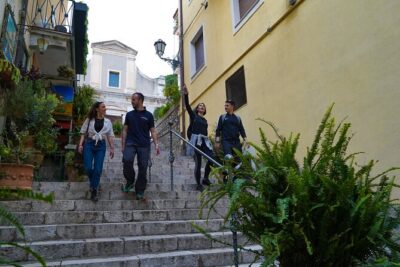 ★ 5.0Mt. Etna and Taormina village full day tour from CataniaFrom $1181,155 reviews
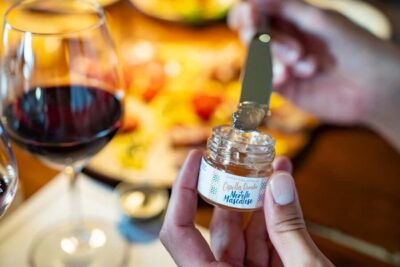 ★ 4.7From Catania: Mount Etna Sunset Tour with Tasting and CaveFrom $451,119 reviews
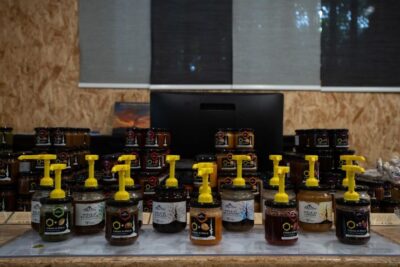 ★ 4.8Catania: Etna Morning Excursion with Tasting and PickupFrom $67820 reviews
 ★ 4.9Catania: Amazing Etna Morning Tour with Pickup and Drop-OffFrom $81799 reviews
Browse the lists this tour appears in