
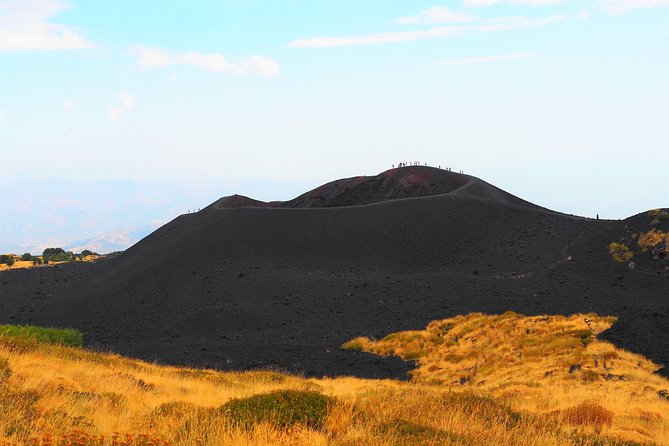
Reviewed · MOUNT ETNA VOLCANO TOURS
ETNA – Trekking to the Craters Eruption of 2002
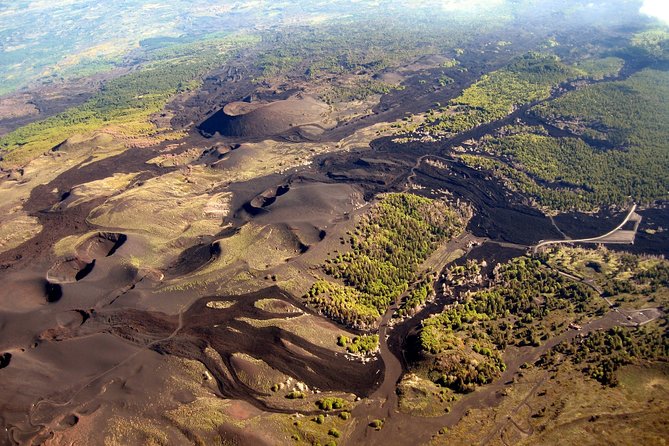
Etna is louder up close. This guided walk follows the 2002 eruptive fracture from Piano Provenzana, past lava fields, woodland edges, and side craters like a bottoniera.
I love that you are not just standing near a viewpoint, you are moving through real volcanic terrain with a guide who explains what you are seeing in plain language, including the science side. I also love the small-group feel and the English support, so you get answers as the route changes. The main drawback to plan for is that bottled water, coffee, and snacks are not included, and weather can affect what is possible that day.
You meet at Piano Provenzana on Etna Nord and the activity runs about 2 to 3 hours, then you return to the start point with admission handled.
Key points that make this trek worth your time
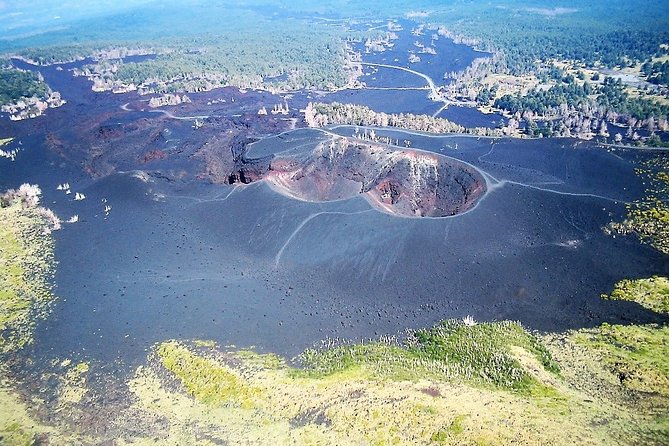
- Route traces the 2002 eruptive fracture, so you walk where the eruption actually spread.
- Side craters like a bottoniera add variety beyond the main lava field.
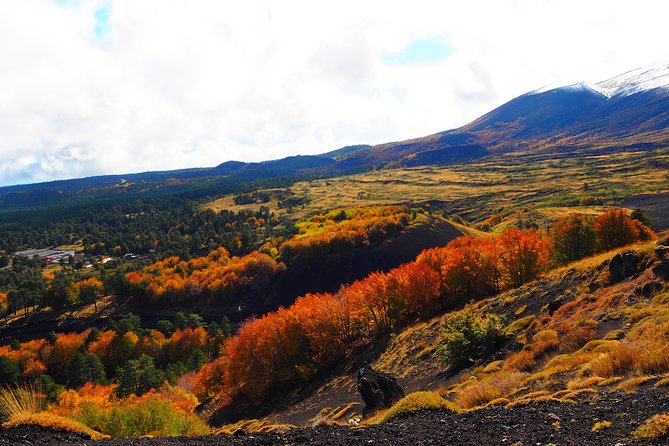
- Lava, beech, and larch pine woods mix into a route that changes every few minutes.
- Telescopic poles are included, a real help on uneven volcanic ground.
- English guidance keeps the hike engaging, not just scenic.
- Small group size (up to 12) makes it easier to keep a safe pace.
Entering Etna Nord at Piano Provenzana
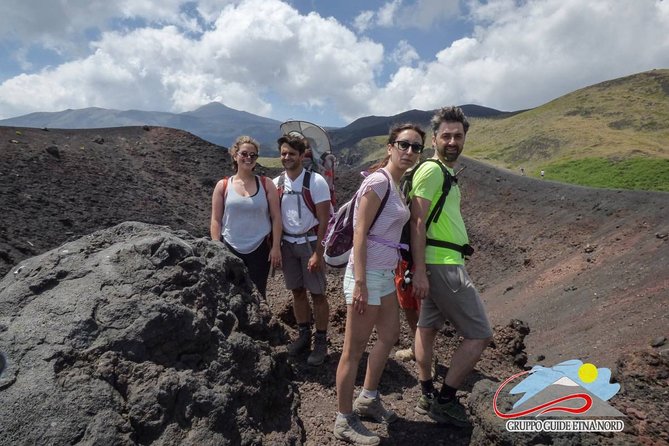
The experience starts at Piano Provenzana, right on Etna Nord (via Provenzana, 95015 Linguaglossa CT). The scheduled start is 10:00 am, and the trek is generally short enough that you can fit it into a busy Sicily day without feeling like you need a whole travel day for one hike.
What I like about this setup is the logic of it. You are not scrambling for hours to reach the action. You are starting in the Etna zone where you can walk among volcanic textures, then focus your time on the craters and the 2002 eruption story. You also get admission included, which matters because on Etna you can quickly end up juggling a ticket plus a tour plus gear.
The first stretch is all about settling into the terrain. Lava ground is uneven, sometimes sharp, and it can get windy. Your guide’s job is to get you moving steadily, and to make sure you understand what you are looking at as the ground shifts from one volcanic feature to another.
You can also read our reviews of more hiking tours in Sicily
Walking the 2002 eruptive fracture and a bottoniera
The heart of the trek is the walk along the 2002 eruptive fracture. Think of it like a natural timeline across the mountain. The path brings you alongside a lava field, then through patches of vegetation, then back into more open volcanic ground where the surface looks and behaves differently.
You also visit side craters, including one called a bottoniera. That name adds personality to the route, and it is the kind of detail you will remember later when you try to picture what you walked past. Side craters often feel more intimate than the big famous viewpoints, because you are close enough to see how the eruption shaped the surrounding ground.
The trek itself is short, but it is not a flat stroll. Volcanic terrain changes elevation and footing. That is where having the right support helps. Telescopic poles are included, and that simple detail can make the difference between a hike you enjoy and a hike you count minutes on.
The real value: geology explanations that stay understandable
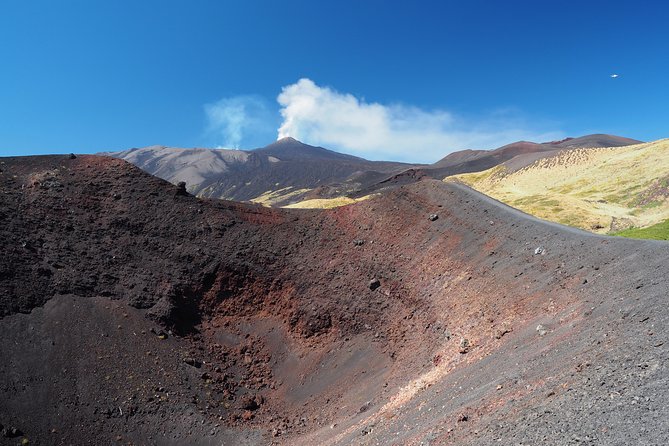
Etna is a science story you can walk through. The best part is when the guide turns what could be intimidating into something you can follow.
Guides linked with this area, including people like Fabio, Sylvia, Giuseppe, and Marco, are described as having strong volcanic know-how and clear teaching style. Some go further into how volcano activity works, even touching on chemistry, so you end up with more than a photo moment. You get context for why certain areas look barren, why others have growth, and how eruptions shape the mountain over time.
This matters because a crater hike can turn into a blur of sights if you do not know what you are looking at. Here, the explanations help you connect the dots between the lava field, the nearby vegetation, and the side craters you are visiting.
Even when the pace is steady, the guide stops long enough for you to catch your breath and absorb what is happening around you. That pacing style shows up again and again in how people describe their day: safe, controlled, and focused on seeing as much as conditions allow.
What you see along the way: lava, beech, and larch pine woods
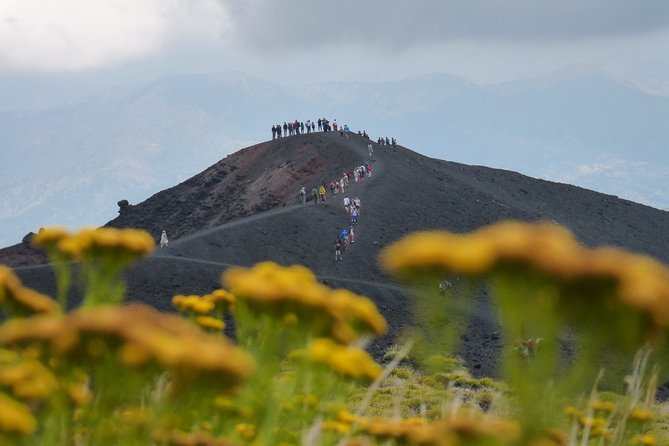
The trek is built around variety, not just one continuous view. On this route, you move from lava field terrain into beech and laricius pine woods. That mix is practical for the experience and also keeps it interesting.
Practically, vegetation can change how exposed you feel. On windy Etna days, walking under tree cover for portions of the route can feel like relief. Visually, it breaks up the scene so you are not staring at the same type of ground for the whole trek. It also sets up a stronger contrast when you step back into open volcanic ground.
One more thing to expect is sensory intensity. Etna areas can be windy, and people talk about the craters being impressive with both view and sound. Even if you do not know the technical terms, you will feel the power of the place.
Pace, safety, and why a small group helps
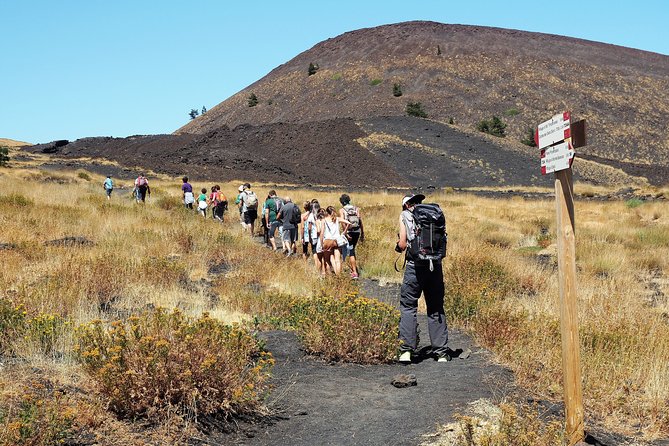
This is designed as an active guided trek, with a maximum of 12 travelers. Smaller groups matter on a volcanic hike because footing can get tricky. If someone is walking more slowly or needs extra time adjusting steps, you want space for that without everyone getting rushed.
Your guide also manages the group so everyone stays together enough to feel safe but still gets time to look around. People describe this as a well-led experience, where the pace is set to keep the whole group moving without forcing anyone to sprint on uneven ground.
Most travelers can participate, which is a helpful line if you are wondering whether you need to be a hardcore hiker. That said, your comfort will depend on your own comfort with rocky, uneven outdoor surfaces and wind.

Gear you get, and gear you need to bring
Good news first: telescopic poles are included. These help on uneven volcanic ground, especially if you are stepping around textured lava rock. Poles reduce strain and can also help you feel steadier when the wind picks up.
Also, some reports mention loaner gear like walking shoes, windbreakers, and sticks at no extra charge. That is not something I would plan around as guaranteed, but it is worth asking if you show up without what you need. At minimum, assume you should come prepared.
Here is what you should bring, since it is not included:
- Bottled water
- Snacks
- Something for coffee or tea needs if you want it
Etna can be chilly or windy depending on the day, and you are outdoors for a couple of hours. Pack layers you can handle quickly. If you have one wind-proof layer, bring it.
Price check: $36.14 and what you actually get for it
At $36.14 per person, this trek sits in the value zone for a guided Etna experience, especially because admission is included and telescopic poles are part of the package. When you compare that to the cost of booking a standalone guided route plus any entry requirements, the included admission helps.
The part you need to factor in is the stuff that is not included: water, coffee or tea, and snacks. If you come prepared, the price feels fair. If you forget and end up buying whatever you can find on the spot, that convenience can erase some of the value.
Also remember you are getting an English-guided activity that focuses on a specific eruption topic, the 2002 event. A themed route like this can be a better use of time than a generic walk, because the guide can connect the dots between what you see and what it means.
English guidance that turns photos into understanding
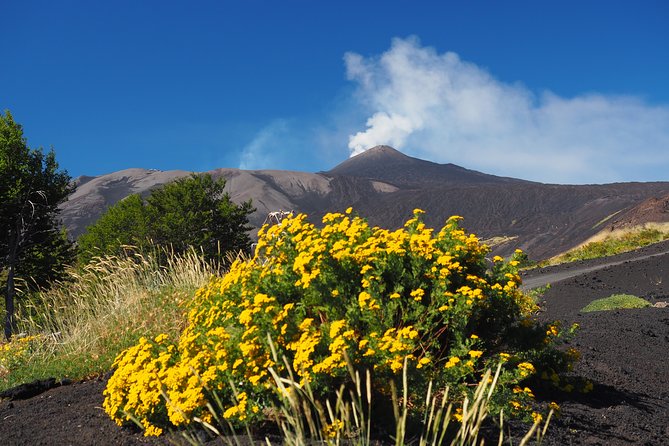
This is offered in English, and that matters more than you might think. Etna can be a place where everyone takes the same photos, but only some people come away understanding the patterns.
When the guide can explain in English, you spend more time asking questions and less time guessing. That is especially helpful when the terrain changes quickly, or when you reach a feature like a side crater and wonder what you are actually looking at.
People also mention guides who stop often enough to rest and explain. That is the sweet spot. You want breaks that feel purposeful, not random.
Weather reality: why your day depends on the mountain
This experience requires good weather. If conditions are poor, it may be canceled, and you are then offered a different date or a full refund.
That means you should not plan a tight schedule with no flexibility. On Etna, wind can change how comfortable you feel even if the sun is out. If your travel day is fixed, consider keeping your morning free for Plan B.
The good part is that the timing is early, 10:00 am. Mornings often give you a better chance of stable conditions, though the mountain always has the final say.
Who this trek is best for
This trek is ideal if you want a guided Etna walk that focuses on the 2002 eruption, not a vague overview. You will probably enjoy it most if you:
- Like short hikes with big payoffs
- Want real crater terrain, not just a distant view
- Prefer guided explanations in English
- Want a small-group experience up to 12 people
- Are okay hiking on uneven volcanic ground for a few hours
You might choose a different type of Etna activity if you need fully smooth walking surfaces, or if you are very sensitive to wind and exposure.
Should you book ETNA – Trekking to the Craters Eruption of 2002?
I would book it if you want a focused, guided crater experience at Etna Nord with the basics handled. Admission is included, you get telescopic poles, and the route is built around the 2002 eruptive fracture plus a bottoniera side craters.
Also, this is a good pick when you want context as you walk. Guides connected with this trek are described as passionate and able to explain volcano activity in a way that stays understandable, even for people who do not come with a geology background.
If you hate packing water and snacks, this one can feel a little inconvenient, because those items are not included. And if your schedule cannot flex for weather, remember this trek depends on good conditions.
FAQ
How long is the ETNA trekking to the 2002 craters?
It lasts about 2 to 3 hours.
Where is the meeting point for the trek?
You meet at Piano Provenzana – Etna nord, via Provenzana, 95015 Linguaglossa CT, Italy.
What is included in the tour price?
The admission ticket is included, and telescopic poles are provided.
Is bottled water or coffee included?
No. Bottled water and coffee or tea are not included, and snacks are also not included.
Is the trek suitable for most travelers?
Most travelers can participate.
Is the tour offered in English?
Yes. The tour is offered in English.
How large is the group?
The experience has a maximum of 12 travelers.
Does the trek depend on weather?
Yes. It requires good weather, and if it is canceled due to poor weather you will be offered a different date or a full refund.
What is the cancellation policy?
You can cancel for a full refund up to 24 hours before the experience start time. If you cancel less than 24 hours before, the amount you paid is not refunded.
More Hiking & Trekking Tours in Sicily
More Tour Reviews in Sicily
Not for you? Here's more nearby things to do in Sicily we have reviewed






Mount Etna Volcano Tours, compared.
 ★ 4.8Catania: Mount Etna Morning or Sunset Day Trip with TastingFrom $704,028 reviews
 ★ 4.7Mount Etna: Guided Volcano Summit Hiking Tour with Cable CarFrom $1243,784 reviews
 ★ 4.8Catania: Sunset Jeep Tour of Mount Etna and Lava Flow CavesFrom $712,113 reviews
 ★ 4.7Mount Etna: Trek to 3000m with cable car and jeepFrom $621,978 reviews
 ★ 4.8Mount Etna: Summit Crater Trek with Cable CarFrom $771,875 reviews
 ★ 4.8Etna and Alcantara Gorges Full-Day Tour with LunchFrom $1051,766 reviews
 ★ 4.3Mount Etna: Roundtrip Cable Car and 4×4 Bus TicketFrom $971,602 reviews
 ★ 4.7Etna Volcano: South Side Guided Summit HikeFrom $671,545 reviews
Browse the lists this tour appears in