
Reviewed · TRAPANI, ERICE & SEGESTA TOURS
Guided tour of the Marsala Salt Pans and salt harvesting
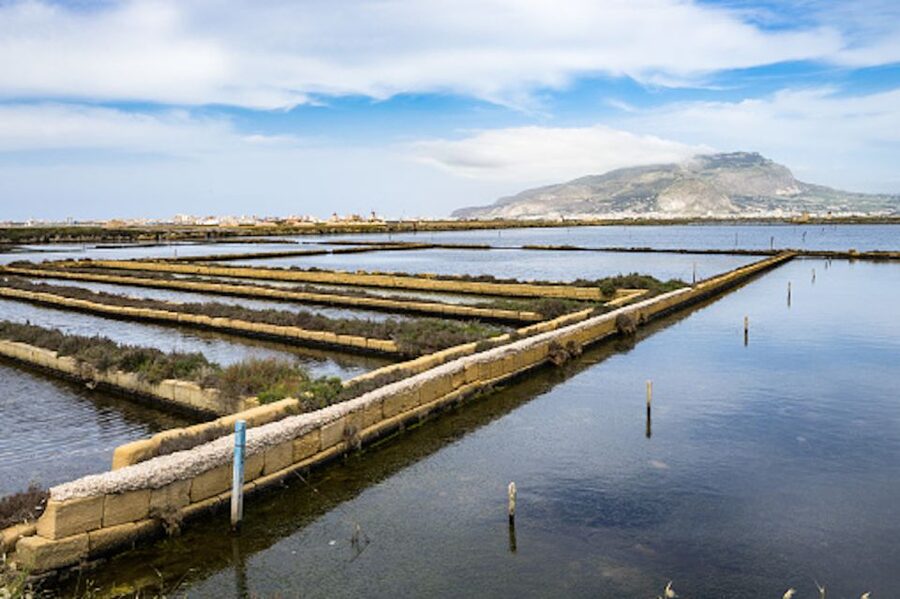
Salt has a smell, and you will notice. This one-hour guided tour takes you into the Stagnone Islands reserve near Marsala, where tanks, small canals, windmills, and working salt pans create a real, still-in-use system.
I love how hands-on it feels for a short visit, and I really appreciate the stop at Infersa Mill, where the production story is explained with a multimedia path you can actually follow on the spot. You also get a clear sense of how different salts connect to everyday life, from cooking to skincare.
One possible drawback to plan around: part of the experience is outdoors in and around the pans, so adverse weather can shift things. Also, give your shoe size at booking so you get the right footwear for the salt-farm walking.
Key takeaways
- Infersa Mill visit with a multimedia walk-through of sea salt production
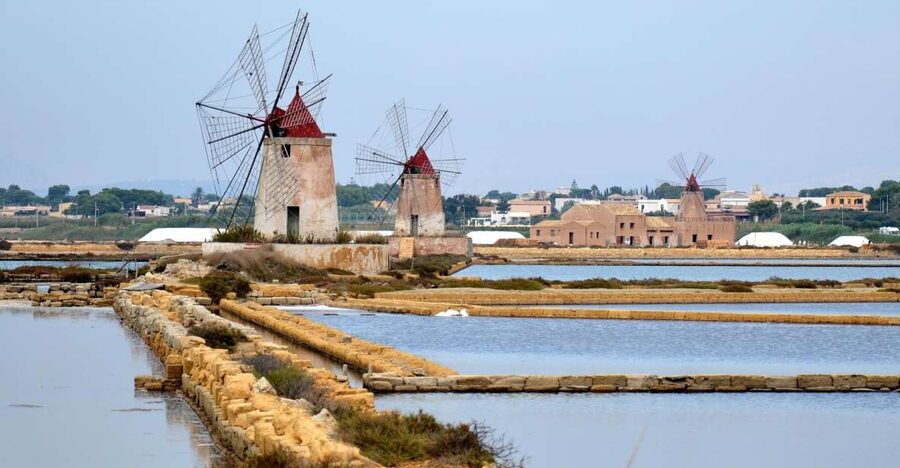
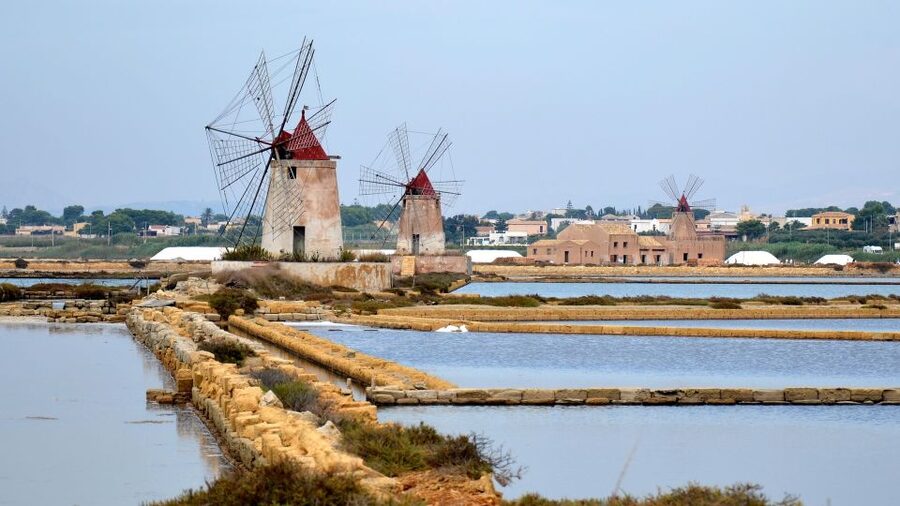
- Windmills, canals, and tanks you can visually read like a working map
- Hands-on salt harvest as part of the guided walk
- Different salt types discussed at the mill, including whole salt and fior di sale
- Cooking plus cosmetics use explained in plain terms
Marsala Salt Pans in One Hour: what you do and why it works
This is the kind of tour that fits perfectly into a busy Sicily day. You are not asked to sit through a lecture. Instead, you spend about an hour moving between the mill and the working salt area, seeing how the system functions, then joining the harvest part with your guide.
The value is that you get both sides of the story: the visual, “how it works” side (tanks, channels, windmills), and the practical, “how people use it” side (different salts, plus uses in cooking and cosmetics). If you like experiences that feel physical and sensory, this one hits the spot.
Just know what you are signing up for. This is not a long, slow nature hike. It is a focused overview, with enough time to learn and participate, but it will move at tour pace.
You can also read our reviews of more guided tours in Marsala
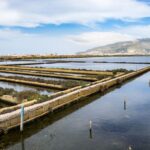
Where it starts: the Infersa Mill meeting point
The guide meets you inside Infersa Mill, so you are not wandering around searching for the right person with a clipboard. Once you are inside, you get oriented to the setting and to what you will see outside.
This is a good start for two reasons. First, the mill is where you learn the “why” behind the salt work. Second, it helps you understand what you are looking at once you step back out near the pans, canals, and windmills.
Boots are included, which matters more than you might think. Salt areas can be uneven and damp, so having proper footwear built into the tour takes a decision off your plate.
Windmills, tanks, and canals: reading the Stagnone salt system
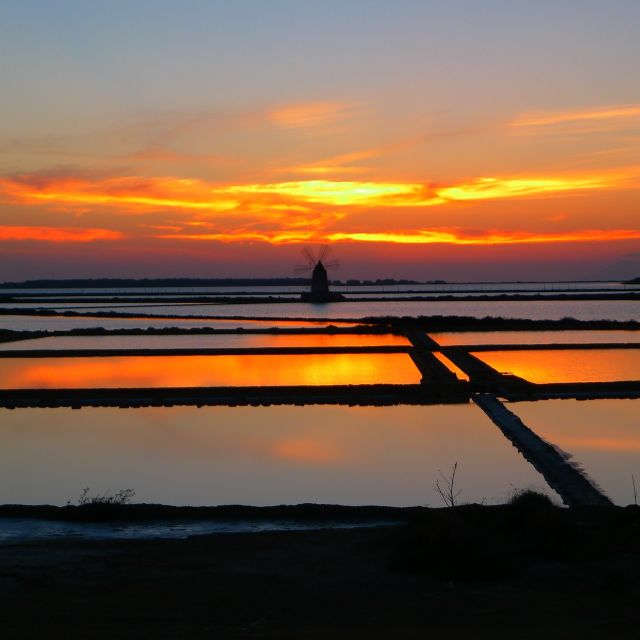
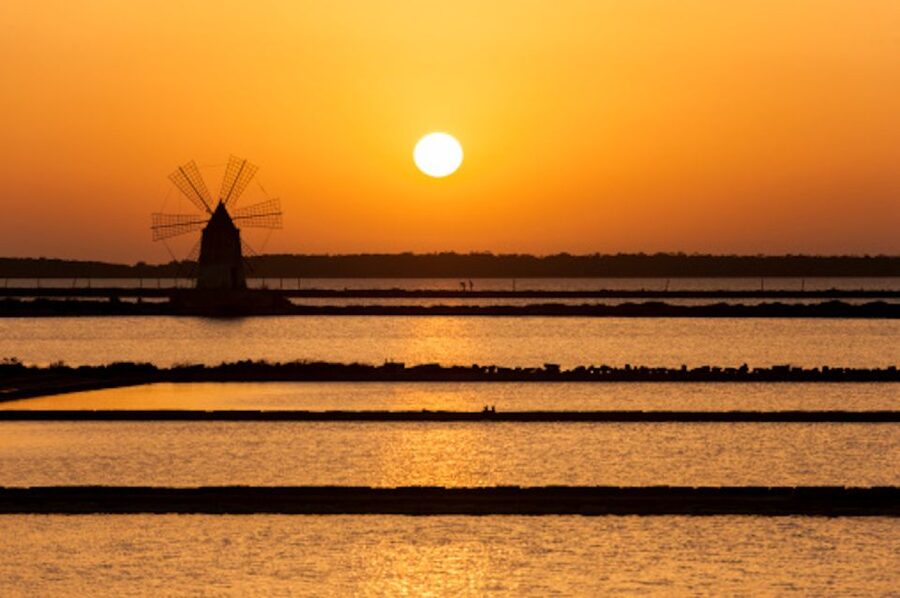
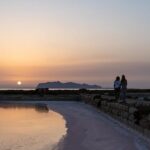
After the mill introduction, you move along the salt-pans area guided by someone who knows the place. You will see a grid of tanks and small canals, big piles of salt, and windmills that are part of the processing scene.
Here’s what I like about this part: it turns a flat idea, sea salt, into a system you can actually picture. You start to see how water movement, evaporation, and harvesting connect. Even if you are not a science person, the guide’s explanations make the process feel logical.
One recent experience highlighted how impressive it looks from a windmill terrace viewpoint. If you can, keep your eyes up while you are walking. There is more to catch visually than you expect when you only look at your feet.
The mill walk-through: multimedia salt production you can follow
At Infersa Mill, you get a multimedia path that explains the ancient and precious art of sea salt production. For many people, this is the “oh, that’s how it fits together” moment.
The multimedia format is especially helpful in a short tour. You are not relying on memory or vague descriptions. You can connect what the videos and visuals show to the exact tanks, channels, and salt piles you will see next.
One booking described the video explanations as being of very high quality, even compared to a well-known Italian science TV style. That matches what you want here. If you are going to learn quickly, the visuals need to be clear and well made.
Whole salt and fior di sale: what you learn beyond basic seasoning
Inside the mill, the tour introduces different types of salt. Two specific ones are highlighted: whole salt (hand-picked) and fior di sale (flavored).
This part matters because it helps you buy smarter later. Ordinary table salt is often treated like a commodity. But the tour frames salt as something more specific, with different qualities that suit different uses.
Even if you do not plan to bring home fancy salt, understanding what makes whole salt different from fior di sale changes how you think about salt as an ingredient. It also helps when the guide explains practical uses in cooking and, later, cosmetics.


Joining the salt harvest: the sensory part people remember
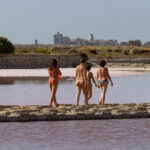
The most memorable part for many people is the moment you actually join the salt harvest. You do not just watch. Your guide takes you along the nature trail and brings you into the harvesting activity for a truly sensory experience.
You should expect hands-on participation. One recent tour described the satisfaction of contacting salt directly and picking both salt crystals and the flower-salt style product. That kind of involvement is why this tour scores high overall.
This is also where you get the strongest sense of work and tradition. It is not “museum salt.” It is part of a working landscape, tied to the identity of the Marsala area and the Stagnone Islands reserve.
One practical point: because this is outdoors and active, wear the boots you are provided with, and plan to move steadily. If you have any concerns about slipping or standing in uneven ground, mention it to the guide early.
Salt in cooking and cosmetics: why the tour goes there
A lot of salt tours stop at the scenery. This one connects salt to everyday uses, and that makes it more useful.
You learn how salt is used in cooking, and also why it shows up in cosmetics. The tour specifically points to salt’s moisturizing power and its use for products aimed at skin well-being.
Why this matters for you: if you care about what you buy, this tour gives you a reason behind the claims. You are not just hearing that a product is “natural.” You hear an explanation for what salt does and why it has value outside the kitchen.
One guide-led experience also emphasized how much there is to learn, even for people who thought they already understood sea salt. That tracks with how the tour is structured: mill education first, then the working environment, then uses.
Price and value for about $41 per person
At about $41 per person for roughly one hour, this tour is not a budget “walk-by” add-on. It is priced like an experience with real labor and interpretation, meaning a guide-led visit, a mill stop, and hands-on harvest participation.
Here is the value logic:
- You are getting a guided explanation plus access to Infersa Mill
- You receive boots included in the price
- You are joining the harvest, not just observing it
- You leave with a clearer understanding of salt types like whole salt and fior di sale, plus their uses
If your goal is photos only, you could drive through the area on your own. But if your goal is to understand the process and participate, this price starts to look reasonable.
If you want to shop afterward, knowledge helps. Knowing the difference between salt types makes buying feel less random and more intentional.
Language, group feel, and how that changes your experience
The tour is offered in Italian and English, and guides can adjust how they explain based on the group.
One high-rated experience mentioned being with the guide in a small setting, which is a good sign if you want questions answered on the spot. Even if you do not end up with a one-on-one feel, expect interactive guidance during the harvest portion.
Also, the guide is clearly a big part of the experience. Multiple recent reviews praised the guide’s English and warmth, and one named guide, Antonetta, stood out for thoughtful pacing and hands-on involvement during harvesting.
What to bring and how to prepare
You do not need to overthink packing for this one, because the tour includes boots. Your main prep task is practical:
- Provide your shoe size at booking so the right footwear is ready
- Wear comfortable clothes for short outdoor walking
- Be ready for the tour to shift if weather turns unpleasant
If you have sensitive hands or dislike getting messy, keep in mind this is a harvest activity. The point is participation, and that means salt contact is part of the deal.
Who this tour is best for (and who should skip it)
This tour is a great fit if you:
- Want a short, hands-on experience instead of a long lecture
- Like learning through visuals and doing, not just watching
- Are curious about how local food and skincare products connect to real raw materials
- Enjoy unique outdoor working sites, not only scenic viewpoints
You might skip it if you:
- Want a long hiking-style nature day (this is only an hour)
- Dislike outdoor activities in weather uncertainty
- Prefer experiences with no mess or contact with natural materials
Should you book this Marsala salt pans tour?
If you want an hour in Sicily that mixes working tradition, a mill education, and actual salt-harvesting participation, I think it is an easy “yes” to book. The pricing makes sense when you factor in the mill visit, included boots, and the hands-on harvest component.
Book it especially if you care about learning something practical you can use later, like what makes whole salt and fior di sale different, and why salt can matter beyond cooking. Just keep your expectations tight: it is short, active, and outdoors, so show up prepared for movement and weather.
FAQ
How long is the Marsala salt pans and salt harvesting tour?
The duration is 1 hour.
Where do I meet the guide?
The guide waits for you inside Infersa Mill.
What does the tour cost?
It is priced at about $41 per person.
What is included in the price?
Included are a visit to Infersa Mill, boots, and a guide.
Is food or drinks included?
No, food and drinks are not included.
What languages are available?
The tour is offered in Italian and English.
Do I need to bring my own boots?
No. Boots are included, but you should provide your shoe size at booking to get the correct footwear.
What happens if the weather is bad?
If conditions are adverse, the reservation may be subject to changes or modifications.
Is there any cancellation option?
Yes, you can cancel up to 24 hours in advance for a full refund.
More Guided Tours in Marsala
More Tours in Marsala

More Tour Reviews in Marsala
Not for you? Here's more nearby things to do in Marsala we have reviewed





Trapani, Erice & Segesta Tours, compared.
 ★ 4.2From Trapani: Cruise to Favignana and Levanzo with lunchFrom $532,286 reviews
 ★ 4.2Segesta, Erice and Salt Pans Full-Day Excursion from PalermoFrom $821,791 reviews
 ★ 4.3From Trapani: Day Cruise to Favignana & Levanzo with LunchFrom $461,483 reviews
 ★ 5.0Boat Tour Egadi Day discover Favignana and Levanzo from TrapaniFrom $1391,183 reviews
 ★ 4.2From Trapani: Favignana and Levanzo Mini Cruise with LunchFrom $47814 reviews
 ★ 5.0Favignana and Levanzo, Egadi islands tour by boat from TrapaniFrom $114720 reviews
 ★ 5.0Boat tour to Egadi Favignana and Levanzo islands from TrapaniFrom $102614 reviews
 ★ 5.0Egadi Islands Tour: Favignana and Levanzo from TrapaniFrom $114607 reviews
Browse the lists this tour appears in