
Reviewed · MOUNT ETNA VOLCANO TOURS
Mount Etna: Trek to the Craters of The 2002 Eruption
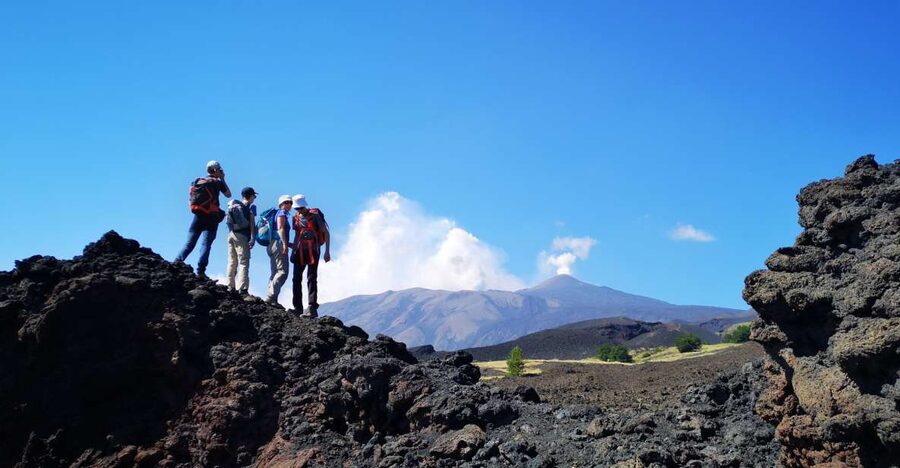
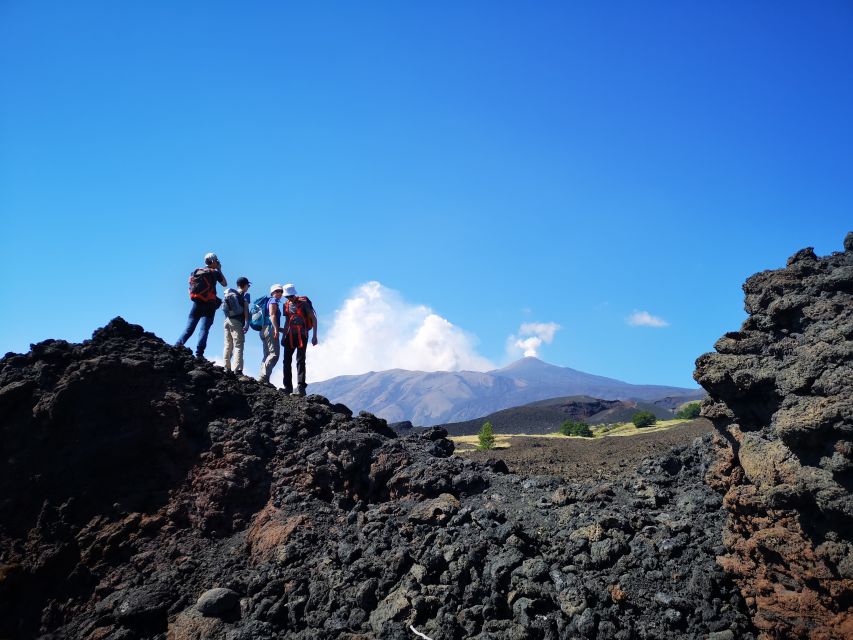
Etna does not do quiet. This trek walks you along the 2002 eruptive fault and turns “lava rock” into real geology you can see with your own eyes. You’re on Mount Etna’s northern flank, so the route has that rare mix of close-up volcanic features and wide coastal sightlines.
I especially love the way the guide explains how eruptions actually build shapes, not just facts about volcanoes. You’ll see hardened flows, lateral cones from gas and rock explosions, and craters up close, then connect it to what happened at dawn on October 27, 2002, the so-called perfect eruption.
One thing to plan around: even though the difficulty is listed as easy, it is not suitable for people with vertigo or mobility impairments, and you cannot wear sandals or flip flops on rocky ground.
Key things you’ll remember about this Etna crater walk
- 2002 fault route on Etna’s northern flank, built from the eruption’s eruptive fracture
- Lateral cones formed by strong explosions of gas and rock fragments
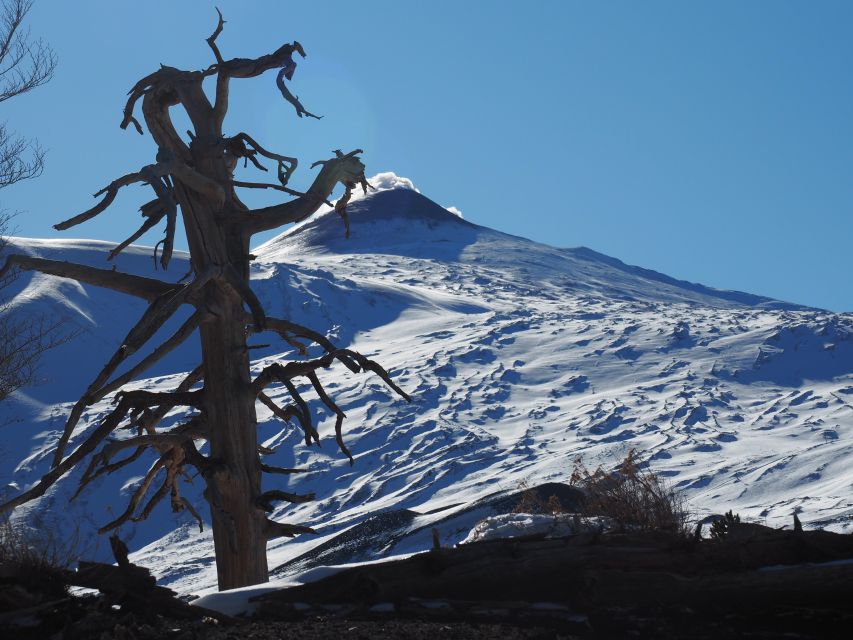
- Crater views plus huge coastal panoramas, including the Bay of Naxos and the Calabrian coast
- UNESCO World Heritage volcano context, tied to Greek mythology and today’s agriculture
- Official English and French guide, with Italian also listed as a tour language
- Easy difficulty, about 2.5 hours, but pace still depends on the group
Why Etna’s 2002 eruption walk feels different from a normal hike
Etna is active, but this tour gives you something more specific than a generic volcano visit. You’re not just looking at Etna from a viewpoint. You’re walking along the eruptive fault connected to the eruption that happened at dawn on October 27, 2002, known as the perfect eruption. That detail matters because it shifts the experience from scenic to story-driven.
I like that the guide frames what you’re seeing as cause and effect. Hardened lava flow becomes a timeline you can trace with your feet. Lateral cones become evidence of how gas and rock blast outward along a fracture. And craters become places where the mountain shows you the aftermath of violent force, now turned into solid formations.
You also get a “why it matters” angle. Etna is a UNESCO World Heritage-listed volcano, and it keeps shaping everyday life through fertile soils that support agriculture. So it is not only about danger or spectacle. It is also about how people live with a volcano that keeps acting like a volcano.
You can also read our reviews of more hiking tours in Mount Etna
Getting started at Piano Provenzana and meeting GRUPPO GUIDE ETNA NORD
Your day begins in the Piano Provenzana area. The meeting point is in the first parking area at the wooden house with the sign Gruppo Guide Etna Nord. Ending back at the same place keeps things simple.
This matters more than you might think. Etna trekking is best when you start calm and organized. You’ll want time to get your water ready, check your shoes, and adjust layers before you move onto uneven lava surfaces. Meeting right at the parking area near the wooden house also makes it easier to sort out what to do with jackets and rain gear once the weather changes.
The operator is GRUPPO GUIDE ETNA NORD di RAGONESE BIAGIO & C sas, and the tour includes a live guide. The listed language coverage includes Italian, French, and English, with an official English and French-speaking guide included.
Walking Etna’s 2002 eruptive fault on the northern flank
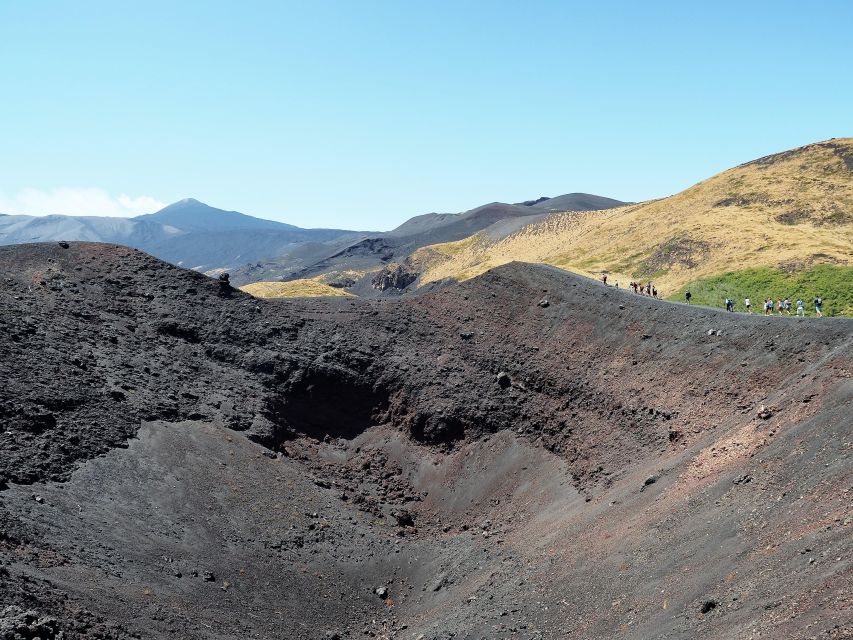
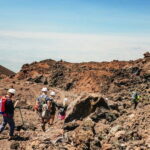
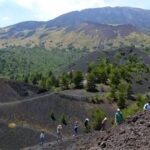
Once you set out, you’ll follow a trail that takes you right along the eruptive fault on Etna’s northern flank. This is the core of the experience, and it is the main reason this trek stands out in value. A view is nice. Walking the actual volcanic features is better because you see how they sit in relation to each other.
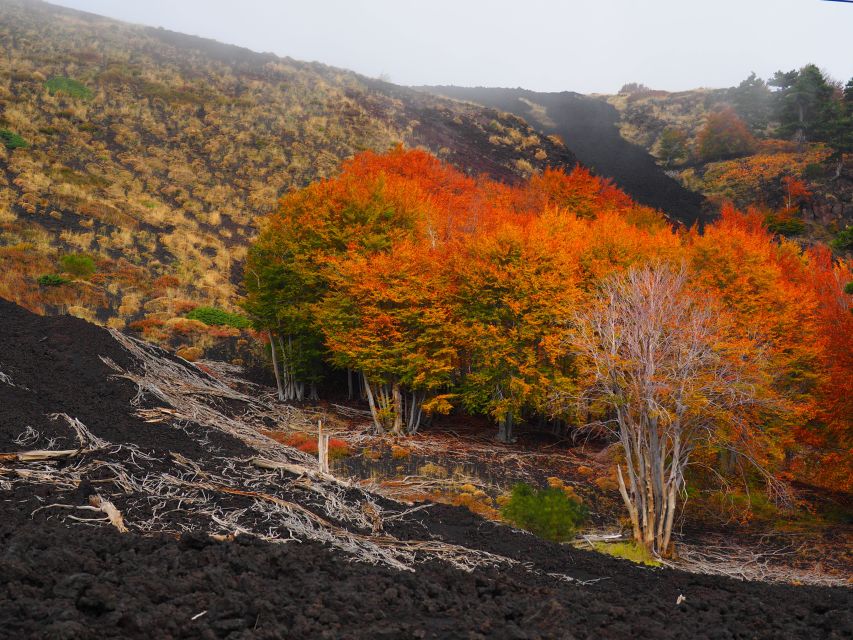
Expect to spend time on hardened lava flow. That is solid ground, but it is still volcanic terrain, so you should plan for a rocky, irregular surface. The tour is listed as easy, but easy does not mean smooth. Comfortable shoes matter.
The guide also helps you visualize the eruption’s mechanics while you walk. The “perfect eruption” at dawn on October 27, 2002 becomes a framework for understanding the shapes around you. You’ll be looking for patterns: where the fracture runs, where the explosions built small structures, and how hardened lava preserves the eruption’s path.
The geology lesson you get while you walk the lava
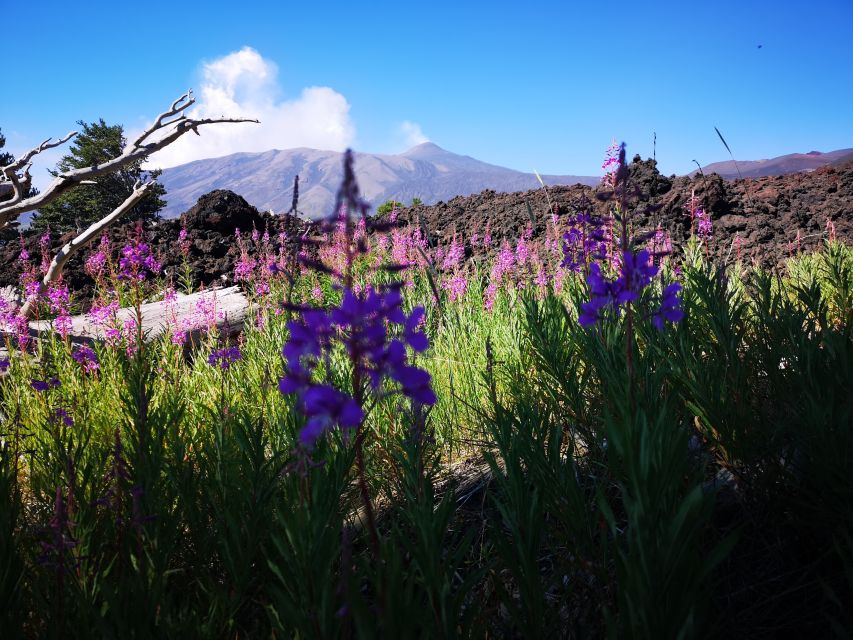
This tour includes geology education, but it’s not classroom-only. The learning is tied to what’s on the ground. You walk past the eruptive fault and learn how eruptions produce the features you can spot on the surface.
Here are the main geology takeaways you should expect to connect during the walk:
- Hardened lava flow shows the path of erupted material after it cooled.
- Lateral cones form along the fault line from strong explosions of gas and rock fragments.
- Craters give you a better sense of where the eruption concentrated and how it ended up building pits and openings.
The best part is that the story stays anchored in the 2002 eruption. Even if you are not a geology person, you can still follow a simple logic: the eruption breaks through, material moves, gas and fragments blast along the fracture, then everything cools into solid landforms. The guide helps you connect those steps to what you see around you.
Lateral cones and craters: what to look for
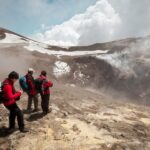
The route includes lateral cones and craters, and you’ll likely spend time pausing to observe. This is where the tour becomes photo-worthy, but also where you should slow down mentally.
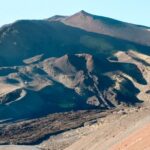
When you see the lateral cones, look for the idea of “built along the fault.” They’re described as being formed by strong explosions of gas and rock fragments along the eruptive fault. That means the eruption wasn’t only a single blast direction. It was active along a line, with explosive energy popping out structures on the sides.
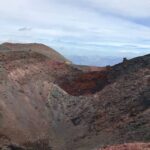
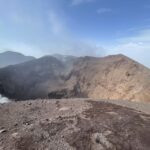
For the craters, the guidance is simple: peer into impressive craters and take in views at the same time. You’re basically training your eyes to read the eruption’s aftermath. A crater is not only a hole. It’s also a clue to where energy focused and what created the opening.
And yes, the scenery helps. Even with a geology focus, the craters and the fault line keep offering dramatic framing, especially on Etna’s northern flank where the coast is visible from higher points.
The views over the Bay of Naxos and the Calabrian coast
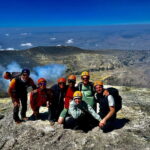
You get stunning views from the top, including the Bay of Naxos and the Calabrian coast. Even if you came for the geology, these sightlines are a major payoff.
This is one of those rare hikes where the views feel like part of the lesson. You’re not wandering through a featureless area. You’re moving along a volcanic fault, then looking outward and realizing the eruption sits inside a much bigger regional map of sea, islands, and coast.
Practical note: bring sunglasses and a sun hat. Even when the day is comfortable, volcano treks can expose you to strong sun and glare off rocky surfaces. If you go in cooler or changeable weather, pack rain gear. The tour strongly suggests a jacket plus rain gear, so don’t plan to “tough it out” if clouds roll in.
UNESCO, Greek mythology, and why locals still farm here
Mount Etna is listed as a UNESCO World Heritage volcano, and the tour connects that status to both mythology and modern life. You’ll learn that Etna was an important locale in Greek mythology, and that the volcano still plays a significant role in regional lifestyles.
The practical part is the fertile soils. The tour information points out that agriculture depends on those soils, meaning the volcano’s destructive power and its long-term soil value both shape the region. That’s a helpful mindset shift. You’re walking through a place that can still influence daily routines, not a museum set in stone and distance.
I like this angle because it makes the volcano more human. It is easy to treat Etna like a dramatic backdrop. The guide’s historical and present-day context makes it clear the mountain is part of the local economy and culture.
Timing and pacing: what the 2.5 hours really means on the ground
The tour is listed as lasting about 2.5 hours, but it also notes that the pace depends on the rhythm of the group. The itinerary indicates a guided tour and a walk time of 3 hours, so you should treat the time estimate as flexible.
Here’s how to plan your expectations:
- If you like steady walking with stops for explanation, this fits well.
- If you’re sensitive to uneven ground, you may need more careful steps, which can slow your pace.
- If you want more crater time for photos, build that into your own rhythm too.
The tour is marked as difficulty easy. That’s a good sign, but it does not change the terrain. Expect a real trekking surface, with lava rock underfoot and places where you’ll be looking down into craters or scanning along the fault line.
What it costs and what you actually get for $39.86
Price is $39.86 per person, which is a strong value for an active volcano guide experience. You get a guided tour, plus an official English and French-speaking guide. You also get structured time on the ground along the eruptive fault, not just a quick stop at a viewpoint.
What you do not get is food and drinks. So if you’re doing this as part of a longer Etna day, plan to eat before or after. I’d also treat water as non-negotiable. The suggested packing list includes water, and you’ll be walking for a couple of hours in a volcanic setting with sun exposure.
If you are weighing this against self-guided Etna visits, the difference is simple. With a guide, you get the eruption context and the “what to look for” learning tied to the features along the fault. You also get someone to manage the pace so the group stays together on a rocky route.
What to wear for Etna’s rocky, crater-adjacent trail
This part can make or break your comfort. The tour explicitly says not to wear sandals or flip flops. You’ll want shoes with solid grip and enough support for uneven lava ground.
The recommended items are practical and worth following:
- Comfortable shoes
- Sunglasses
- Sun hat
- Water
- Jacket
- Rain gear
I’d treat the jacket and rain gear as “bring even if you think you won’t need it.” On active-volcano days, weather can change quickly, and the tour route still goes forward. Having a layer you can put on fast keeps the experience enjoyable, not chilly or annoying.
Also, the tour is not suitable for pregnant women, people with mobility impairments, or people with vertigo. If any of those apply, take that seriously. Craters and rocky terrain can be stressful even when the hike is listed as easy.
Who should book this Etna trek
This experience is ideal if you want Etna as more than a view. If you like geology, love hands-on learning, or want to understand what the 2002 eruption left behind, you’ll appreciate the way the guide connects features to the eruption at dawn on October 27, 2002.
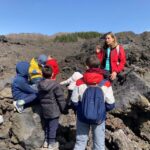
It also works well for families, based on the strongest feedback emphasis on it being a top-notch guided experience that families can handle. If your group includes kids or teens who enjoy discovery, the fact that the walk is easy helps the day stay fun and not exhausting.
Choose something else if you:
- Need an accessible route for mobility impairments
- Have vertigo
- Are traveling with a pregnant person
Should you book Mount Etna, Trek to the Craters of the 2002 Eruption?
Book it if you want a structured, guide-led walk along the 2002 eruptive fault with real takeaways, not just sightseeing. The value is strong because you get guided geology explanations plus big coastal views over the Bay of Naxos and the Calabrian coast, in a time window that’s manageable for many people.
Don’t book it if crater views and rocky walking stress you out, or if your needs fall under the stated limitations like vertigo or mobility impairments. In those cases, you’ll get more peace of mind with a different Etna format.
If you can handle an easy but uneven lava trail and you pack the basics, this is the kind of Etna experience that sticks with you because it turns a headline eruption into something you can actually walk through.
FAQ
How long is the Mount Etna trek?
The duration is listed as approximately 2.5 hours, and it depends on the group’s rhythm. The walking segment is also listed as 3 hours.
Where does the tour start?
You meet at the first parking area at the wooden house with the sign Gruppo Guide Etna Nord. The tour ends back at the same meeting point.
Is the trek difficult?
The difficulty is listed as easy. Even so, it is not suitable for people with mobility impairments or people with vertigo.
What should I bring?
Bring comfortable shoes, sunglasses, a sun hat, water, a jacket, and rain gear.
Are sandals or flip flops allowed?
No. Sandals or flip flops are not allowed.
Is food and drinks included?
No. Food and drinks are not included.
Can I cancel and get a full refund?
Yes. Free cancellation is available up to 24 hours in advance for a full refund.
More Hiking & Trekking Tours in Mount Etna
More Tour Reviews in Mount Etna
Not for you? Here's more nearby things to do in Mount Etna we have reviewed
Mount Etna Volcano Tours, compared.
 ★ 4.8Catania: Mount Etna Morning or Sunset Day Trip with TastingFrom $704,028 reviews
 ★ 4.7Mount Etna: Guided Volcano Summit Hiking Tour with Cable CarFrom $1243,784 reviews
 ★ 4.8Catania: Sunset Jeep Tour of Mount Etna and Lava Flow CavesFrom $712,113 reviews
 ★ 4.7Mount Etna: Trek to 3000m with cable car and jeepFrom $621,978 reviews
 ★ 4.8Mount Etna: Summit Crater Trek with Cable CarFrom $771,875 reviews
 ★ 4.8Etna and Alcantara Gorges Full-Day Tour with LunchFrom $1051,766 reviews
 ★ 4.3Mount Etna: Roundtrip Cable Car and 4×4 Bus TicketFrom $971,602 reviews
 ★ 4.7Etna Volcano: South Side Guided Summit HikeFrom $671,545 reviews
Browse the lists this tour appears in