
Reviewed · SYRACUSE & ORTIGIA TOURS
Ortigia: Syracuse’s Ancient Town Center Private Walking Tour
Ortigia starts making sense fast. This small-group private walking tour shows you the key layers of Syracuse, from Greek stone to baroque churches, without wasting time figuring out where to go next. I like how the route is built to fit a short visit, and I like that your guide turns famous spots into real explanations, with strong English guides such as Eva, Ava, Valeria, and Carmine.
One thing to plan around: the Syracuse Cathedral interior depends on timing, since entry isn’t possible during holy mass or marriages, and there’s a dress code. If you’re wearing shorts or a sleeveless top, you can be refused entry, and the cathedral interior fee is extra at about €2 per person.
Key things to know before you go
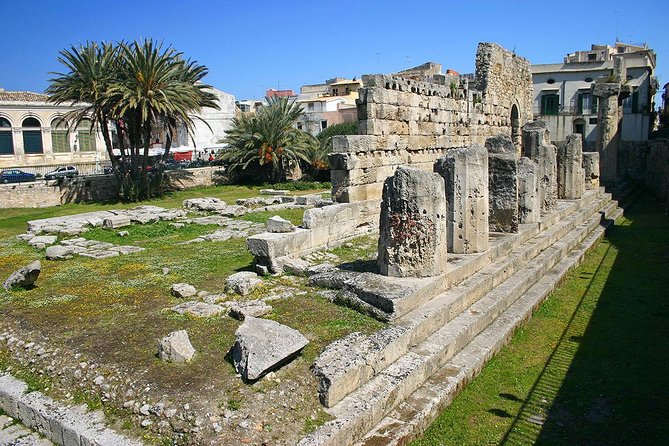
- Oldest Greek stone temple in Sicily first stop, Tempio di Apollo, sets the story immediately
- You hit multiple major squares, including Piazza Duomo, with key buildings outside and a cathedral stop
- Cathedral interior has rules: dress code plus limited times due to services
- The walk includes Fonte Aretusa, plus the myths tied to Alpheus and Arethusa
- You spend real time in Ortigia’s narrow lanes, including the Giudecca district
- Some guide-led groups go in tiny numbers, with experiences reported as small as 4 people
Why this 2-hour Ortigia tour is a smart use of your Sicily time
Ortigia can feel like a maze at first. This tour helps you get your bearings fast because you’re following a guide who keeps you moving from landmark to landmark, with stops that teach you what you’re actually looking at.
What makes it practical is the pacing. At about 2 hours, you’re not trying to do the entire island in one go. Instead, you get a clean loop through the historic core, plus the kind of context that makes later self-guided wandering easier.
You’ll also like that it’s a private walking tour, meaning only your group participates. That matters in Ortigia, where narrow streets can turn crowded quickly. With a smaller group, you can ask questions, get points of view, and slow down when something catches your eye.
You can also read our reviews of more walking tours in Sicily



Tempio di Apollo: the Greek temple that anchors everything else
You start near Via dell’Apollonion, meeting close to the Tempio di Apollo. This is billed as the oldest stone temple built by Greeks in Sicily, so it’s a strong opener. Even before you get to churches and palaces, you’re learning what kind of city Syracuse used to be.
The stop is short, about 10 minutes, and that’s on purpose. You’re not here for a long museum-style visit. You’re here to grab the big idea: you’re walking through layers of time, and the Greek world is the foundation.
The practical win: since admission is free for this first stop, you can focus on explanation and photos instead of budgeting extra or waiting in lines.
Piazza Archimede and Diana’s fountain: learning to read the squares
Next comes Piazza Archimede, where the focus is the neoclassical Diana fountain and the surrounding mix of architectural styles. In a place like Ortigia, squares are your “outdoor rooms.” They’re where power shows itself, where religion shifts, and where everyday life keeps happening.
This stop is also about 10 minutes, and it works well. You get a quick visual reset after the temple, then you head into smaller streets where you’ll notice details a lot more.
If you like city walks where you start seeing patterns, pay attention to how the buildings change style as you move. Your guide’s job here is to help you recognize the story those style changes are telling.
Via Cavor near Collegio dei Gesuiti: a quick street-side history moment
Between the big squares, you walk a section of via Cavor, passing near the Collegio dei Gesuiti. This is one of those “small stop, big value” parts of the tour, because it bridges the showpieces.
You’re not just walking for exercise. You’re getting a tour of the city’s rhythm: temple to square, square to institutional buildings, then back toward the cathedral area. That helps you understand why the center of Syracuse looks the way it does.
Even if this stretch feels like transfer time, it’s still time used for meaning. In Ortigia, a couple of streets can explain a whole period.
Piazza Duomo and Syracuse Cathedral: baroque grandeur with real-world entry rules
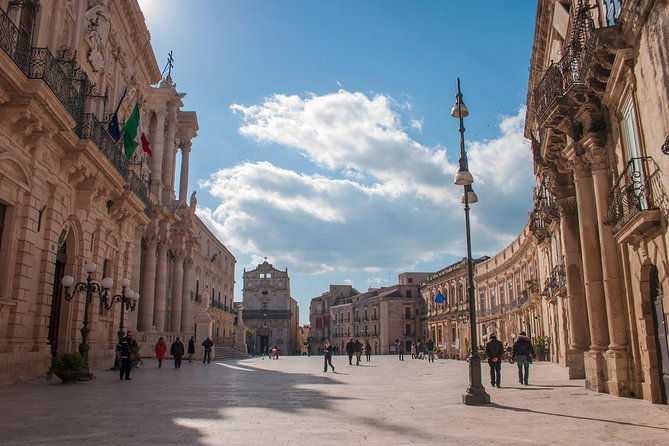
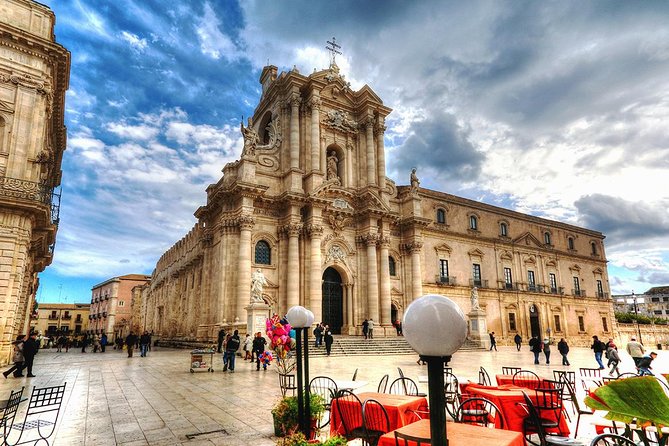
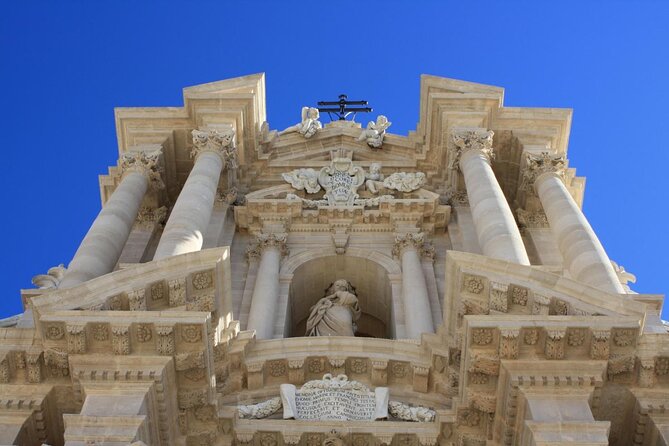
Then it’s Piazza Duomo, where you’ll learn about the cathedral square and the main buildings around it, including the cathedral, palazzo Vermexio, the arcivescovado, and palazzo Beneventano del Bosco. This is where your photos start to look like postcards, but the guide’s explanation is what makes them feel earned.
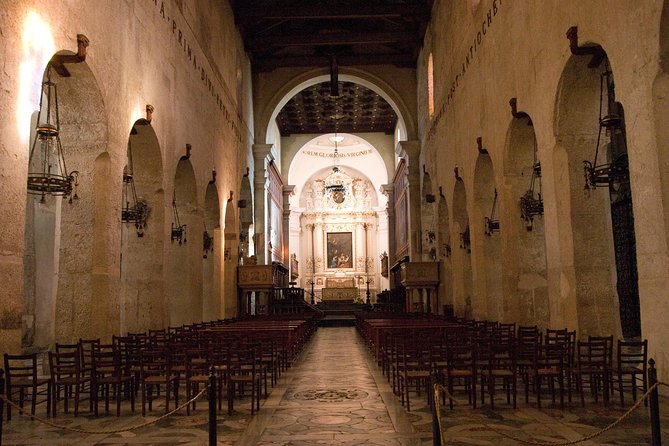
After that, you move into the heart of the experience: Syracuse Cathedral. This part is about 25 minutes, but there’s a key catch. The cathedral interior is built on an ancient Greek temple, and it’s baroque inside, but entry requires an extra fee of about €2 per person, and you may not be able to go in during holy mass or marriages. If that happens, your guide will explain things from outside.
Also plan for the dress code. To enter the cathedral interior, you need shoulders covered, so no shorts or sleeveless tops for both men and women. If your outfit doesn’t match, you can risk being refused entry.
For me, the value here is obvious: you’re paying for someone to make the cathedral make sense. If you go in, you’ll connect what you see outside in the square with what you see inside. If you can’t go in, you still get structure and context, instead of just standing in front of doors.
You can also read our reviews of more private tours in Sicily



Santa Lucia alla Badia: St. Lucy’s church interior when it’s open
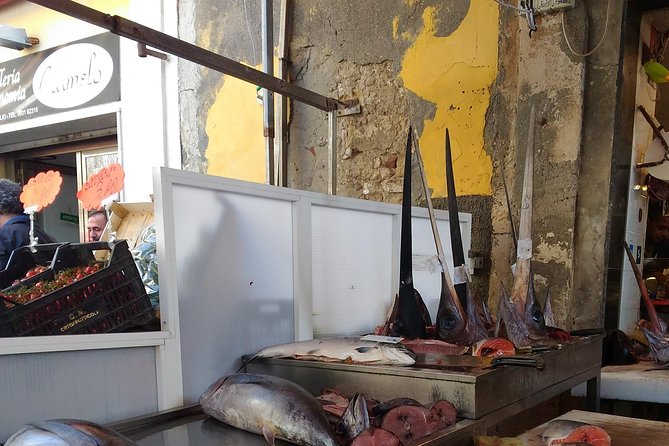
Next is Chiesa di Santa Lucia alla Badia, with about 20 minutes here. The plan includes an interior visit, and admission is listed as free for this stop, but there’s an important scheduling note: the church is closed on Mondays, so interior entry isn’t possible if your tour lands on a Monday.
This is the kind of detail that can make or break your day, so check your travel days carefully. If you’re set on interior time here, avoid Mondays.
One more reason this stop gets attention: the nearby church area is associated with Caravaggio’s The Burial of Saint Lucy. If that interests you, this is where your guide’s explanations can help you connect art, faith, and the city’s story in one place.
Fonte Aretusa: the spring, papyrus plants, and myths of Alpheus and Arethusa
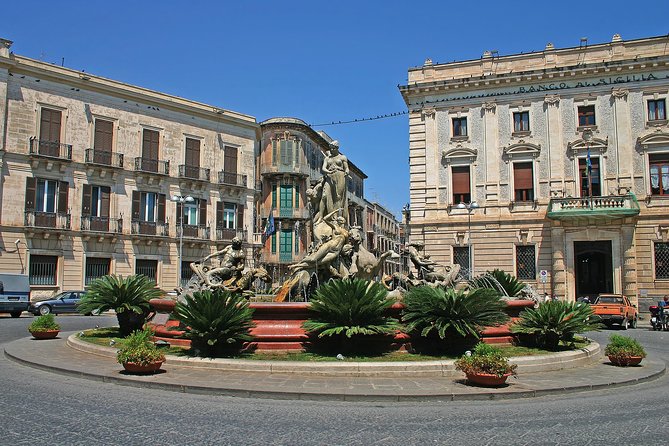
Now you shift from churches and squares to a landmark that feels almost magical in the middle of town: Fonte Aretusa. This stop is short, about 10 minutes, but it’s a classic Ortigia anchor.
What you’re looking at here is Syracuse’s legendary spring, also known for papyrus plants. Your guide will tell you about Alpheus and Arethusa, so you’re not just seeing a water feature. You’re hearing the mythology attached to it.
Why this works on a walking tour: Fonte Aretusa gives you a calm pause after the denser historic zones. It also helps you balance the hard architecture stuff with something more human, something that invites a little wonder.
Ortigia’s narrow streets and the Giudecca district: seeing everyday Syracuse
After Fonte Aretusa, you’re into the part people usually picture when they imagine Ortigia: narrow streets, old-town lanes, and the feeling of being inside an older city. The tour includes time on the Island of Ortigia, including the Giudecca district, the ancient Jewish quarter of Syracuse.
This segment is about 20 minutes, which is a good amount of time. It’s long enough to actually walk the streets, spot small details, and feel how the neighborhood flows. It’s not so long that you lose the history momentum.
Then you end with Via della Giudecca, another about 10 minutes, finishing your arc in the same district theme. Ending here makes sense, because your earlier stops are about structures and faith institutions, while this part is about community space and local geography.
From a value standpoint, this street time is where the tour turns from sightseeing into a sense of place. You leave knowing where you are, and why it matters.
Guide quality is the real differentiator here
This tour’s structure gives you the right stops. But what repeatedly elevates it is the people leading it.
Across experiences, guides like Eva/Ava, Valeria, and Carmine show up as personable and strong at connecting dots. You get lots of facts, but in a way that feels like conversation. A good sign is when the guide tailors what they emphasize to your interests instead of pushing the same script no matter what.
If you’re the kind of traveler who likes asking why something exists, how different cultures layered over each other, or what you should notice in a square, you’ll enjoy this format. The route covers Greek, Roman, Arab, and Christian layers at a city level, so it’s easy to build understanding without needing a full day at the archaeology museum.
Small-group size also helps. If you end up in a tiny group, like the experience reported with only 4 people, you can move at a comfortable pace and get questions answered without feeling rushed.
Price and what $107.53 buys you in Syracuse
At about $107.53 per person, this isn’t the cheapest way to see Ortigia. But for a 2-hour private walking tour, you’re paying for a guide, a set route, and interpretation at major stops.
Here’s how I think about value:
- Admission fees for many stops are listed as free, so most of what you pay goes to guiding time rather than ticketing logistics.
- The cathedral interior may cost extra (around €2 per person), but that’s optional and depends on entry conditions.
- The private nature and short duration mean you’re buying efficiency. You’re spending your limited time in the streets that matter, not wandering in circles.
If you’re traveling as a couple or small family, the per-person cost can feel more reasonable because it replaces the mental load of doing it yourself. If you’re traveling alone, it still works if you want a guide more than you want independence.
What to wear and how to plan the cathedral stops
This is where your preparation can save you disappointment.
For the cathedral, remember the rules: no shorts, no sleeveless tops, and shoulders must be covered for both men and women. Even if everything else goes smoothly, this is the one thing that can block entry.
Also, plan around timing. The cathedral interior can be unavailable during holy mass or marriages. If entry is blocked, your guide will explain from outside, so you won’t be left completely out in the cold, but your interior time may be shorter than you hoped.
For Santa Lucia alla Badia, check the weekday. If your tour day falls on Monday, the church is closed for interior visits, so the tour can only do what’s possible that day.
Who should book this Ortigia walking tour
I’d book this if you:
- Have limited time in Syracuse and want a tight loop through the core
- Like history that connects buildings to real explanations, not just names on signs
- Want a private walk where you can ask questions and adjust pace
- Plan to spend time afterward wandering Ortigia on your own, because this route helps you understand where you’re going
I’d skip it or consider a lighter option if you:
- Only care about interiors and hate walking (this is a walking tour, with several exterior-focused stops)
- Are traveling on a Monday and specifically want Santa Lucia interior time
- Are not willing to follow the cathedral dress code rules
Should you book it
If you want an efficient, guided introduction to Ortigia, this is a strong bet. You get a well-ordered route, major landmarks like Tempio di Apollo and Piazza Duomo, a spring stop at Fonte Aretusa, and a real walk through the Giudecca district. Add a guide who knows how to explain what you’re seeing, and the 2-hour format feels like good use of time.
If cathedral interiors matter a lot to you, pack your outfit for the dress code and be flexible about service timing. Otherwise, you’ll still get a solid experience even when interiors are limited.
FAQ
Where does the tour start and end?
The tour starts at Via dell’Apollonion, 96100 Siracusa SR, Italy. It ends back at the same meeting point.
How long is the Ortigia walking tour?
It lasts about 2 hours.
Is this a private tour?
Yes. It is a private walking tour, and only your group participates.
What’s included in the price?
Included are a professional guide and the private walking tour.
Are there any extra entrance fees?
Yes. The Syracuse Cathedral interior fee is not included and is listed as about €2 per person. Other stops are listed as free, including the Temple of Apollo and parts of the walk outside.
What dress code do I need for the cathedral?
To enter the cathedral, you need shoulders covered. That means no shorts or sleeveless tops for both men and women, or you may risk being refused entry.
Is Santa Lucia alla Badia open every day?
No. The church is closed on Mondays, so interior visits are not possible if your tour day is Monday.
What language is the tour offered in?
The tour is offered in English.
What happens if poor weather cancels the tour?
The experience requires good weather. If it’s canceled due to poor weather, you’ll be offered a different date or a full refund.
More Walking Tours in Sicily


More Tours in Sicily



More Tour Reviews in Sicily


Not for you? Here's more nearby things to do in Sicily we have reviewed






Syracuse & Ortigia Tours, compared.
 ★ 4.7Syracuse: Boat Trip of Ortigia Island and Sea CavesFrom $23937 reviews
 ★ 4.7Syracuse: Boat Tour with Captain Mirko, Snorkeling & CavesFrom $35746 reviews
 ★ 5.0Tour of the island of Ortigia and exploration of sea caves with baths.From $24668 reviews
 ★ 4.7Siracusa: Ortigia Boat Tour with Marine GrottoFrom $45617 reviews
 ★ 4.9Siracusa: Ortigia & Sea Caves Speedboat Tour with Swim StopFrom $34499 reviews
 ★ 5.0Boat tour of Ortigia Island and sea cavesFrom $24407 reviews
 ★ 4.6Catania: Syracuse, Ortigia, and Noto Tour with BrunchFrom $112404 reviews
 ★ 4.7Syracuse: Neapolis Archaeological Park Small Group TourFrom $26350 reviews
Browse the lists this tour appears in