
Reviewed · PALERMO CITY & MARKET TOURS
Palermo in 2 hours Main monuments and historic markets
Palermo in two hours gives you quick bearings. This guided walk strings together Teatro Massimo and the Palermo Cathedral, then shifts gears into the markets for street-food energy.
I like how the guide ties monuments to Sicily’s bigger stories, from the Beati Paoli myths to the city’s patron saint, Santa Rosalia. I also like the hands-on market moment, including a short free street-food tasting, so you leave with ideas you can chase later on your own. One thing to think about, a few major sights on the route are view-only, and outside entrances beyond the Cathedral are not included.
Key Highlights to Know Before You Go
- A fast route through Palermo’s main landmarks, ending at the Cathedral
- Cathedral entrance included, in Arab-Norman style and a UNESCO site
- Market crossing plus a short free street-food tasting, not just sightseeing
- Legends and local context, including Beati Paoli and Santa Rosalia
- Small group size (max 20), so questions feel possible
- See multiple “theater Palermo” stops, including the Opera dei Pupi with UNESCO ties
A 2-Hour Game Plan for First-Time Palermo
This is a great “start here” tour if Palermo feels like a blur when you first arrive. The route is compact, designed to give you a mental map fast, from grand public squares to the Cathedral area, with the markets tucked in along the way.
You’ll typically spend about 2 hours on the walk, but I’d treat that as an estimate. One review described a 3-hour experience, which makes sense for a guide who likes to stop often and explain what you’re actually looking at.
You can also read our reviews of more historical tours in Sicily

Teatro Massimo: Why This Opera House Is the Perfect First Stop
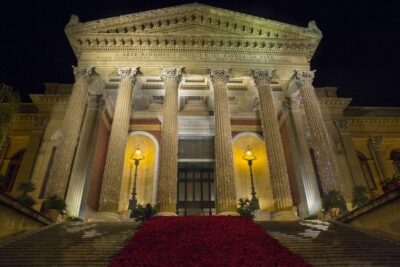
The tour starts with Teatro Massimo, described as the largest opera house in Italy. Even if you don’t go inside here, the exterior sets the tone for Palermo. It’s one of those places that helps you understand how theatrical the city can feel, not just in the arts, but in everyday life too.
You’ll have a 10-minute stop, and admission is not included. That’s a practical tradeoff, you get the orientation value without adding ticket time on a short tour.
What to watch for: look at the scale and form from the street. When a guide points out details, it’s easier to remember them later when you’re wandering back through town on your own.
Opera dei Pupi and Mimmo Cuticchio: Puppet Theater With UNESCO Status
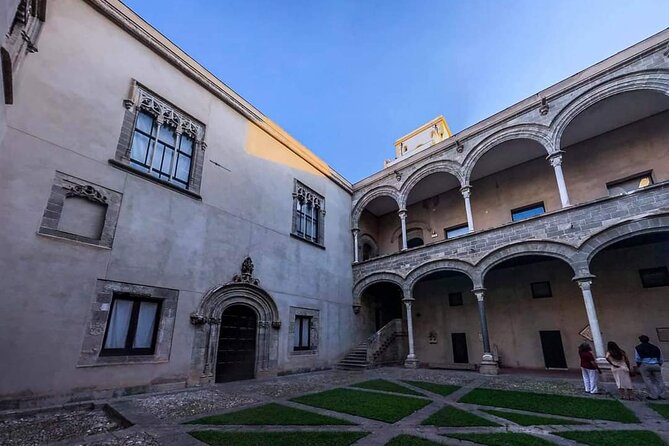
Next comes Teatro dell’Opera dei Pupi by Mimmo Cuticchio, a traditional Palermo show dating back to the 1800s. This is another 10-minute stop, and again, tickets are not included.
The key value here is context. The guide uses this stop to connect Palermo to a living performance tradition, not just a building in a guidebook. It also helps you understand the city’s layers, because Palermo doesn’t treat “culture” as something separate from daily life.
Piazza Pretoria and Palazzo delle Aquile: A Renaissance Fountain Moment
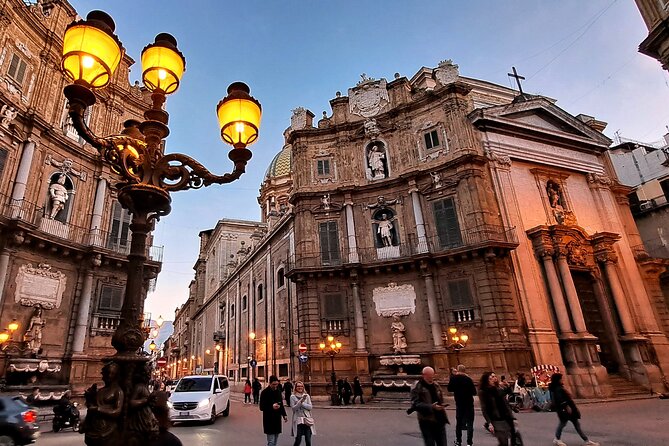
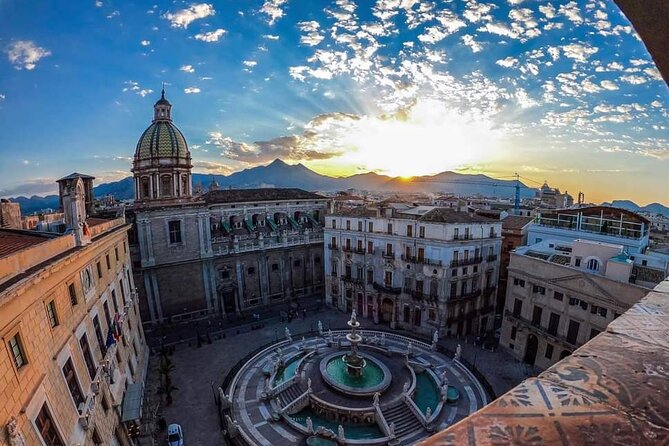
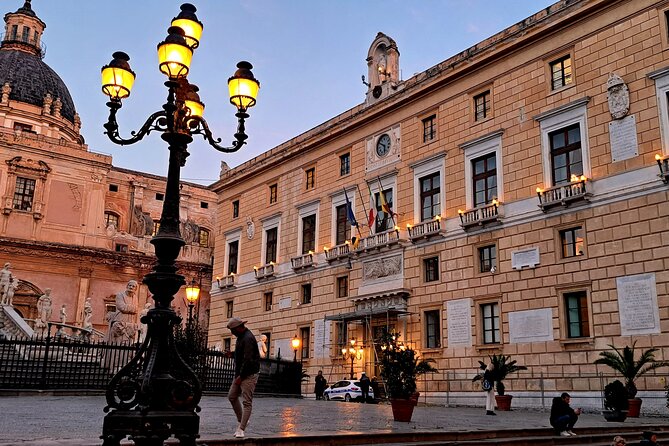
Then you hit Piazza Pretoria, with the famous Renaissance fountain in front of the Palazzo delle Aquile, a historic seat of civic administration. It’s one of those squares that instantly gives you a sense of how power used to be staged in public.
This stop includes admission (you’ll be covered for Piazza Pretoria, specifically). It’s a 10-minute moment, but it’s the kind of place you can stare at longer once the guide gives you the cues.
Why it matters: Palermo’s religious and cultural landmarks can feel heavy. This square adds a different kind of history, political and civic, shown through art and public space.
Piazza Olivella: Sant’Ignazio, Santa Rosalia, and a Free Museum Stop
Piazza Olivella is where the tour blends architecture, legend, and a bit of detective work. You’ll spend about 15 minutes here, and both the Regional Archaeological Museum and the area mention for Sant’Ignazio come with free entry in the tour context.
You’ll also see Sant’Ignazio, described as one of the most sumptuous Baroque temples in the city. Nearby, the tour connects the dots to the birthplace of Santa Rosalia, the patron saint proclaimed by popular acclaim for freeing Palermo from the plague.
This is a stop that works well even if you’re not the type who reads long explanations in museums. The guide’s job is to translate symbols into something you can actually picture, so the Baroque details become part of the story, not just decoration.
More Sicily island tours, Etna days, coastal boat trips, and food experiences to compare

Cape Market Crossing: Street Food That Acts Like a Time Machine
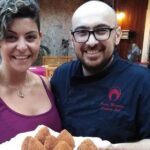
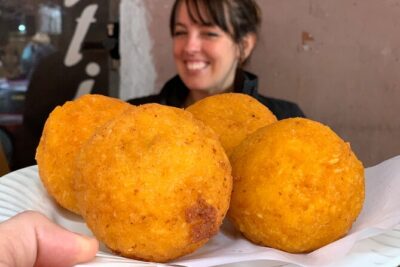
One of the best reasons to book this tour is that it includes the Cape Market crossing and a short free street-food tasting. This isn’t a “stand on the sidewalk and take photos” market stop. You’ll be moving through stalls and focusing on what locals buy and eat when they’re not performing for tourists.
The tour is explicit that food and beverages beyond that tasting are not included, so keep expectations realistic. Still, that free tasting is useful. It gives you a sample and, more importantly, it helps you learn what to look for later when you’re on your own.
How I’d use this moment: arrive with some room in your stomach, but don’t overcommit. If you start your Palermo day too stuffed, it’s harder to enjoy dessert stops later. Also, the guide can help you understand what’s worth trying first, which saves you from gambling with hunger.
The Cassaro: Palermo’s Oldest Street and the City’s Long Memory
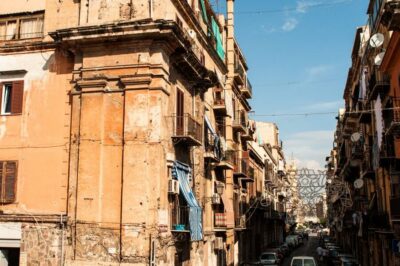
After the squares and market, you move toward the ancient Cassaro, described as the oldest street in Palermo, lined with palaces, churches, and convents. This is your “street-level history” stretch, where you connect the formal landmarks back to the real grid of the city.
It’s also where you start understanding why Palermo feels different from many Italian cities. The Cassaro isn’t just a route, it’s a spine. Once you’ve walked it once with a guide pointing things out, it becomes much easier to explore the neighborhoods on your own without getting lost in the wrong kind of way.
Palermo Cathedral: Arab-Norman Style, UNESCO, and the Final Payoff
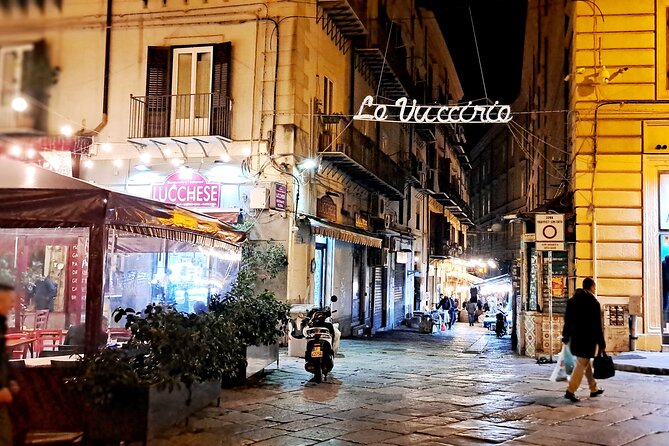
The tour ends at the Palermo Cathedral (with the included cathedral entrance). You’ll see this site described as a UNESCO heritage landmark in Arab-Norman style, which is exactly the kind of Palermo blend you came for.
This stop is the emotional finish. After opera, fountains, Baroque faith, and market energy, the Cathedral gives you a sense of how many civilizations can leave marks on the same stone.
What to focus on during your time inside: let the guide frame what you’re seeing before you wander too fast. Arab-Norman style is all about recognizing the mix, and the guide can help you pick out what belongs to which tradition without turning it into a lecture.
The tour concludes at the Cathedral end point on via Vittorio Emanuele.
Guides and Legends: Why the Best Part Is the Storytelling
The reviews place a lot of weight on the guide’s personality and delivery. You’ll see names like Maurizio and Fabrizio again and again, with consistent praise for engaging explanations and a pace that keeps attention.
One thing I like in this kind of tour is that it doesn’t treat myths like party facts. The route explicitly connects to legends such as Beati Paoli, and it ties them to the city’s “why.” It also brings in major figures like Santa Rosalia, so Palermo’s calendar is more than just dates on a museum sign.
Some feedback also highlights practical guidance, like advice on how to haggle properly at market stalls, plus extra help such as sharing tips on messaging via WhatsApp. That sort of real-world advice is exactly what turns a tour into something you can use.
Price and Value: Is This $23.26 Two-Hour Walk a Good Deal?
At $23.26 per person, you’re not paying for a long museum day. You’re paying for a licensed guide, a curated walking route, and specific included entries that matter.
Here’s the value math that makes sense for this itinerary:
- You get a licensed professional guide for the full walk.
- You get Piazza Pretoria admission included.
- You get Palermo Cathedral entrance included.
- You get Cape Market crossing plus a short free street-food tasting.
What you do not get is everything you might want to enter. Teatro Massimo and Teatro dell’Opera dei Pupi stops are listed without admission included. Any other palaces, churches, or museums beyond what’s specifically covered can cost extra.
So my take: it’s a good value if you want a guided orientation and a couple of paid entries that remove friction. If you already know you want to spend a lot of time inside multiple buildings, you may feel slightly limited by the short format.
Who Should Book This Walk, and Who Might Want Another Option
This tour is a strong match if:
- You want a first-time Palermo introduction with a logical route.
- You care about street food and want a guided way to sample without guessing.
- You like your history in stories, myths, and city details, not just dates.
It may be less ideal if:
- You plan to chase indoor tickets for Teatro Massimo, opera venues, or multiple museums in one day.
- You prefer a slower pace with long sits in big churches or galleries.
Also, the group is capped at 20 travelers, which helps. Smaller groups usually mean less rushing and more chances to ask a question when something piques your interest.
Should You Book Palermo in 2 Hours Main Monuments and Historic Markets?
If your goal is to get your bearings and start understanding Palermo’s mix of art, faith, legends, and street life, I think this is a smart booking. The included Cathedral entrance plus the market crossing and free tasting do more than fill time, they give you context you can use the rest of your trip.
I’d book it with one expectation set: not every stop is an inside visit, and that’s partly what keeps the experience to a tight two-hour format. If you want a quick, memorable start, this does that job well.
FAQ
How long is Palermo in 2 hours?
It’s listed at about 2 hours.
What time does the tour start, and where does it meet?
The start time is 10:30 am. The meeting point is Via Cavour, 131, 90133 Palermo PA, Italy.
Where does the tour end?
The tour ends at Palermo Cathedral, at Via Vittorio Emanuele, 490, 90134 Palermo PA, Italy.
What is included in the tour, and what costs extra?
Included items are a licensed professional guide, crossing the Cape Market, a short free street-food tasting, and Cathedral entrance. Tickets for other entrances, like those at Teatro Massimo and Teatro dell’Opera dei Pupi, are not included.
Do I get food during the walking tour?
Yes, there is a short stop for free street food tasting. Food and beverages beyond that tasting are not included.
Is the Palermo Cathedral entry included?
Yes. Cathedral entrance is included, and the Cathedral is described as a UNESCO heritage site in Arab-Norman style.
What if the weather is poor, and how big is the group?
The experience requires good weather. If it’s canceled due to poor weather, you’ll be offered a different date or a full refund. The group has a maximum of 20 travelers, and service animals are allowed. Free cancellation is available up to 24 hours in advance for a full refund.
More 2-Hour Experiences in Sicily
More Historical Tours in Sicily
More Tour Reviews in Sicily

Not for you? Here's more nearby things to do in Sicily we have reviewed



Palermo City & Market Tours, compared.
 ★ 4.8Palermo: NO Mafia Walking TourFrom $402,431 reviews
 ★ 3.9Palermo: Hop-on Hop-off Bus Tour 24-hour TicketFrom $172,410 reviews
 ★ 5.0Palermo Original Street Food Walking Tour by StreatyFrom $832,105 reviews
 ★ 4.2Segesta, Erice and Salt Pans Full-Day Excursion from PalermoFrom $821,791 reviews
 ★ 4.5Palermo: Teatro Massimo Opera House Guided TourFrom $141,573 reviews
 ★ 4.2From Palermo: Monreale and Cefalù Half-Day TripFrom $711,354 reviews
 ★ 4.9Palermo: Street Food and History Walking TourFrom $541,294 reviews
 ★ 4.2Palermo: Agrigento and the Valley of the Temples Day TourFrom $771,240 reviews
Browse the lists this tour appears in