
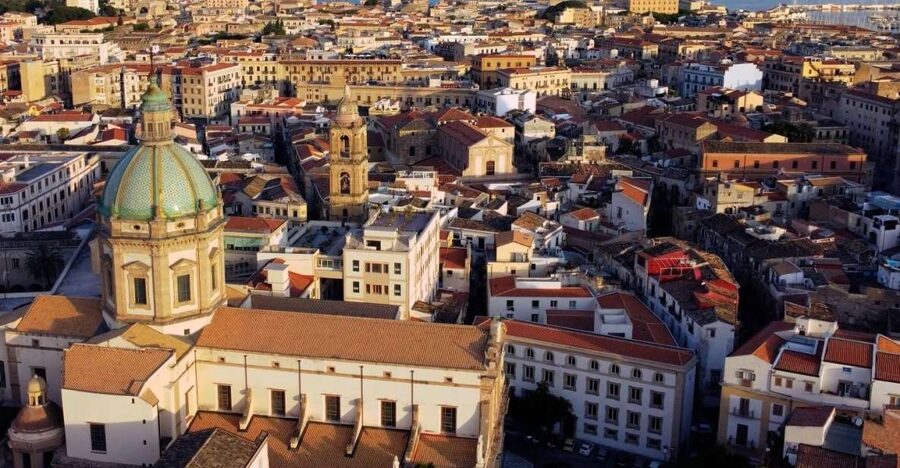
Reviewed · PALERMO CITY & MARKET TOURS
Palermo: Walking Tour of Historic Markets and Monuments
Palermo has a pulse, and this walk catches it. You start at the Palermo Cathedral, then head into the color and noise of the Capo market, where history feels close enough to touch. For 35 dollars you get a guided route that turns major sights into a connected story, not a checklist.
The one real catch: it’s Italian only, and the cathedral asks for modest clothing. If you’re not comfortable in Italian or you want to keep your outfit strictly casual, plan accordingly.
Key Highlights You Will Notice Fast
- UNESCO Palermo Cathedral with attention to the early 12th-century story and the bell towers
- Teatro Massimo as Italy’s largest theater, plus the ghostly legends tied to it
- Quattro Canti baroque drama in the middle of the historic center
- Fontana Pretoria in Piazza Pretoria, a striking landmark you will see up close
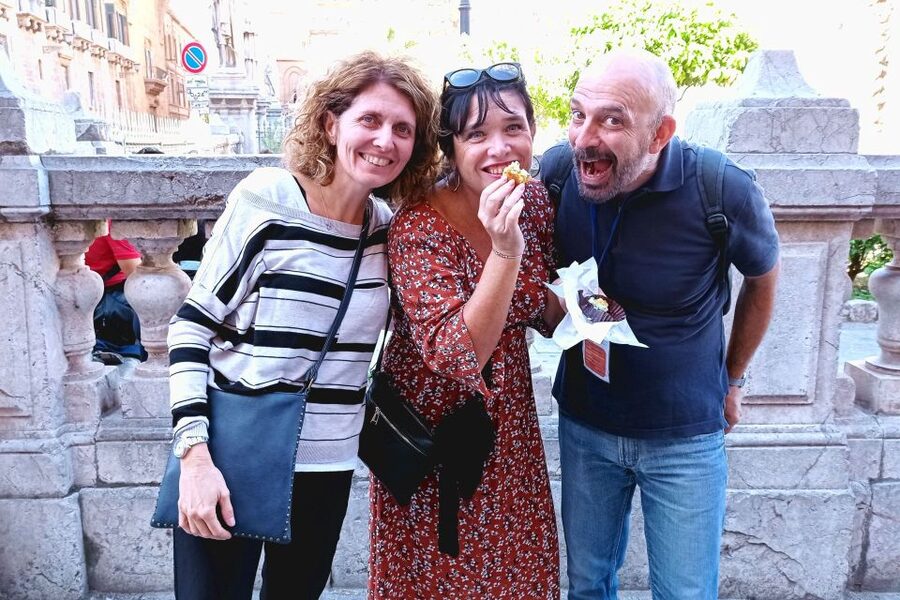
- Capo market food stops for Sicilian street food and pastries straight from the market
How This 3-Hour Walk Connects Palermo’s Most Important Stops
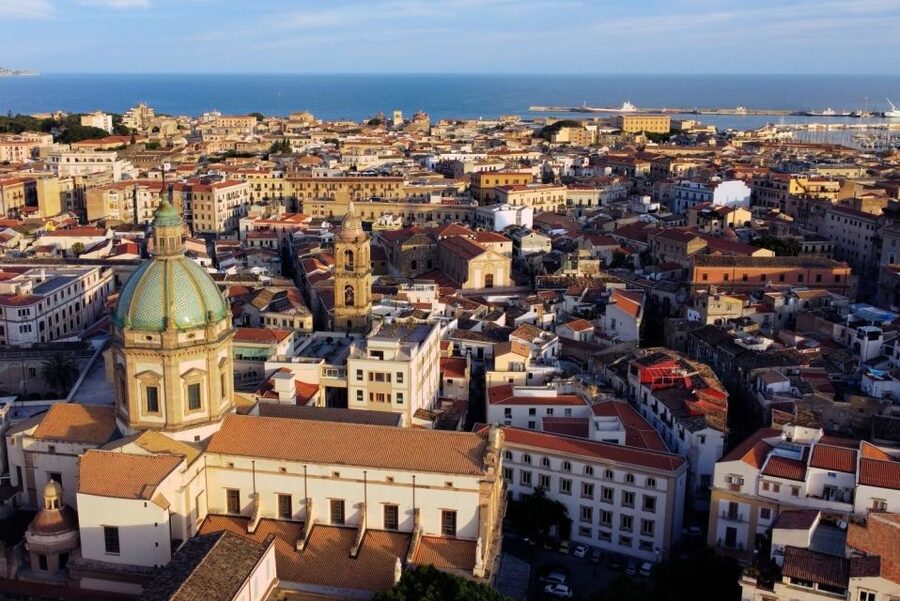
This tour works because it stitches Palermo together in a smart order. You begin with a religious anchor at the Palermo Cathedral, then you move outward to theaters, baroque squares, and public fountains, and finally you end in the Capo area where local life shows up in the market streets.
That flow matters. The city’s monuments can feel scattered if you explore alone, but here the guide gives you the thread: who ruled, what changed, and what locals still remember. You also get that practical mix of seeing big sights and eating like a local, without having to plan separate stops.
Also, the duration is just right for a first pass through the center. Three hours is long enough to feel you learned something real, but short enough that you can still keep the rest of your day free.
You can also read our reviews of more walking tours in Palermo
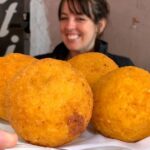
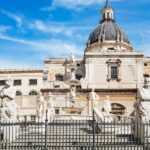
Meeting in Front of Feltrinelli and the Guide Factor (Claudio or Fabrizio)
You meet in front of the library called Feltrinelli. Your guide will be easy to spot, wearing a red tag that says tour guide.
This is the kind of tour where the guide makes a real difference. The reviews point again and again to the same names, especially Claudio and Fabrizio. One guide is described as professional, enthusiastic, and funny in a way that keeps you moving, while another is praised for broad knowledge and a lively, clear way of explaining what you are actually looking at. In plain terms, you are not just walking from photo spot to photo spot. You are getting context as you go.
Because the tour is in Italian only, I suggest you treat this as a “learn the rhythm” experience. Even if your Italian is basic, you can still follow the visual cues and the stories tied to each landmark.
Entering Palermo Cathedral: 12th-Century Origins and Bell Towers You’ll Want to Study
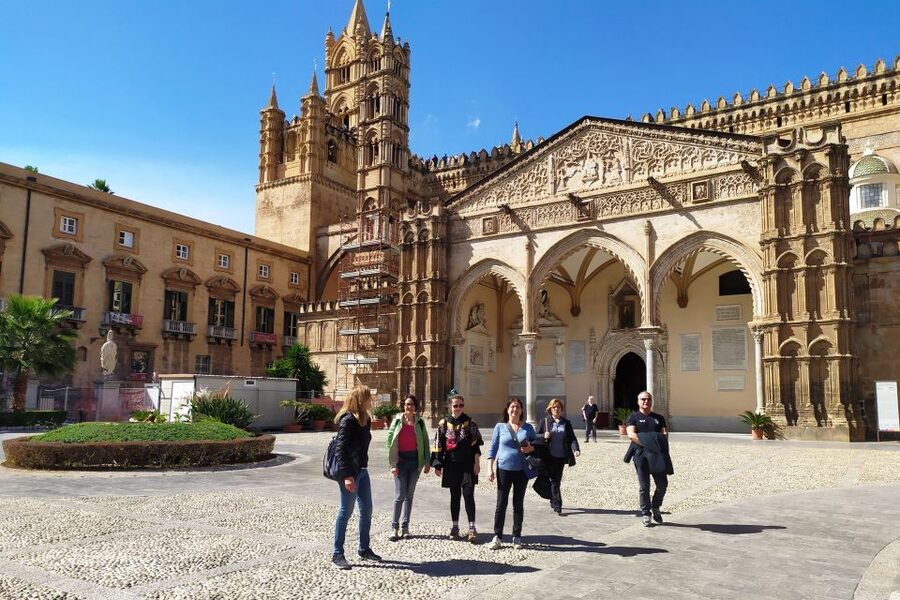
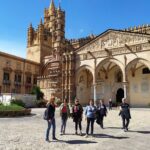
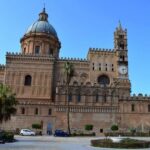
The first big moment is stepping into the Palermo Cathedral. It is a UNESCO-listed site dating from the early 12th century, and the guide focuses on what makes it distinctive as it evolved over time.
Here is what I think you will appreciate most. The guide does not treat the cathedral like a frozen museum object. You learn to look at it as layers and changes across eras. The bell towers are a key part of that, and once you know what to look for, the building stops being just impressive and starts being understandable.
Practical note: modest clothing is required to enter the cathedral. This is not the place for extremely short shorts or bare shoulders. If you have a light scarf or cover-up, that small bit of preparedness saves stress.
One more detail to keep in mind: entry tickets are not included. The tour starts by entering the cathedral, but you should still be ready to cover any ticket requirement at the time, depending on how access is handled that day.
Teatro Massimo: Italy’s Largest Theater and the Legends Around It
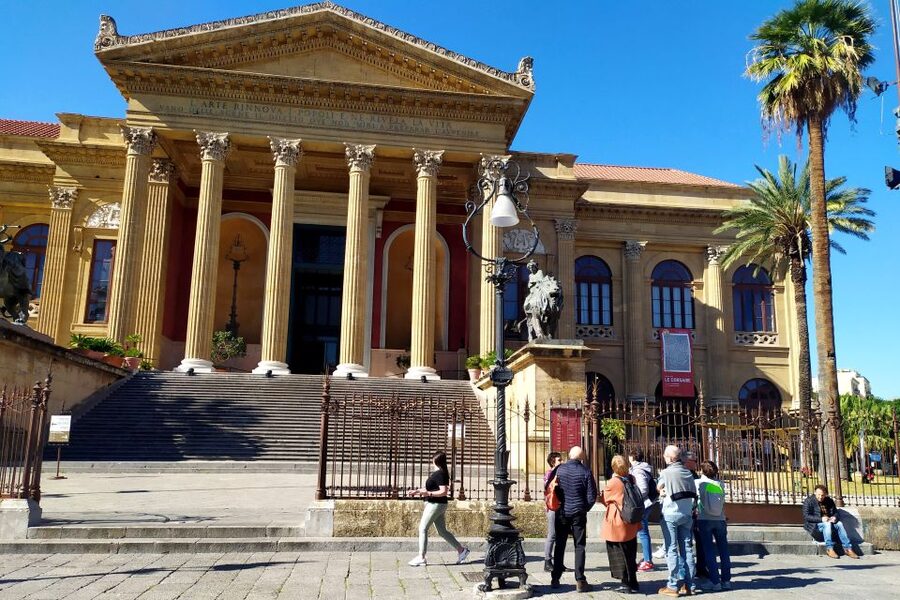
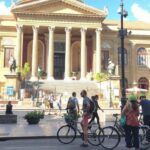
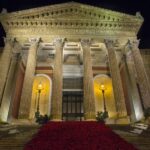
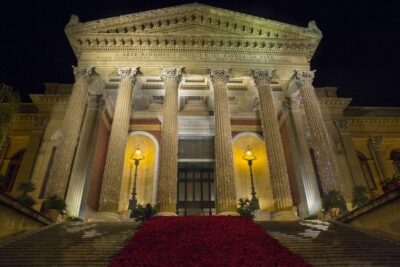
After the cathedral, the walk leads you to Teatro Massimo. This is Italy’s largest theater, and it is also a symbol of Palermo. The guide uses that fact as a springboard into the city’s imagination.
The standout here is the storytelling. You hear ghostly legends connected to the theater. Even if you are not normally into spooky folklore, this part works because it gives personality to a landmark that might otherwise feel like just another grand building on a street.
And it helps your whole route. When you connect theater to local legend, you start noticing how Palermo treats culture as something alive, not something locked behind doors.
Quattro Canti and Fontana Pretoria: Baroque Corners and a Big Public Fountain
Next up you hit the baroque side of central Palermo. Quattro Canti is a plaza where the city’s architecture practically performs. It is the kind of place where walking around the corners is worth it, because the look changes as you turn.
This stop is valuable because it trains your eye. Instead of just admiring the look, you understand why it is placed where it is and why it matters in the layout of the historic center.
Then you reach Fontana Pretoria in Piazza Pretoria. The fountain is imposing, visually dramatic, and the guide’s explanation makes it more than a photo background. You will feel like you are watching history take shape in public space, right where people still pass through.
If you like architecture, you will likely spend a few extra seconds looking for details here, because that is what the guide’s framing encourages.
You can also read our reviews of more historical tours in Palermo
Beati Paoli and Santa Rosalia: The Local Legends That Give the City a Voice
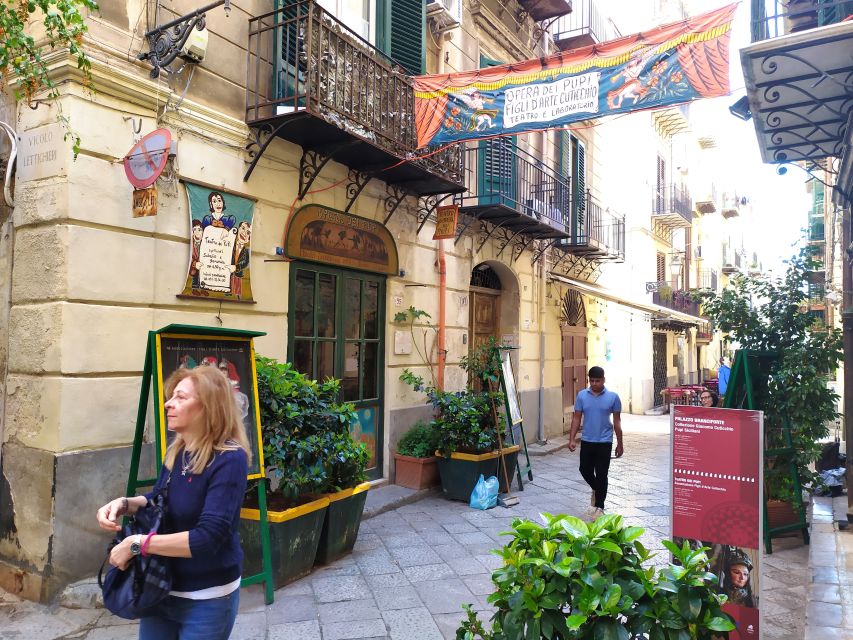
The tour does not stay purely architectural. You also hear about myths and legends tied to Sicily and to Palermo in particular.
Two stories you’ll hear about are the mysterious Beati Paoli sect and Palermo’s patron saint, Santa Rosalia, also known as La Santuzza. These aren’t random trivia drops. They help explain why locals talk about the city the way they do, and why certain landmarks feel emotionally important, not just historically important.
This is one of the most underrated parts of the experience. If you only read plaques, Palermo can feel like stone and dates. Add the legends and you start understanding why those same stones and dates are remembered.
Capo Street Market: Street Food and Pastries Where You Feel the Daily Scene
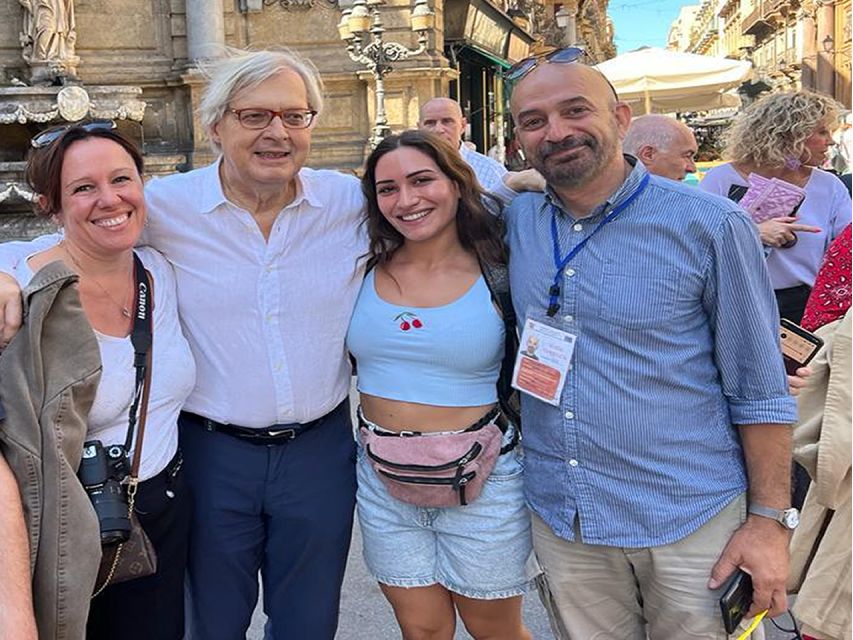
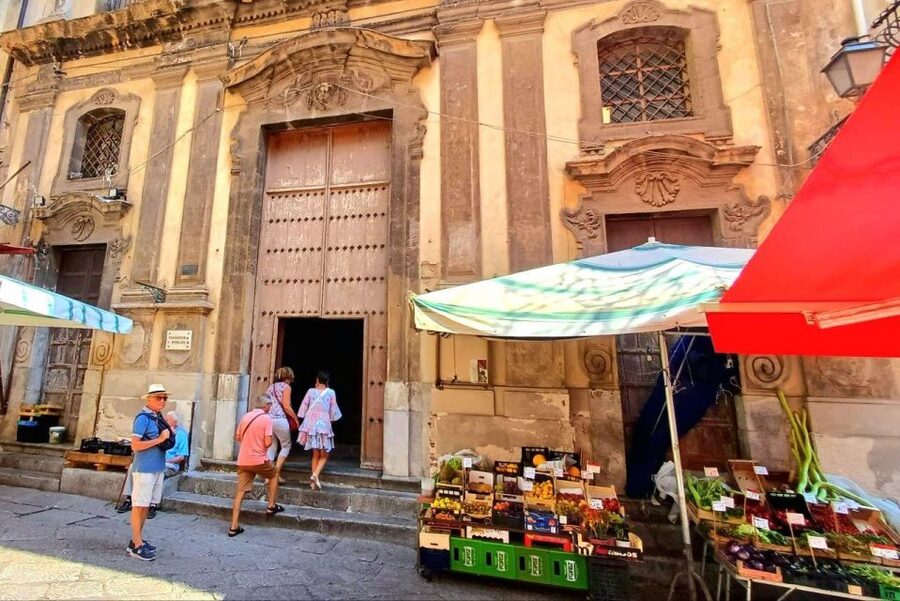
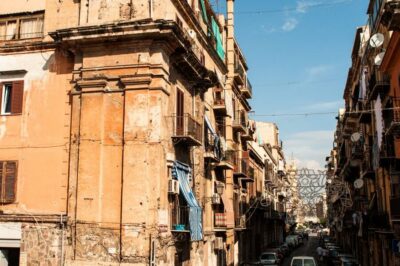
After monuments and squares, the tour turns to Capo and the ancient street market. This is where the whole experience gets practical.
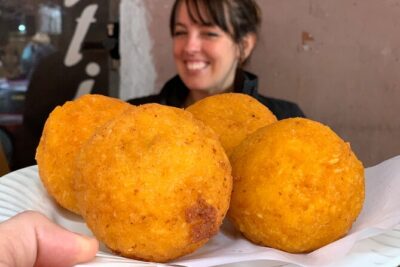
You walk through market streets and you get a chance to sample Sicilian street food, plus pastries, fresh from the market. The guide sets you up to make smart choices, so you are not stuck guessing what to buy in a crowd.
Why this ending is a good design:
- You have already built context from the monuments, so market life feels connected, not random.
- You get a food payoff right when you are most likely to feel hungry.
- You leave with ideas for what to try later, based on what you tasted during the walk.
Wear comfortable shoes. The market streets are part of the experience, which also means they are not the easiest surfaces for dress shoes. If your feet are happy, you will enjoy the energy more.
Price and Value: Is $35 Worth It for Cathedral, Theater, Squares, and Food?
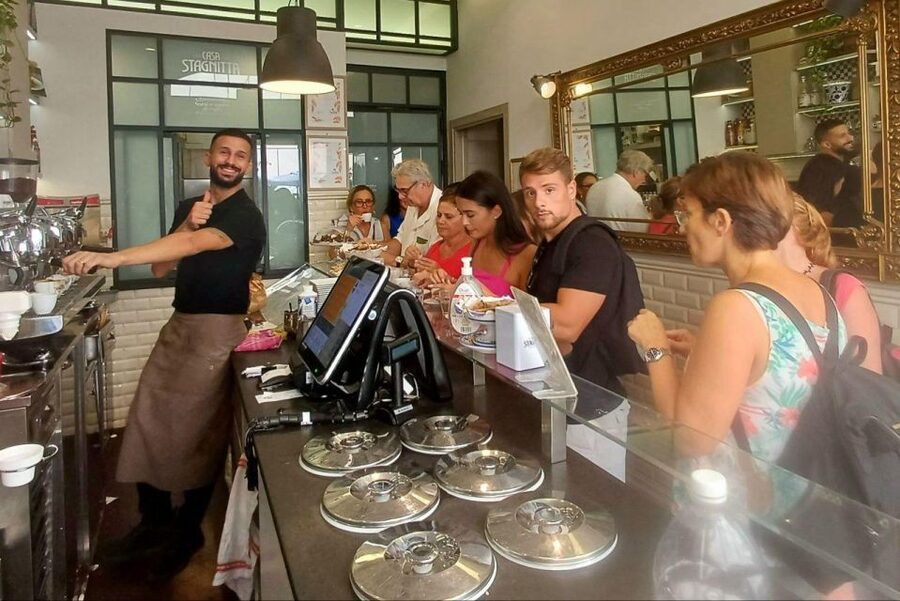
$35 for a 3-hour guided walking tour is reasonable, especially in a city where self-guided exploring can leave you with a pile of sights but not much understanding.
Here is the value breakdown:
- You are getting a professional guide for the full walk, with live explanations.
- You cover multiple major landmarks, including Palermo Cathedral and Teatro Massimo, plus Quattro Canti and Fontana Pretoria.
- You get a chance to sample Sicilian street food and pastries in the Capo market.
The main thing you need to plan for is that entry tickets are not included. That can change the true total depending on what the day requires. Still, even with that in mind, the guided pacing and the storytelling around legends, architecture, and city identity are what you are really paying for.
Given the strong rating of 4.9 from 478 reviews, the demand is clearly there. The repeated praise for guide quality, especially for Claudio and Fabrizio, suggests you are likely to get more than standard commentary. You get energy and explanations that make you look harder.
Who This Tour Is Best For (and Who Might Want a Different Option)
This tour is a great fit if you:
- Want a structured walk through the historic center without building your own route
- Like monuments but also care about local stories, legends, and cultural context
- Are happy to eat street food as part of sightseeing
- Prefer a live guide who explains what you are seeing as you go
It may not be the best fit if you:
- Need an English tour, because this is Italian only
- Are not willing to meet the cathedral modest clothing requirement
If you fall in the middle, you can still enjoy a lot visually. Just go in knowing you will rely more on sight and guidance cues than on detailed translation.
Should You Book This Palermo Cathedral, Markets, and Monuments Walk?
If you want a fast, meaningful orientation to Palermo, I would book this. The route hits major monuments, but it is the mix of architecture, legends like Beati Paoli, and the market food in Capo that makes it feel like a real day in the city rather than a sightseeing marathon.
I would particularly consider it if you value guided storytelling, because the reviews strongly emphasize guide performance. Names like Claudio and Fabrizio come up for a reason, with people praising the professionalism and the way the explanations stay fun while still informative.
Just be honest with yourself about the two practical issues: Italian only, and modest clothing for the cathedral. If you can handle those, this is a high-value way to spend three hours in Palermo.
FAQ
Is this tour in English?
No. The tour is in Italian only.
How long is the Palermo Historic Markets and Monuments walking tour?
It lasts 3 hours.
How much does the tour cost?
The price is $35 per person.
Where is the meeting point?
You meet in front of the library Feltrinelli. The guide wears a red tag that says tour guide.
What is included in the price?
Included are a guided walking tour and a professional tour guide.
Are entry tickets included?
No. Entry tickets are not included.
What should I bring or wear?
Wear comfortable shoes. For the cathedral, you must dress modestly.
More Walking Tours in Palermo

More Tours in Palermo
More Tour Reviews in Palermo
Not for you? Here's more nearby things to do in Palermo we have reviewed




Palermo City & Market Tours, compared.
 ★ 4.8Palermo: NO Mafia Walking TourFrom $402,431 reviews
 ★ 3.9Palermo: Hop-on Hop-off Bus Tour 24-hour TicketFrom $172,410 reviews
 ★ 5.0Palermo Original Street Food Walking Tour by StreatyFrom $832,105 reviews
 ★ 4.2Segesta, Erice and Salt Pans Full-Day Excursion from PalermoFrom $821,791 reviews
 ★ 4.5Palermo: Teatro Massimo Opera House Guided TourFrom $141,573 reviews
 ★ 4.2From Palermo: Monreale and Cefalù Half-Day TripFrom $711,354 reviews
 ★ 4.9Palermo: Street Food and History Walking TourFrom $541,294 reviews
 ★ 4.2Palermo: Agrigento and the Valley of the Temples Day TourFrom $771,240 reviews
Browse the lists this tour appears in