
Reviewed · AGRIGENTO & VALLEY OF THE TEMPLES TOURS
Piazza Armerina: Roman Villa del Casale Mosaics Tour
Roman mosaics, on a whole other scale.
At Piazza Armerina’s Villa del Casale, you get a focused guided walk through one of the richest mosaic sites from Roman times, with artwork spread over 3,500 m. I like that the visit is organized around rooms you can actually connect to real Roman life, not just random decoration.
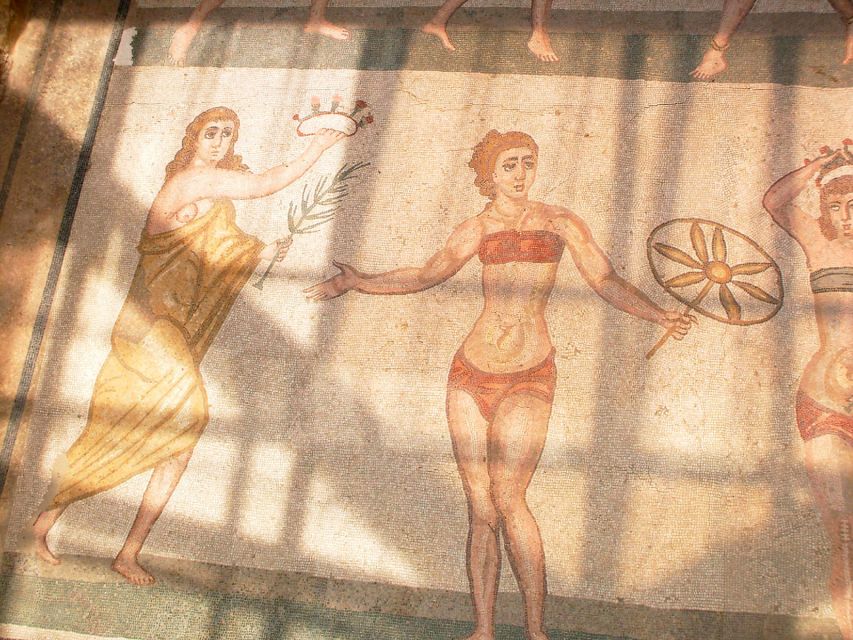
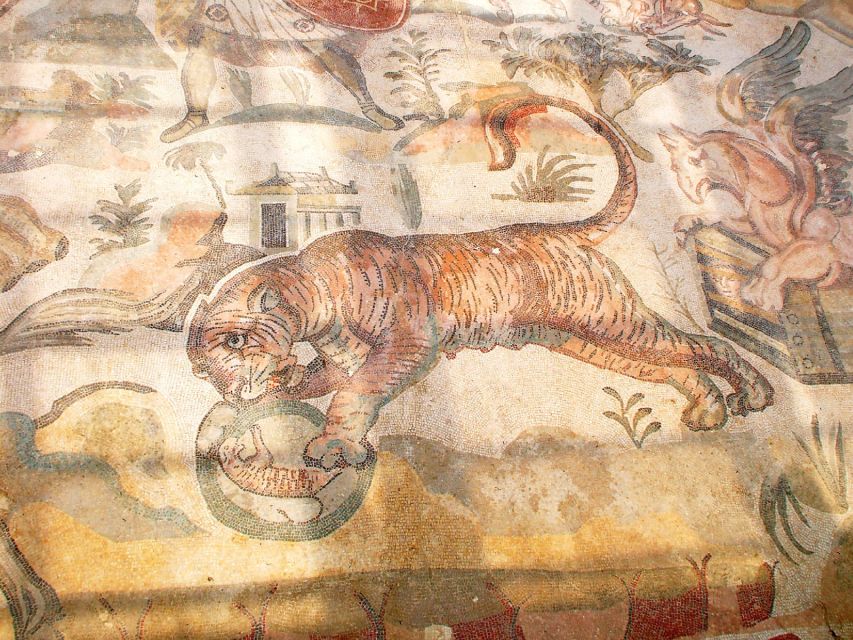
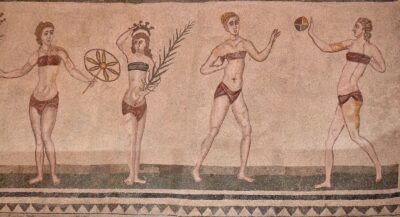
What I’d put at the top of your checklist is the chance to see the Great Hunt mosaic and the famous sports scene known as the bikini mosaic. Second, I like how the tour explains the layout, so the peristyle floor with animals from Europe and Africa, plus the garden fountain and bath rooms, start to feel like a functioning home.
One thing to plan for: it’s a popular UNESCO site. If the site is busy, the crowd flow can make it harder to linger on the smaller details, even with a good guide.
Key points before you go
- The “Great Hunt”: a full-story mosaic that helps you read Roman imagery fast.
- The bikini sports mosaic: a surprising, sports-focused panel that grabs attention immediately.
- 48 rooms, one guided storyline: you see the villa as a home, with meals, baths, and work spaces.
- Peristyle mosaic floor: European and African animals make the villa feel global.
- The garden fountain: a multi-pool water feature with marble outside and mosaics inside.
- Circus Hall and the Circo Massimo reproduction: a gym-like space tied to Roman spectacle.
Villa del Casale, why Piazza Armerina deserves a stop
Villa del Casale is the kind of place that makes you slow down, even when your feet want to keep moving. This isn’t just a museum with “pretty floors.” It’s a preserved Roman domus (house) where mosaics covered much of daily space, from circulation areas to dining rooms and bathing zones.
The key, and the reason this tour works well, is that you’re guided through the villa as a living environment. You’ll hear context about the site’s importance in Sicily and what the grand parts of the home likely meant in Roman society. The villa is often linked to Valerio Massimiano, a powerful patrician of the empire, and the guide typically uses that angle to make the mosaics feel purposeful, not decorative.
You also get a clear time frame: about 1.5 hours. That matters here because Villa del Casale rewards focused viewing. Too little time and you miss the “why,” too much time and you start rushing your own attention.
You can also read our reviews of more tours and experiences in Piazza Armerina.
Getting oriented fast at the archaeological entrance
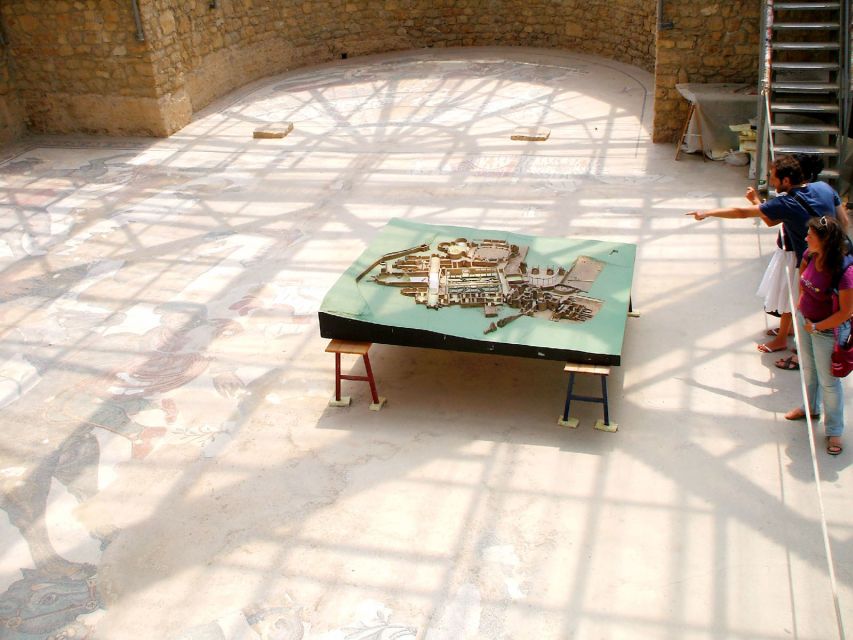
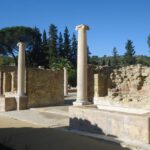
Your tour starts at the entrance to the archaeological site, SP90, 94015 Piazza Armerina EN, Italy. That’s a practical detail, because once you’re inside, the structure of the villa is what you need to understand. The guide’s job is to help you read the space, room by room, so the mosaics do not blur together.
Because this is a private group experience with a licensed live guide, you’re not stuck with a generic audio track. You can usually adjust your pace slightly, ask questions in the provided languages, and stay on track through the main sections that define the villa.
One more value point: you get a licensed guide, but the entrance ticket is not included. So you should budget for that extra item. If you arrive expecting everything to be covered, you’ll feel the snag immediately.
The peristyle and rooms that make the mosaics make sense
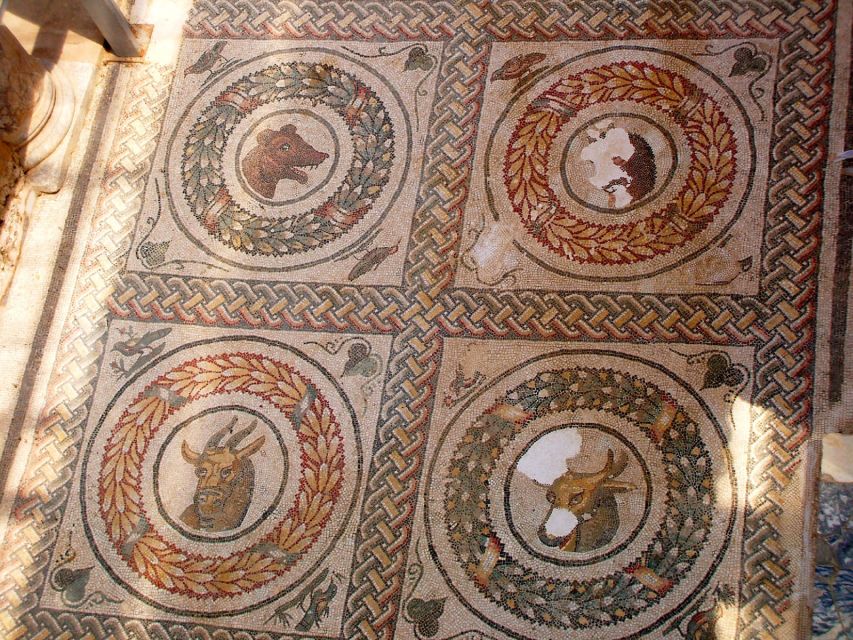
The villa is organized into 48 rooms, and the tour is built to help you connect what you see to how the Roman household functioned. One of the most important areas is the peristyle, where the floor is entirely mosaic and includes drawings of animals from both Europe and Africa. I love how this detail shifts your thinking. You stop seeing mosaics as only art and start seeing them as branding, education, and status, all in one.
From there, you move into the internal corridors and major halls that act like Roman “main routes” through the house. These spaces matter because they show you where people would naturally slow down, look around, and get absorbed.
Your guide also points out special symbolic elements, like the Great Hall Corridor with two columns depicting female figures that represent the two peripheral provinces of the empire. When you hear the meaning, the figures stop being just decoration. They become part of a political message embedded in the architecture.
If you like museum-style reading, you’ll appreciate this approach. If you prefer to wander on your own, it can feel a bit structured, but in a good way. Villa del Casale is too big for a totally casual walk to be satisfying.
The Great Hunt mosaic and the bikini sports scene
Two mosaics are the reason most people plan this trip. And in a tight 1.5-hour guided visit, they are handled early enough to keep your attention locked in.
First is the Great Hunt mosaic. This is one of the most famous panels at the villa, and it works because it reads like a sequence rather than a single image. You can follow action across the scene, and that makes the Roman obsession with spectacle and strength feel very real. The guide’s job is to help you notice the big story beats so you don’t just stare at animals and forget the narrative.
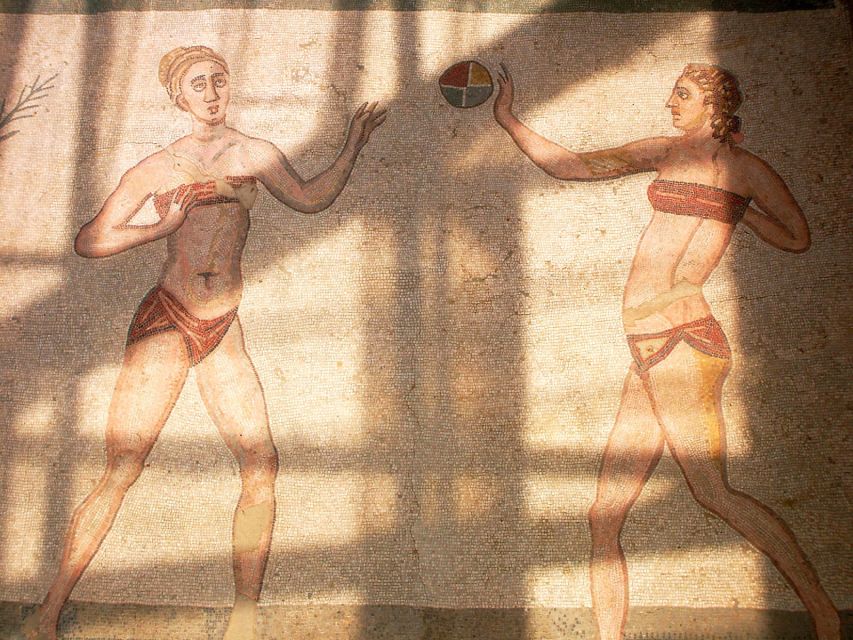
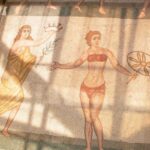
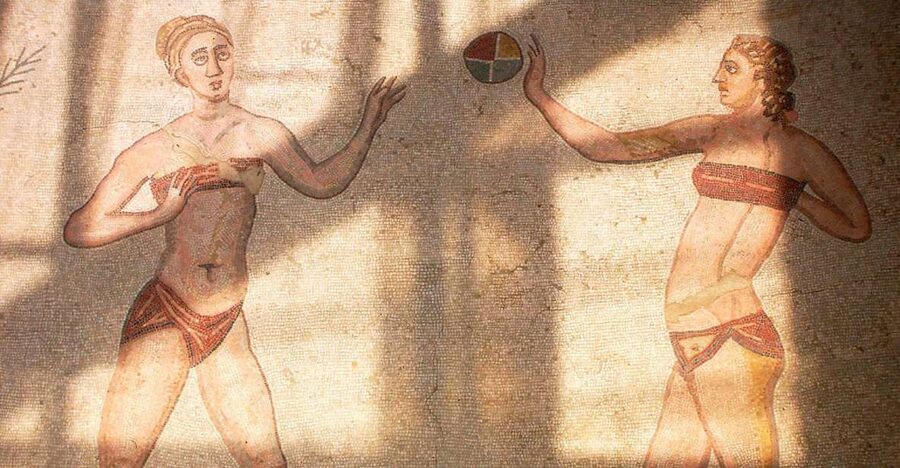
Then comes the mosaic people talk about for a modern reason: the bikini mosaic, a sports panel showing 10 girls playing games and training. You’ll see activity like throwing a discus, playing with a ball, exercising with weights, and even cross country style movement. Even if you know Roman art before, this panel hits because it’s both athletic and oddly direct. The energy is there. The message is about training, performance, and leisure culture, all at once.
I also like that the tour does not treat these mosaics as isolated poster images. You see how they fit into the villa’s overall rhythm of space and function.
Dining rooms, private spaces, and daily life tucked into floors
After the big hits, the tour shifts toward how Romans used the house day to day. You’ll pass into the oval-shaped triclinium, the dining room. This is where the mosaic viewing angle changes again. Dining spaces are designed for lingering, so the art makes sense as something guests would see while they ate and conversed.
Next, you’ll move through private rooms reserved for domestic people. This isn’t just a sad footnote or a generic label. It helps you understand that the villa was not only for the owner’s public image. It had roles, routines, and hierarchy built into who used which spaces.
The tour also includes the garden, enriched by a large fountain made of three pools. The fountain is covered in marble on the outside and mosaics on the inside. This is a wonderful contrast to indoor rooms. You get to think about how mosaics would shimmer with daylight and how water features turned leisure into an experience.
Basilica floors, theatrical masks, and the bedroom details people miss
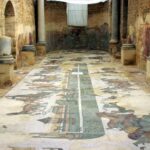
The tour includes the Basilica, known here for its polychrome marble floors. It’s a different kind of beauty than mosaic, and I like the change of texture and color because it helps you avoid mosaic fatigue. You start noticing patterns rather than only focusing on famous named images.
Then you’ll enter a bedroom with a rectangular alcove. The mosaics here feature theatrical masks and a central medallion depicting lovers. If you’re the type who likes symbolism, this part is a real reward. Masks point toward performance and identity, while the lovers panel brings emotion and human story into the room.
These details matter because they show the villa’s range. A wealthy Roman home could communicate power, myth, sport, and tenderness in different rooms. The tour gives you enough time in each area to notice the shift.
Baths and the Circus Hall, from frigidarium to gym time
If you want to understand Roman daily comfort, don’t skip the bath section. The tour takes you through the domus baths, including the Frigidarium and the Tepidarium. Even without getting technical, these rooms give you the sense of a routine and a body-focused lifestyle. The mosaics and architecture work together to make bathing feel like part of household culture, not just a utility.
Next comes the Circus Hall, used like a gym. That sounds modern, and I mean it as a good thing. When you see the hall used for physical activity, the Roman sports theme stops being only “the bikini mosaic.” It becomes a broader idea across the villa.
Here you also see a mosaic reproduction of the Circo Massimo in Rome. That is a smart closing note because it ties Piazza Armerina’s villa back to the imperial center. You end feeling like you’ve seen a local version of Roman public spectacle, scaled down into a private home.
Price and value: what $325 per group really buys
The tour price is $325.13 per group, for groups up to 15 people, and it’s a private group with a licensed guide. On paper, that sounds like a lot until you do the math.
If you fill the full group, the cost is roughly $21.68 per person. Even if your group is smaller, you’re still paying for the guide time and the focused routing through the villa’s main areas. That is real value here because Villa del Casale is best with someone helping you read it.
Two important notes for budgeting:
- Entrance ticket is not included, so add that cost separately.
- Transportation or pickup is not included, so plan to get to the site on your own.
For couples, two friends, or small families, the private setup can be worth it simply because you can move through a busy UNESCO site with less friction than a larger public tour.
Languages and guide quality that can make or break the visit
This is a live guided tour with Spanish, English, French, German, and Italian. That matters because the mosaics are detail-heavy, and the guide is the tool that turns floors into stories.
The strongest praise highlights enthusiastic interpretation and clear context. A guide named Stefania has been singled out for putting the villa into context and pointing out both the most important features and the most interesting details. When a guide is doing that job well, you leave with a mental map of what you saw and why it matters.
If your group has mixed language needs, check that your chosen time slot supports your preferred language among the options. The tour data lists several language choices, so you should be able to match your comfort level.
Should you book this Villa del Casale mosaic tour?
Book it if you want the highest-value route through a big, mosaic-heavy site in about 1.5 hours, without guessing what to look at first. You’ll especially enjoy it if Great Hunt and the bikini sports mosaic are on your list, because the tour is built around the moments people remember.
Skip it or consider a different approach if you know you want extra time in a few specific rooms to fully sit with the details. A guided visit is designed for momentum. The villa is famous, and that means crowds can affect how long you linger.
My bottom line: for the money, this is a strong deal because it’s priced per group, includes a licensed guide, and focuses on the villa’s most readable highlights, from peristyle animals to bath rooms and the Circus Hall.
FAQ
How long is the Piazza Armerina Roman Villa del Casale mosaics tour?
The tour duration is 1.5 hours.
Is the entrance ticket included in the price?
No. The tour includes a licensed guide, but the entrance ticket is not included.
What languages does the live guide speak?
The live guide offers Spanish, English, French, German, and Italian.
Where does the tour meet?
The meeting point is the entrance to the archaeological site, SP90, 94015 Piazza Armerina EN, Italy. The tour ends back at the meeting point.
What is included in the tour package?
It includes a licensed guide.
What is the cancellation policy?
You can cancel up to 24 hours in advance for a full refund.
More Tours in Piazza Armerina
More Tour Reviews in Piazza Armerina
Not for you? Here's more nearby things to do in Piazza Armerina we have reviewed
Agrigento & Valley of the Temples Tours, compared.
 ★ 4.5Agrigento: Valley of the Temples Skip-the-Line Sunset TourFrom $511,512 reviews
 ★ 4.2Palermo: Agrigento and the Valley of the Temples Day TourFrom $771,240 reviews
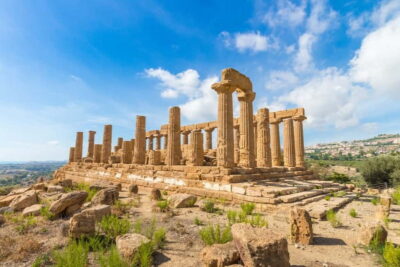 ★ 4.3Agrigento: Valley of the Temples Ticket & App AudioguideFrom $191,160 reviews
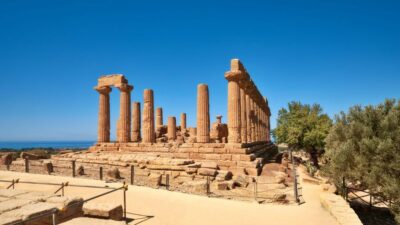 ★ 4.6Agrigento: Valley of the Temples E-Scooter TourFrom $68557 reviews
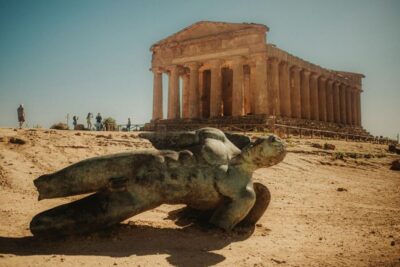 ★ 4.1Palermo: Valley of the Temples and Scala dei Turchi Day TripFrom $90380 reviews
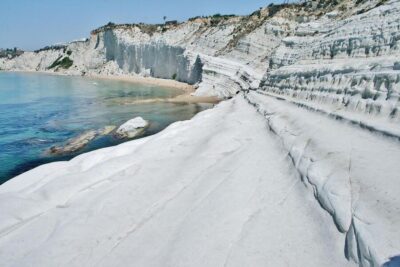 ★ 4.5Catania: Valley of the Temples and Turkish Steps with SnackFrom $129346 reviews
 ★ 4.1Agrigento: Valle dei Templi Fast-Track Ticket & Smart GuideFrom $24344 reviews
 ★ 4.6From Palermo: Villa Romana and Valley of the Temples TripFrom $138294 reviews
Browse the lists this tour appears in