
Reviewed · AGRIGENTO & VALLEY OF THE TEMPLES TOURS
Piazza Armerina: Villa Romana del Casale Guided Tour
Roman mosaics, in real life, wow. This skip-the-line tour is a smart way to see Villa Romana del Casale quickly, with the thermal baths as your first stop and a guide who keeps the stories clear. One thing to keep in mind: the site can feel crowded if multiple groups start at the same time, and that can make it harder to follow every detail.
What I especially like about this experience is the fast, organized start and the way the route moves you from bathing culture to private life. You get a live guide in English or Italian, and the talk is built around what the mosaics show, not just what the walls look like. You will also walk away with a better sense of how late Roman wealth worked, from leisure to business.
You meet your guide at the ticket booth and then stay on a focused 2-hour route. If you want a guided visit that prioritizes the mosaics and the meanings behind them, this format fits well.
Key highlights and why they matter
- Skip-the-line entry so you spend more time inside the villa’s rooms and less time waiting outside.
- Caldarium to frigidarium bathing sequence, including the frigidarium fed by the Gela River.
- Guest apartment mosaics with daily-life themes like fishing, hunting, and banquets.
- The Little Hunt mosaic helps you picture the tension and anticipation in the hunt scene.
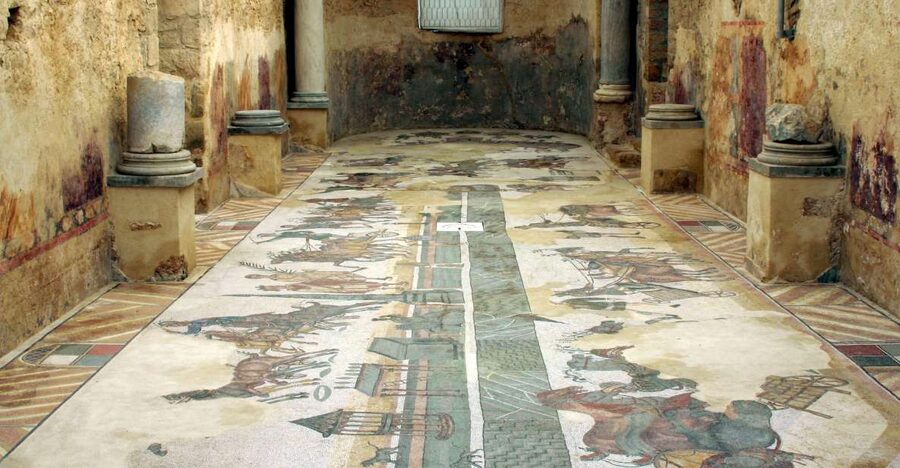
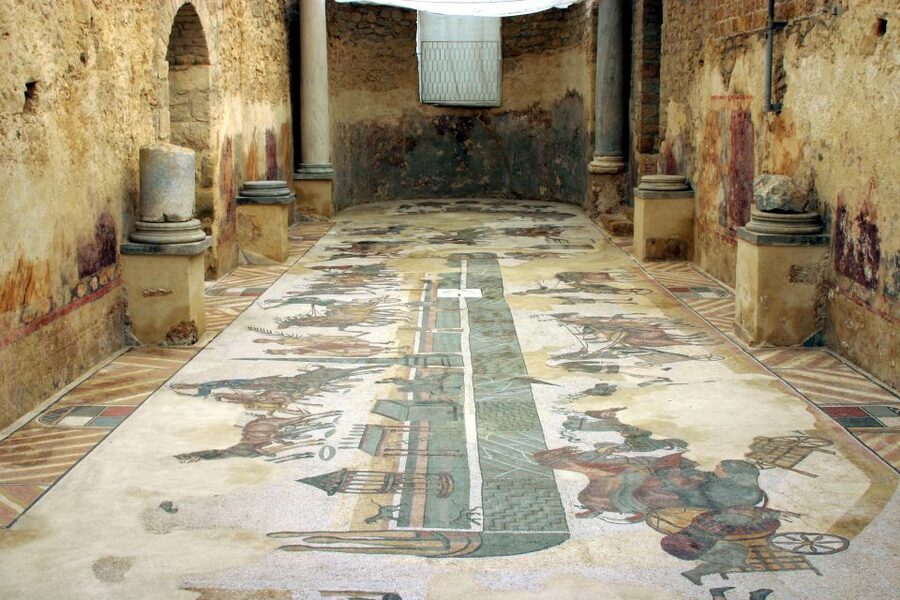
- Great Hunt mosaic with a monumental Roman Empire map plus dramatic animals and ships.
- Private rooms of the domina and dominus showing how the owners slept, ate, and managed daily affairs.
A Roman villa built for luxury, and mosaics you can actually read
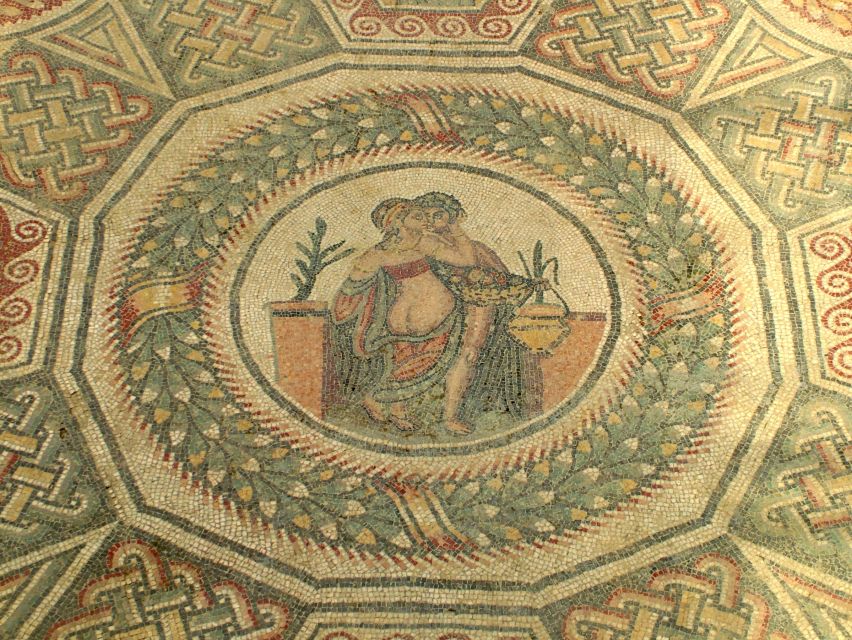
Villa Romana del Casale is famous for a reason. This late Roman complex turned everyday spaces, like baths and dining areas, into a walkable museum of images. And at the center of it all are mosaics from the 4th century A.D., including what is described as the largest mosaic collection in the world.
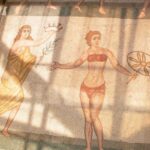
The guided format matters because the mosaics are not just decoration. They are “story tiles,” with scenes that hint at status, jobs, entertainment, and mythology. With a guide guiding your attention, you start noticing patterns, symbols, and repeated themes that you would likely miss if you were just wandering on your own.
If you care about Roman art and how it connects to daily life, this tour gives you a clean line through the site. You are not stuck trying to guess what you are looking at, and you get context for why certain rooms were made for specific kinds of activity.
Meeting the guide and using the skip-the-line ticket
You start at the ticket booth area, where you meet your guide before entering the villa. The big practical win here is the skip-the-line access, which helps you avoid the worst parts of peak waiting.
This is also where you should manage expectations about groups. The villa can run tours in English and Italian, sometimes at the same time. If you are sensitive to noise or crowding, I’d pick a start time that feels calmer for you, and I would arrive a little early so you can get into position before the talking starts.
No hotel pickup is included, so plan to reach the meeting point on your own. Also, the tour does not include food and drinks. If you are pairing this with other stops in Piazza Armerina, it helps to plan your meal around this 2-hour window.
You can also read our reviews of more guided tours in Piazza Armerina
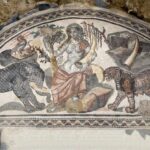
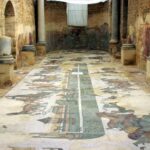
Thermal baths: caldarium heat, frigidarium cold, and the Gela River
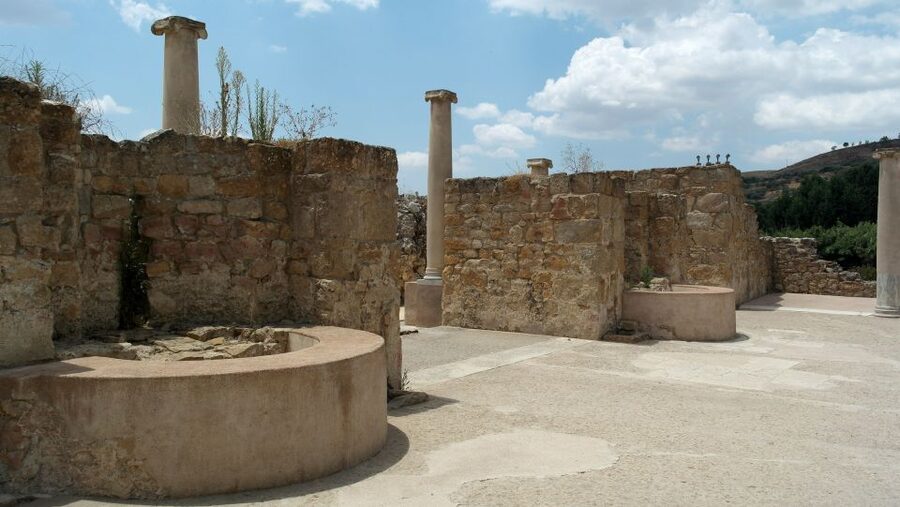
Your visit begins in the thermal baths. That choice is smart because it sets the mood of the villa right away, and it also gives you a physical sense of the space. The guide has you picture the warmth of the caldarium, then the cooler plunge in the frigidarium.
The frigidarium is described as being fed by the Gela River, which adds a real-world detail to the fantasy of “Roman luxury.” Even if you are only looking at stone and mosaic from a standing position, this kind of grounding detail makes the space feel lived-in, not just staged.
The tour also uses the baths to connect art to entertainment. In this room, you are encouraged to imagine the energy of spectators at events like a quadriga race, the chariot competition of four-horse teams. That framing turns the baths from a generic Roman feature into a social setting where excitement happened.
If you want to get the most from this first stop, listen closely to how the guide links the space to behavior. Bathrooms in Roman life were not only about cleanliness, they were a public theater of status and conversation. Starting here gives you that interpretation before you move into more private areas.
Guest apartments: hunting, fishing, banquets, and the Little Hunt mosaic
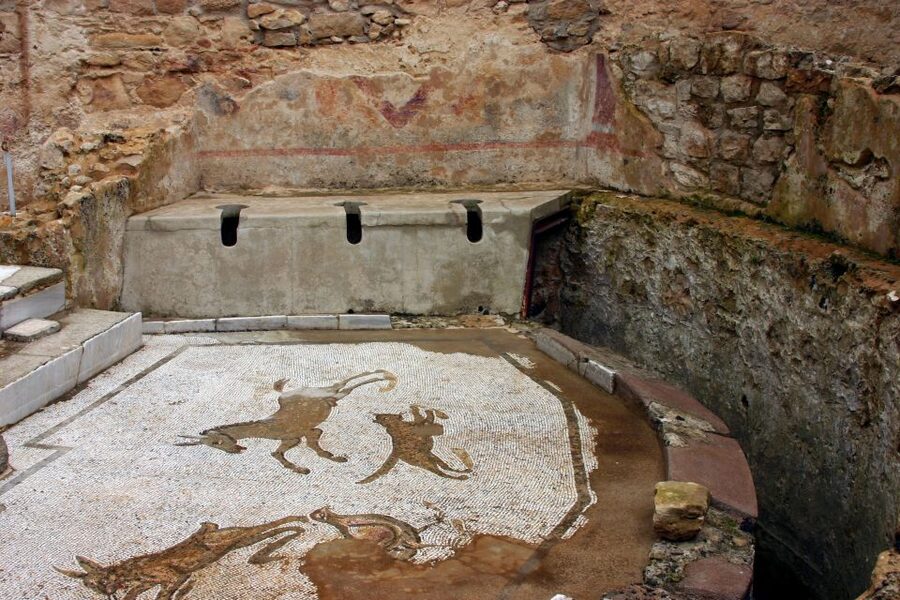
After the baths, the route moves to the guest apartment area. Here, the focus shifts from bathing to scenes that look like leisure and everyday activity for an elite household.
The themes you will see include fishing, hunting, and banquets. And the guide points you toward the “Little Hunt” mosaic, where the mood is built into the image. You are not just viewing animals and hunters, you are learning how the scene is meant to communicate anticipation and action.
This is one of the most useful parts of the tour for people who like “how did they live?” questions. The mosaics act like frozen snapshots of what mattered to wealthy households: food, sport, and hospitality. When you connect the imagery to daily routines, the villa stops feeling like a set of random floor patterns.
In the dining room, the tour brings in mythology. You will imagine Orpheus playing his lyre, with animals drawn in around him. Since the villa’s mosaics mix entertainment and storytelling, this scene fits the overall vibe of the complex: art meant to be watched, discussed, and remembered.
If you have limited time in Sicily and you want one place where Roman art and Roman life meet, the guest apartment stops are the turning point. This is where the villa’s images begin to feel personal, like you are seeing into a household rhythm.
Public halls and the Great Hunt mosaic across the Roman Empire
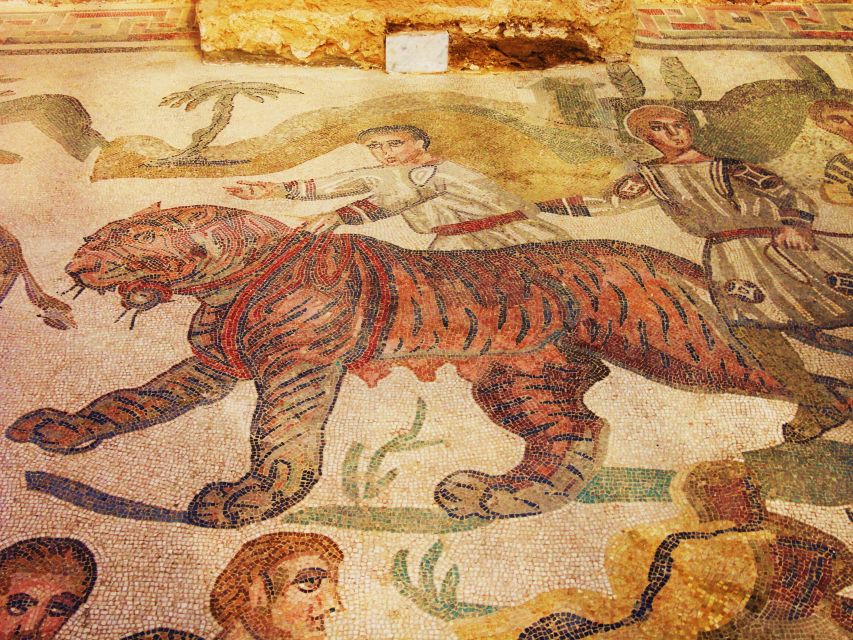
Then comes the part that many people talk about first: the grand public halls. These are connected to how the villa received important visitors, described here as clientes.
This is where the mosaics scale up in meaning. The star is the “Great Hunt” mosaic, which is presented as a monumental map of the Roman Empire. That detail changes how you look at it. You are not only seeing a hunt scene, you are seeing political reach shown through art.
The mosaic also includes dramatic narrative moments, including a lioness attacking a hunter, an elephant boarding a ship, and a ship sailing through waves. The guide’s job is to help you recognize how these pieces fit the larger story of power, territory, and spectacle.
What I like about this section is that it teaches you to read Roman art like a system. The imagery is not random, and it is not only decorative. It communicates worldview. If you step away from the Great Hunt with a “wait, I get it” feeling, the tour is doing exactly what it should.
If you are tempted to take quick photos and move on fast, give yourself permission to slow down here. This mosaic is the one spot where spending a few extra minutes actually pays off, because the guide’s explanations tie so many elements together.
Private rooms of the domina and dominus, where owners slept and did business
Toward the end, you enter the private rooms connected with the villa’s domina and dominus, the household owners. This is the shift from public reception to private life, and it is where you get a sense of the villa as a functioning home, not only a showpiece.
The tour explains what wealthy owners did in these spaces: how they slept, ate, and handled daily business. You can think of this as the villa’s “behind the scenes.” You are seeing how status translates into architecture, routines, and room purpose.
Another valuable piece here is that the guide discusses who may have owned the villa. That final context helps tie the experience together. You leave knowing not only what the rooms were like, but also that the villa was tied to real people, real decisions, and real wealth in late antiquity.
If your trip to Sicily includes multiple ancient sites, this one plays a different role. It is not only about ruins. It is about interiors, decorative programs, and how art shaped daily living. Private rooms are where that lesson lands.
Time, price, and value of a $51, 2-hour guided visit
At $51 per person for about 2 hours, this tour lands in the mid-range for major attractions in Italy. The value is not just that you see Villa Romana del Casale. It is that you get a live, bilingual guide and a fast entry ticket packaged together.
Here’s the simple math I use: you are paying for three things you would otherwise struggle to assemble on your own.
First, the entrance without the long line hassle. Second, an organized route through baths, guest quarters, public halls, and private rooms. Third, explanations that connect mosaics to everyday culture, mythology, and architecture.
Because the villa’s most famous features are spread through multiple areas, a tight 2-hour structure can be a win. You do not wander for hours guessing what to look for. Instead, you move room to room while your guide interprets what you see.
Also, the tour supports flexible planning with reserve now and pay later, and it includes free cancellation up to 24 hours before. Those perks are practical if your schedule in Sicily is still forming.
If you are the kind of visitor who loves to read on your phone in museums, you could do this independently. But if you want the mosaics explained in context, the guided format is where the money makes sense.
Crowd and audio realities, plus how to get the best experience
The site is popular, and the tour format can mean several groups moving through at once. One downside to be aware of is crowd confusion at busy start times. If you join when many groups begin together, the rooms can feel tight, and it can be harder to hear every word.
There is also a mention of equipment not performing perfectly. I cannot promise what you will experience, but I can tell you what to do if it happens. Pick a spot where your guide’s voice travels clearly, and if you notice audio problems, alert the guide right away so they can adjust your group’s listening position.
For best results, go in with a realistic goal. You do not need to “see everything perfectly.” You need to catch the big stories: the baths sequence, the guest scenes, the Little Hunt, Orpheus, and especially the Great Hunt mosaic.
If you are traveling with anyone who gets frustrated by crowds, this tour can still work, as long as you set expectations. It is a busy site. Your best protection is a guide’s ability to keep your attention anchored.
Who this tour suits best, and who may want a different plan
This guided visit is a strong fit for people who like art history with clear connections to daily life. If you want Roman mosaics explained as images tied to bathing, leisure, hunting, banquets, mythology, and social status, you will feel satisfied by the route.
It also fits couples and small groups who want a structured experience. The 2-hour timing is long enough to cover the main mosaic highlights without turning your visit into a full-day endurance test.
Where it might feel less ideal is if you strongly dislike group logistics. If you know you will get stressed by crowding, or if you want a slow, solitary pace with lots of lingering, you may prefer independent visiting. In that case, you would need to be comfortable reading the site info on your own.
For families, it depends on the child’s patience with museum-style storytelling. The tour includes vivid themes like hunting scenes and Orpheus, so there is potential to keep it interesting, but it is still a guided walk through multiple interior rooms.
One more note: pets are not allowed. Plan accordingly if you are traveling with a companion animal.
Should you book this Villa Romana del Casale guided tour?
Book it if you want the best chance of understanding the mosaics instead of simply viewing them. This is one of those places where a good guide changes everything, especially for the baths sequence, the hunting imagery, and the Great Hunt mosaic with its Roman Empire map.
Skip it only if you are determined to move at your own pace with minimal group influence. If crowds and audio distractions would ruin your day, you might choose a quieter time slot or consider a different format.
If you do book, go in ready to look up and listen. The villa rewards attention, and the tour is built to help you read the stories hidden inside the floor. For many visitors, that is the difference between a nice stop and a lasting memory.
FAQ
How long is the Villa Romana del Casale guided tour?
The tour lasts about 2 hours.
Where do I meet the guide?
Meet your guide in front of the ticket booth.
Is it a skip-the-line tour?
Yes, it includes fast entry with a skip-the-line ticket.
What languages are available?
The live tour guide is available in English and Italian.
What is included in the price?
The package includes the entrance ticket to Villa Romana del Casale and a bilingual guide.
Are food and drinks included?
No, food and drinks are not included.
Is hotel pickup and drop-off included?
No, hotel pickup and drop-off are not included.
Are pets allowed?
Pets are not allowed.
Is cancellation free if my plans change?
There is free cancellation up to 24 hours in advance for a full refund.
More Guided Tours in Piazza Armerina
More Tours in Piazza Armerina
More Tour Reviews in Piazza Armerina
Not for you? Here's more nearby things to do in Piazza Armerina we have reviewed
Agrigento & Valley of the Temples Tours, compared.
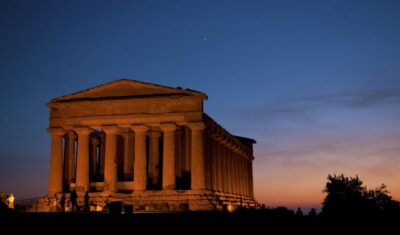 ★ 4.5Agrigento: Valley of the Temples Skip-the-Line Sunset TourFrom $511,512 reviews
 ★ 4.2Palermo: Agrigento and the Valley of the Temples Day TourFrom $771,240 reviews
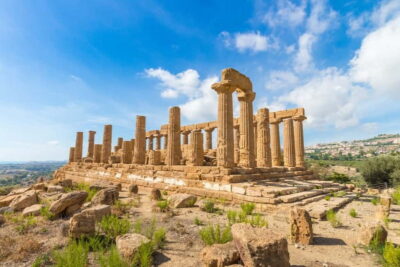 ★ 4.3Agrigento: Valley of the Temples Ticket & App AudioguideFrom $191,160 reviews
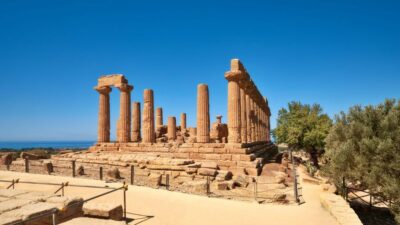 ★ 4.6Agrigento: Valley of the Temples E-Scooter TourFrom $68557 reviews
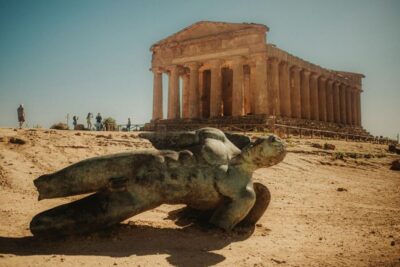 ★ 4.1Palermo: Valley of the Temples and Scala dei Turchi Day TripFrom $90380 reviews
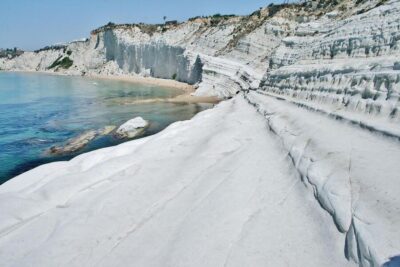 ★ 4.5Catania: Valley of the Temples and Turkish Steps with SnackFrom $129346 reviews
 ★ 4.1Agrigento: Valle dei Templi Fast-Track Ticket & Smart GuideFrom $24344 reviews
 ★ 4.6From Palermo: Villa Romana and Valley of the Temples TripFrom $138294 reviews
Browse the lists this tour appears in