
Reviewed · SYRACUSE & ORTIGIA TOURS
Private Tour of Syracuse in 6 hours with Enrica De Melio
Syracuse hits different when you have a guide. On this half-day private walk, I loved how Enrica De Melio connects the big ancient story to what you can actually see, and I also loved the balance of Neapolis ruins plus the slower, charming streets of Ortigia. One drawback to plan for: the main archaeological entrance fees and a couple of site tickets are not included, so your budget needs a small add-on.
This is a small-group setup, up to 8 people, and it stays focused. You start in the Neapolis Archaeological Park area, then shift over to Ortigia, finishing near Arethusa Spring. If you’re expecting a car tour with minimal walking, this is not that kind of day.
Key points to know before you go
- PhD archaeologist guidance: Enrica De Melio is a PhD archaeologist guide, so explanations come with real depth and context.
- Two “worlds” in one half day: you pair the large-scale ruins of Neapolis with the intimate, street-level charm of Ortigia.
- Big-name highlights: the Ear of Dionysius, Greek Theatre, Altar of Hiero II, and the Roman Amphitheater are all part of the Neapolis walk.
- Ortigia essentials on foot: you’ll cover Temple of Apollo, Duomo Square, the Cathedral/Temple of Athena, and Arethusa’s Spring.
- Small group, private pace: it’s designed for your group only, which makes it easier to ask questions and slow down where you care most.
- Tickets add cost: Neapolis entrance is extra, and the Cathedral of Syracuse ticket is extra too, even though Ortigia’s stop includes an admission ticket.
Neapolis Archaeological Park: Ear of Dionysius to the Roman Amphitheater
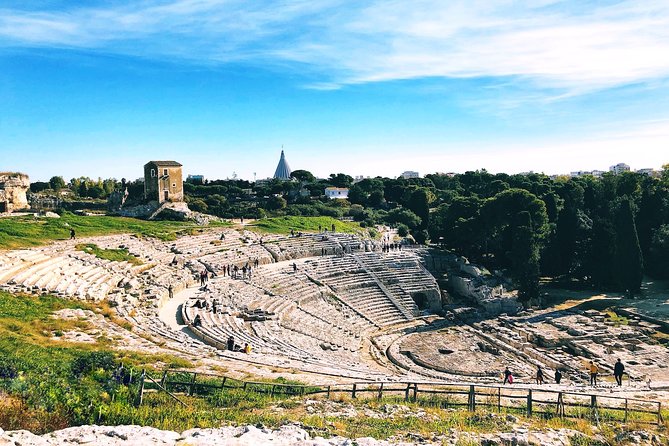
Neapolis Archaeological Park is where Syracuse stops being a name on a map and becomes a place you can walk through. You’re guided on a chronological route, so you’re not just collecting monuments. You’re following how the city’s power and culture changed over time.
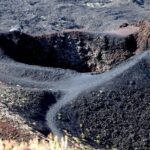
A major highlight is the Quarry of Paradise and the Ear of Dionysius, one of the park’s most famous features. The name alone gets your attention, but what makes it worthwhile is how your guide frames it in the broader ancient setting, not as a random photo stop.
You’ll also pass the Cave of the Rope-makers. Even if you only catch a glimpse, it helps you understand that the park isn’t only about grand temples. It’s also about the practical life that lived around these systems.
Then the walk moves into performance and ceremony. Expect to see the Greek Theatre and the Altar of Hiero II, described as the largest altar in the world. Whether or not you measure that claim, the value here is the scale and the way your guide gives you a sense of why a monument like this mattered to civic and religious life.
Finally, you reach the Roman Amphitheater. This contrast is a big reason I like Neapolis for a half-day visit. The shift from Greek space to Roman space feels visible, and with a guide’s context, it becomes more than “old rocks.”
Practical note: the Neapolis archaeological area admission ticket is not included, and it’s listed at 17 euros per person (free under 18). Plan to buy it ahead if you can, or at least be ready to pay so the day stays smooth.
You can also read our reviews of more private tours in Sicily


Ortigia island walk: Temple of Apollo, the Cathedral of Athena, and Arethusa’s Spring
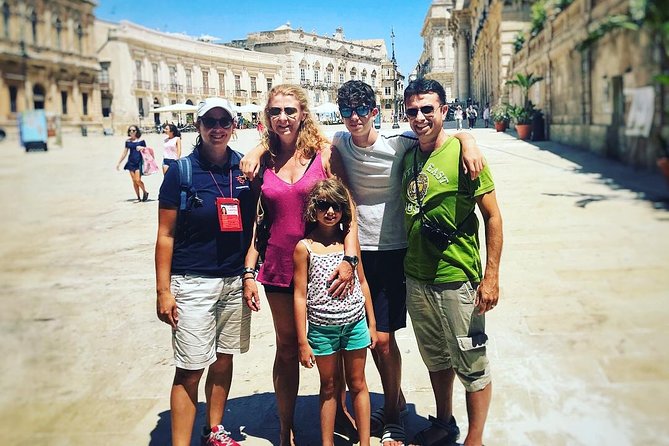
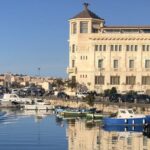
After Neapolis, the whole mood changes. Ortigia is smaller, streetier, and more human-scale. It’s also connected to Syracuse by bridges, so you’re basically switching from a big archaeological zone to an island neighborhood.
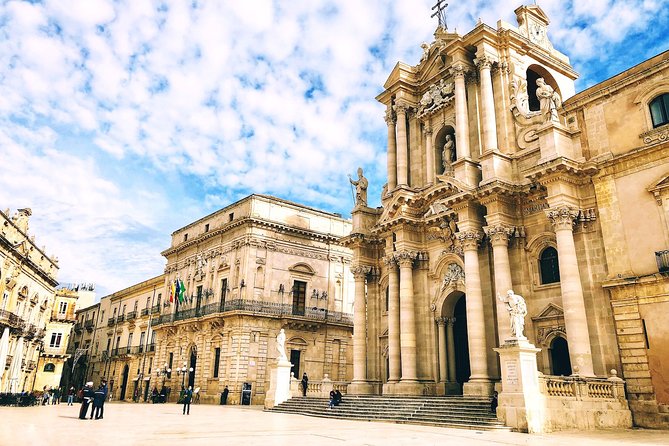
This second part of the walk is built around the sights you’ll keep remembering long after you leave. You start with the Temple of Apollo (VI century BC). Seeing something that old in a working town takes your perspective from “museum facts” to “how do people live beside this?”
Next comes Duomo Square, where baroque palaces frame the older layers beneath. The star stop is the Cathedral/Temple of Athena. Your guide uses this as a way to explain how sacred spaces evolve over centuries, so you don’t just read plaques. You understand what you’re looking at and why it sits where it does.
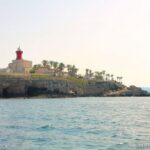
And then you end up at Arethusa’s Spring, one of Syracuse’s signature moments. Even if you don’t think of fountains as highlights, the spring feels like a real anchor point for the city. Finishing here is also convenient because your tour ends at Arethusa Spring.
One cost detail to keep straight: the Ortigia stop lists its admission ticket as included. Still, the Cathedral of Syracuse ticket is listed separately as not included, at 2 euros per person. So you’ll want to budget for that small add-on even though you’re not paying for every ticket in Ortigia.
Why the private guide setup feels worth it
This tour is private for your group only, and that matters more than it sounds. With a small group up to 8 people, I find it’s easier to ask questions, adjust your pace, and linger when something grabs your attention.
The biggest praised strength is Enrica De Melio’s combination of deep expertise and a warm, cheerful delivery. In practice, that means the day doesn’t feel like a lecture delivered while you stare at stone. It feels like a story told along a path you can follow, with stops that make sense.
Another thing I appreciate is how she tends to handle the day as a real experience, not a checklist. One of the reviews highlighted her attention to accessibility needs for a traveler with a disability. That’s a great sign, but I’ll add a practical caution: the tour notes a moderate physical fitness level and smart casual dress code, so you should think honestly about your own comfort with walking and uneven historic surfaces.
Price and value: what your $361.11 per group is really buying
The price is listed at $361.11 per group, for up to 8 people, and the tour runs about 5 to 6 hours. On paper, that sounds like a premium, but it’s a classic “you’re paying for access and expert time” situation.
Here’s what that value usually translates to for you:
- A PhD archaeologist guide for your half-day, not a mixed crowd bus tour.
- A tight route that covers both Neapolis Archaeological Park and Ortigia in one morning.
- Explanations that help you understand what you’re seeing, not just what it is.
What’s not included is where the real budget planning comes in. You’ll likely pay:
- Neapolis Archaeological Area entrance, listed at 17 euros per person (free under 18).
- Cathedral of Syracuse entrance, listed at 2 euros per person.
- Lunch, and transportation to and from attractions.
So the best way to think about the price is: your guide and private pace are included, and the major site fees are mostly extra. If you have a group, it can become a strong deal because you split the guide cost across your people.
Also, this is described as requiring good weather. If the day turns rainy or miserable, the experience may be adjusted, so have flexibility in your plans.
Timing, meeting points, and the route you should expect
You start at 9:30 am at Neapolis Archaeological Park, Via Luigi Bernabò Brea 14, 96100 Siracusa. The tour ends at Arethusa Spring, Largo Aretusa, 96100 Siracusa.
That “start one place, finish another” detail is small but important. It affects how you plan your morning, especially if you’re pairing this with other activities, dining, or a day trip.
This is also a mobile ticket tour, which usually means less hassle on arrival and fewer paper documents to manage. The tour is near public transportation, so you’re not locked into one specific parking plan.
Pacing is built into the itinerary: about 1 hour 30 minutes at Neapolis, then about 1 hour 30 minutes at Ortigia, with the rest of your time taken up by walking, orientation, and the guide’s explanations.
Finally, dress code is smart casual. That’s easy to follow, but I suggest planning for sun and stone underfoot. You’ll be doing real walking on historic terrain, so comfortable choices matter.
Who this tour suits best (and who should consider another option)
This is a great fit if you:
- Like guided context and want to understand what you’re seeing at places like the Ear of Dionysius and the Greek Theatre.
- Want a balanced morning that mixes big ruins with the charming streets of Ortigia.
- Prefer a private or small-group experience where the guide can answer questions and keep your pace comfortable.
It may be less ideal if you:
- Want a low-walking day or plan to avoid uneven surfaces.
- Need a fully included lunch and transportation. Those are not included here.
- Have a tight schedule that depends on being able to return to the exact starting point after the tour. You finish at Arethusa Spring.
Should you book this Syracuse and Ortigia private tour?
If you want an efficient, memorable Syracuse day with real expertise behind it, I’d book it. The combination of a PhD archaeologist guide plus two different kinds of “Syracuse” in one half day is exactly the kind of format that helps you see more without feeling rushed.
I’d only hesitate if entrance fees would strain your budget or if your group needs a more relaxed, minimal-walking outing. Otherwise, this is one of those experiences where the guide makes the ruins and the island feel connected, not like two random stops.
FAQ
How long is the Syracuse and Ortigia private tour?
It runs about 5 to 6 hours.
How many people are in the group, and what does it cost?
It’s $361.11 per group for up to 8 people.
Who guides the tour?
Your guide is Enrica De Melio, listed as a PhD archaeologist guide.
What entrance tickets are included, and what costs extra?
Neapolis Archaeological Area admission is not included (17 euros per person, free under 18). The Cathedral of Syracuse ticket is not included (2 euros per person). The Ortigia stop lists an admission ticket as included.
Where does the tour start and end?
It starts at Neapolis Archaeological Park, Via Luigi Bernabò Brea 14, 96100 Siracusa, and ends at Arethusa Spring, Largo Aretusa, 96100 Siracusa.
What should I wear, and what fitness level is needed?
The dress code is smart casual, and the tour notes a moderate physical fitness level.
What if the weather is bad?
The experience requires good weather. If it’s canceled due to poor weather, you’ll be offered a different date or a full refund.
More Private Tours in Sicily
More Tours in Sicily


More Tour Reviews in Sicily
Not for you? Here's more nearby things to do in Sicily we have reviewed






Syracuse & Ortigia Tours, compared.
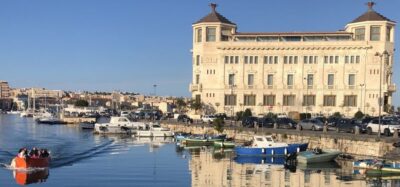 ★ 4.7Syracuse: Boat Trip of Ortigia Island and Sea CavesFrom $23937 reviews
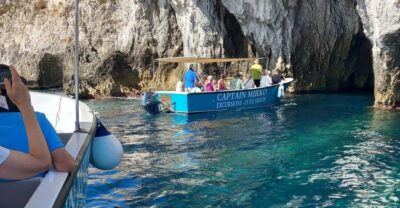 ★ 4.7Syracuse: Boat Tour with Captain Mirko, Snorkeling & CavesFrom $35746 reviews
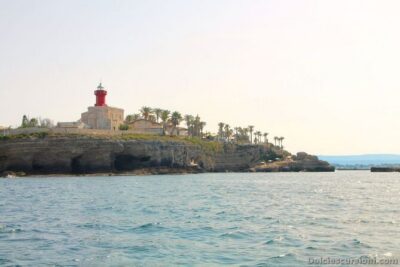 ★ 5.0Tour of the island of Ortigia and exploration of sea caves with baths.From $24668 reviews
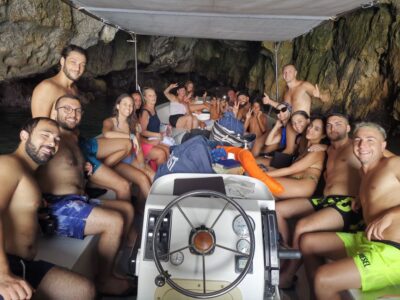 ★ 4.7Siracusa: Ortigia Boat Tour with Marine GrottoFrom $45617 reviews
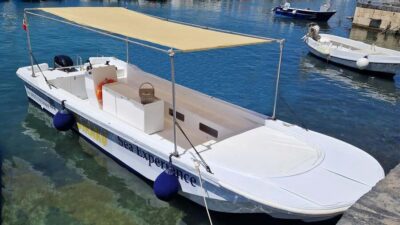 ★ 4.9Siracusa: Ortigia & Sea Caves Speedboat Tour with Swim StopFrom $34499 reviews
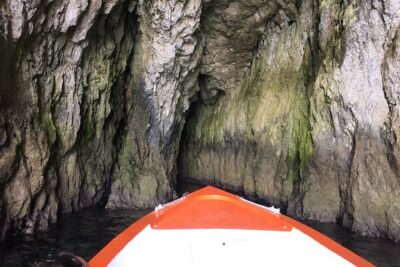 ★ 5.0Boat tour of Ortigia Island and sea cavesFrom $24407 reviews
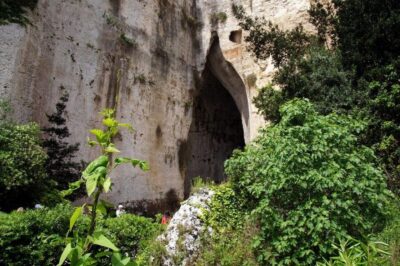 ★ 4.6Catania: Syracuse, Ortigia, and Noto Tour with BrunchFrom $112404 reviews
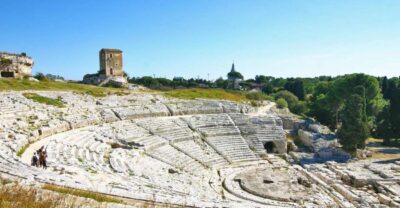 ★ 4.7Syracuse: Neapolis Archaeological Park Small Group TourFrom $26350 reviews
Browse the lists this tour appears in