
Reviewed · SYRACUSE & ORTIGIA TOURS
Syracuse: Ortygia & Neapolis Archaeological Park Guided Tour
Syracuse can feel like a living museum. This guided tour strings together Ortygia streets, sea views, and the big Neapolis Archaeological Park monuments in about two hours, with a licensed guide keeping everything clear. I especially like how the route connects religion, math, and power, from the Temple of Apollo to the Cathedral of Syracuse and then into the Roman and Greek remains.
What I like most is the mix: you get both the dramatic waterfront stops and the archaeological heavy hitters in one walk-and-visit plan. The only real catch is that key entries are not included, like the Duomo and the Neapolis park tickets, so you will want to plan for those before you go.
Ortygia and Neapolis quick hits
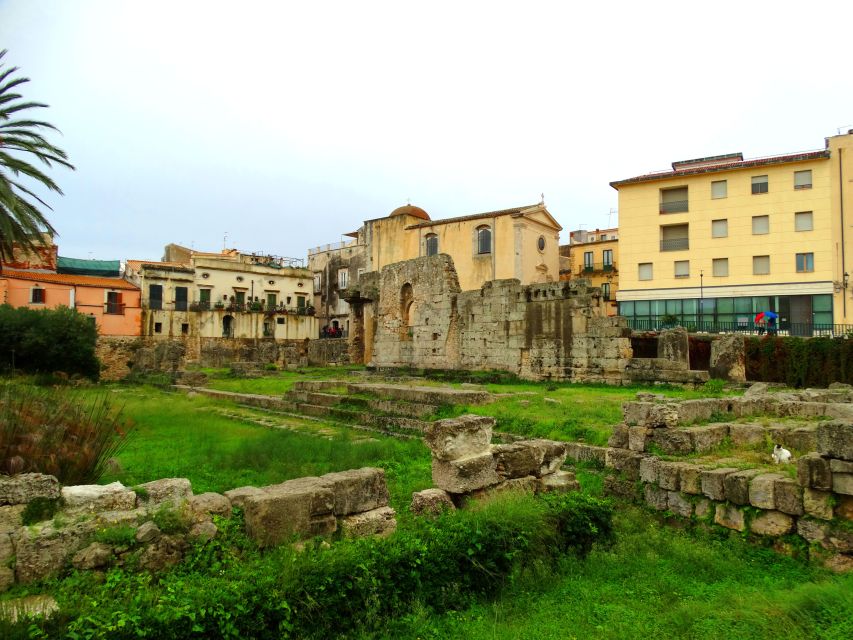
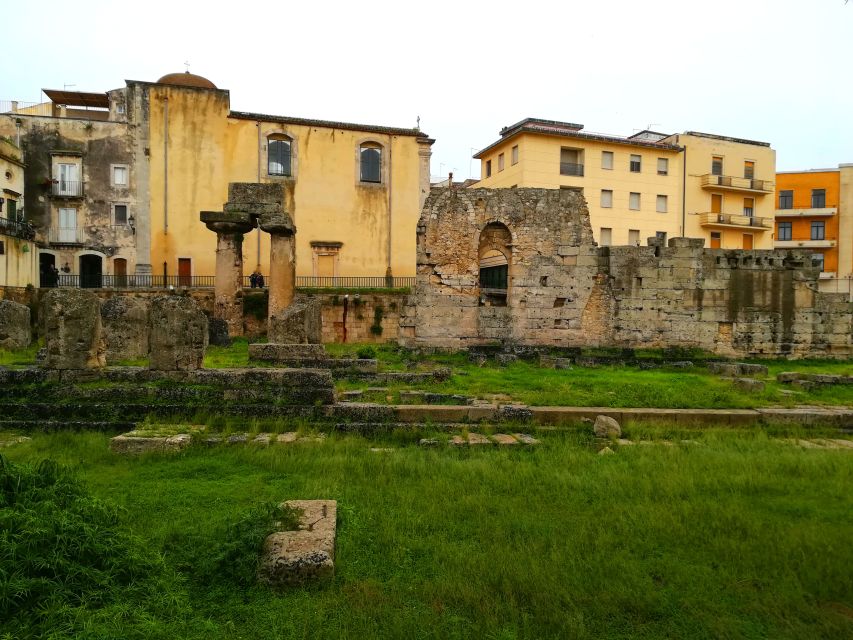
- Temple of Apollo on the Umbertino Bridge site, said to date to 580 BC and described as the oldest Doric temple in Sicily
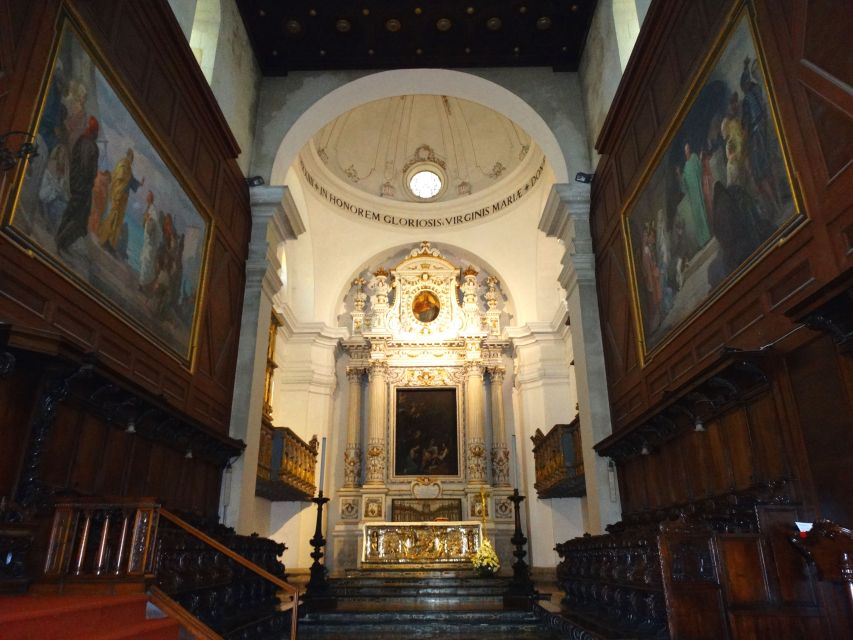
- Cathedral of Syracuse built in Baroque and Rococo style, with ancient Temple of Athena columns still visible in the structure
- Santa Lucia alla Badia with Caravaggio artwork, The burial of Saint Lucia
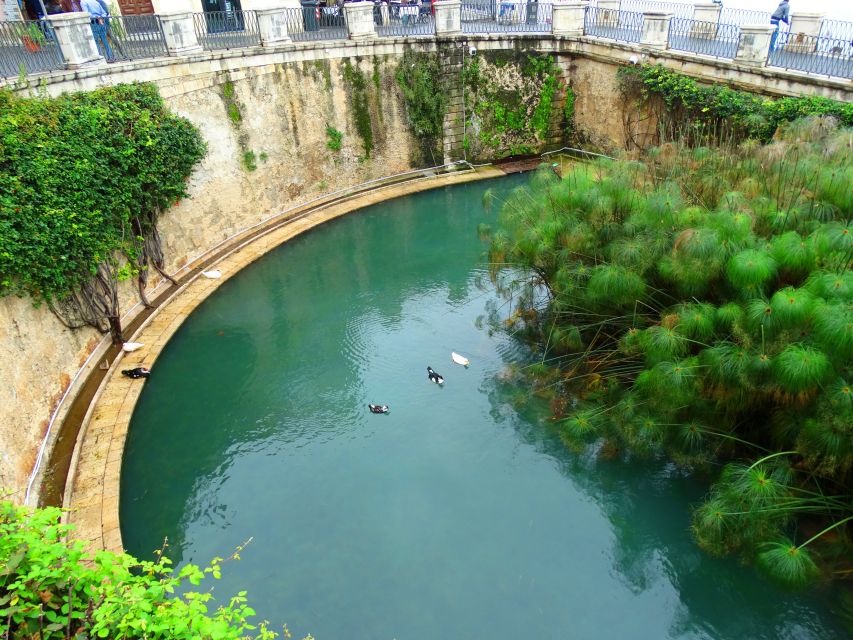
- Fonte Aretusa and papyrus plants at the Ortigia waterfront, plus the fish and ducks scene
- Neapolis Archaeological Park core monuments: Greek theater, Roman amphitheater, Ara of Hieron, and the Ear of Dionysus
- Licensed guide in multiple languages (English, Italian, French, German, Spanish) on a private group format
Where this Syracuse tour really shines in 2 hours
This is one of those Syracuse experiences where you leave with names and connections, not just photos. The Ortygia part shows you how Syracuse’s old layers sit on top of each other, while Neapolis explains how Greeks, then Romans, shaped the city for performance, power, and worship.
I like that the pacing is built around recognizable waypoints. You start at the bridge area, move through central squares and churches, then shift toward the sea, and finally transition to Neapolis for the theatrical ruins. If you have limited time on the island, this format is a practical way to hit the main highlights without wandering in circles.
The key consideration is scope. Two hours is fast, so you will see the major monuments, not every corner of these big areas. If you love reading every inscription slowly and staying in one spot, you might want more time elsewhere. For a focused first visit, it works well.
You can also read our reviews of more guided tours in Syracuse


Umbertino Bridge start, and the Temple of Apollo leg
You meet at the Umbertino Bridge at the Archimedes statue. It is a good landmark start, and it helps you get your bearings fast in Ortigia. From there, the tour heads toward the Temple of Apollo visit.
This stop matters because the tour frames Apollo as the city’s early backbone. The Temple of Apollo here is described as dating back to 580 BC and as the oldest Doric temple in Sicily. Even if you are not a stone-nerd, having a date and a style label makes the ruins easier to understand, and your guide’s job is basically to translate that history into something you can picture.
If you are sensitive to sun or long walks, keep this in mind. The first part is outdoors before you settle into squares and churches.
Ortygia squares: Archimede, Diana Fountain, and Minerva’s white limestone
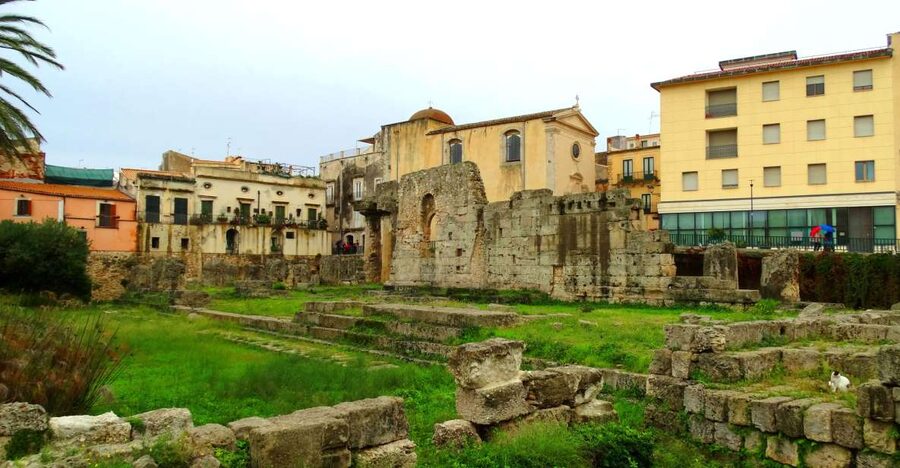
After the Temple of Apollo, the route moves into the heart of Ortigia through recognizable public spaces. You go past Piazza Archimede, dedicated to the Syracusan mathematician. That is a smart move, because it reminds you Syracuse was not only about temples and battles. It also had thinkers shaping how people understood the world.
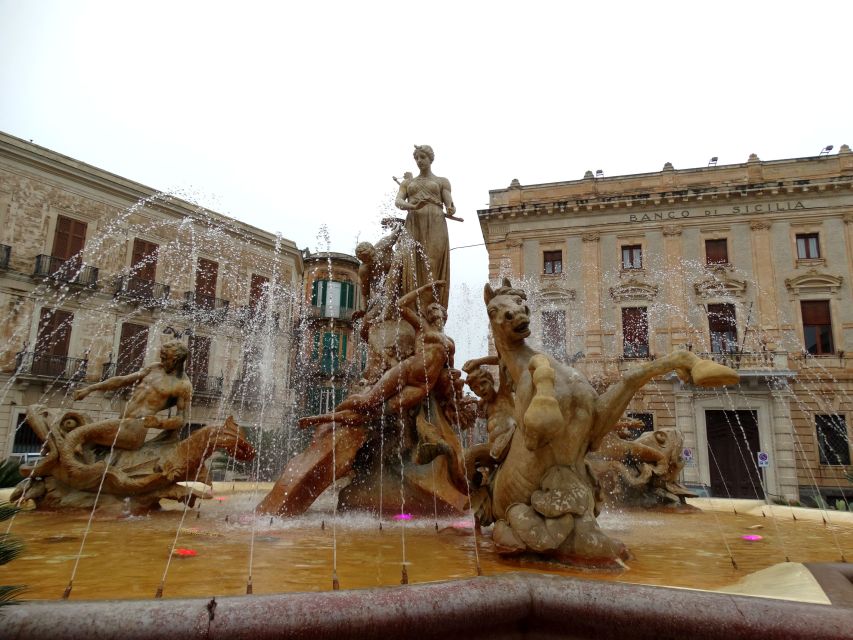
Then you reach the Diana Fountain. It sounds simple, but fountains are often the city’s way of compressing meaning. In Ortygia, it helps you transition from ancient sites into the living square culture where people still pass by every day.
Next is Piazza della Minerva, made of white limestone. The tour calls attention to how the surrounding buildings frame the view. I like that kind of guidance because it trains you to notice architecture, not just attractions.
This part of the walk is where you start getting the feel of Ortigia as a compact island center. Expect alleyway navigation, small turns, and quick shifts in atmosphere.
The Cathedral of Syracuse: Baroque, Rococo, and ancient columns
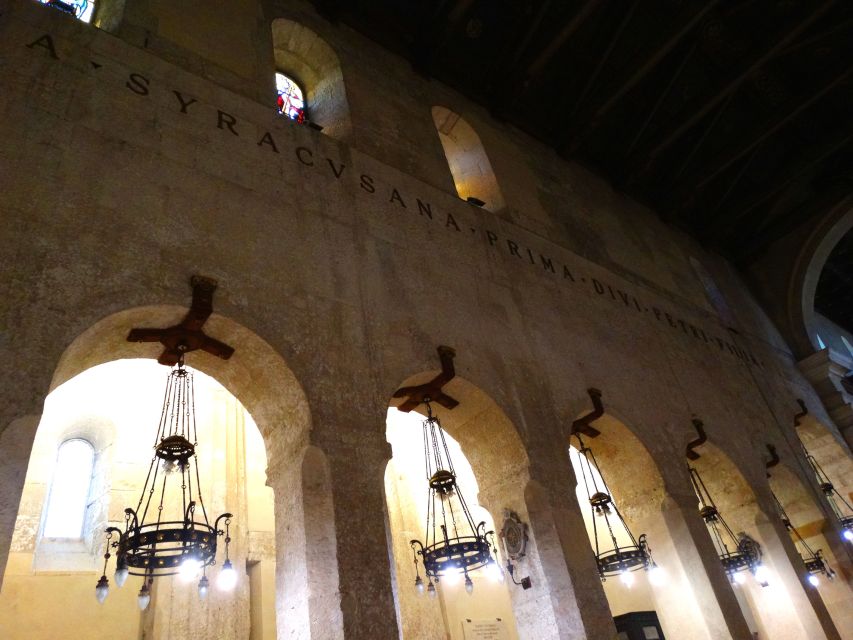
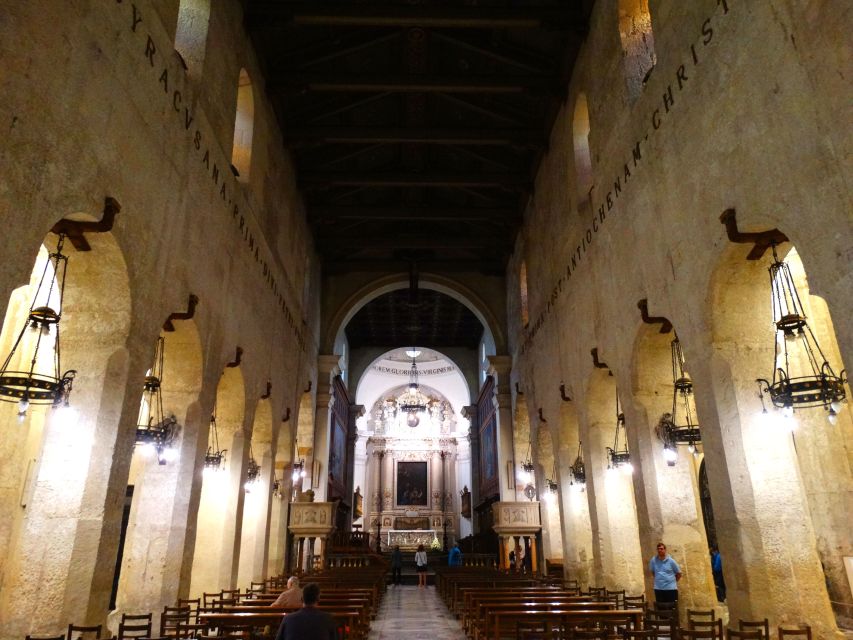
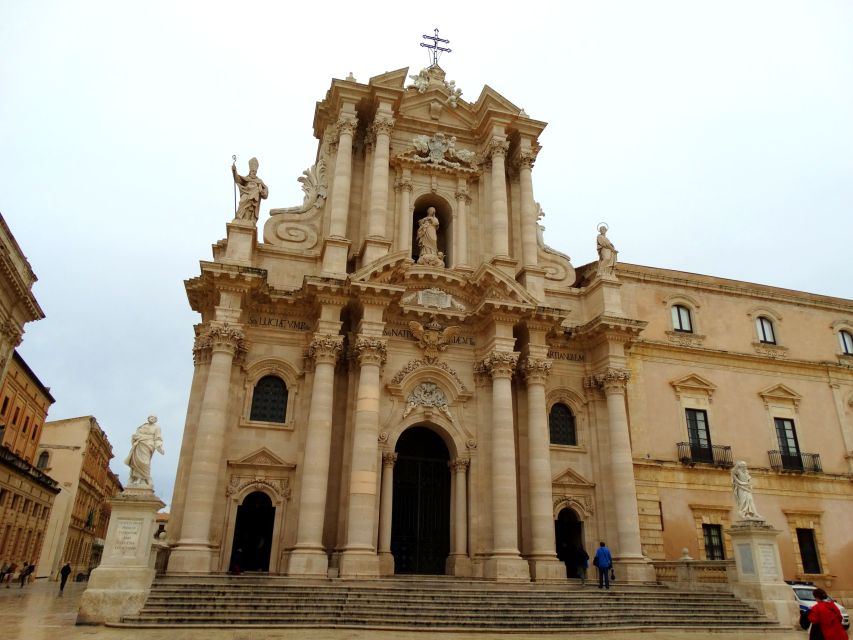
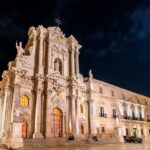
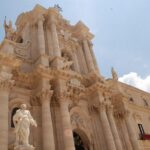
The Cathedral of Syracuse is the Ortygia centerpiece on this tour. The facade is described as Baroque and Rococo, and you also get the chance to connect it to the earlier Temple of Athena.
Here is the practical value: the guide helps you understand the church is not sitting on blank ground. The Cathedral is dedicated to the Nativity of Mary Most Holy and is founded on remains of an ancient Temple of Athena. Some columns that re-emerge from the church walls can be seen externally, and even more clearly when you visit inside the Cathedral.
So you get a double lesson: art and style on one hand, and architectural continuity on the other. That makes your Cathedral visit feel less like a single stop and more like a story about how Syracuse kept reusing sacred space.
Also note the ticket detail. The tour includes the Cathedral visit, but the Duomo ticket is not included. Plan to secure that entry separately so your timing stays smooth.
Santa Lucia alla Badia and Caravaggio’s The burial of Saint Lucia
Right after the Cathedral experience, you see the Church of Santa Lucia alla Badia. This church is highlighted for preserving a Caravaggio painting, The burial of Saint Lucia.
This is one of the moments where a guide earns their fee. Without someone explaining the connection, Caravaggio can be just a famous name and a famous painting. With the proper context, it becomes part of the local religious story rather than a random museum stop.
You also get visual payoff in the square area. The tour description points out how the Cathedral facade is surrounded by other important buildings overlooking Piazza della Minerva, including Palazzo del Vermexio, seat of the town hall, and Palazzo Beneventano. That grouping is exactly why guided walking tours work, you learn how buildings relate to each other rather than seeing them as separate postcards.


Fonte Aretusa, papyrus, and the sea that frames Ortigia
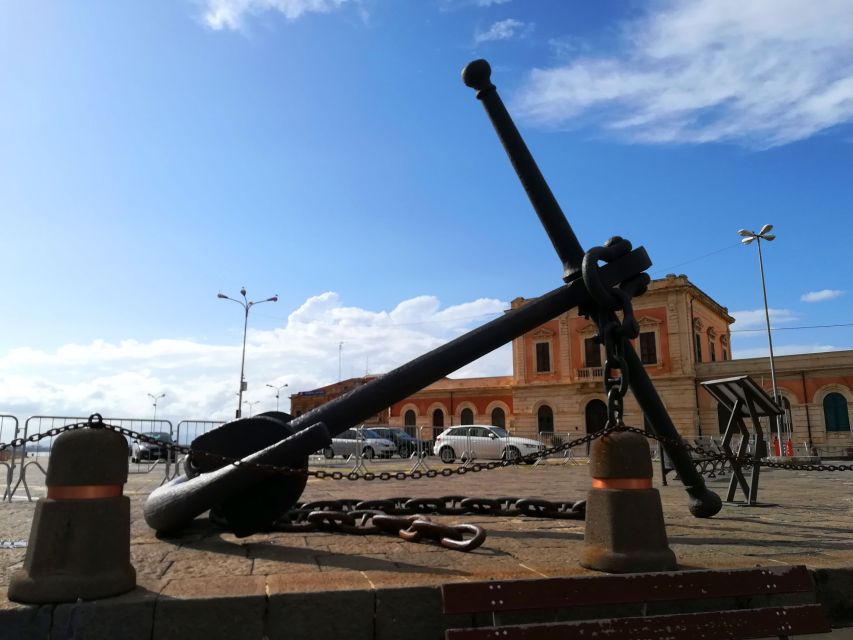
Once you finish the church and square zone, the tour heads toward the waterfront. You visit Fonte Aretusa first, described as an unusual mirror of fresh water with fish and ducks, plus papyrus plants growing nearby.
This is the kind of stop that snaps the whole day into focus. You start the tour in ancient temples, then you’re suddenly looking at fresh water and birds near the sea. It makes the geography feel real, not abstract.
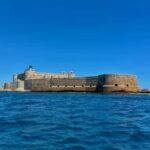
A few meters away you reach the Alfeo seafront. The tour notes it as the oldest stretch of seafront on the island, and it is set up for sea views. From there, you also see the imposing Maniace Castle.
Maniace Castle ties the story to more recent control of the city. It is described as a fortress dating back to the Swabian period, and at one point it served as a prison and military barracks. Even if you do not go deep into fortress design, this stop helps you understand Syracuse was strategic long after ancient monuments fell out of active use.
Moving to Neapolis: from a church doorway to Roman water systems
After the Ortigia waterfront and castle area, the tour transitions to Neapolis. One detail that matters for planning is that transfer by your own vehicle or public transport from Ortigia to Neapolis and back is not included. You end back at the original meeting point on Umbertino Bridge, so you will want a clear plan for how that movement works on the day.
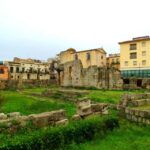
Neapolis visits start from the Church of San Nicolò ai Cordari, described as an 11th-century church. Then the tour moves into the lower area and the Roman Pool, also described as large water tanks dug into the rock. Pipes brought water to the Roman amphitheater for nautical games and water fights.
This is a great example of why guided tours help. You can stand in front of ruins and only see shape. With an explanation, you see function. These water tanks were part of spectacle, not just infrastructure.
Roman amphitheater and the Ara of Hieron: spectacle and power
Next comes the Roman amphitheater dating back to the Augustus era. The description highlights its elliptical structure carved into the rock and its three-level layout. It also points to the famous kind of events it hosted, gladiator fights.
Then you visit the Ara of Hieron, described as the immense altar dedicated to Zeus, with sacrifices of bulls taking place there.
In a short time window, the guide is essentially covering two sides of Roman rule: public entertainment and public ritual. That combination is what makes Neapolis feel like a working stage and a working temple, even though the stage is now stone.
If you love architecture, the amphitheater form is easy to spot, and the guide’s explanation helps you imagine how crowds would have moved and how fights would have looked from different levels.
Latomie del Paradiso and the Ear of Dionysus echo
Latomie del Paradiso are quarries used for extracting stone, and this tour highlights the most important one: the Ear of Dionysus. The cave is described as 23 meters high, and it is famous for the exceptional echo inside it.
This is where you get to feel the place as an acoustical instrument. It is not just a view, it is a sound experience. The tour framing makes it more fun, because you start listening for what the space is doing, instead of treating it like an empty cavity.
Practical note: caves and quarry areas can be cooler or more enclosed than open-air stops. Wear layers you can manage, especially in changing weather.
Greek theater finish: carved stone and Roman renovation
The tour ends with the Greek theater carved into the stone, described as the most famous monument of the archaeological park. Built by the Greeks and renovated by the Romans, it is a perfect final stop because it sums up the entire Syracuse theme of this itinerary.
You can look at it and see the idea of performance taking center stage. With the guide’s context, you also understand the Romans did not erase Greek design, they adjusted and renewed it.
It is the right ending point for two reasons. First, it is big enough to feel like a finale. Second, it closes the storyline from early sacred sites to spectacle spaces, from Apollo and Athena to Zeus and theatre crowds.
Price and logistics: what $369.31 per group really means
The price is listed as $369.31 per group, up to 30 people. That matters. This is not priced per person. It is priced for the group size, so the value depends heavily on how many people are actually in your private group.
If you can fill that group, the cost per person becomes much more reasonable. If it is just a small party, you are effectively paying for a tailored guide rather than a low-cost group bus style experience. Still, for a two-hour guided plan that covers both Ortygia and Neapolis highlights, you are paying for interpretation, not just walking through stones.
A second logistics point: tickets are not included. Specifically, the Duomo ticket and the Neapolis park ticket are not part of the package. Also, transport from Ortigia to Neapolis and back is not included, which means you need to handle that movement yourself via your own vehicle or public transport.
The tour includes a licensed guide, and you also get a private group format. In my view, that combination makes sense for people who want a clear route and clean explanations, but it does require a little front-end planning on entry tickets and getting between areas.
Who should book this Syracuse Ortygia and Neapolis guided tour
I think this tour is best for you if:
- You have limited time and want the headline sites of Ortygia plus the major Neapolis monuments.
- You like explanations that connect places, like Temple of Apollo leading into the Cathedral’s ancient foundations.
- You want a guide who can manage a mixed group with energy. The available feedback highlights Giuseppe for being perfect, entertaining, and engaging even for younger members.
It also makes sense for first-time Syracuse visitors. You get the right balance of waterfront atmosphere and archaeological structures, without needing to master the site layout on your own.
Should you book it, yes or no?
Book this tour if you want an organized, guided path through Ortygia and Neapolis with clear historical connections. The Cathedral and Caravaggio stop add a big cultural punch, and the Neapolis segment gives you the main performance and ritual spaces, plus the memorable Ear of Dionysus echo.
Skip or reconsider if you already planned to spend extra time inside museums, or if you do not want to handle separate tickets and your own transport between Ortigia and Neapolis. Two hours is tight, and this itinerary prioritizes the highlights over long lingering.
If you are happy with a focused hits-only day, this guided plan is a strong way to understand Syracuse fast, and leave with more than just snapshots.
FAQ
How long is the Syracuse Ortygia and Neapolis archaeological park guided tour?
The tour duration is 2 hours. Starting times depend on availability.
Where do I meet the guide, and where does the tour end?
You meet the tour guide on Umbertino Bridge (at the statue of Archimedes). The tour ends back at the same meeting point.
Is this tour private, and what languages are offered?
It is a private group. The live guide is available in English, Italian, French, German, and Spanish.
What is included in the price?
The tour includes a licensed tour guide.
What tickets are not included?
Ticket Duomo and the ticket to the Archaeological Park of Neapolis are not included.
Is the transfer between Ortigia and Neapolis included?
Transfer by your own vehicle or public transport from Ortigia to Neapolis and back is not included.
More Guided Tours in Syracuse


More Tours in Syracuse
More Tour Reviews in Syracuse
Not for you? Here's more nearby things to do in Syracuse we have reviewed




Syracuse & Ortigia Tours, compared.
 ★ 4.7Syracuse: Boat Trip of Ortigia Island and Sea CavesFrom $23937 reviews
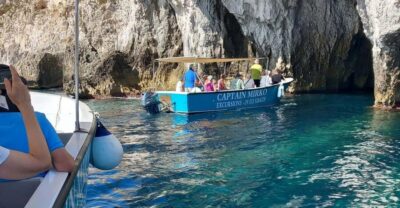 ★ 4.7Syracuse: Boat Tour with Captain Mirko, Snorkeling & CavesFrom $35746 reviews
 ★ 5.0Tour of the island of Ortigia and exploration of sea caves with baths.From $24668 reviews
 ★ 4.7Siracusa: Ortigia Boat Tour with Marine GrottoFrom $45617 reviews
 ★ 4.9Siracusa: Ortigia & Sea Caves Speedboat Tour with Swim StopFrom $34499 reviews
 ★ 5.0Boat tour of Ortigia Island and sea cavesFrom $24407 reviews
 ★ 4.6Catania: Syracuse, Ortigia, and Noto Tour with BrunchFrom $112404 reviews
 ★ 4.7Syracuse: Neapolis Archaeological Park Small Group TourFrom $26350 reviews
Browse the lists this tour appears in