
Reviewed · MOUNT ETNA VOLCANO TOURS
Etna: Winter excursion to 3.000mt
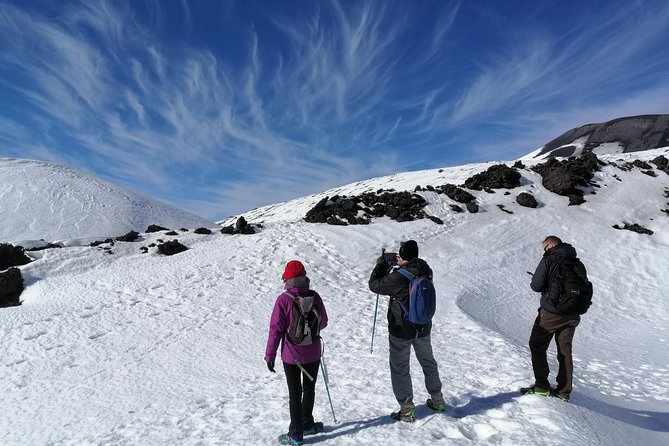
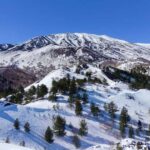
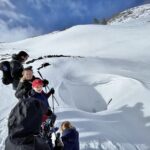
Winter Etna feels like another planet.
This 5 hour winter hike gets you from the cable car zone up toward 3,000 m, walking through icy volcanic terrain with an alpine and volcanological guide team. I especially like the small group size (up to 15), which makes it easier to move carefully on snow without feeling rushed.
What really makes it click is how the guides handle both the mountainside and the volcano story. On trips led by people like Simone and Giuseppe, the vibe stays friendly, but the safety rules are clear, and the explanations land in real language, not a lecture. You also get practical help before you even start moving, since you can borrow key gear.
One drawback to plan for up front: this is not a casual winter stroll. The ice and snow mean you need expert hiker comfort, steady legs, and good winter layering, or the day can feel like hard work fast.
Key things I’d circle on your map
- Cable car to 2,500 m, so your legs start where the winter views begin
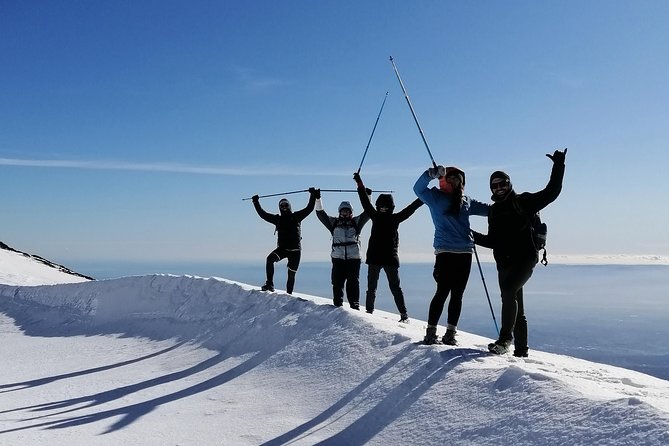
- Trek around 3,000 m on snow and volcanic ground, with poles and traction help
- Stops focused on real volcanic features, including the 2001 eruption cone and Valle del Bove
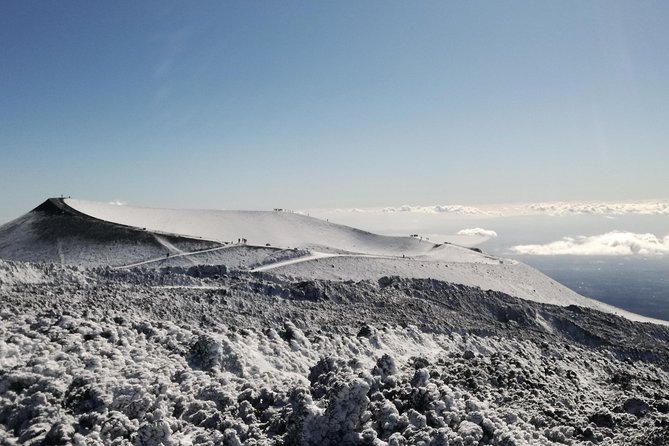
- Summit craters seen from a safe distance, with guidance on where to look and when to move
- Groups capped at 15, which matters a lot when conditions are slick
- Guides from the alpine plus volcanology world, so you get both safety and science
A 3,000 m Etna winter day, the way it feels on your boots
I love Etna in any season, but winter changes the whole mood. The air is crisp, the ground turns crunchy and slippery, and the colors shift to stark whites and dark volcanic rock. What you’re really buying is a rare mix: physical challenge plus a front row seat to how Etna looks when it’s quiet but still active beneath the surface.
You go with a small group and a guide who understands both mountain conditions and volcanic terrain. That matters because winter on Etna is not just pretty. It is ice management, careful spacing, and knowing where the route is stable enough to walk.
Expect a demanding hike built around long stretches of snow, then crater viewpoints, then a return down to the cable car area. The day is guided from start to finish, but you still need to show up ready to work your way upward.
More Sicily island tours, Etna days, coastal boat trips, and food experiences to compare
From Piazzale Rifugio Sapienza to the 2,500 m start line
Your morning starts back at Ashàra Etna & Stromboli Guides, at Piazzale Rifugio Sapienza in Nicolosi (the meeting point is close to public transport). The start time is 9:00 am, and the whole experience runs about 5 hours.
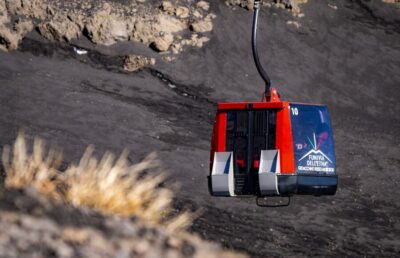
The first big moment is the ride up by cable car to 2,500 metres. This isn’t just convenience. It changes your hike from a long slog to a steep, high-altitude trek where the “real Etna” starts sooner. Once you reach altitude, you begin the trek at about 3,000 metres.
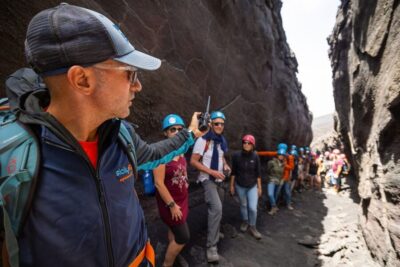
Included gear helps you get moving without overpacking. You’ll have access to a rock helmet, high-necked hiking shoes, and a trekking pole. In winter, those boots and poles aren’t optional extras, they’re what let you handle icy patches and uneven volcanic grit without constant sliding.
If you’re thinking about clothing, plan like this: you’ll be cold in the beginning, then warm once you’re climbing, then cold again when you stop. Layers win, and you’ll want gloves you can grip in and out. Some people find extra cold-weather items available on the day, but the only guaranteed items are the ones listed as included, so bring your basics.
The route up Etna: snow walking plus volcano stops you can actually picture
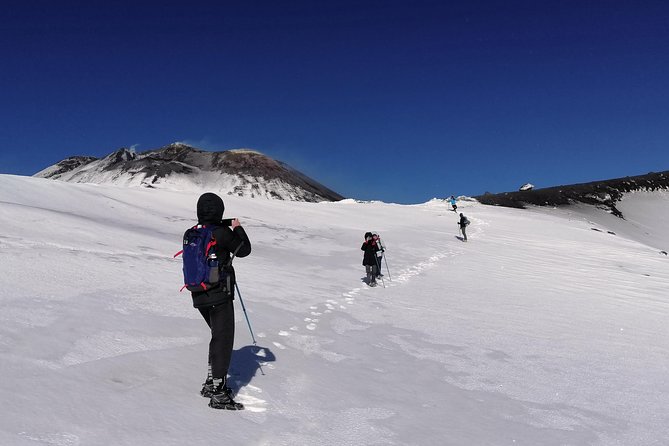
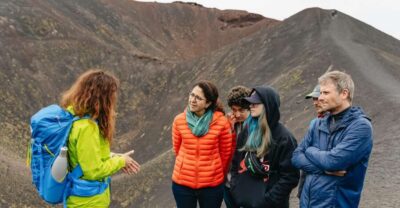
Once you’re at trekking altitude, the day becomes a mix of effort and observation. You’ll follow long snowy sections, then move between major volcanic areas that are easy to understand when someone points them out in plain terms.
You’ll head along the route that includes:
- a walk to the cone of the 2001 eruption
- time around Valle del Bove
- views and stops near the Barbagallo craters
Here’s why I like this routing for winter. On snowy Etna, the terrain can feel similar mile to mile. Adding specific volcanic features gives your mind something to hold onto, so the hike doesn’t feel like one long grind. It also helps you understand what you are looking at, instead of just seeing dark rock and white snow.
Stop feel: cable car zone versus trekking zone
At the cable car portion, you’re mainly getting positioned and catching your breath before the harder work. Once the trek begins near 3,000 m, everything tightens up. Footing matters. Pace matters. Even the stops are short and purposeful, because staying still in the cold too long can turn your legs numb.
What the trek asks of you
This is described as suitable for expert hikers because ice and snow are part of the route. In practical terms, that means:
- you should be comfortable hiking on uneven ground
- you shouldn’t need help balancing on slick surfaces
- you can keep a steady pace for sustained uphill effort
Even if you’re fit, winter altitude can surprise you. Your lungs and legs work harder than on a summer hike.

Valle del Bove and the Barbagallo craters: where views turn into context
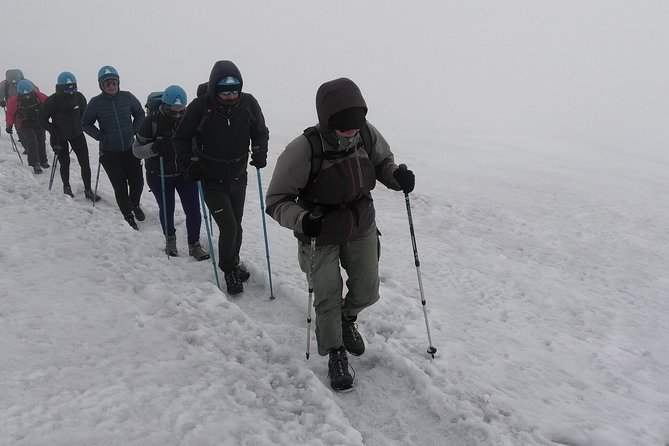
As you move through the middle part of the excursion, you’ll spend time around the zones that define Etna’s “big picture.” Valle del Bove gives you that classic Etna geometry, and the Barbagallo craters help you connect the volcanic landscape to real features you can point at.
The best part of having volcanology support is how it changes your questions. You start noticing details like why certain areas look broken or layered, and you begin to understand the difference between a crater you can name and a crater you can safely just observe. The guide keeps you oriented so you’re not guessing where the interesting parts are.
Also, because the group is small, you’re not stuck behind a crowd. That small size (max 15) means the guide can check footing and spacing without losing control of the route. On winter days, that’s a big deal.
Summit crater viewpoints, safe distance, and a possible lava flow add-on
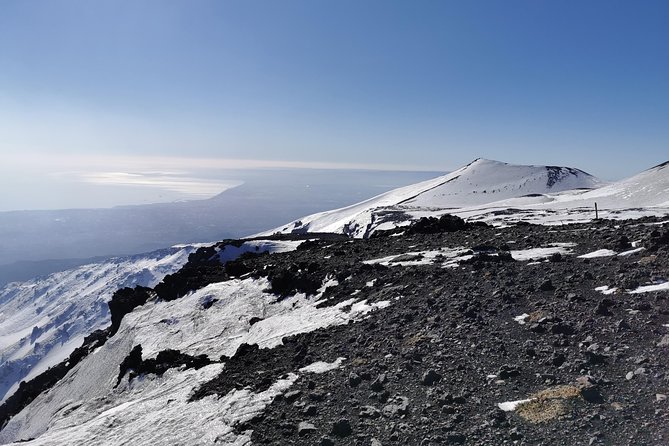
Near the end of the main trekking portion, you’ll admire Etna’s summit craters from a safe distance. This is one of those moments where the winter visuals are stark and the volcano feels close, but you’re not walking right up to hazard zones. The “safe distance” is part of the experience value, because it keeps your day focused on observation rather than risky shortcuts.
Then there’s a possible extra: if snow conditions permit, you may visit a lava flow channel before returning. I like having this as a conditional element because it respects what nature decides that day. If conditions allow, great. If not, the core route still makes sense and you still get the big volcanic highlights.
For me, this section is where the day turns from hike to story. You stop thinking only about your next step and start looking at patterns: where the rock has been pushed, where channels guide the eye, and how the winter snow changes the way the terrain reads.
Guides, pacing, and why “up to 15” really matters
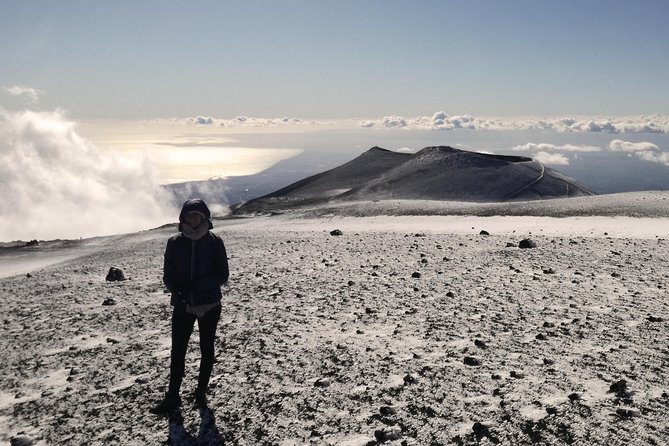
I’ve found that with winter hikes, the best guides do two jobs at once: they keep you safe, and they keep you mentally steady. Here, the guide setup is described as authorized alpine plus volcanological guidance, and that shows in how they run the day.
You might meet guides like Max, Simone, or Giuseppe. The common thread in what people describe is a mix of warmth and control. One guide style that stands out is pacing: you get stops at the right times, not just whenever someone feels like a break.
The pace also matters because the group is mixed. Some people come in thinking winter Etna is a tougher version of a normal hike, then realize it’s a different sport. When the group moves slowly enough for everyone to hear the explanations and walk comfortably, the whole experience gets better.
One more note I think you should take seriously: a guide can only control conditions for the group, not for your personal legs. If you feel “maybe I can do it,” be honest with yourself. Winter Etna punishes overconfidence.
Gear, water, and what to pack so you do not suffer
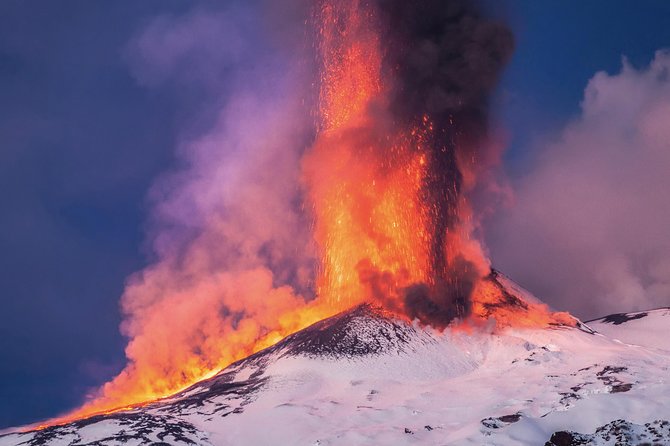
The tour includes a lot of the expensive winter essentials:
- Free rental rock helmet
- High-necked hiking shoes
- Trekking pole
- Alpine and volcanological guide
- Insurance
What it does not include:
- bottled water (plan for at least 1.5 litres)
- snacks, including a packed lunch
- return cable car ticket, which is €52 per person
That last point is the one that catches people mid-conversation. The itinerary includes returning to the meeting point by cable car, but you need to budget the €52 for that return. So do the math before you assume the advertised price is the full cost of the day.
My practical packing list for Etna winter
I can’t guarantee what you’ll get access to beyond the included items, so I’d pack for the cold like you’re going out for a long winter walk in a windy place. Bring:
- layers you can add and remove without fuss
- gloves you can grip well
- extra socks
- water plus something you like to eat, because you will need fuel
- any personal items that help your balance and comfort
Then let the helmet and poles do their job.
Price and value: what $108.84 buys, and what you should add
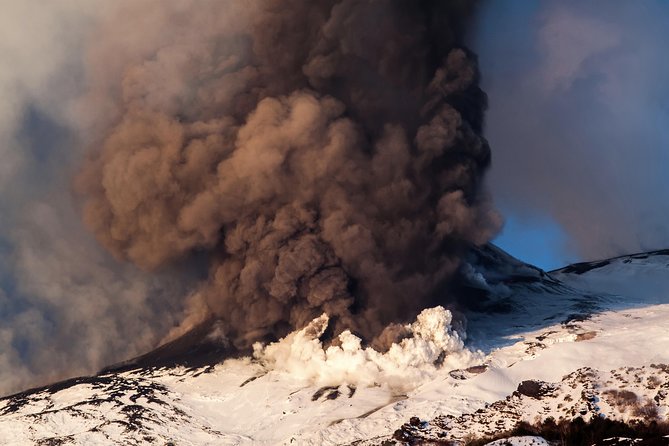
The price is $108.84 per person, booked for about 9 days in advance on average. For that, you get a guided, high-altitude winter trek with key gear rentals, insurance, and expert guidance that covers both mountain safety and volcanic interpretation.
Then add the known extras:
- €52 return cable car ticket per person
- water and snacks or packed lunch
So the real value question becomes: is the included hiking experience with specialist guides worth paying cable car return and feeding yourself? For me, yes, because winter logistics on Etna are part of the “product.” You’re not just going up and taking pictures. You’re walking in snow to specific volcanic points, with safety built in and gear handled for you.
Where I’d be more careful is if you’re price sensitive and also not sure you can handle the hiking difficulty. This tour is best when you’re confident in winter hiking. If you think you might be underprepared, you could end up uncomfortable in a way that ruins the fun.
Weather, wind, and why winter Etna can change the plan
This excursion requires good weather. If it’s canceled due to poor weather, you’ll be offered another date or a full refund. That’s not just “paper policy,” it matters because winter safety is weather-dependent.
Also, the experience needs a minimum number of travelers. If it does not meet that minimum, you’ll be offered an alternative date or a full refund. In low season, groups can be smaller or plans can shift to meet safe operating requirements.
If you hate uncertainty, consider booking this early in your Sicily trip window, so you have flexibility for a rebooked date.
Who should book this Etna winter trek, and who should skip it
This one is for people who want a real winter hike. The guidance says suitable for expert hikers, and it also notes you should have moderate physical fitness. Put together, that means you don’t need to be an athlete, but you should be ready for an icy, uphill day where footing matters.
You’ll probably love it if:
- you are comfortable hiking in winter conditions
- you enjoy volcano science and want to understand what you’re seeing
- you like small-group tours where the guide can manage pace and safety
You should think twice if:
- you struggle with steep or slippery trails
- you don’t handle cold well when you stop
- you expect an easy photo walk
And if you’re coming with family members who may not handle winter effort, plan for the fact that the hike can feel demanding even when the group keeps a careful pace.
Should you book Etna: winter excursion to 3,000 m?
Book it if you want an Etna day that feels like a real outdoor mission, not a drive-by viewpoint. The small group, the included winter gear, and the combination of alpine plus volcanology guidance make it a strong value if you’re ready for snow, ice, and altitude.
Skip it if you’re hoping for an easy day trip. This is a hike, in winter, at high elevation, with conditions that reward preparation and steady legs. If you match the fitness and comfort level, though, this is one of those Sicily experiences that stays with you long after the photos fade, because you didn’t just look at Etna, you walked through a winter version of it.
FAQ
Where does the tour start and where does it end?
The tour starts at Ashàra Etna & Stromboli Guides at Piazzale Rifugio Sapienza, 95030 Nicolosi CT, Italy. It ends back at the same meeting point.
What time does the excursion begin?
The start time is 9:00 am.
How long is the Etna winter excursion?
The duration is approximately 5 hours.
How high do we go during the tour?
You go up by cable car to about 2,500 metres, then you start trekking at around 3,000 metres.
Is this tour suitable for beginners?
The excursion is suitable for expert hikers due to ice and snow. You should also have moderate physical fitness.
What’s included in the price?
Included items are a free rental rock helmet, high-necked hiking shoes, trekking pole, an alpine and volcanological guide, and insurance.
What is not included?
Bottled water (at least 1.5 litres) and snacks, including snack and packed lunch, are not included. The return cable car ticket is also not included, and costs €52 per person.
Is there a return cable car?
Yes, the activity returns by cable car to the starting point, but the return cable car ticket is not included in the tour price.
How large is the group?
The maximum group size is 15 travelers.
What happens if weather is bad or I cancel?
This experience requires good weather. If it is canceled due to poor weather, you will be offered a different date or a full refund. You can cancel for a full refund up to 24 hours in advance; less than 24 hours before start is not refunded.
More Winter Activities in Catania
More Tours in Catania
More Tour Reviews in Catania
Not for you? Here's more nearby things to do in Catania we have reviewed
Mount Etna Volcano Tours, compared.
 ★ 4.8Catania: Mount Etna Morning or Sunset Day Trip with TastingFrom $704,028 reviews
 ★ 4.7Mount Etna: Guided Volcano Summit Hiking Tour with Cable CarFrom $1243,784 reviews
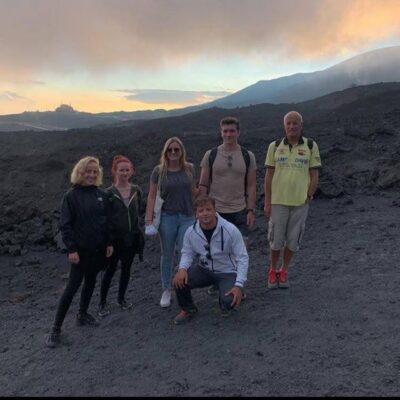 ★ 4.8Catania: Sunset Jeep Tour of Mount Etna and Lava Flow CavesFrom $712,113 reviews
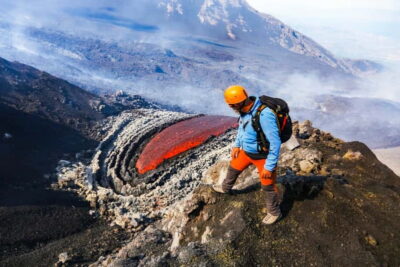 ★ 4.7Mount Etna: Trek to 3000m with cable car and jeepFrom $621,978 reviews
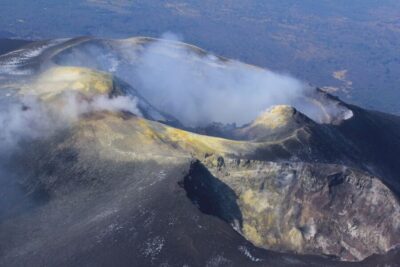 ★ 4.8Mount Etna: Summit Crater Trek with Cable CarFrom $771,875 reviews
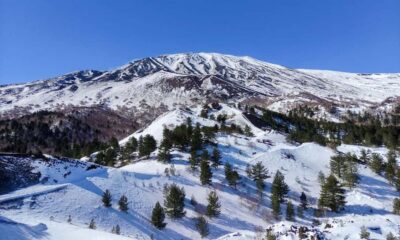 ★ 4.8Etna and Alcantara Gorges Full-Day Tour with LunchFrom $1051,766 reviews
 ★ 4.3Mount Etna: Roundtrip Cable Car and 4×4 Bus TicketFrom $971,602 reviews
 ★ 4.7Etna Volcano: South Side Guided Summit HikeFrom $671,545 reviews