
Reviewed · SYRACUSE & ORTIGIA TOURS
Syracuse, Ortigia & Noto
Neàpolis to baroque Noto is a satisfying switchback of Sicily. I like how this tour threads Greek ruins, Ortigia’s walkable streets, and Noto’s white-stone architecture into one smooth day. The payoff is big for the time. One watch-out: the day is long, and depending on city conditions you may get less on-the-spot guiding at specific moments, so you should stay flexible.
You start early from Catania, ride in a private vehicle, and keep the pace calm enough to actually look. I especially enjoyed the way the guide made the stops feel connected, and the snack and typical-product tasting adds a practical break instead of another rushed meal. The main consideration is comfort: you will be doing a fair amount of walking, including stone steps and uneven areas.
Key Highlights I’d Prioritize
- Small group, max 8 travelers, so questions do not get swallowed by the crowd
- Neàpolis guided time around the Greek Theater, Dionisio’s Ear, and the Latomie area
- Ortigia on foot, from Apollo ruins to Piazza Duomo, then Fonte Aretusa and the promenade
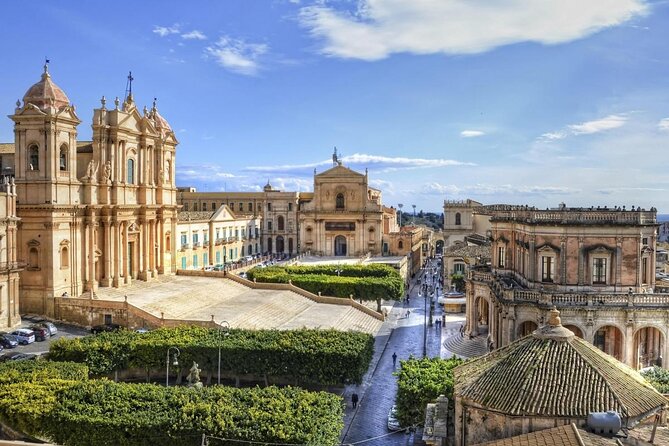
- Baroque focus in Noto, centered on the Royal Gate and major churches and palaces
- Food included at the right moment, with a Sicilian hot table snack plus water and Etna wine in Ortigia
- UNESCO Val di Noto context, so you understand why the buildings look the way they do
Syracuse to Noto in One Day: Why This Route Works
This is the kind of day trip that makes sense because it follows Sicily’s natural logic. You begin with the older layers, the Greek setting in Syracuse, then slide into the living streets of Ortigia, and finish in Noto where the town almost looks like it was carved for a postcard.
The timing is also built to help you see. A roughly 9-hour day with a 8:30 am start gives you daylight for walking and photos. You are not forced to sprint from one attraction to another. There is enough structure to keep you oriented, with time windows that let you pause, snack, and then move on.
And the group size matters. With a maximum of 8 travelers, you usually get better communication from the polyglot guide, and the rhythm is steadier. The experience provider, DREAMING SICILY, runs it with private transportation, so you are not stuck on a long public-transport shuffle. That sounds minor, but it changes how pleasant the day feels.
You can also read our reviews of more tours and experiences in Catania.


Neàpolis Archaeology Park: Greek Theater, Dionisio’s Ear, and the Latomie Mood
Stop one takes you into Neàpolis, the archaeological park outside Syracuse. This is one of those places where the setting does part of the job. You are not looking at artifacts behind glass. You are in the landscape where the Greeks built, cut stone, and staged performance.
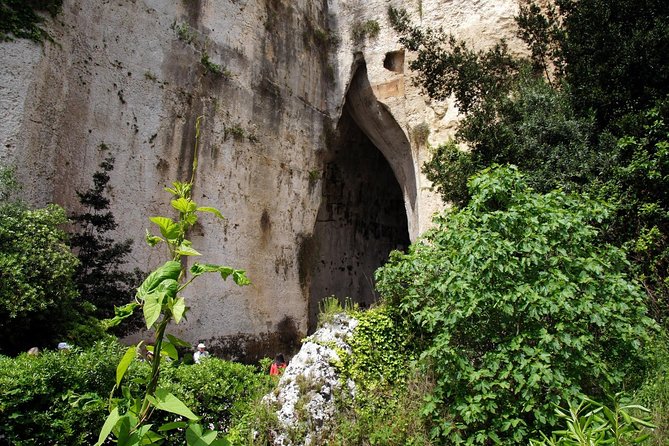
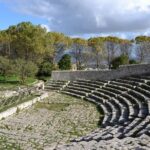
You get about 1.5 hours here, with the visit centered on major elements like the Greek Theater, Dionisio’s Ear, and the Latomie. Even if you do not consider yourself a history buff, you will probably love this stop because it feels physical. Stone theater seats give you a scale you cannot get from a photo. Dionisio’s Ear is one of those names that makes you want to test how sound carries, and it helps you imagine how the place worked.
A practical tip I value here: wear shoes you can trust on uneven surfaces. The park is outdoors and you will want stable footing so you can look around without thinking about where to put your feet. If you come on a hot day, plan to move slowly through the more exposed parts and use shady angles where you can.
What I find most satisfying is how this park connects to the next stops. Syracuse’s Greek roots set the stage for everything you later see in Ortigia. You start recognizing layers: Greek temple bases, reused sites, and a coastline that has hosted people for centuries.
A small note on tickets
The schedule lists admission ticket free for the main monument stops, but the tour details also state that entrance tickets are not included. Before you go, I recommend checking what is actually covered during confirmation. It can be as simple as whether the site entry is handled for you or you bring the pass yourself.
Ortigia Peninsula on Foot: Temple of Apollo to Piazza Duomo to Fonte Aretusa
Ortigia is where the day turns from ruins to real life. This part is the walking showpiece of the tour, and it is easy to understand why. You begin near the ruins of the Temple of Apollo, then drift through the kind of narrow streets that make you keep looking up and sideways.
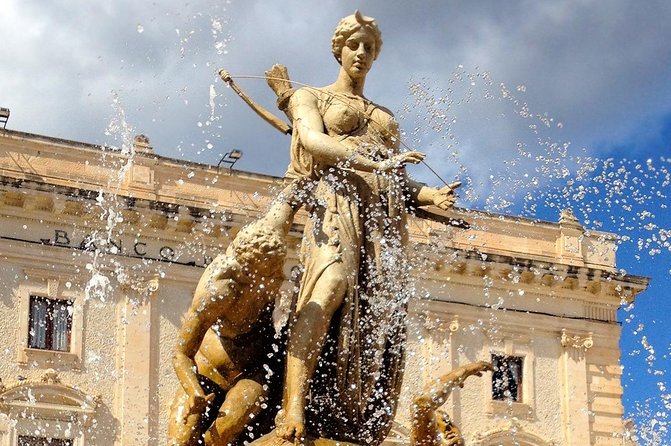
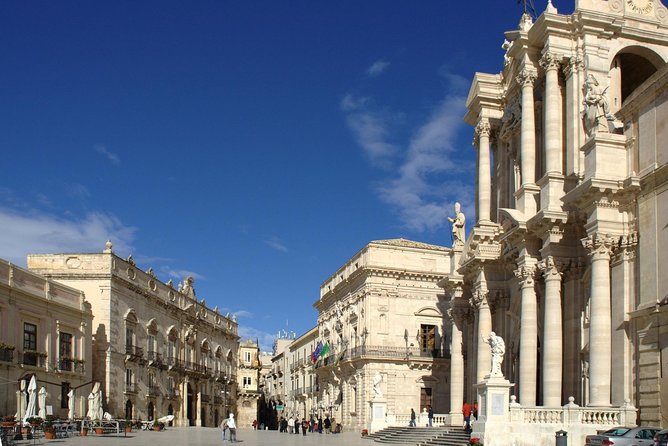
A highlight is Piazza Duomo. You reach the large white cathedral called the Nativity of Mary Most Holy. The key idea is that it sits on the ancient Greek temple of Athena. That single fact changes how you read the square. You are not just admiring a church façade. You are seeing a site that has been repurposed over and over, with each era building on the last.
From Piazza Duomo, the walk continues toward Fonte Aretusa and then out along the promenade. Fonte Aretusa is a great stop because it breaks up the architecture focus with something more scenic and calming. You also get a better sense of Ortigia as a peninsula, surrounded by water and shaped by breezes.
The snack and wine break is actually useful
This tour builds in a food moment that fits the pace. You get a rich snack based on a Sicilian hot table, plus water and Etna wine. It is not just a token bite. It is timed for when your energy is likely to dip after the morning walking.
If you prefer lunch elsewhere, you also have about an hour of free time in Ortigia for a sit-down meal in the alleys. That flexibility is valuable. Ortigia has plenty of restaurants, but you want time to choose without rushing.




Where Ortigia can slow you down
Ortigia’s streets are charming, but they can feel maze-like. If you are hoping for long, uninterrupted sightseeing with no detours, you might need to balance exploring with getting back on schedule. Also, this is one of the more walk-heavy sections, and you may encounter steps or uneven stone.
One more thing to keep in mind: if major city events affect parking or staging, you might get dropped with less live guiding in a specific moment. You still should be able to enjoy the walk, but I would keep your phone ready for map backup and just go with the flow.
Noto After Lunch: White Baroque, Royal Gate, and the Town as an Open-Air Museum
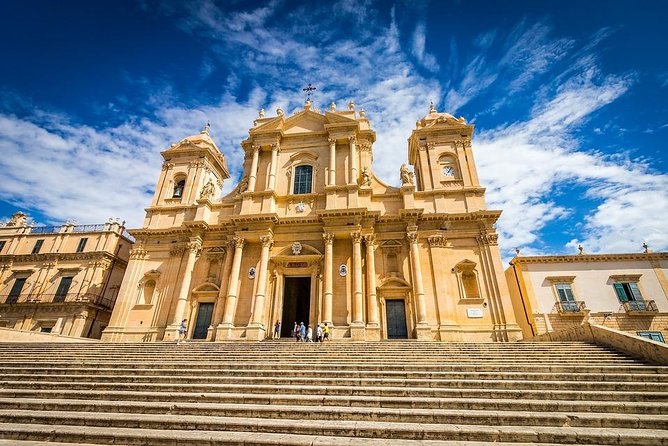
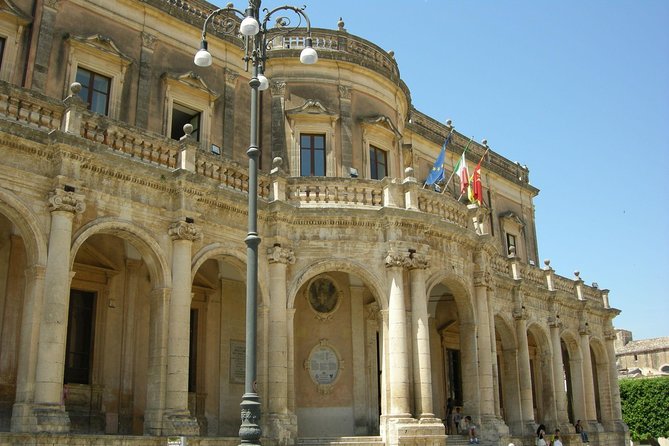
Then you head to Noto, the last stop, and this is where the day flips visually. Noto is part of UNESCO heritage tied to the Val di Noto area, and it earns the reputation for Sicilian baroque that you can see from far away.
You get about 3 hours here, which is the right amount of time. Noto is not a museum you rush through. It is a town where buildings, steps, and façades work together as a single scene.
What to look for in the Noto walk
The visit starts entering from the Royal Gate. From there, you move to big visual anchors like the Church of San Francesco, reached from its majestic steps, and then to the Palazzo Ducezio in Piazza del Municipio. The stop is designed so you do not just see one landmark, you pass a sequence of churches and palaces and start to understand why people call it baroque in stone.
You also do not miss the Mother Church area, including the Bishop’s palace and the Church of San Salvatore. And yes, you get to the Nicolaci Palace, famous for ornamental balconies representing Neo-Baroque style. This is the kind of detail that makes you slow down, even if you thought you were going to keep a quick pace.
The big theme: Noto looks like an open-air museum because the architecture is the attraction. The stone itself is part of the show. When you walk it, the buildings feel staged, like the town was planned to show off craftsmanship.
A pacing trick that makes Noto more enjoyable
If Noto feels like a lot, that is normal. I like using a simple strategy. Go a bit faster on the outward leg so you see the major sights clearly, then slow down on the way back to linger on façades and side streets. It helps you avoid the tired feeling that turns architecture walks into chores.
Also, plan for heat and sun. Noto’s sun exposure can be intense. If you are traveling in summer, bring water with you even if the snack provides a break, and take pauses when you can.
The Guide, the Pace, and What Included Really Means
This tour includes private transportation, a polyglot guide, snacks, and a tasting of typical products. That is the core value.
A guide matters most on days like this, because it is not just about where to go, it is about what you notice once you are there. In my experience, the best part of a good guide on an architecture-heavy trip is connecting details. In Syracuse, it helps you connect the Greek elements to what you see later in Ortigia. In Noto, it helps you see baroque as a language, not just a style.
Also, the tour is offered in English, and it is built for a typical range of travelers, with most people able to participate. Service animals are allowed, which is always good to see.
One important clarification: guides inside the monuments are not included, and a full lunch is not included. That does not mean you are wandering completely blind. It means the guide is focused on the overall experience, while specific site-level interpretation may not be covered. In practice, you will likely get guidance outside or during the walks, and then do some self-guided looking inside buildings.
The pace is a “calm but full” mix. You have scheduled time at Neàpolis, a structured Ortigia walk with food and optional lunch time, and then a dedicated Noto window. The result is that you see the big hits without burning every hour in transit.
Price and Logistics: Is $146.52 Good Value?
At $146.52 per person, this day trip falls into the category where you should think in terms of what you get, not just what you pay.
You are paying for:
- Private transportation from Catania
- A polyglot guide
- Snacks and typical-product tasting
- A full day of structured sightseeing at three major stops
Entrance tickets are listed as not included in the tour details, but the stop descriptions also state admission ticket free. Because those two statements conflict, your best move is simple: confirm what is covered at booking or confirmation. That one question can save you from surprises.
When the logistics line up, the value is clear. Without included snacks and wine, you would still spend money on meals and drinks to keep going. With the snack and tasting built in, you are less likely to end up paying for convenience food at a bad moment.
The other value play is the small group size. A max of 8 travelers keeps the experience personal enough to feel like a tour, not a bus ride with a lecture.
Should You Book This Syracuse, Ortigia & Noto Tour?
I’d recommend booking if you want one efficient day that hits the three biggest visual personalities of this region: Greek Syracuse, the walking streets and waterfront of Ortigia, and the baroque spectacle of Noto. It is especially good for couples, solo travelers who like guided structure, and anyone who wants a clear route without planning each stop.
Skip it or plan carefully if you have limited mobility or you know you struggle with long walks and steps. The tour includes multiple walk-heavy segments and outdoor sightseeing, so comfort matters. You should also be ready for possible extra walking if city conditions affect parking or drop-offs.
If your priority is maximum time in only one place, you might prefer a slower, single-town day. But if your priority is checking off the classics with a guide who helps you understand what you are seeing, this is a strong choice.
FAQ
What time does the tour start?
The start time is 8:30 am.
How long is the Syracuse, Ortigia & Noto tour?
It runs for about 9 hours.
Is pickup offered from Catania?
Pickup is offered.
How many people are in a group?
The tour has a maximum of 8 travelers.
What language is the tour offered in?
The tour is offered in English.
Are monument entrance tickets included?
The tour details say entrance tickets are not included, but the stop descriptions list admission ticket free for the main stops. Check what is covered when you confirm your booking.
Is the tour dependent on weather?
Yes. The experience requires good weather. If it is canceled due to poor weather, you will be offered a different date or a full refund.
More Tour Reviews in Catania
Not for you? Here's more nearby things to do in Catania we have reviewed






Syracuse & Ortigia Tours, compared.
 ★ 4.7Syracuse: Boat Trip of Ortigia Island and Sea CavesFrom $23937 reviews
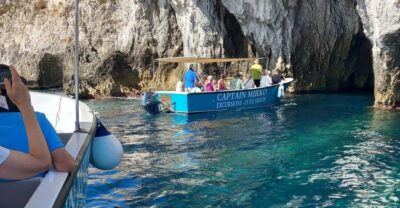 ★ 4.7Syracuse: Boat Tour with Captain Mirko, Snorkeling & CavesFrom $35746 reviews
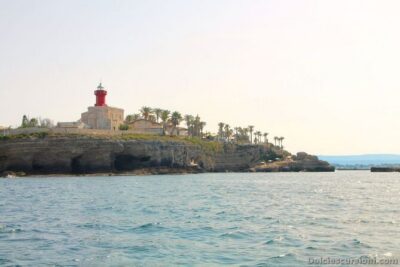 ★ 5.0Tour of the island of Ortigia and exploration of sea caves with baths.From $24668 reviews
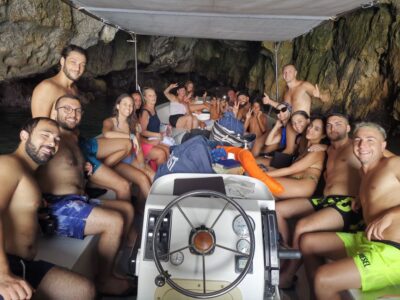 ★ 4.7Siracusa: Ortigia Boat Tour with Marine GrottoFrom $45617 reviews
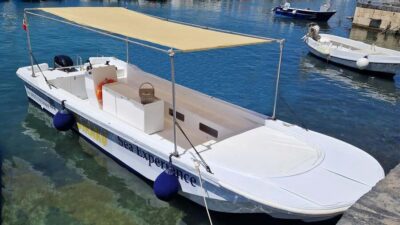 ★ 4.9Siracusa: Ortigia & Sea Caves Speedboat Tour with Swim StopFrom $34499 reviews
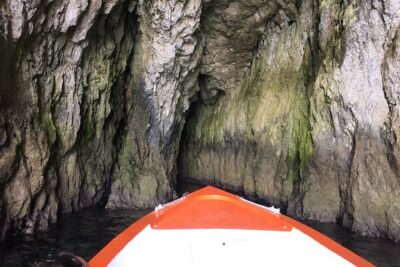 ★ 5.0Boat tour of Ortigia Island and sea cavesFrom $24407 reviews
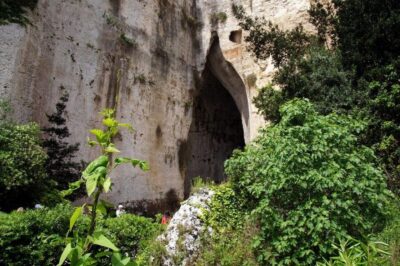 ★ 4.6Catania: Syracuse, Ortigia, and Noto Tour with BrunchFrom $112404 reviews
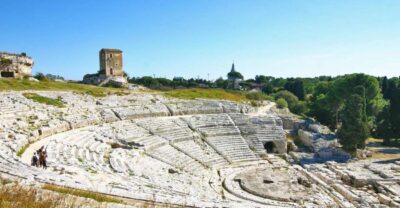 ★ 4.7Syracuse: Neapolis Archaeological Park Small Group TourFrom $26350 reviews
Browse the lists this tour appears in