
Reviewed · TRAPANI, ERICE & SEGESTA TOURS
Guided tour of the salt pans of Trapani and the Salt Museum
Trapani salt pans are a working landscape, not a dusty museum set. You’ll stroll through the WWF-protected reserve where sea water turns into salt, then step into the Museo del Sale to connect the crystals on the ground with the people and tools that made them for generations. The colors alone make it feel special, from white salt to pink tanks to clay tones.
Two things I really like: you get hands-on salt farming context, not just photos, and the guides make the process easy to follow. One thing to think about: you need transport, since this stop is outside central Trapani and public transit is not something to count on.
Key highlights you should know
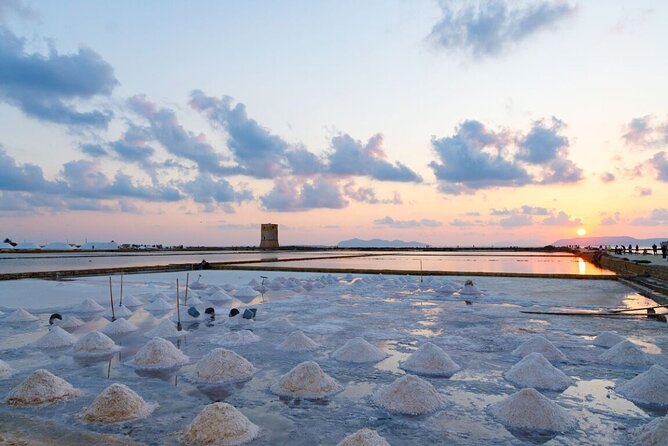
- WWF reserve walk in Riserva Naturale Saline di Trapani e Paceco, with salt pans, sea, clay, and birds in the mix
- Tickets included for both the salt pan portion and the Salt Museum
- Hands-on salt-making viewing, including how sea water becomes salt in stages
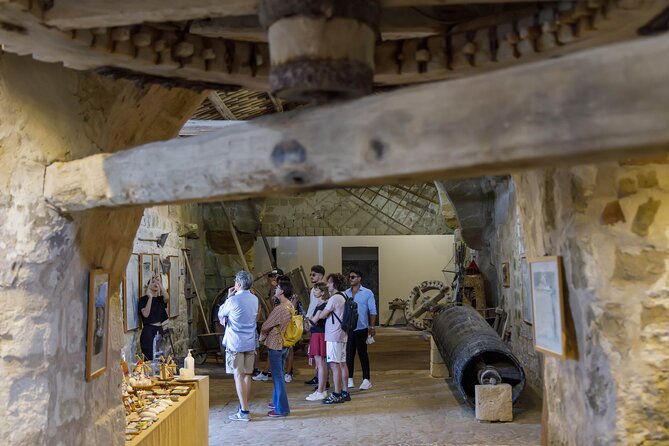
- Museo del Sale inside a historic baglio, with an ancient mill dating to the 1400s
- Small tasting mentioned in the experience format, tied to what you just learned
- Private tour for your group only, usually booked about 10 days in advance
Why Trapani Salt Pans Feel Like a Living Workshop

Sicily has a lot of scenery that looks good from a road. Trapani salt pans work differently. Here, the scenery is built by the process itself. The salt ponds, the shallow water, the drying areas, the clay channels, the long straight lines of production, all of it is part of a system that keeps producing.
That is why this tour works so well for first-timers. You’re not just seeing salt. You’re learning how the salt gets made, slowly, step by step, in a place that still does the job today. The route runs along the perimeter of the salt pans, so you get a natural rhythm: walk, look closer, then connect what you see to what it means in the transformation from sea water to salt.
And yes, it’s scenic. People talk about sunset here, because the water acts like a mirror and the whole scene shifts in light. If you can, plan your day so you are not rushing through this as a “quick stop.” Give it time to do its thing.
You can also read our reviews of more guided tours in Sicily


The 50-Minute Walk Through the WWF Salt Reserve
The first part takes you into Riserva Naturale Saline di Trapani e Paceco, where salt production and conservation live side by side. Expect a relaxing walk that stays focused on the changing colors and surfaces you see around the ponds: white salt, blue sea, gray clay, and pink tanks. It sounds almost like an artist’s color guide, but it’s actually the visual language of how the ponds operate.
This route follows the perimeter of the salt pan. That choice matters. Instead of tramping through production areas, you trace the working edges. You can look across to the banks where the water reflects the sky, then pivot back toward the tanks and drying zones. It’s a smart way to see the “before, during, and after” of production without feeling like you’re on a timed sprint.
You’ll also get context for why this place is protected. The experience is set in a WWF reserve, so there are protected plants and birds you might spot depending on the season and conditions. Even when you do not notice animals, you still get the sense that this is an ecosystem that salt farming has learned to work with, not fight.
A practical note: this portion is about 50 minutes, and it can feel more like “walk and observe” than “guided lecture.” That’s a good thing. You’ll remember it because you see the stages with your own eyes.
Getting Your Hands Into Salt-Making Steps
What makes this tour more than a scenic walk is the way it connects observation to action. The format includes learning the process that turns sea water into salt that everyone recognizes from the kitchen. You’ll follow the steps in sequence, watching how the different parts of the salt pans relate to each stage of production.
The tour also includes a hands-on moment where you can collect salt with your hands. That matters because salt in a shaker feels weightless and uniform. Salt from the pans has texture, crunch, and a very particular look, and you understand faster why it takes time to form. It also helps you understand what you are paying attention to: what is damp, what is drying, what is ready, and what is still part of the cycle.
If you like practical “how it works” explanations, you’ll enjoy the steady pacing here. One of the best review-style takeaways from this experience is that the guides do not just recite dates and facts. They explain the process clearly, without turning it into something heavy. You walk away with a real mental map of how the system functions.
Museo del Sale in a Historic Baglio, Plus a 1400s Mill
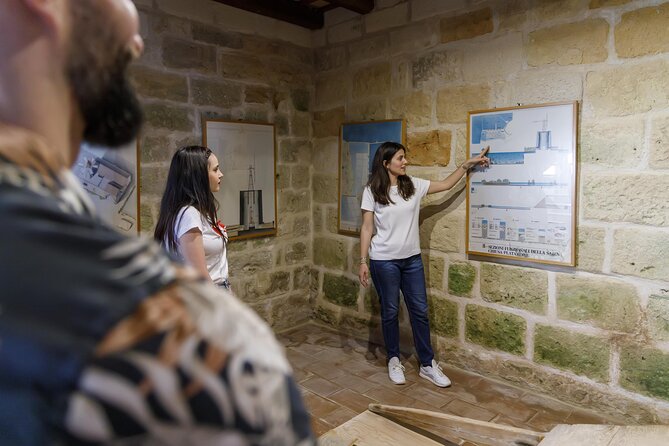
After the reserve, you shift from outdoors to history. The second stop is Museo del Sale, and it is not just a room full of salt jars. It focuses on salt’s long labor story and the family tradition behind it.
You’ll tour the museum and also visit an ancient mill from the 1400s. That mill gives the story a physical anchor. Instead of salt being a vague commodity, you see the machinery and working logic behind turning resources into usable product.
The museum is located inside an ancient baglio, which helps the place feel authentic. Bagli are rural complexes tied to agricultural life, and this setting fits the topic. Salt farming is seasonal and specific to the environment, so it makes sense to interpret it in a building shaped by rural production rather than a generic museum box.
Another detail that stands out is the human side. The guided portion retraces not only the tiring work of the salt pans, but also the history of the family who ran the operation for generations. That generational angle is one of the reasons this museum section can feel more personal than expected.
How long is it? About 25 minutes. For many people, that is a sweet spot. You get enough time to understand the big picture and see key tools, without feeling stuck in a slow gallery loop.
Small Tasting and Why It Fits the Story

You might notice the tour format includes a small tasting tied to the salt experience. That is not a random add-on. It works because you just learned what salt is doing and how it forms. When you taste something salty after seeing crystals form in the ponds, it makes the experience stick.
Also, tastings in rural food settings tend to be modest. You should think of it as a short, informative finish, not a full meal. The rest of your “wow” will come from the walk and the museum spaces.
If you are sensitive to taste experiments, ask about what you will be tasting when you meet your guide. The data you have does not specify the product, so treat it as a small sample rather than a guaranteed menu.
You can also read our reviews of more museum experiences in Sicily


Sunset Timing, Light, and What to Look For
Even if you love museums, the salt pans are where this tour really earns its keep. The reserve can look different hour to hour, and sunset is repeatedly highlighted as the moment when the setting becomes extra photogenic and calm.
If you can choose timing, consider booking closer to late afternoon. You will have a better shot at that mirror-like water look, plus softer light on the ponds and tanks. That does not mean the tour is bad in the daytime. It just means the light helps you see how dramatic the color contrast can be.
For your eyes and your photos, focus on the edges and reflections. The perimeter walk gives you repeated chances to look across water to sky. Those reflection views are the easiest to miss when you rush.
Price and Value at Around $21.77
At about $21.77 per person, this tour is priced like an experience, not just entry to a museum. The value comes from the combination: a guided walk plus the museum visit, with tickets included for both parts.
You are also getting two different “ways of learning.” Outdoors, you learn by seeing the process in a working landscape. Indoors, you learn by connecting tools and family history to what you just observed. If you like activities that create a mental link instead of stacking separate sights, this format is strong.
Duration is around 1 hour 15 minutes, so it fits easily into a day around Trapani or nearby areas. It also means you are not stuck for hours in a slow-moving plan.
One more value point: the tour is private in the sense that only your group participates. That typically makes questions easier and keeps the pace from feeling rushed. If you are traveling with kids, a private or small-group format can turn a “technical” topic into something more comfortable.
Logistics Near Trapani: Plan for the Drive
Here is the honest part. This activity meets in Paceco, at Via Salina Chiusa 1. That is not the center of Trapani.
So, plan transport ahead. The most common mistake is assuming you can hop on public transit. You should treat getting there as a car or arranged taxi trip. One review example called out that the location can be around a 15-minute drive from downtown Trapani, and they had to pay for an added round trip ride because they did not plan for the distance.
If you do not have a car, make sure you line up a taxi plan or a driver in advance. This is also where timing matters. If you are squeezed for time, you can end up paying more just to avoid being stuck.
Who This Tour Suits Best
This tour is a great fit if you want something real and place-based. You should enjoy it if you like:
- learning how everyday products are made in the real world
- scenery that is tied to work, not staged views
- guided explanation that stays clear and not overly technical
It also suits families. The walk is described as relaxing and suitable for all age groups, and you can learn the process without needing specialized knowledge.
If you dislike walking outdoors or you are very short on mobility tolerance, the salt-pans portion may require extra consideration since you will be walking along the perimeter and spending about 50 minutes outdoors. The tour does not list detailed physical requirements in the provided info, so you’ll want to assess your comfort level before booking.
Should You Book This Salt Pans and Salt Museum Tour?
Yes, if you want a high-value experience that combines salt-making in a real working reserve with a museum stop that adds historical context. The ticket-included format, the clear guided process, and the fact that only your group participates make it feel focused.
Book it with the right expectations: you are going to learn in stages, you will walk outdoors, and you should plan transport because this is not walkable from central Trapani. If you can time it for sunset, you’ll likely get the best light on the reflections.
If you want a checklist decision, use this:
- You are in Sicily for more than beach photos
- You do not mind a short drive outside Trapani
- You like guided learning that connects to what you see
If all three are true, this one belongs on your list.
FAQ
How long is the tour?
The guided experience is approximately 1 hour 15 minutes.
Where does the tour start?
The meeting point is Via Salina Chiusa, 1, 91027 Paceco TP, Italy. It ends back at the meeting point.
Is the tour offered in English?
Yes, the experience is offered in English.
What are the main stops during the tour?
You’ll visit the salt reserve area at Riserva Naturale Saline di Trapani e Paceco for a guided walk, and then the Museo del Sale for a guided museum visit.
Are admission tickets included?
Yes. Admission tickets are included for both the salt pan part (about 50 minutes) and the museum part (about 25 minutes).
Is there a tasting during the tour?
A small tasting is included as part of the experience format.
Is this tour private?
Yes. Only your group participates.
Do I need good weather for this experience?
Yes. The experience requires good weather. If it is canceled due to poor weather, you’ll be offered a different date or a full refund.
Are service animals allowed?
Yes, service animals are allowed.
What is the cancellation policy?
You can cancel for a full refund up to 24 hours in advance. If you cancel less than 24 hours before the start time, the amount paid is not refunded.
More Guided Tours in Sicily


More Tours in Sicily


More Tour Reviews in Sicily



Not for you? Here's more nearby things to do in Sicily we have reviewed







Trapani, Erice & Segesta Tours, compared.
 ★ 4.2From Trapani: Cruise to Favignana and Levanzo with lunchFrom $532,286 reviews
 ★ 4.2Segesta, Erice and Salt Pans Full-Day Excursion from PalermoFrom $821,791 reviews
 ★ 4.3From Trapani: Day Cruise to Favignana & Levanzo with LunchFrom $461,483 reviews
 ★ 5.0Boat Tour Egadi Day discover Favignana and Levanzo from TrapaniFrom $1391,183 reviews
 ★ 4.2From Trapani: Favignana and Levanzo Mini Cruise with LunchFrom $47814 reviews
 ★ 5.0Favignana and Levanzo, Egadi islands tour by boat from TrapaniFrom $114720 reviews
 ★ 5.0Boat tour to Egadi Favignana and Levanzo islands from TrapaniFrom $102614 reviews
 ★ 5.0Egadi Islands Tour: Favignana and Levanzo from TrapaniFrom $114607 reviews
Browse the lists this tour appears in