
Reviewed · CATANIA CITY & FISH MARKET TOURS
Catania: Private Tour with Arancino Tasting
Catania tastes like street food history. This private 2-hour walk pairs Ursino Castle architecture with a hands-on arancino tasting, so you get both monuments and the local snack people actually crave. I also like how the route connects major sights to the everyday city scenes around them, from Roman traces to a working fish market.
One heads-up: you are doing real walking. It is not suitable for wheelchair users, and you will want comfortable shoes if you want to enjoy the views without watching your step all the time.
Key things you will notice
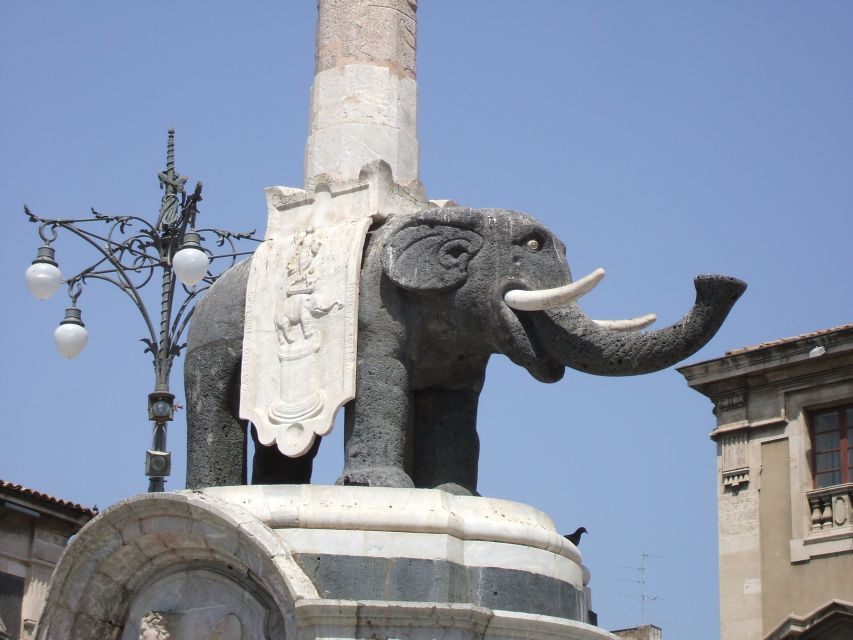
- Start at Piazza del Duomo by the elephant fountain, an easy landmark for meeting
- Ursino Castle (13th century) anchors the tour with Norman-Swabian style and great photo angles
- Via Auteri, Roman baths, and the fish market bring Catania to life with sights of sea creatures
- Sant’Agata Cathedral ties together the 1090 build and the post-earthquake rebuild in 1693
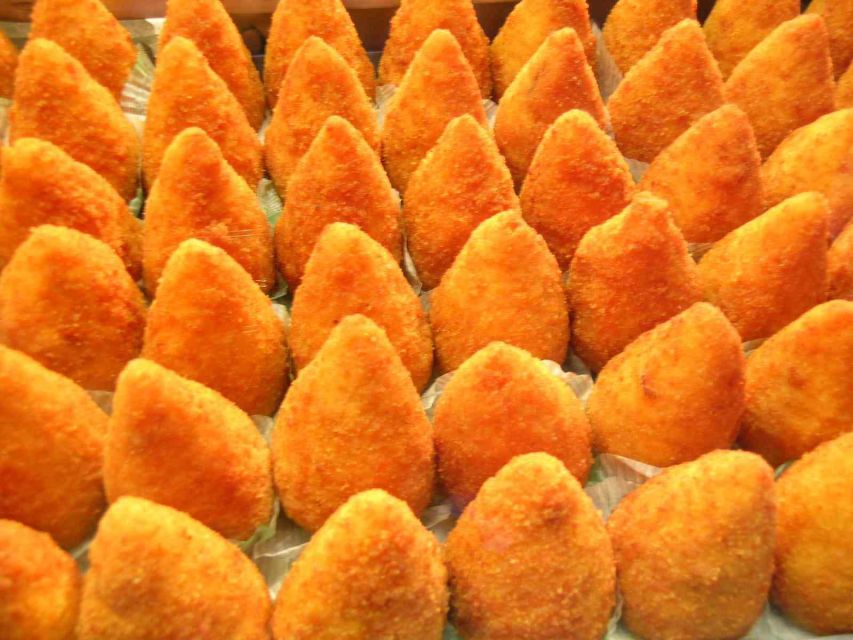
- Arancino tasting teaches the local eating rule, holding it from the bottom end
- Teatro Bellini and the end at San Nicolò keeps the walk moving toward opera and church interiors
Kickoff at Piazza del Duomo and the elephant fountain meet point
Most tours try to start somewhere central. This one starts right at Piazza del Duomo, next to the elephant fountain, which makes orientation simple from minute one. Even if you arrive a little unsure, you can spot the landmark quickly and get on with the day.
From the beginning, your guide sets expectations for what you are about to see, and that matters in a compact tour like this. In two hours, you want your stops to feel connected, not like a list of unrelated photos. Starting here also makes it easy to understand why the Duomo area is the spine of Catania’s walking life.
You can also read our reviews of more food & drink experiences in Catania



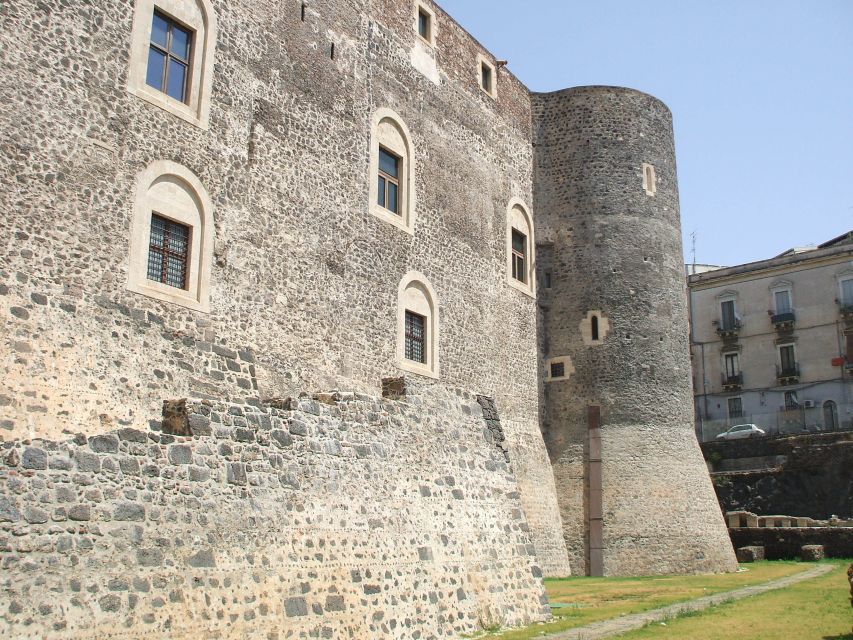
Ursino Castle: the 13th-century fortress that frames Catania’s mix
The tour’s first big architectural stop is Ursino Castle, a 13th-century stronghold with a style that blends influences you can actually see in the stonework. The best part is that you are not just looking at walls. You are learning how the design reflects the cross-currents that have shaped Sicily over centuries.
Bring your camera early. This is the kind of place where a quick snapshot does not feel like enough, because the angles change as you move around. The castle is also a strong “mental map” stop, so when you later pass through other areas, you start noticing patterns instead of only buildings.
Via Auteri and the Roman baths, then straight to the fish market
After the castle, you head through central streets that act like shortcuts between eras. You pass Via Auteri and you get a look at Roman baths, which helps you understand that Catania was never just medieval, it layered forward.
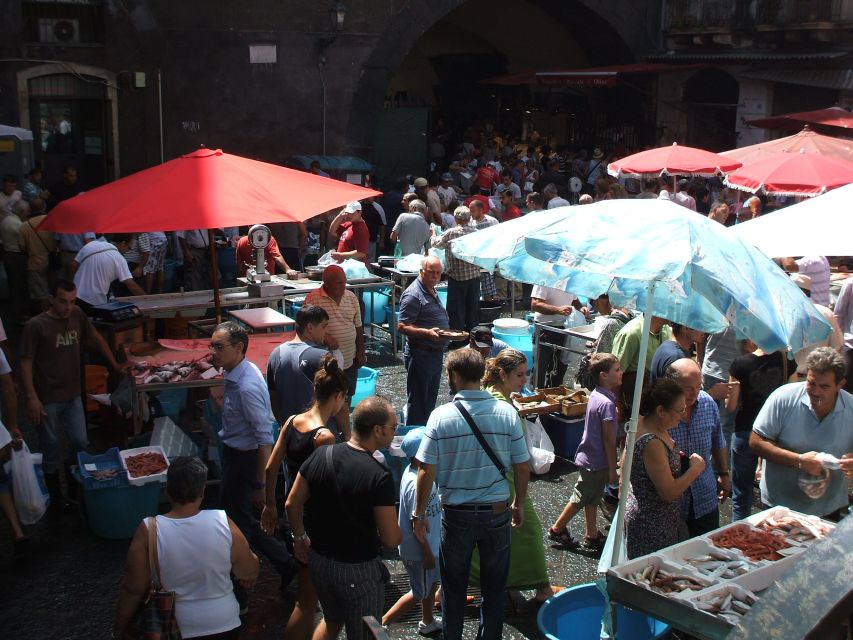
Then comes one of the most memorable sensory shifts: the fish market. You will walk past stalls and see an array of sea creatures up close, which is a far more real-world experience than looking at artifacts behind glass. If you like travel that feels alive, this is a big reason to book.
A small practical point: markets can be busy and sometimes crowded. Keep your phone and camera ready but be mindful where you stop, especially if you are near displays. You want to take pictures without blocking anyone’s path.
Piazza del Duomo baroque buildings and the path to Sant’Agata Cathedral
You circle back into Piazza del Duomo for the baroque atmosphere, including the iconic elephant fountain view. Baroque in Catania is not just decorative, it also helps explain how the city expressed identity after major events.
From there, you move to Sant’Agata Cathedral, built in 1090 above the Roman baths of Achille. That detail is a gift for your imagination. You are standing in a place that literally sits over older layers, and your guide can help you “read” the vertical story of Catania through architecture.
Then there is the 1693 turning point. After the earthquake of 1693, the cathedral was completely rebuilt, and that rebuilding is part of why the interior and overall feel matter so much. It also means you should pay attention to what looks finished and intentional, because it reflects restoration choices, not only original design.
Inside Sant’Agata: Vincenzo Bellini’s tomb and the Aragonese connections
Step inside and the cathedral stops being only a pretty exterior. You can see the tomb of Vincenzo Bellini, one of the composers tied to Catania’s artistic identity. The guide’s commentary helps you connect Bellini’s legacy to the city streets you are walking.
You will also see the presence of many Aragonese kings inside the cathedral. That is the kind of detail that makes this stop more than a photo break. It turns the church into a political and cultural “archive,” showing how rulers and faith intertwined in Sicily.
If you care about learning while you tour, this is where it pays off. The explanations tend to make you notice how each element fits into a larger story, even in a short two-hour format.
You can also read our reviews of more private tours in Catania

Arancino tasting: eat it with your hands, bottom end first
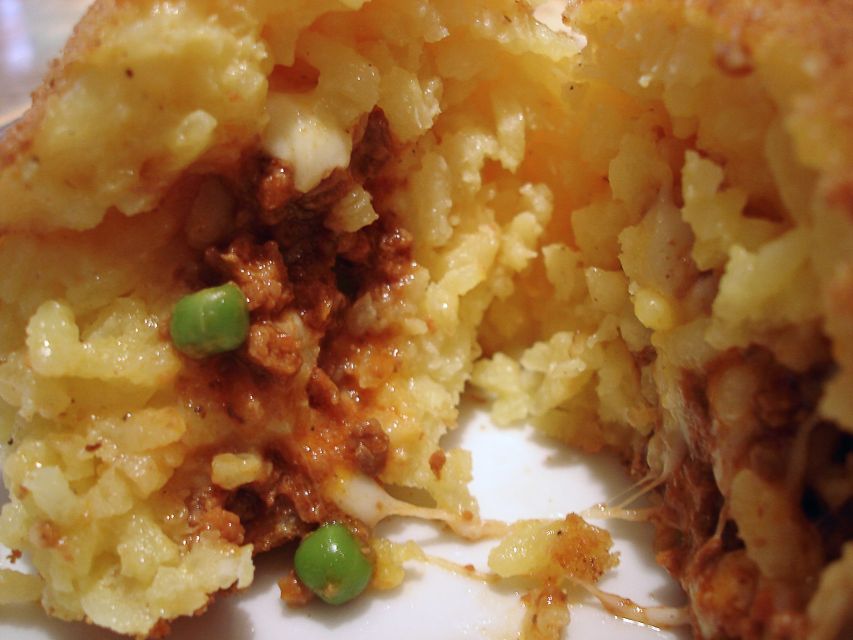
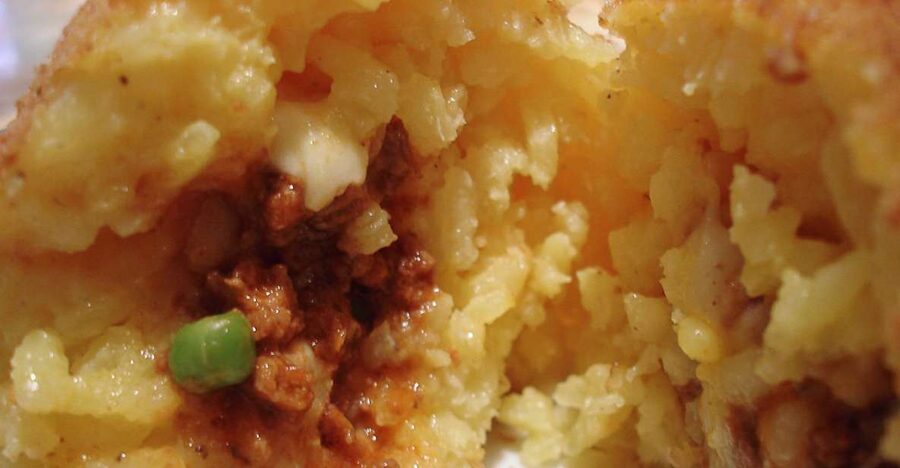
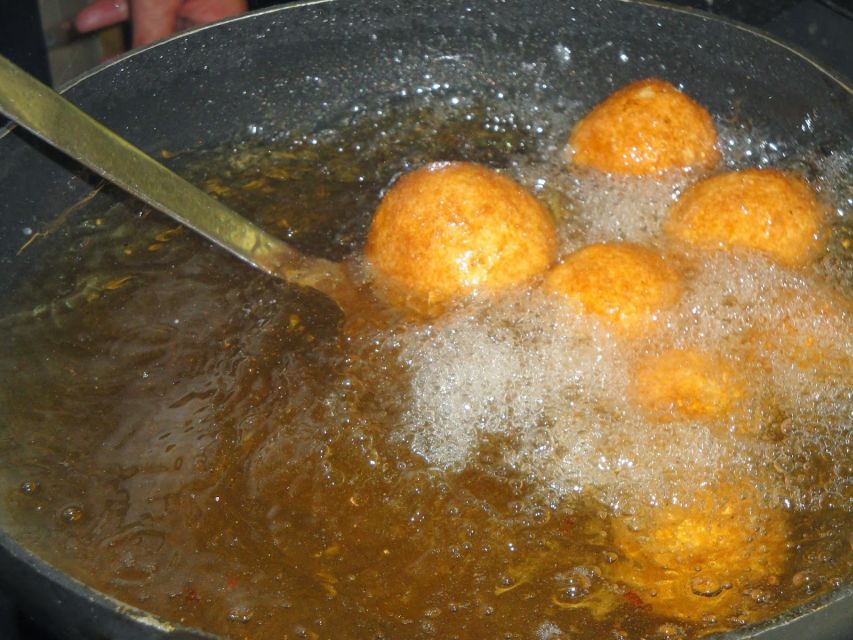
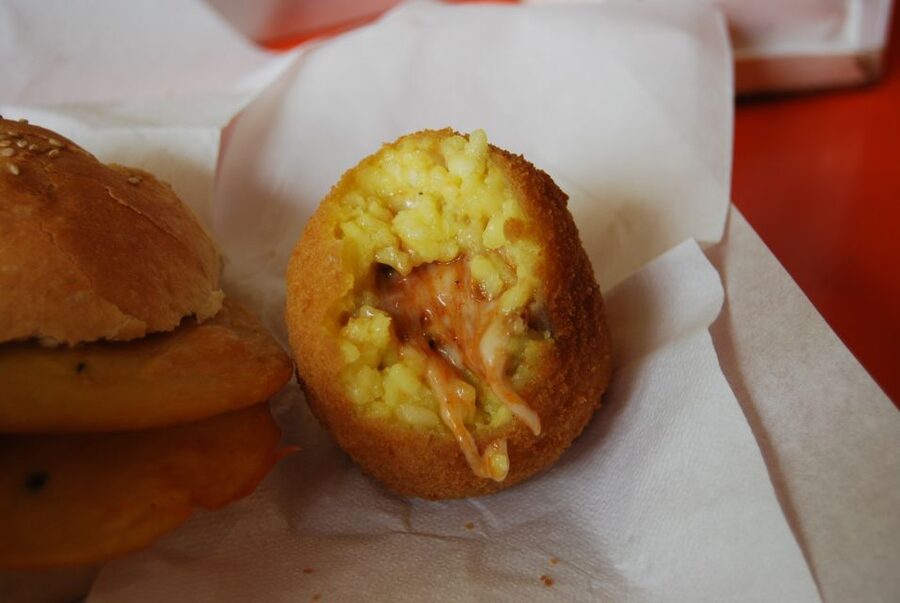
Then you get to the best kind of break, a food stop that still fits the tour’s pace. The tasting focuses on arancino, a Sicilian snack shaped like a drop and filled with rice and meat sauce. The food is simple, but the method is part of the culture.
The key rule is practical: you eat it strictly with your hands, holding it from the bottom end. This is not a “cute presentation” detail. It is the best way to keep sauce from escaping and to avoid a mess while you keep moving through Catania.
I like that the tasting comes right when you are hungry, after cathedral viewing. By the time you sit with the arancino, you have context, and the meal feels tied to place rather than like a random snack. It is also a quick reset from standing and walking, and it keeps the whole tour from dragging.
Teatro Bellini and Via Vittorio Emanuele: opera and big-building views
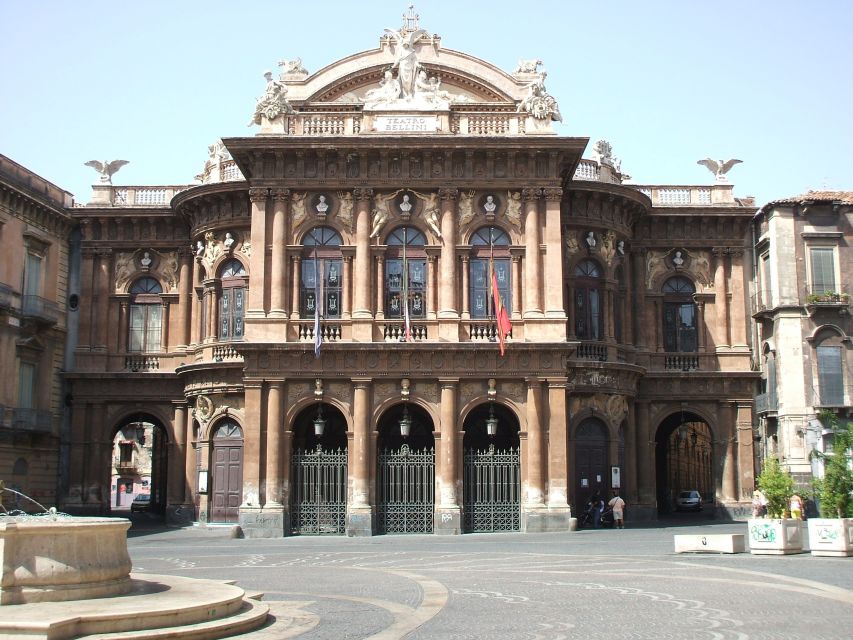
Next up is Bellini Theater (Teatro Bellini), where opera is staged. The building is described as one of the most famous theaters in Italy, and even if you are not an opera superfan, you will still appreciate the scale and presence.
Your guide will point out what to look for, but you should also look with your own eyes. Take photos from the spots that let you capture both the façade and the street context. A theater looks different depending on where you stand, and the best angle tends to show up as you walk along.
After that, you stroll along Via Vittorio Emanuele. This is the “stretch your legs and watch the city” portion, where the tour shifts from monuments into a more everyday rhythm. It is also a good moment to take in street energy at walking speed, not car speed.
Ending at the Benedictine monastery and Church of San Nicolò
The tour ends at the Benedictine monastery and the Church of San Nicolò. This part matters because it changes the mood. After opera grandeur and baroque weight, these church spaces let you slow down and look at spiritual architecture as lived space rather than only a spectacle.
Since the tour finishes back at the meeting point area, it stays easy to continue on your own afterward. That makes it a good choice for pairing with a longer meal later, or for adding a second walking loop when you still have energy.
Price and value: what $183.52 buys in two hours
At $183.52 per person for a 2-hour private group tour, the value is in focus. You are paying for a live guide, a curated route through key sights, and included arancino tasting. In other words, this is not trying to be a full-day pass through every major museum. It is a tight, guided “Catania orientation plus one food experience.”
What is included:
- Local guide
- Arancino tasting
What is not included:
- Roman theater fees
- Food and drinks
- Pickup and drop-off
That “not included” list is important for budgeting. You will still want water, and you may want extra snacks beyond the tasting. If you plan to visit anything that charges entry near Roman theater areas, you should expect separate costs, since Roman theater fees are listed as not included.
On the upside, private format means your guide can pace around your questions. If you care about the why behind the sights, this is often where you feel the money was well spent, because the time is guided instead of wandering.
Practical tips so you can enjoy the walk (not fight it)
You will be on your feet, so treat this like a walking tour with a food stop, not a sit-down sightseeing option.
Bring:
- Comfortable shoes
- Camera
- Water
- Comfortable clothes
- Credit card and cash
A few smart moves:
- Wear shoes that handle stone and uneven surfaces.
- Bring your camera early for Ursino Castle and Teatro Bellini photo moments.
- Plan to eat the arancino the local way, holding from the bottom end, so you do not spend the rest of the tour cleaning up.
One more fit detail: the tour is live and in English and Italian, and it is not suitable for wheelchair users. If that affects you, you will want to choose a different format.
Should you book this Catania private tour with arancino tasting?
I think this tour is a good bet if you want Catania in a short window and you like learning while you walk. The included arancino tasting is not an afterthought, it is built into the route right when you need a break. And the combination of Ursino Castle, Sant’Agata Cathedral, and Teatro Bellini gives you both the city’s art and the city’s appetite.
I would skip or reconsider if you strongly dislike walking or if you need wheelchair-friendly access, since this one is not suitable for wheelchair users. Also, if you want a long food crawl with multiple meals, this is only one tasting plus plenty of time for you to add your own stops afterward.
If you are the type of traveler who likes to understand places fast, this private format can feel like a shortcut to enjoying the city on your own afterward.
FAQ
Where does the tour start?
You meet your guide at Piazza del Duomo, right next to the elephant fountain.
How long is the tour?
The tour lasts 2 hours.
Is this a private tour?
Yes, it is a private group.
What languages is the guide available in?
The live guide is available in English and Italian.
What is included in the price?
The local guide and the arancino tasting are included.
What is not included?
Roman theater fees, food and drinks, and pickup and drop-off are not included.
Is pickup or drop-off provided?
No, pickup and drop-off are not included.
What should I bring?
Bring comfortable shoes, a camera, water, comfortable clothes, and both a credit card and cash.
Is the tour wheelchair accessible?
No, it is not suitable for wheelchair users.
Is there free cancellation?
Yes, you can cancel up to 24 hours in advance for a full refund.
How much does it cost?
It costs $183.52 per person.
More Food & Drink Experiences in Catania

More Tours in Catania


More Tour Reviews in Catania
Not for you? Here's more nearby things to do in Catania we have reviewed






Catania City & Fish Market Tours, compared.
 ★ 4.8Catania: Mount Etna Morning or Sunset Day Trip with TastingFrom $704,028 reviews
 ★ 4.8Catania: Sunset Jeep Tour of Mount Etna and Lava Flow CavesFrom $712,113 reviews
 ★ 4.9Catania: Mount Etna Trekking Trip off the Tourist PathFrom $781,351 reviews
 ★ 4.8Catania: Etna Sunset Tour with Pickup and Drop-offFrom $711,348 reviews
 ★ 5.0Mt. Etna and Taormina village full day tour from CataniaFrom $1181,155 reviews
 ★ 4.7From Catania: Mount Etna Sunset Tour with Tasting and CaveFrom $451,119 reviews
 ★ 4.8Catania: Etna Morning Excursion with Tasting and PickupFrom $67820 reviews
 ★ 4.9Catania: Amazing Etna Morning Tour with Pickup and Drop-OffFrom $81799 reviews
Browse the lists this tour appears in