
Reviewed · SYRACUSE & ORTIGIA TOURS
Syracuse: Ortigia Deep Dive Cultural Tour (max 6 Guests)
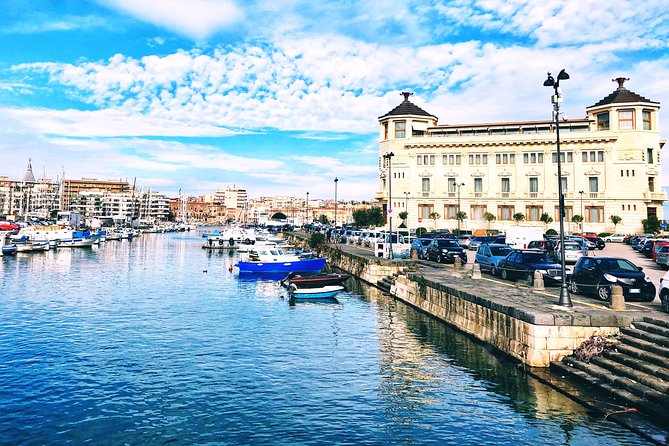
Ortigia rewards people who stop and look. This 90 minute cultural walk links key sights in Syracuse’s historic center into one clear story with time for your questions.
I love the format for its focus: compact stops, simple pacing, and a chance to tailor what you want to emphasize, from history to food and gastronomy themed options. The one drawback is also the main requirement, good weather, since this is an outdoor walking experience.
Key highlights at a glance
- Small group of up to 6, so you are not just another face in the crowd
- Flexible meeting time, useful when your day in Sicily is already packed
- Stop-by-stop commentary at the Temple of Apollo, Archimede Square, Piazza Duomo, Athena, and Arethusa Spring
- Ask questions during the walk, not only at the start or end
- Mixed admissions, with most stops free and Temple of Athena entry optional (fee not included)
A focused 90 minute Ortigia plan that actually feels doable
Ortigia can be a maze if you wander without a thread. This tour gives you that thread, then keeps the walking time short enough that you can still enjoy the streets afterward.
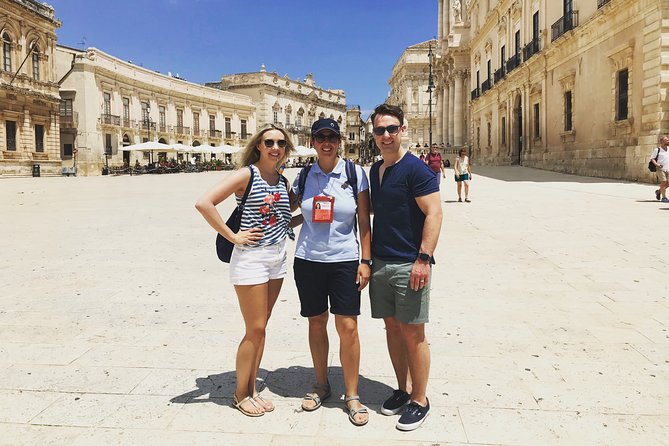
With a max group size of 6, the pace stays human. You are moving station to station, about 7 to 15 minutes at each key point, which is perfect if you want context without burning half a day.
Another practical plus is the flexible start. You can pick the time of day you meet, which helps if you want to line this up around a meal or a busier daytime schedule. And because it is offered in English with a mobile ticket, it is easy to fit into a day without complicated logistics.
You can also read our reviews of more historical tours in Sicily


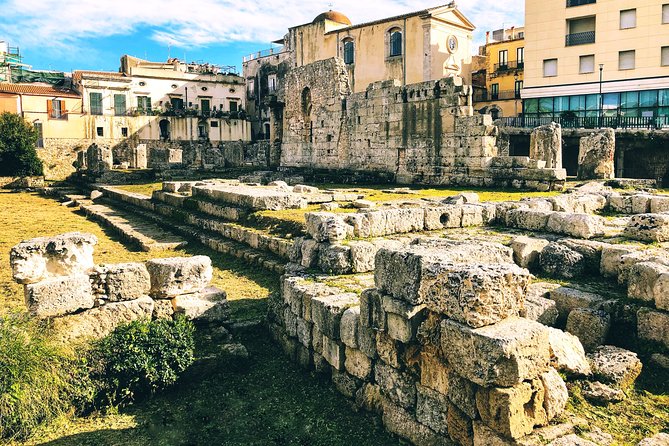
Starting at the Temple of Apollo (Tempio di Apollo): the oldest anchor point
You begin at the Temple of Apollo area, the Apollonion in Syracuse. The stop is brief, about 15 minutes, but it sets the tone by grounding the walk in early Greek roots, specifically the temple’s early VI century BC timeframe.
What I like about this opening is the way it helps you orient instantly. Instead of starting with the most photogenic street, you start with a real anchor. Once you understand what Apollo represents here, the rest of Ortigia’s layout starts to make more sense as you move through squares and buildings.
Admission is free at this stop, so you can focus on the explanations instead of checking tickets or searching for entry points. If you are the type who likes a quick historical framework before you roam, this first chapter is a good match.
Piazza Archimede and Diana’s Fountain: history you can see all at once
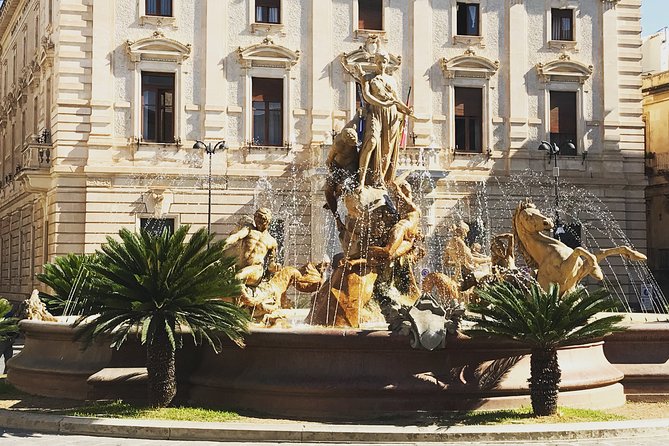
Next is Piazza Archimede with its Diana’s Fountain. This stop is around 10 minutes, and the goal is not to rush past it. The commentary centers on the historic buildings overlooking the square, so you look outward, not just at one monument.
This is a smart stop for orientation. Squares in Ortigia tend to act like small stages, and you can often grasp how the area connects by noticing where streets funnel toward the open space. With Archimede’s name and the fountain as visual anchors, you get a mental map fast.
Admission is free here too, which keeps the experience low pressure. You can spend more energy watching details and less energy figuring out whether you need tickets or which door to use.
Piazza Duomo: what to notice before you head inside elsewhere
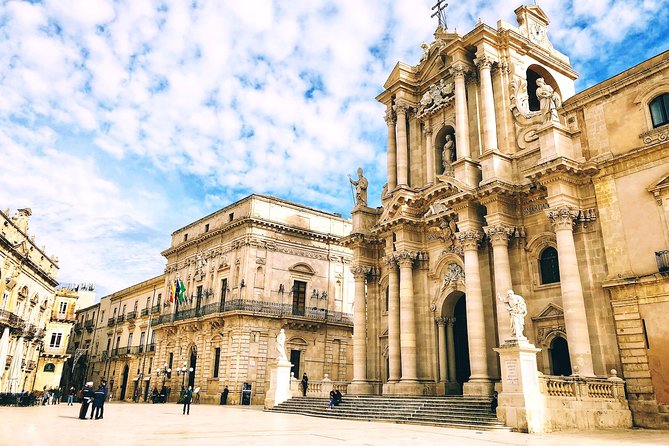
Then you move to Piazza Duomo for another 10 minutes. The tour focuses on the beautiful and important historic buildings overlooking the square. Even if you do not enter every site, this kind of elevated, square level explanation helps you read the architecture.
A practical way to enjoy this stop is to pick a couple of things to actively look for, then let the guide’s story steer you. Since the talk is aimed at the buildings facing the square, you will get more out of your eyes if you are comparing facades and levels rather than treating it as a single photo moment.
Again, admission for this segment is free, so you are not juggling costs at the same time you are soaking in details. If you want Ortigia to feel like a guided “how to look” lesson, this is one of the best moments to absorb that.
Temple of Athena inside the Cathedral: optional entry, clear payoff
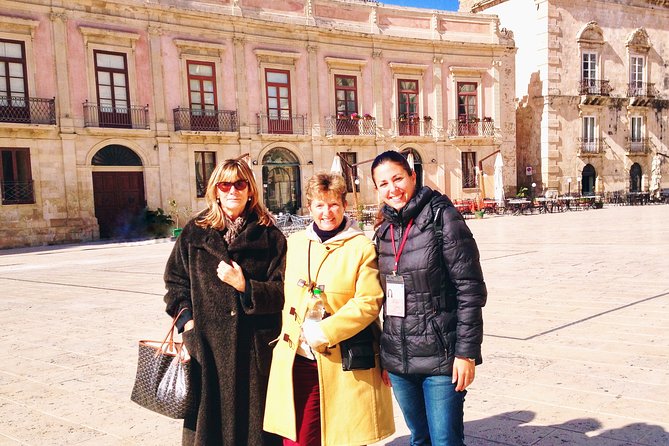
The next stop is the Temple of Athena, explained from both the exterior and the interior. This segment is about 15 minutes, and it includes optional entry for a fee. The key point is that you are not forced into paying to get the value of the explanation.
This is also where the tour becomes more than “look at buildings.” You get the sense of how the sacred space functions, and you get enough context to decide whether paying for entry fits your time and budget.
If you are traveling with limited time or you prefer to keep costs controlled, you can stay with the exterior portion and still get a solid story. If you are the type who likes interior visits, this optional fee is your chance to go deeper without the tour turning into a long museum detour.

Arethusa Spring (Largo Aretusa): the myth stop that slows you down
The walk ends at Arethusa Spring at Largo Aretusa. This is a shorter stop, around 7 minutes, but it is the kind of place that works best when you let the atmosphere do some of the work.
The guide explains Arethusa as a myth connected to the spring. That matters because the spring is not just a scenic endpoint. It is a story location, and it helps you connect the Greek myth layer to what you have just learned about earlier temples and sacred spaces.
Admission is free at this stop, and you finish near an easy, recognizable landmark. It is a nice ending rhythm: history and architecture to the last small scene, then a calm place to regroup and decide where to go next.
Customizable options: make the story match your interests
One of the strongest ideas here is that you can choose from a range of options. The tour is described as customizable, with choices that can lean toward gastronomy themed activities or toward historical sites.
You do not need to care about food to benefit from this, but it is a real advantage if you do. Ortigia is the kind of place where eating and architecture are intertwined in how people experience the neighborhood. If you want your trip to reflect local life, you want a guide who can steer the walk toward what you care about.
If you are more history focused, the customization gives you permission to prioritize temples, squares, and cathedral related context. Either way, the structure keeps you moving through the key points so you do not get stuck with a vague “we’ll see what happens” plan.
Enrica’s guide style is the reason to pick this one
A big theme in the feedback is the guide’s energy and how clearly the story comes through. Enrica, specifically, has been praised for being friendly and energetic, with commentary that brings Ortygia and its landmarks to life.
What you should care about is the practical side of that: the walk includes time for questions, and it is designed for real conversation. That is useful if you want clarification on why places matter, what different names refer to, or how the different stops connect.
If your travel style is to ask, you will like this format. It feels less like a lecture and more like a guided conversation in the street.
Value check: free stops plus one optional paid entry
A helpful way to measure value here is to compare what is included in the walk versus what might cost extra.
From what you are told for the listed stops, Admission Ticket Free applies at:
- Temple of Apollo (about 15 minutes)
- Piazza Archimede (about 10 minutes)
- Piazza Duomo (about 10 minutes)
- Arethusa Spring (about 7 minutes)
The only stop noted as having an extra admission element is Temple of Athena, where optional interior entry has a fee not included. That means the tour does not make you pay just to understand the core points. You can treat Athena interior entry as the splurge choice if you want it.
Also, a mobile ticket helps you keep the day friction low. You spend your attention on the streets, not on paperwork.
Timing and weather: how to set yourself up for a smooth walk
This experience runs about 1 hour 30 minutes. That is an ideal length in a historic core because it is long enough for meaningful context, but short enough that you can pivot if you want to linger elsewhere after.
The tour also requires good weather. If skies are rough, you may be offered another date or a full refund. To reduce stress, I suggest checking the forecast on the morning of your tour and planning a flexible buffer afterward, so you are not rushing into another timed activity.
Dress code is smart casual. In practical terms, wear comfortable shoes with solid grip. You will be on uneven historic streets and moving between squares, even if each stop is short.
Because it is near public transportation, you can join without driving across central Syracuse. That matters in Sicily, where parking and traffic can eat into your time.
Should you book this Ortigia cultural tour?
Book it if you want Ortigia to feel coherent fast. The biggest strengths are the small group size, the short stop pacing, and the guide time built in for questions. You will also like the structure if you want a guided story without committing to a full museum day.
Skip it, or at least reconsider, if you hate walking in open air or if you are traveling on a day with unstable weather. Since good weather is required, you might not enjoy it as much if you constantly need to dodge rain or wind.
If you do book, I would plan your day so you can wander after the spring endpoint. The tour ends at Arethusa Spring, and it is a great launch point for your next steps in Ortigia, especially if you want to keep exploring on your own with better bearings.
FAQ
How long is the Syracuse Ortigia tour?
It lasts about 1 hour 30 minutes.
How many people are in the group?
The tour has a maximum of 6 travelers.
What language is the tour offered in?
The tour is offered in English.
Where does the tour start and end?
It starts at Temple of Apollo (Apollonion), 96100 Syracuse, and ends at Arethusa Spring, Largo Aretusa, 96100 Siracusa SR.
What are the main stops on the route?
The tour includes Temple of Apollo, Piazza Archimede, Piazza Duomo, Temple of Athena, and Arethusa Spring.
Is admission included for the temples and sights?
Temple of Apollo, Piazza Archimede, Piazza Duomo, and Arethusa Spring are listed as free. Temple of Athena has optional entry with a fee that is not included.
Can I choose what time of day to meet?
Yes. You can pick whatever time of day you’d like to meet.
Is there time to ask questions?
Yes, the tour includes time for questions.
What is the dress code?
The dress code is smart casual.
What is the cancellation policy?
Free cancellation is available. You can cancel up to 24 hours in advance for a full refund, and cancellations within 24 hours are not refunded. The tour also requires good weather, and if it is canceled due to poor weather you will be offered a different date or a full refund.
More Historical Tours in Sicily


More Tours in Sicily


More Tour Reviews in Sicily
Not for you? Here's more nearby things to do in Sicily we have reviewed






Syracuse & Ortigia Tours, compared.
 ★ 4.7Syracuse: Boat Trip of Ortigia Island and Sea CavesFrom $23937 reviews
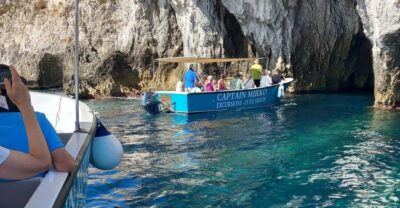 ★ 4.7Syracuse: Boat Tour with Captain Mirko, Snorkeling & CavesFrom $35746 reviews
 ★ 5.0Tour of the island of Ortigia and exploration of sea caves with baths.From $24668 reviews
 ★ 4.7Siracusa: Ortigia Boat Tour with Marine GrottoFrom $45617 reviews
 ★ 4.9Siracusa: Ortigia & Sea Caves Speedboat Tour with Swim StopFrom $34499 reviews
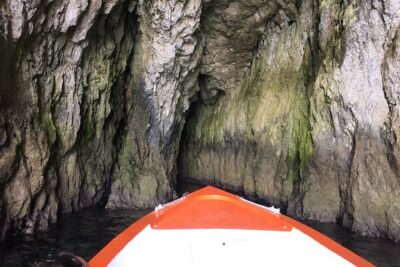 ★ 5.0Boat tour of Ortigia Island and sea cavesFrom $24407 reviews
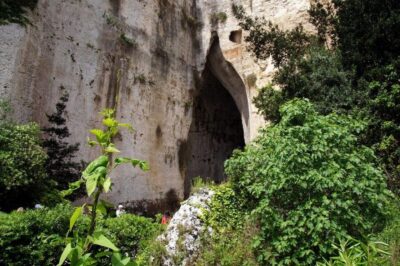 ★ 4.6Catania: Syracuse, Ortigia, and Noto Tour with BrunchFrom $112404 reviews
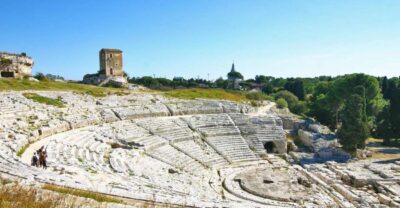 ★ 4.7Syracuse: Neapolis Archaeological Park Small Group TourFrom $26350 reviews
Browse the lists this tour appears in