

Reviewed · SYRACUSE & ORTIGIA TOURS
Syracuse’s Archaeological Park Private Walking Tour
Stone echoes in Syracuse, literally. This private walking tour in Neapolis gives you a guided route through one of Sicily’s most important UNESCO sites, with stops that connect Greek and Roman city life. You get a relaxed pace and personal attention, plus you can pick a time that fits your day.
What I like most is how quickly the guide helps you make sense of the ruins. In just two hours, you’ll see the Greek theater, the Nympheum fountain, the Latomie stone quarries, the Ear of Dionysius, and the Roman Amphitheater, plus hilltop views and local plant life along the way.
One thing to plan for: the park entrance fee is not included, so you should budget €16.50 per person on top of the tour price. Also, it is still a walking tour, so comfortable shoes really matter.
Key things to know before you go
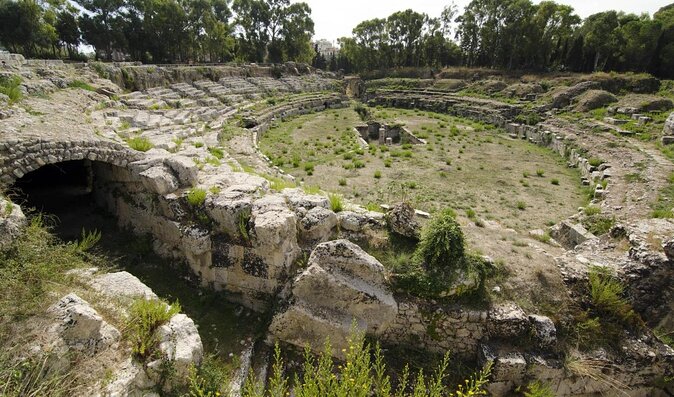
- A private route through UNESCO Neapolis with personal guide attention, not a crowded shuffle.
- Big-ticket sights in only two hours, from the Greek theater to the Roman Amphitheater.
- Latomie and the Ear of Dionysius are built into the walk, so you do not have to figure out the best order.
- Views plus plants, with the guide pointing out local flora and the viewpoints from the hill.
- Comfort kit at the start, with masks, protective gloves, and hand sanitizer provided for your group.
- Marco experience is a selling point, since the guide’s storytelling style made the park feel alive for visitors.
Why Neapolis feels like a story, not a site
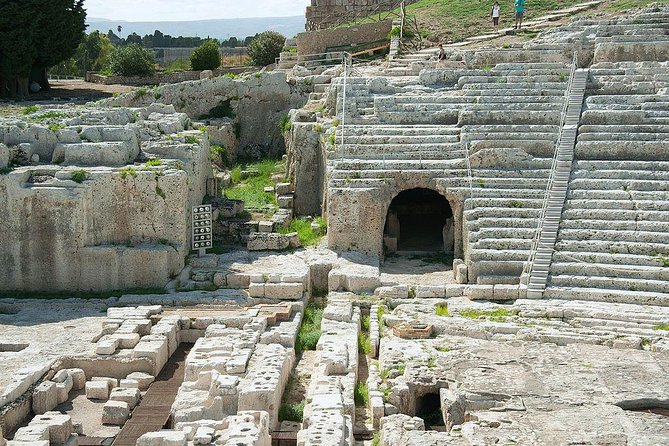
Neapolis is one of those places where the buildings do not just sit there. They connect, layer on top of each other, and explain how Syracuse grew over time. This tour is built to help you see that big picture without having to wander for hours and guess what matters.
You start in the Parco Archeologico della Neapolis and follow a route that hits the park’s headline features, with the guide explaining what you are looking at as you move. That is the big advantage of going with a private guide here: you get context fast, and you can spend your energy actually seeing things, not trying to translate stones.
And yes, the setting helps. You’re walking through an open-air archaeological landscape where light, height, and acoustics all play a role. You’ll get the best payoff when you let the guide steer you from one highlight to the next.
You can also read our reviews of more walking tours in Sicily



Entering the park with a relaxed private pace
The meeting point is at the entrance of Neapolis Archaeological Park, Via Luigi Bernabò Brea, 14, 96100 Siracusa SR, Italy. The tour runs about two hours and ends back at the starting point, so it is easy to plug into a day that already includes other Syracuse stops.
Because it is private, it is truly your party only. You are not waiting for a slow group to catch up, and you are not stuck watching the guide sprint ahead. That matters in ruins, where it is tempting to rush. The relaxed pace is a big part of why this feels satisfying rather than exhausting.
You can also choose between different tour times. That is a quiet but real help in Sicily, where you might want to start earlier for heat, or match your day with other sites.
One more practical detail: at the beginning of the excursion, each guest is given a mask, protective gloves, and hand sanitizer. If you prefer to keep things simple, you do not need to bring your own for this specific tour.
Stop by stop: the Greek Theater and the Nympheum fountain
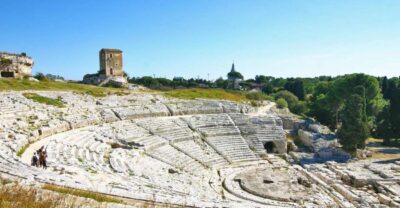
Your first major moment is the Greek theater, described as the biggest Greek theater in Sicily. Even if you have visited other ancient amphitheaters, it hits differently when you understand what it was designed to do. The guide’s job is to make those curved lines and seating areas readable in a way that a brochure never does.
Next comes the Nympheum fountain. A fountain sounds small compared to a theater, but it belongs in the same urban idea: the city was not only for performances and politics. Water features were part of public space, and the guide helps you see it as part of a functioning environment rather than an isolated relic.
This is also where the tour tone sets in. The guide does more than point. You get stories and legends, plus references to battles and daily life, so your brain starts sorting the site into a timeline. One guide name that comes up in people’s experiences is Marco, and the consistent theme is that he tells the park’s story in a way that keeps your attention moving from one stop to the next.
What to watch for: don’t just aim your camera at the largest structure. When the guide talks, shift your viewpoint. Ruins make more sense when you take in how one area relates to another, and the guide sets that up.
Latomie stone quarries: why these ruins feel different
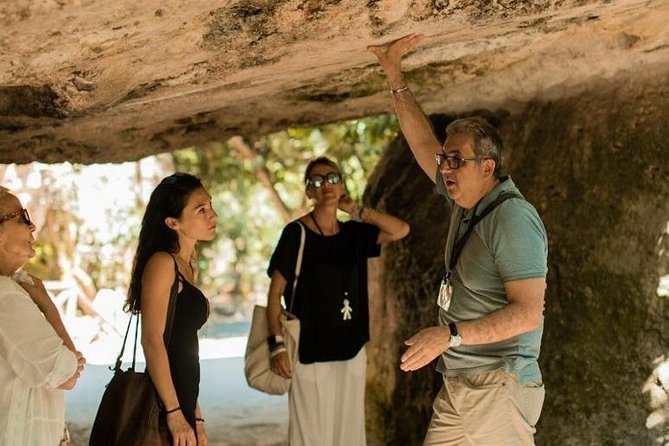
After the theater and fountain, you’ll head to the Latomie, the ancient stone quarries. These are not just background scenery. They add a different kind of realism to the park. Instead of only looking at entertainment or civic spaces, you’re seeing where stone came from and how the landscape was shaped by human work.
This is also a good moment to slow down mentally. When you are in ruins, it is easy to think everything was built for spectacle. Latomie pushes you to notice the practical side of the ancient city: resources, labor, and the impact of extraction on the landscape.
The tour keeps a comfortable rhythm, so you can take in the scale without feeling rushed. You’ll also see local flora as you go. The guide highlights plants in the park, which makes the walk feel less like an open-air museum and more like a place that still breathes.
The Ear of Dionysius: acoustics you can feel
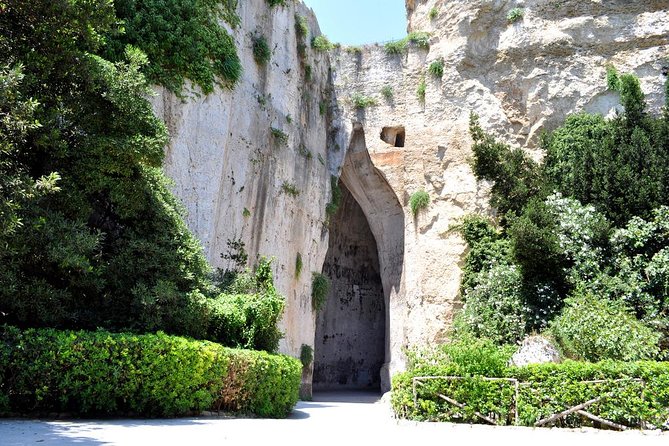
Then you reach one of the park’s most memorable features, the Ear of Dionysius. You’re likely to have heard of it in passing, but this tour gives you the specific angle that makes it interesting: its unique acoustics and shape.
Even without performing anything, the setting makes you pay attention to sound and geometry. The guide ties what you see to why it matters, and that transforms it from a quirky cave into a designed space with purpose.
If you care about how ancient people engineered spaces, this stop is a standout. It is also a good stop for families, because kids can focus on a physical gimmick without needing a long lecture. One review experience specifically mentioned the guide ensuring children stayed engaged.
Practical tip: wear shoes with solid grip. Cavities and uneven areas are part of the story here, and you want your footing to stay calm so you can concentrate on the explanations.
You can also read our reviews of more private tours in Sicily



Roman Amphitheater and hilltop views you do not want to skip
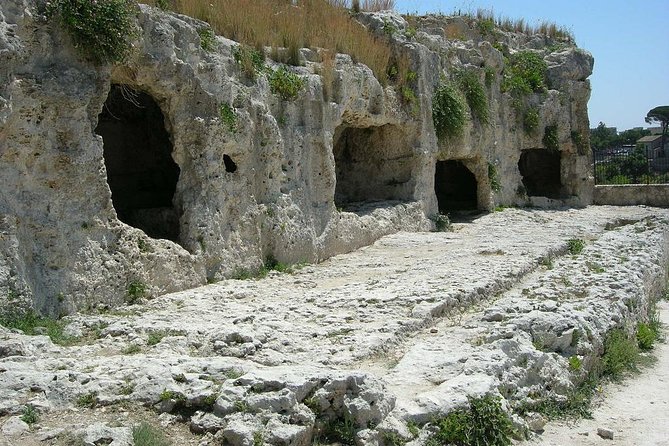
As the tour continues, you see the Roman Amphitheater. This is where the Greek-to-Roman connection becomes concrete. You’re not just looking at separate ruins, you’re watching an evolution in architecture and use.
The guide helps you compare what you see in the amphitheater to the earlier Greek elements, so the park starts to click as a layered city. The Roman Amphitheater is a major visual payoff, and it also gives your walk some movement, because your viewpoint shifts naturally as you progress.
Finally, the tour includes a beautiful panoramic view from the top of the hill, plus local flora along the route. This is not filler time. It is your mental reset, where the guide’s explanations land as you see how the site sits in the larger area.
It’s the kind of moment where you can look back and recognize what you covered. If you do one thing for yourself during the walk, make time to actually look out, not just take a photo.
What the price buys you, plus the entrance fee reality check
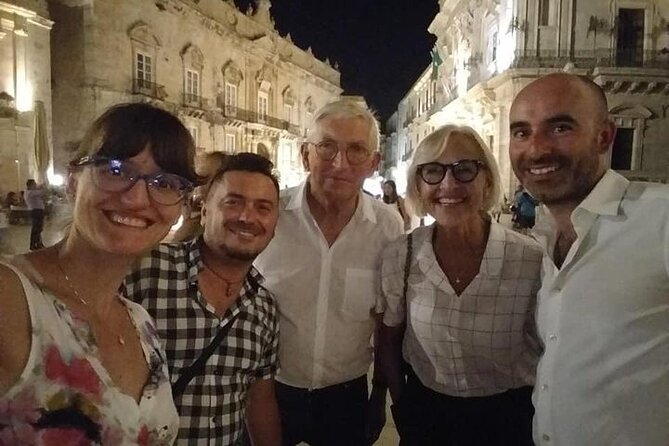
The tour costs $180.62 per person for an approximately 2-hour private walk in English. You also get a local, professional guide and a private format that is only for your party.
Here is the value angle that matters: for many UNESCO sites, the difference between a good visit and a great one is whether you can interpret what you’re seeing. For Neapolis, the “interpretation” part is huge, because the park is made of multiple structures with different functions and a mix of Greek and Roman elements. Paying for a guide saves you time and boosts understanding so you do not end up feeling like you visited a pretty open-air backdrop.
You do need to budget the park entrance fee separately: €16.50 per person is listed as not included. That means your total cost is not just the tour price. Also, food and drinks are not included, though you can purchase them.
If you are wondering whether it is worth it versus a self-guided visit, ask yourself how you like to tour. If you prefer reading in quiet spots and figuring things out alone, you might be fine without a guide. If you want the site to make sense fast, this is priced like a “pay for understanding” experience, not a barebones walk.
What you should expect from the guide style
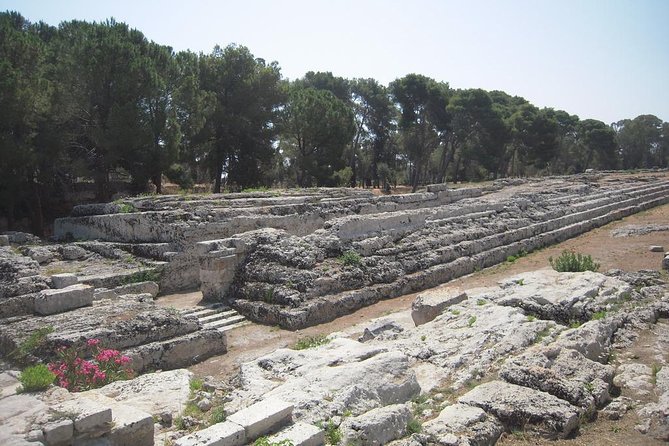
The guide approach is a big part of the satisfaction here. People praise the way guides tell stories, connect legends and battles to what you’re seeing, and even point out flora tied to the park.
One name that showed up clearly is Marco. The impression from experiences is that he balances facts with narrative, and that he knows how to keep people watching. Another helpful detail is that the guide can add French commentary too in some cases, based on experiences you might see, which can be a bonus if you know French.
Also, the tour is designed to be friendly and relaxed, not stiff and scripted. That matters in ruins, where you might be tempted to drift off. Here, the guide keeps the flow and helps you see the key features in order.
Who this tour suits best
This is a private tour, with a minimum of 2 adults required per booking. If you are traveling as a couple, it can work nicely because private attention means you can ask questions as you go.
It also works well for families. The park is visually striking, and one experience specifically called out that the guide made sure children could participate without getting bored. That usually means the explanations are paced and tied to what kids can notice in front of them.
Service animals are allowed, which is worth noting if you travel with one. Most travelers can participate, and the main requirement is sensible footwear.
If you are the kind of visitor who likes structured time, this tour also respects that. You see the top sights in about two hours, and the start and end at the same meeting point makes it easy to plan your next stop.
Small tips that make the two hours feel longer
A private tour can still feel rushed if you show up unprepared. So do a few simple things:
- Wear comfortable walking shoes. The route includes multiple features and terrain, and good footing keeps the whole experience calmer.
- Plan to cover the €16.50 entrance fee per person. It is the one cost surprise people might otherwise miss.
- Bring patience for walking pace. Two hours sounds short until you realize it includes major structures plus viewpoint time.
- If you want to buy food or drinks, check your timing. Food is available for purchase, but it is not included.
- Pick your tour time based on your energy. Since you can choose among time slots, match it to when you are most awake.
If you do these, you’ll get the full payoff: a clear route, the key highlights, and explanations that make the stones feel less like random ruins.
Should you book this private walking tour?
Book it if you want high-impact sightseeing without spending your day doing guesswork. The route makes sense, the time is tight in a good way, and the guide helps you understand what you are seeing, from the Greek theater and Nympheum fountain to the Latomie quarries, the Ear of Dionysius, and the Roman Amphitheater.
Skip it or consider a different option if you have a strong preference for independent exploring with no paid guide help. Also, factor in the entrance fee, because the tour price alone does not cover that part.
For most visitors to Syracuse, this is a smart way to turn Neapolis into a real story instead of a checklist.
FAQ
How long is the Syracuse Archaeological Park private walking tour?
The tour lasts about 2 hours.
Is the tour in English?
Yes, the tour is offered in English.
Where do I meet the guide?
You meet at the entrance of Neapolis Archaeological Park, Via Luigi Bernabò Brea, 14, 96100 Siracusa SR, Italy. The tour ends back at the meeting point.
Is the entrance fee included?
No. The Parco Archeologico della Neapolis entrance fee is €16.50 per person.
What is included in the tour price?
It includes a local, professional guide and a private tour.
Are hotel pickup and drop-off included?
No. Hotel pickup and drop-off are available on request.
Do I need to bring anything?
Comfortable walking shoes are recommended. Masks, protective gloves, and hand sanitizer are provided at the beginning of the excursion.
Is this tour suitable for children?
Children must be accompanied by an adult. The tour description says children can participate, and the format is designed to keep everyone involved.
What is the cancellation policy?
Free cancellation is available. You can cancel up to 24 hours in advance for a full refund.
More Walking Tours in Sicily



More Tours in Sicily




More Tour Reviews in Sicily



Not for you? Here's more nearby things to do in Sicily we have reviewed









Syracuse & Ortigia Tours, compared.
 ★ 4.7Syracuse: Boat Trip of Ortigia Island and Sea CavesFrom $23937 reviews
 ★ 4.7Syracuse: Boat Tour with Captain Mirko, Snorkeling & CavesFrom $35746 reviews
 ★ 5.0Tour of the island of Ortigia and exploration of sea caves with baths.From $24668 reviews
 ★ 4.7Siracusa: Ortigia Boat Tour with Marine GrottoFrom $45617 reviews
 ★ 4.9Siracusa: Ortigia & Sea Caves Speedboat Tour with Swim StopFrom $34499 reviews
 ★ 5.0Boat tour of Ortigia Island and sea cavesFrom $24407 reviews
 ★ 4.6Catania: Syracuse, Ortigia, and Noto Tour with BrunchFrom $112404 reviews
 ★ 4.7Syracuse: Neapolis Archaeological Park Small Group TourFrom $26350 reviews
Browse the lists this tour appears in