
Reviewed · SYRACUSE & ORTIGIA TOURS
Syracuse: Greek Theater and Neapolis Guided Private Tour
Syracuse’s ruins still talk back. This private guided walk through Neapolis Archaeological Park pairs major set pieces like the Greek Theater with spooky, story-rich stops such as the Ear of Dionysus and the Latomie. I like that the guide ties the sites to how Syracuse grew as a polis, not just dates and names.
I also like that it’s timed for a focused 2 hours, with a clear route through the theater area, the altar, and even the Roman Amphitheater phase. One thing to consider is that this is an outdoor park experience, and if the weather turns bad, your reservation may be modified or canceled.
Key highlights to look for
- Ear of Dionysus acoustics and myth, including the story tied to tyrant Dionysius
- Latomie stone quarries, once hard labor and imprisonment sites, now softened by greenery
- Greek Theater viewpoints, plus the Fountain of the Nymphaeum and the panorama over the large port
- Altar of Hieron II, the largest stone altar built in the Greek world
- Roman Amphitheater and gladiatorial games, so you see the city’s shift across eras
First stop: your briefing at the Neapolis entrance
This tour starts at the Neapolis entrance in Syracuse, where you meet your certified guide. Expect a short briefing before you step deeper into the archaeological area. It’s not a lecture you have to fight through. It’s a quick way to get your bearings fast, then you move on to the real payoff, the physical sites themselves.
The guide’s goal is to explain the origins of the city and how Syracuse developed its identity as a polis. That matters here because Neapolis is huge. If you walk it casually, the places can blur. With a plan, you start noticing patterns, like how myth, politics, and building projects all reinforce each other.
You’ll be with a private group, so the pace can feel more like a conversation than a scripted march. And since the tour is offered in multiple languages, it’s easier to follow the details even if ancient Greek myths are new to you.
You can also read our reviews of more guided tours in Syracuse


Latomie: ancient quarries, heavy labor, then shade and silence
After that initial briefing, you head into the Neapolis archaeological park and one of the most memorable stops: the Latomie. These are the ancient stone quarries where materials for building Syracuse were extracted for centuries. In other words, this wasn’t just a scenic backdrop. It was industry, and it shaped the city.
What I love about this stop is the emotional contrast the guide points out. These were former places of heavy work and imprisonment. Today, the Latomie have changed their faces with greenery. You can see how time can soften even places with a hard past.
If you care about the human scale of ancient sites, this is the part that does it. A Greek theater can impress you from a distance, but quarries make you imagine the day-to-day grind. The Latomie help you picture how Syracuse was literally constructed out of stone pulled from the same ground you’re standing on.
A possible drawback is that the Latomie are not a single landmark with one perfect photo angle. This is more of an atmosphere stop. If you want only monuments that feel instantly iconic, you may need to let the setting work on you.
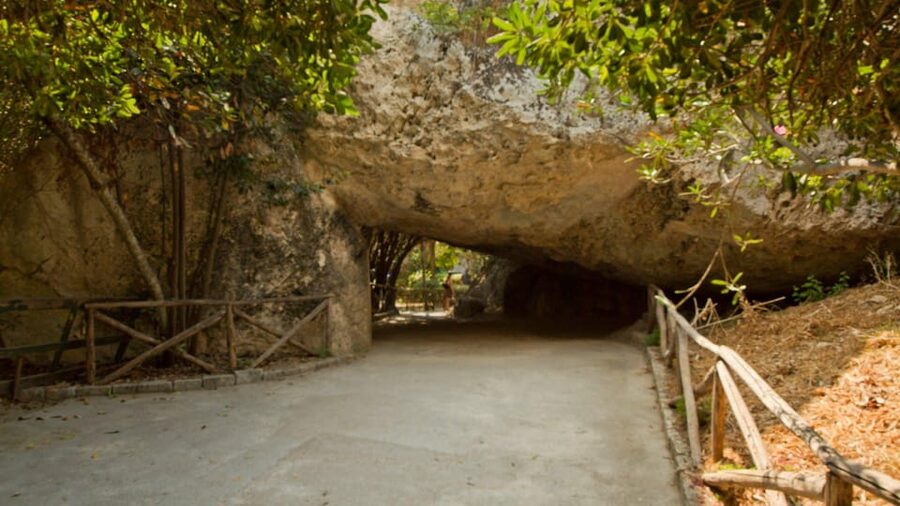
Ear of Dionysus: the cave with the tyrant story and the acoustics
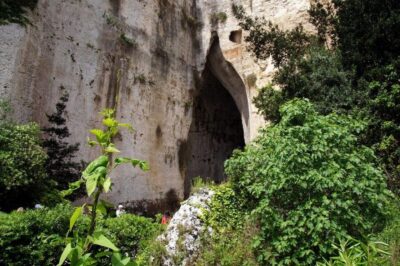
From the Latomie, you move to the Ear of Dionysius, a cave known for its distinctive shape and its particular acoustics. This is one of those locations where the myth and the engineering-like trick both get attention.
The guide explains the story of the tyrant Dionysius and the legend connected to this cave. You’re not just hearing a name. You’re being shown how Syracuse used dramatic narratives to frame power, control, and punishment.
The acoustics are the hook that pulls many people in, but the real value is how the cave fits into the larger picture. When you connect the Ear of Dionysus to the surrounding Latomie, the whole area reads like a system, not random ruins.
I especially like how the guide uses the cave to reinforce the tour theme: Syracuse wasn’t only temples and theaters. It also had mechanisms for coercion and symbolism.
Grotta dei Cordari: a view of the cave area and the next stage
Next you’ll see the Grotta dei Cordari. This is a quieter move in the itinerary compared with the Ear of Dionysus, but it’s part of the same Neapolis logic. The park is built so you can travel by feet between viewpoints and compartments, and the guide helps you understand why.
Here’s what to expect: you get the chance to keep absorbing the “cave and quarry” world of Neapolis, then you begin shifting toward the public stage of Syracuse, the theater zone.
If you prefer tours where every stop is equally loud and famous, you might feel this segment is more transitional. On the other hand, that transition is exactly what makes the overall route feel coherent.
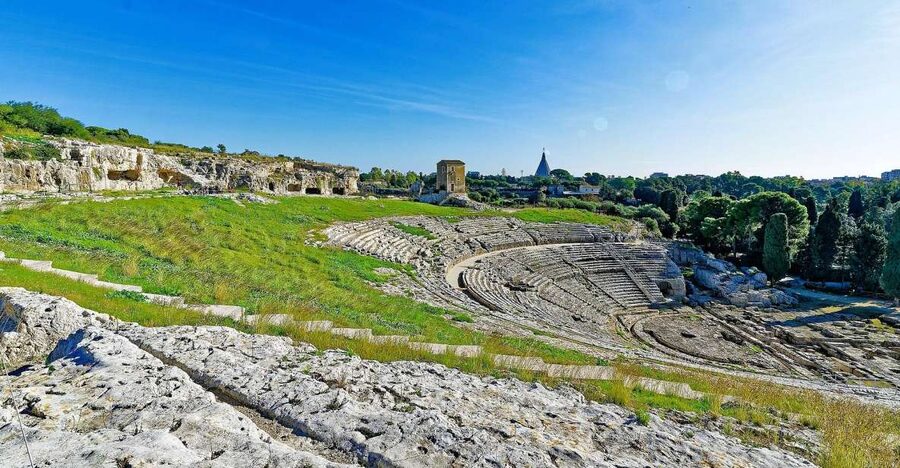
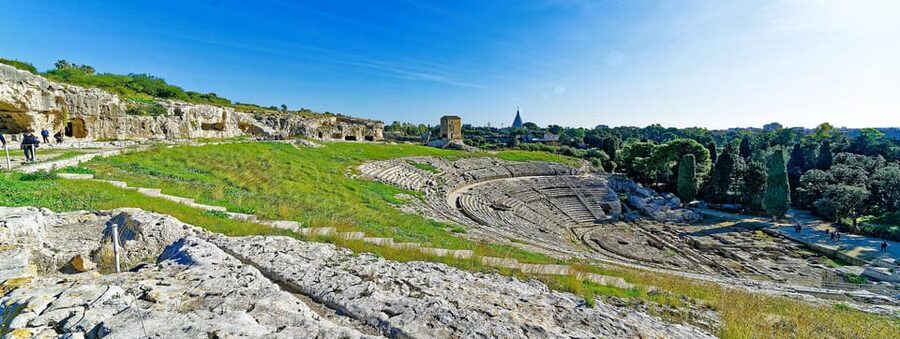
Greek Theater: one of the Mediterranean’s biggest, plus big views
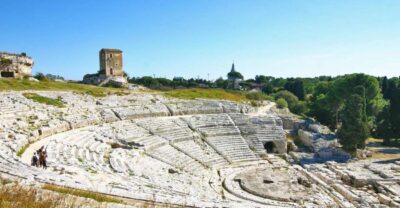
Then comes the centerpiece for many people: the Greek Theater. This is described as one of the largest Greek theaters in the Mediterranean, and the experience is built around more than just scale.
You’ll reach the upper terrace viewpoint, where the guide points out the Fountain of the Nymphaeum. From there, you get a panorama overlooking the large port. This is where the geography starts to make sense. Syracuse wasn’t only culture and myth. It was also a city connected to movement, trade, and the power that comes with being near water.
The theater area is also where your earlier context pays off. When you have the myths and polis background in your head, the theater becomes more than seating rows. It becomes a stage for identity, a place where stories and civic life could share space.
You can also read our reviews of more private tours in Syracuse





Nymphaeum fountain and the port panorama: why this viewpoint is worth your time
Many theater visits stop at the seats. This one gives you a reason to look outward. The guide takes you to where you can see the Fountain of the Nymphaeum and the wider port view.
I like this because it turns the theater into a living location. You start noticing how ancient people would have experienced the city, not just the building. The port helps you understand why Syracuse mattered, and why its rulers and institutions would invest in grand cultural structures.
It’s also a natural pause in the tour flow. After quarries and caves, the wide view feels like you’ve stepped back into the bigger story.
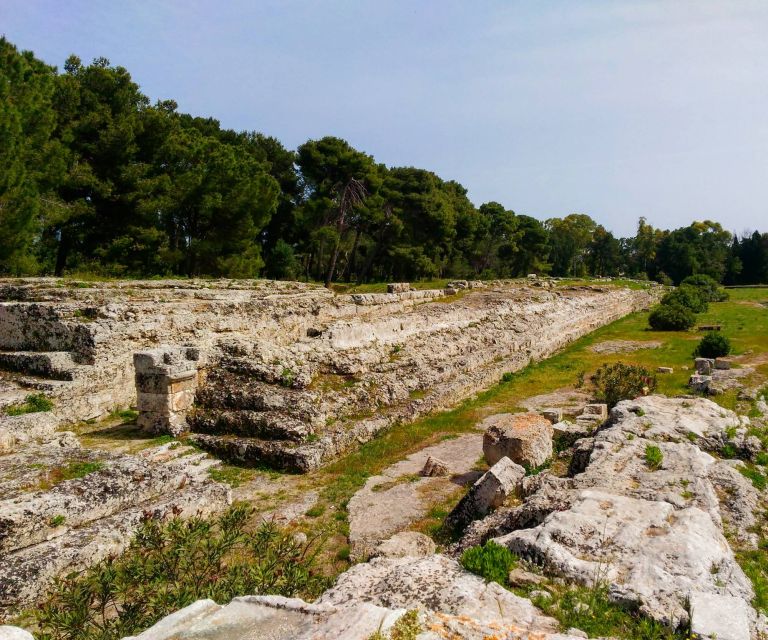
Altar of Hieron II: the largest stone altar in the Greek world
After leaving the theater, you move to the Altar of Hieron II. This stop is very specific in the description: it’s the largest stone altar built in the Greek world. That’s the kind of detail that helps you appreciate it quickly.
On this tour, the guide doesn’t treat the altar as a random detour. It’s positioned as a continuation of the sacred and civic spaces clustered around the theater area. It’s the logic of Neapolis expressed through monumental stone.
What makes it valuable for your visit is that it helps you connect the dots between public performance, religious symbolism, and political power. Syracuse had grand architecture for many reasons. This altar is one of the clearest reminders that ritual and state identity were linked.
Roman Amphitheater: a second era, gladiatorial games, and a different city mood
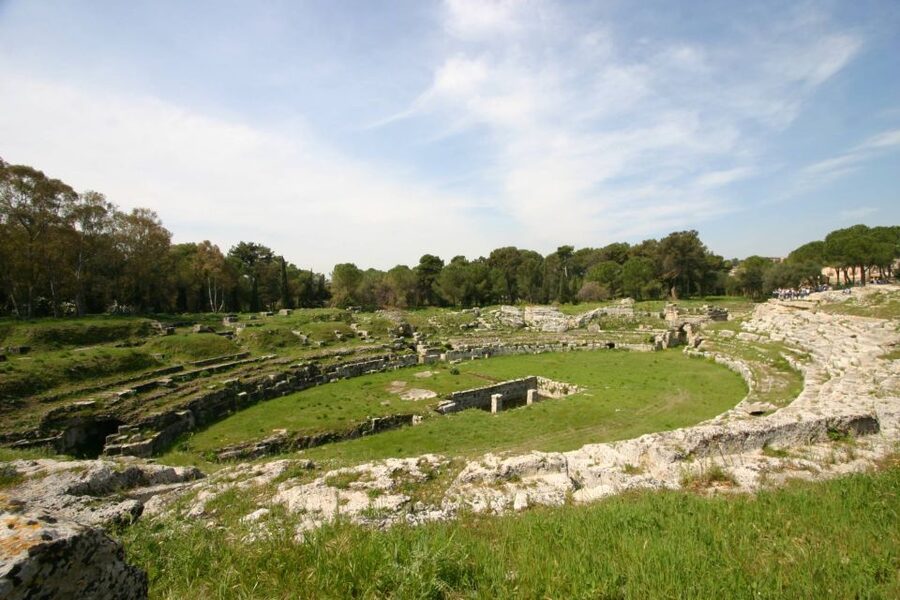
The last major monument in Neapolis on this guided route is the Roman Amphitheater. The guide shows you the Roman phase of the city and explains the building characteristics and the particularities of gladiatorial games.
This is a smart way to end the experience because it prevents the easy mistake of treating ancient Syracuse as frozen in one moment. You see how the site kept getting reused and reinterpreted as power shifted.
What I like here is the emphasis on the Roman phase, not just a quick glance. You’re given a framework for noticing differences in how the Romans used entertainment spaces and how those spaces communicated their own version of authority.
And yes, gladiatorial games can feel brutal on the topic level. But as a historical lens, they explain how empire replaced local traditions with its own spectacles, and how that plays out right in the stones you’re visiting.
Il mito di Aretusa: if you pick the Italian option, add the show
If you choose a tour in Italian, you may also attend the show Il mito di Aretusa. This is a rare bonus because it turns the myths you hear from your guide into something staged.
Even if you do not speak Italian at a high level, the idea is still clear: the stories become performance. If you enjoy when a tour connects architecture to storytelling, this add-on can make the whole experience feel more memorable.
The only thing to keep in mind is that it depends on the option you book and the tour’s timing. The tour description says you can attend it if you choose the Italian option, so I’d treat this as a potential bonus, not a guaranteed standalone event.
How much is this tour really worth?
The price is $283.21 per group, for up to 15 people. That makes it a private-group option, but it’s priced per group rather than per person.
Here’s the value math to help you decide:
- If you book for the full 15-person group, that’s about $18.88 per person.
- If you book for fewer people, the per-person cost goes up, because the guide cost is spread across fewer seats.
So the best value usually happens when you travel with friends or family, or when you can form a group. If you’re solo or a couple, it can still be worth it if you want a guided route that hits multiple major Neapolis landmarks in about two hours without any guesswork.
Either way, you’re paying for a certified guide and a guided structure through several of the area’s top sights: Latomie, Ear of Dionysus, Greek Theater, Altar of Hieron II, and the Roman Amphitheater.
Guide quality: what you can hope for from the human factor
Your tour is led by a certified guide, and the experience seems to rise or fall based on storytelling clarity. The names Rita and Cristina come up in connection with guests being impressed by historical knowledge and by the way details get explained.
If you get someone like Rita, expect a strong focus on history and how each site fits into the story of Syracuse. If you get someone like Cristina, you can expect an emphasis on explaining details while keeping the setting readable, including the way greenery and atmosphere affect how you experience the Latomie.
That’s not a minor detail. In places like Neapolis, where the ruins can look similar at first glance, good guiding makes the difference between seeing stones and understanding a city.
Weather and timing: the practical reality of an outdoor park
The tour description notes that in bad weather, your reservation could be modified or canceled. That’s exactly what you should plan for with any outdoor archaeological site.
You also need to accept that the tour is only 2 hours long. That’s a feature if you want concentration, and a consideration if you want to linger at each spot for long, slow photo sessions. With a guide route like this, the goal is to cover the highlights intelligently, not to turn it into an all-day wander.
Starting times vary by option, so check what works with your day in Syracuse. Neapolis is one part of a bigger trip, so schedule it when you can stay flexible for minor changes.
Who this tour fits best
This is best for you if you want:
- A private guided route through the major Neapolis sights in about two hours
- The myths and history connected to specific places, like the Ear of Dionysus and the tyrant story
- A sense of Syracuse across eras, including the Roman phase and gladiatorial games
You might not love it if you want a long, slow self-guided exploration with lots of downtime. This is a guided, structured experience, which is great when you want clarity, less great if you want total freedom.
Should you book Syracuse: Greek Theater and Neapolis Guided Private Tour?
I’d book it if your priority is a fast, high-impact introduction to Neapolis with a guide who explains how the sites connect. The route covers the big hitters, Greek Theater, Ear of Dionysus, Latomie, Cordari Cave, the Altar of Hieron II, and the Roman Amphitheater, all in a tight 2-hour format.
It’s especially good value if you can fill out the group size, since the price is per group up to 15. If you’re going with just a couple of people, it’s still reasonable, but you’ll want to be sure you’ll use the guide time well and that you’re comfortable with an outdoor itinerary that can shift in bad weather.
If your ideal Syracuse day includes myths, monuments, and a view over the port, this private tour is a strong match.
More Guided Tours in Syracuse


More Tours in Syracuse



More Tour Reviews in Syracuse
Not for you? Here's more nearby things to do in Syracuse we have reviewed






Syracuse & Ortigia Tours, compared.
 ★ 4.7Syracuse: Boat Trip of Ortigia Island and Sea CavesFrom $23937 reviews
 ★ 4.7Syracuse: Boat Tour with Captain Mirko, Snorkeling & CavesFrom $35746 reviews
 ★ 5.0Tour of the island of Ortigia and exploration of sea caves with baths.From $24668 reviews
 ★ 4.7Siracusa: Ortigia Boat Tour with Marine GrottoFrom $45617 reviews
 ★ 4.9Siracusa: Ortigia & Sea Caves Speedboat Tour with Swim StopFrom $34499 reviews
 ★ 5.0Boat tour of Ortigia Island and sea cavesFrom $24407 reviews
 ★ 4.6Catania: Syracuse, Ortigia, and Noto Tour with BrunchFrom $112404 reviews
 ★ 4.7Syracuse: Neapolis Archaeological Park Small Group TourFrom $26350 reviews
Browse the lists this tour appears in