
Reviewed · SYRACUSE & ORTIGIA TOURS
Syracuse: Ortigia Classic Walking Tour
Syracuse reads best on foot. This 2-hour Ortigia classic walking tour strings together the Temple of Apollo, Piazza Duomo, and the Aretusa spring, all with an English or Italian live guide. I like two things a lot: the small-group feel (max 25, often around 10) and the practical setup with audio headsets for when groups get bigger. One thing to plan for, though, is that the meeting point can feel a bit vague since there are several tours operating in the same tight area and Ortigia streets are narrow.
What makes this walk worth your time is how it links places you’d otherwise hit one by one. You start at a Greek landmark, then move through the Christian layers of Ortigia, and end with sea views and the famous spring where papyrus grows. If you prefer strolling at a comfortable pace with time to ask questions and take photos, this format fits well.
Key things to know before you go
- Small-group pacing with time for questions, plus a typical group size around 10
- Audio headsets provided for better clarity in larger groups
- Apollo Temple start to set the Greek origins right from the beginning
- Cathedral visit is optional with an extra €2 entrance ticket
- Myth plus everyday life via Aretusa spring, local traditions, and religious celebrations
- Easy walking basics with comfortable-shoes advice and wheelchair accessibility
Entering Ortigia the right way: the Temple of Apollo start
The tour kicks off at the ancient Temple of Apollo area at the entrance of Ortigia, with meeting points that can vary (one common option is Largo XXV Luglio). This matters because Ortigia is compact. If you get the start right, you lose less time hunting down where everyone gathered and you start your walk with the story already in place.
Why start at Apollo? Because it frames the whole experience. The temple is a Doric-style landmark, and it’s described as the first large stone temple the ancient Greeks built in their western colonies. Even if you only know a little Greek mythology, that opening stop gives you a mental map: you’re not just sightseeing, you’re watching the city’s layers stack up over time.
From there, the walk turns into a guided stroll that takes you through key squares and landmarks, each one acting like a chapter heading. That structure is one of the reasons this tour feels like a smart first introduction to Syracuse.
You can also read our reviews of more walking tours in Syracuse

Piazza Archimede and Diana Fountain: the city’s squares in walking distance
After Apollo, you head toward Piazza Archimede, a central square tied to the city’s classical identity. Your guide uses the spot to connect the present Ortigia streets with the ancient characters Syracuse is famous for. Then you continue to the Diana Fountain, which is highlighted as a standout focal point in the area.
For me, the best use of these stops is that they give your eyes a reset. You’re moving from one dense stone setting to the next, and a square like this helps you orient yourself before you step into the bigger religious and civic spaces later on.
Expect the guide to keep it practical too. You’re walking through a part of town where there’s always something happening, so these breaks in the route help you catch your breath, take a few photos, and absorb what came before without feeling rushed.
Piazza Duomo: the cathedral built on ancient Greek foundations
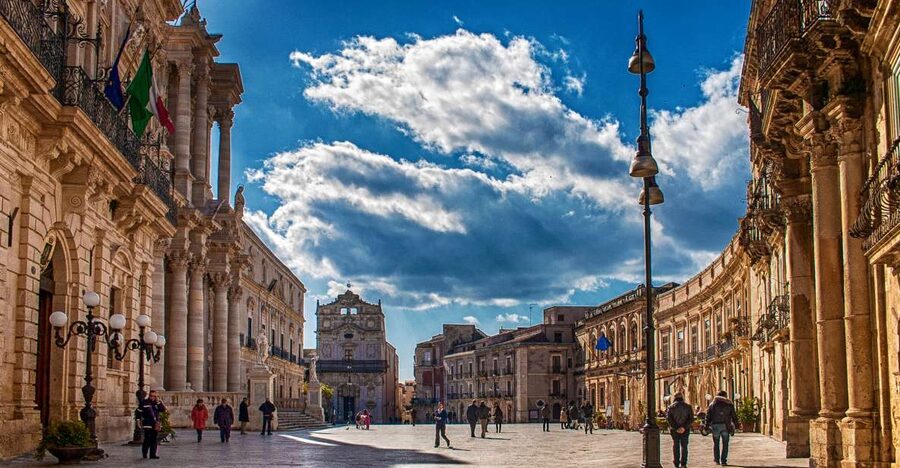
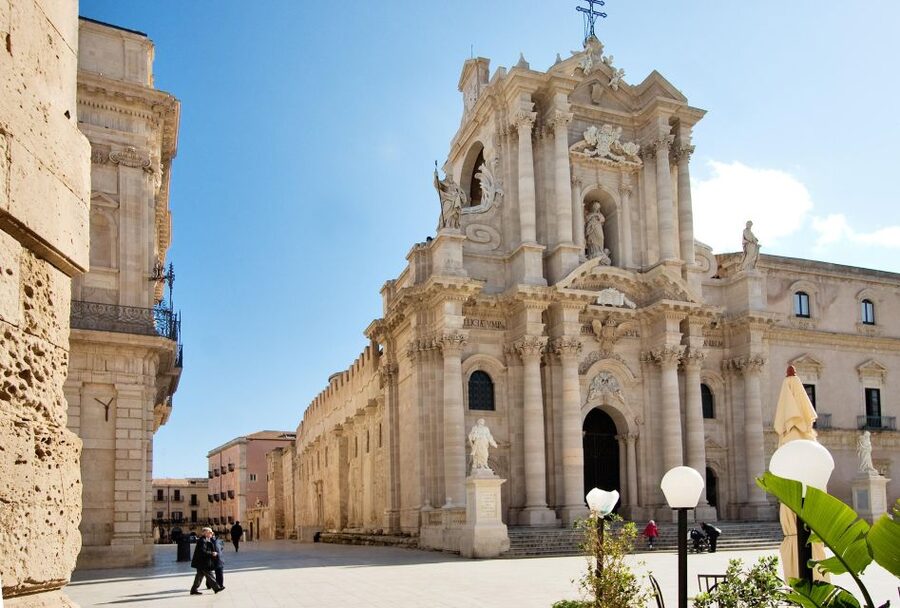
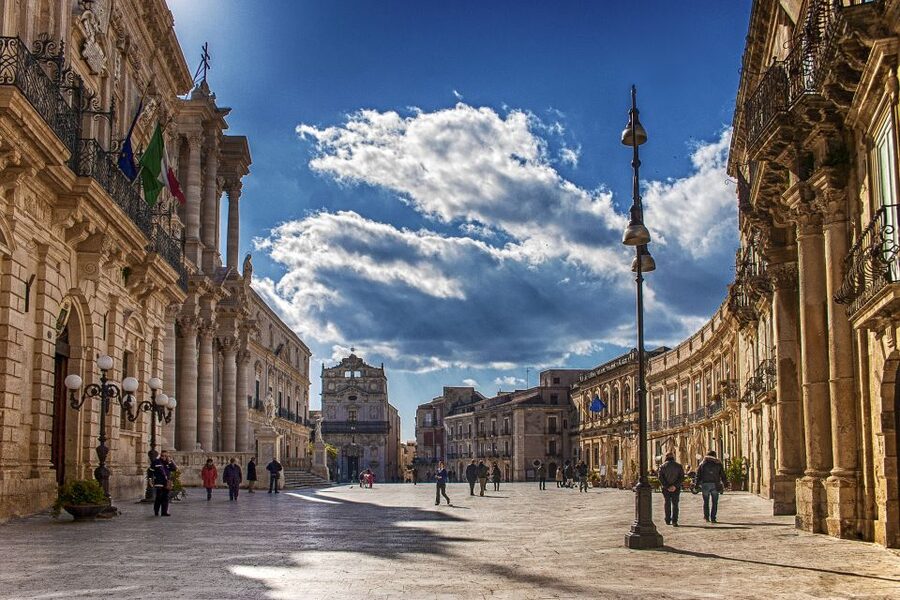
The heart of the walk is Piazza Duomo, the cathedral square, where you see the city’s grand mix of old and new. You’ll also learn about nearby civic and palace buildings along the way, including Palazzo Vermexio (town hall) and Palazzo Beneventano del Bosco.
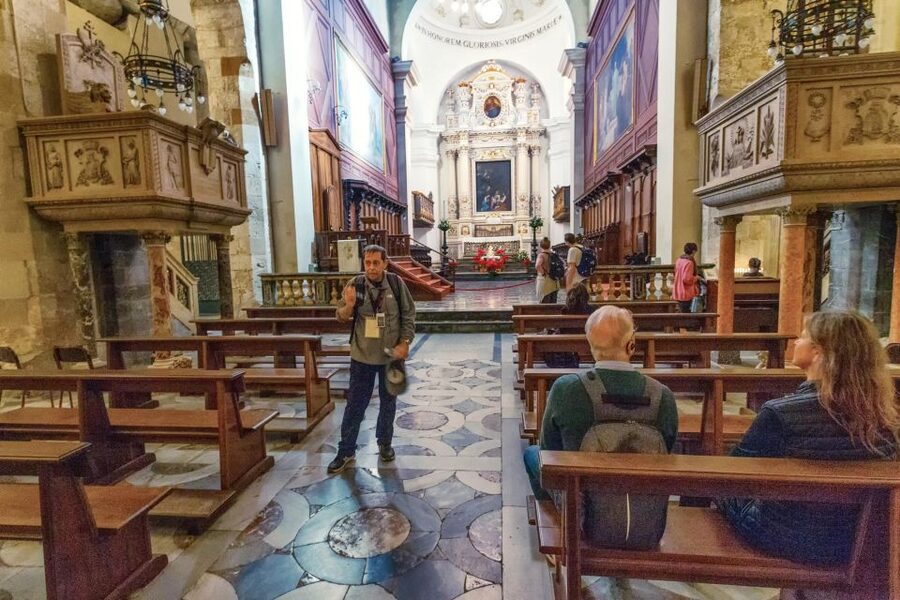
This is where the tour explains one of Ortigia’s biggest ideas: the Christian cathedral you see here sits on the footprint of an ancient Greek temple. That is the kind of detail that changes how you look at the stonework. Instead of treating the cathedral as just another church stop, you start noticing what part of the site feels reused, transformed, and layered.
The cathedral visit has a clear choice:
- You can typically see the area and learn about the site.
- When it’s accessible, the guide may offer time to explore the church interior with you.
- The cathedral interior entrance ticket is €2 and not included.
The cathedral is also noted as a frequent wedding venue. Even if you aren’t there for a ceremony, it helps explain why the place is so carefully kept and why it remains a living part of town life, not just an artifact.
If you’d rather not add a ticket, that’s fine. The tour includes an alternative like a short coffee break so you can keep moving without feeling stuck at a door.
Aretusa spring and Castello Maniace views: myth, papyrus, and the sea
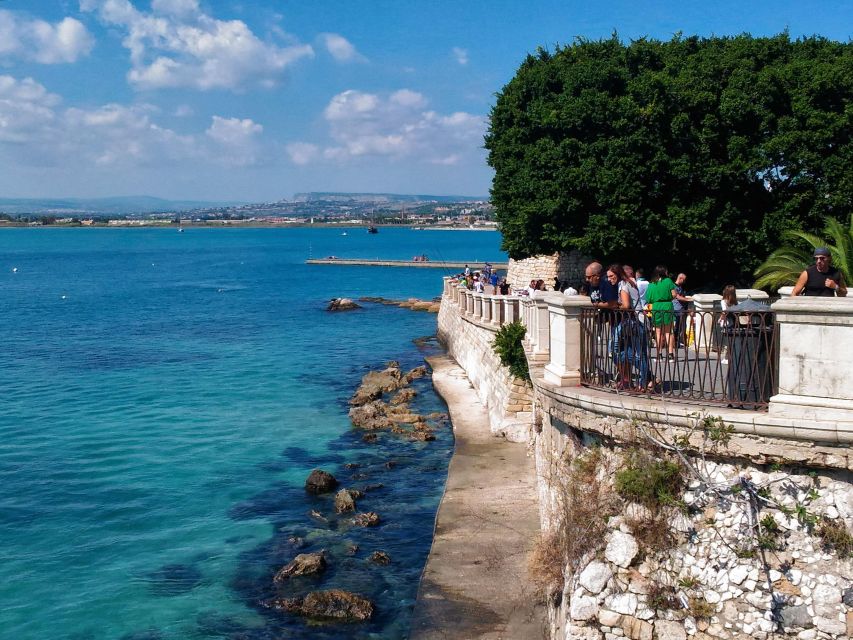
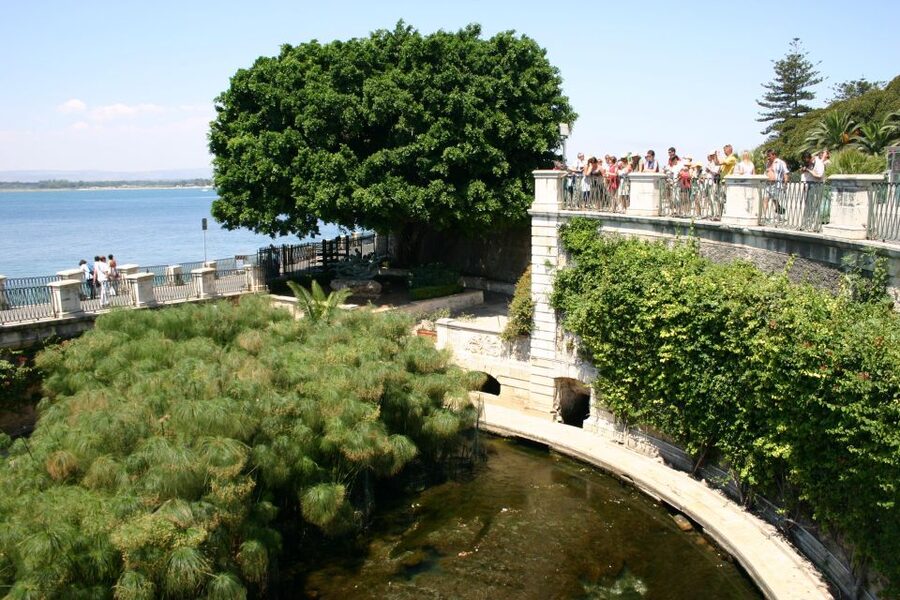
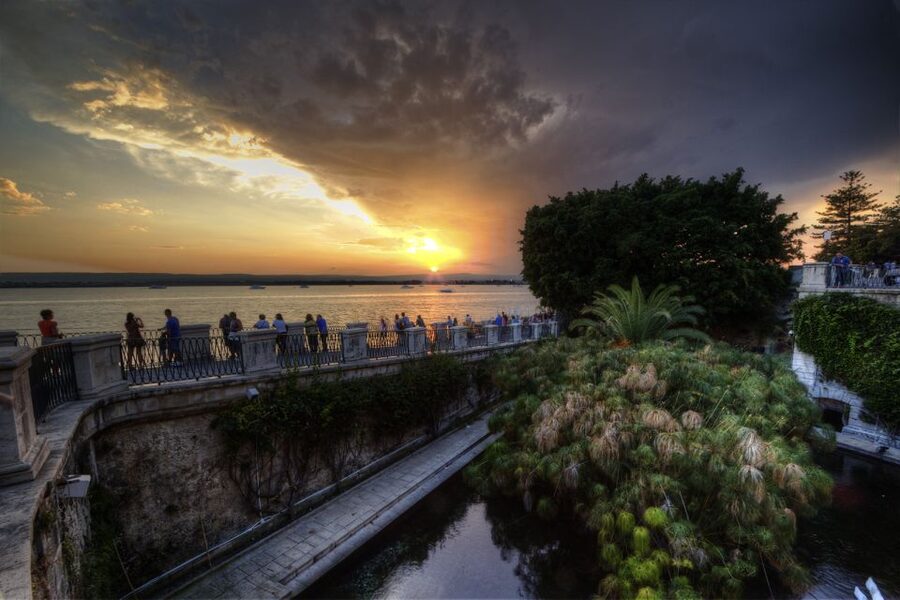
The tour then moves to Arethusa (Aretusa) Spring, a legendary spot tied to mythical lore and famous for its papyrus plants. It’s one of those places where the setting does half the job. The guide helps you understand why the spring matters, so you get more than a quick photo moment.
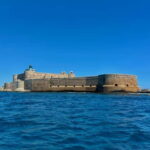
After Aretusa, the route continues along a seafront promenade. You’ll also catch scenic views on the way that are associated with Castello Maniace, which is positioned as a viewpoint stop rather than a deep-dive museum-style visit. That choice is smart for a 2-hour tour. You still get the feeling of Syracuse at the water’s edge without turning the day into logistics.
This section is a good reminder that Ortigia isn’t only about monuments. The sea is part of the story. If you like your history with atmosphere, this is where you feel it.
Via della Giudecca and the Church of Saint John Baptist: a different part of the puzzle
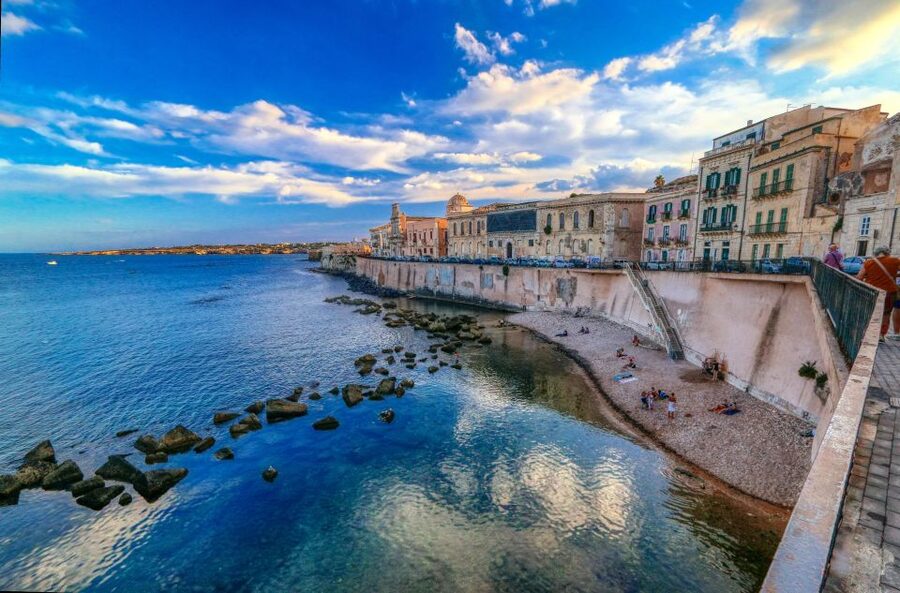
Next up is Via della Giudecca, described as a walk through the historic area tied to the former Jewish district. The guide provides glimpses into that community and its past, helping you see Ortigia as more than just Greeks and Christians. That broader lens makes the city feel less like a set of isolated stops and more like a shared human space that changed over centuries.
After that, you visit the Church of Saint John Baptist, with a guided explanation on site. This is one of the places where a guide’s narration matters more than how long you stand still, because the value is in the connections they make between architecture, faith, and local identity.
There’s also a cultural layer built into the tour’s storytelling. Along the way, the guide talks about traditions and religious celebrations, including the revered St. Lucy’s feast and its grand procession. Even if you don’t know the details yet, hearing about how celebrations shape daily life helps the sites make more sense once you’re back on your own.

How the guide handles small-group navigation in tight streets
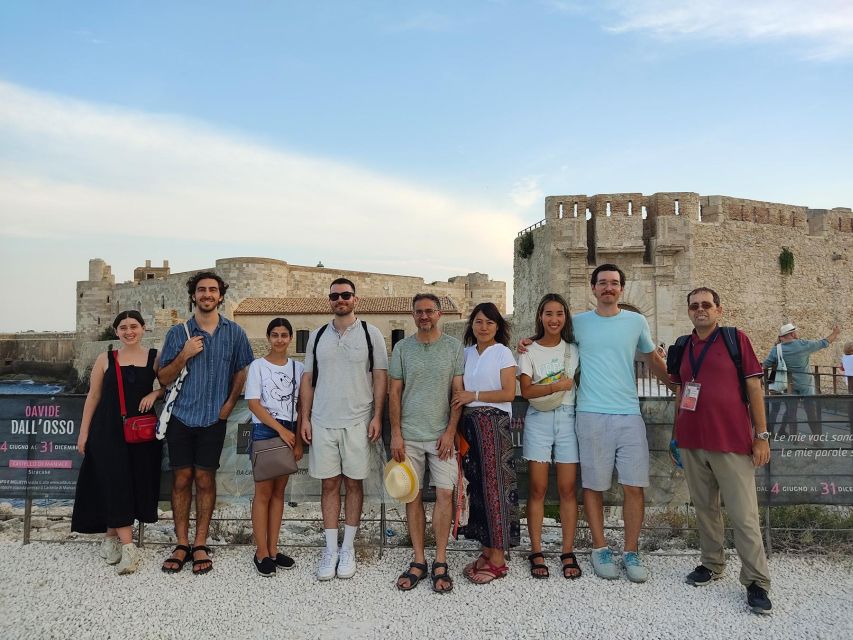
This walk is shared, but it’s designed to feel intimate. Maximum group size is 25, with many tours typically running with around 10 participants. That smaller scale is important in Ortigia because space is limited and streets can get crowded with other groups at the same time.
I also appreciate the tour setup for clarity. Headsets are provided for free in case of larger groups, so the guide does not need to shout to be heard. That makes the experience more comfortable, especially at indoor or enclosed-looking spots where sound can bounce around.
The pace is described as guided but not frantic. You get guided segments and then enough breathing room to explore, take photos, and ask questions. And the tour isn’t just scripted facts. The guide invites you to ask for suggestions about nearby monuments, other towns, restaurants, and activities. That can be surprisingly useful when you’re trying to build a Syracuse plan that goes beyond the obvious.
One consideration: Ortigia is busy and there can be competing walking tours in the same area. Add in pedestrian-only streets and the occasional chaos of moving groups, and you’ll want to keep an eye out for your group when you arrive.
Price and value: what $22 buys you in Syracuse
The price is listed at $22 per person for a 2-hour shared walking tour. For Ortigia, that’s a pretty efficient use of time because the walk covers multiple anchor stops in one go, starting from Apollo and ending around the Archimede area, with drop-offs at options like the Fountain of Diana and Piazza Archimede.
What you get in the base price is more than just motion. You’re paying for:
- a live guide in English or Italian
- a route that ties Greek origins, Christian transformation, and local culture together
- free headsets if the group is larger
What you might add is modest. The cathedral interior ticket is €2 and is optional. So you’re not forced into an extra payment if you prefer to skip it.
Also note the practical reality: this tour runs rain or shine. That’s not a luxury detail. In Sicily, weather shifts. Paying for a tour that still operates gives you flexibility and helps you protect your day.
Who should book this Ortigia classic walking tour
This is a great fit if you:
- want a structured first look at Syracuse Old Town, Ortigia
- like seeing how Greek and Christian layers overlap in the same physical spaces
- want a guide to explain key stops without you having to read for hours
- enjoy walking at a steady pace with time to take photos and ask questions
It’s especially useful if you are short on time. Two hours is long enough to get meaningful storytelling and orientation, but short enough that you still have energy left for a meal, a longer sea stroll, or a follow-up detour.
If you prefer self-guided wandering with no scheduled stops, this might feel too structured. But if you like the balance of guided + free time, it hits a sweet spot.
Should you book it?
I’d book this tour if you want an efficient, story-driven orientation walk through Ortigia, with a clear route that starts at Apollo, moves through Piazza Duomo, and ends with Aretusa and sea views. The value is strong for the price, especially because the tour includes audio headsets when needed and the guide interaction is part of the experience.
I’d think twice if you dislike groups in busy areas or if you know you’ll find meeting points stressful. Ortigia is compact and crowded, so arrive a few minutes early and do the practical thing, spot the group, and start with confidence.
FAQ
How long is the Syracuse: Ortigia Classic Walking Tour?
The tour lasts about 2 hours.
How much does the tour cost?
It costs $22 per person.
Where does the tour start and where does it end?
The meeting point can vary depending on the option booked, with Largo XXV Luglio listed as a start option. The tour ends around the Piazza Archimede area, with drop-off options including Fountain of Diana and Piazza Archimede.
What major stops are included on the route?
You’ll visit the Temple of Apollo area, Piazza Archimede, Arethusa Spring, and Via della Giudecca, plus you’ll also have guided time at the Church of Saint John Baptist. Scenic views on the way include Castello Maniace.
Is the cathedral entry included?
Cathedral entry is optional and not included. The entrance ticket is €2.
What languages is the tour offered in?
The tour is offered in English or Italian, with live guiding.
Does the tour run in bad weather?
Yes, the tour takes place rain or shine. Comfortable shoes are recommended.
More Walking Tours in Syracuse



More Tours in Syracuse
More Tour Reviews in Syracuse
Not for you? Here's more nearby things to do in Syracuse we have reviewed




Syracuse & Ortigia Tours, compared.
 ★ 4.7Syracuse: Boat Trip of Ortigia Island and Sea CavesFrom $23937 reviews
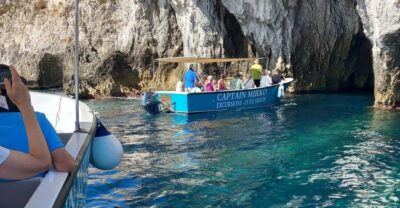 ★ 4.7Syracuse: Boat Tour with Captain Mirko, Snorkeling & CavesFrom $35746 reviews
 ★ 5.0Tour of the island of Ortigia and exploration of sea caves with baths.From $24668 reviews
 ★ 4.7Siracusa: Ortigia Boat Tour with Marine GrottoFrom $45617 reviews
 ★ 4.9Siracusa: Ortigia & Sea Caves Speedboat Tour with Swim StopFrom $34499 reviews
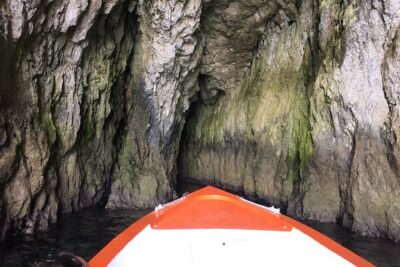 ★ 5.0Boat tour of Ortigia Island and sea cavesFrom $24407 reviews
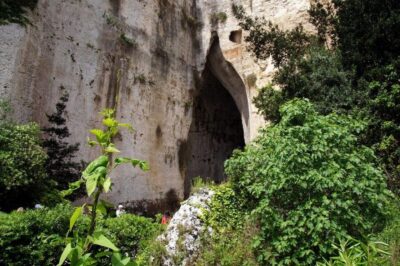 ★ 4.6Catania: Syracuse, Ortigia, and Noto Tour with BrunchFrom $112404 reviews
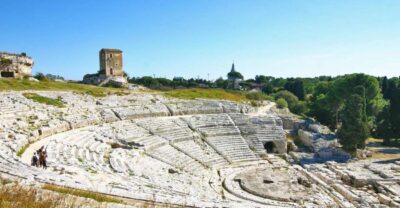 ★ 4.7Syracuse: Neapolis Archaeological Park Small Group TourFrom $26350 reviews
Browse the lists this tour appears in