
Reviewed · SYRACUSE & ORTIGIA TOURS
Siracusa Walking Tour with Audio and Written Guide by a Local
Ortigia gets better when you can pause. This Siracusa walking tour is built around your own pace and a multilingual audio and written guide, so you can linger where you want and skip what you don’t. One practical catch: you’ll need a smartphone with internet to use the guide, and headphones are not included.
I especially like that it gives local restaurant advice alongside the sights, not just history for history’s sake. It’s also designed to be doable for many visitors, including those using a wheelchair or stroller, with a route that fits a relaxed half day.
If your phone signal is weak, the audio can be finicky, so plan for occasional reconnecting and keep Google Maps handy as a backup.
Key highlights at a glance
- Choose-your-own-pace route through Ortigia and key Syracuse sights
- Audio plus text in 5 languages (Eng, Esp, Ita, Ger, Fr)
- Smartphone guided navigation using Google Maps links
- Free landmark stops plus a couple of sights where you pay entry separately
- Practical local food recommendations to round out your day
Ortigia and Neapolis, the best way to see Syracuse without rushing
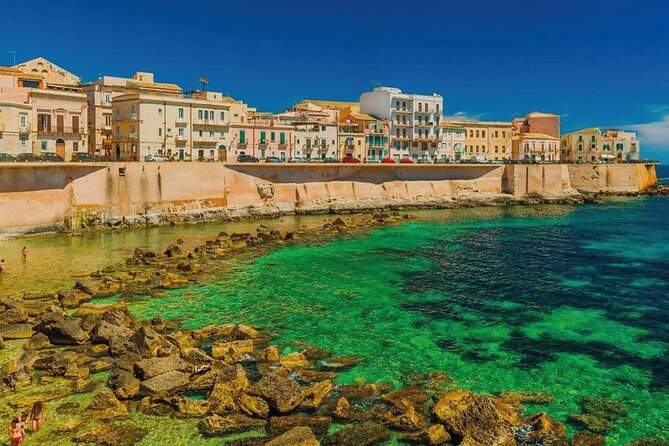
This tour works because Syracuse is a place where timing and wandering matter. Ortigia’s streets can feel tight and twisty, and the appeal is in the small moments, not just the big monuments. With the audio and written guide, you get structure without being chained to a group pace.
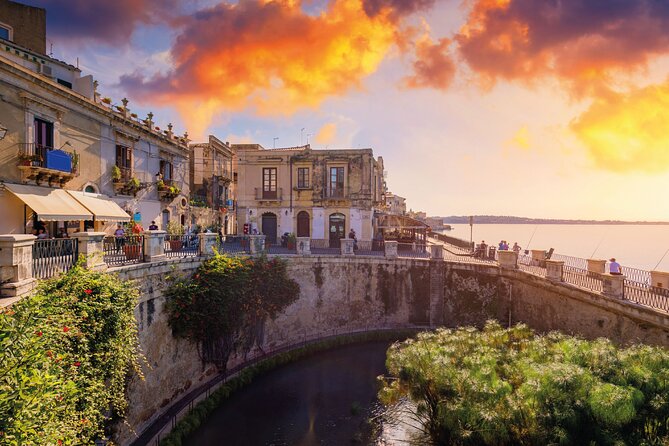
You’re also covering two different “moods” of the city. Ortigia is the postcard island with markets, fountains, and church squares. Neapolis is the archaeological zone, where you step into the scale of Greek-era Syracuse and the drama of the underworld-like Latomìe.
The sweet spot for most people is the 4 to 5 hour range. It’s long enough to feel like you worked your way through the highlights, but not so long that you’re forced into an exhausting “power walk” day.
You can also read our reviews of more walking tours in Syracuse

Price and value: why a $7.84 guide can be a smart buy
At about $7.84 per person, you’re paying for organization, context, and convenience more than you’re paying for a person standing next to you. The value comes from the guide itself, plus the built-in extras that help you turn a walk into a day plan.
You get:
- A digital guide for doing the route at your speed
- Audio and text in multiple languages
- Tips for monuments and history plus local curiosities
- Advice for authentic local restaurants
- Connected Google Maps so you can follow along
Is it perfect for everyone? No. It’s not a live guided explanation where you can ask questions on the spot. But if you like moving when you feel like it, this is a very low-cost way to get real narration and not just a map line.
Also, the tour has a maximum group size of 104. Since the experience is smartphone-led, you’re not stuck listening to dozens of people compressing into the same narrow corners, which is a big plus in Ortigia.
Getting started at the Ortigia Street Market, and how the audio walk actually feels
You begin at Ortigia Street Market in Vicolo Bagnara (96100 Siracusa). Your walk ends at Castello Maniace, Piazza Federico di Svevia 5. That end point is handy because it places you near one of the most iconic stretches of waterfront views.
The experience is wheelchair and stroller accessible, and it’s designed so most travelers can participate. You’ll still want comfortable shoes, because you’re walking through a historic area where surfaces can be uneven and cobbled.
The guide setup matters. You’ll need a smartphone with internet to use it, and you activate it using instructions in your voucher. Headphones are not included, so you’ll use your phone’s speaker or your own headphones if you have them.
A real-life tip: if audio glitches on you, try using the phone speaker instead of holding it to your ear. The audio quality is often better and more stable that way, especially if your connection is patchy.
Stop 1: Mercato di Ortigia, the port-side heart that shaped the city

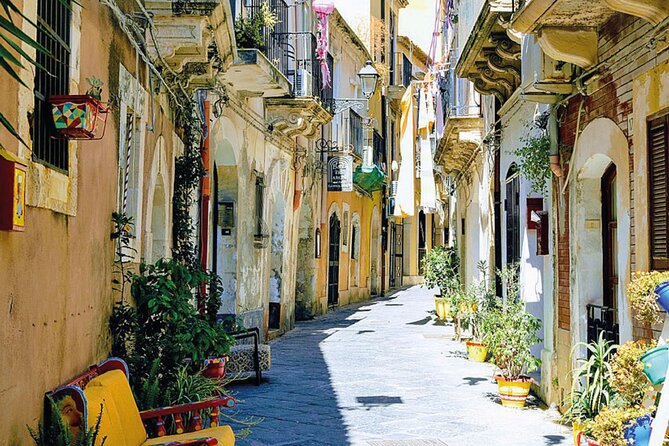
Your first big introduction is the Mercato di Ortigia, right in the thick of the island’s daily life. This area has been important since Greek and Roman times, acting as a commercial and cultural meeting point because it sits close to the port.
What you’ll like here is that the tour sets you up to see the market as more than a place to buy snacks. You’re learning how ideas and goods moved through the Mediterranean, and that helps everything you see later feel connected instead of random.
Practical note: this is a free stop and described in a shorter window. Treat it like orientation. Look around, take a breath, and then start moving, because Ortigia rewards you for keeping momentum.
Temple of Apollo and the Doric roots of Sicily
Next comes the Temple of Apollo, built at the beginning of the 6th century BC. The highlight is that it’s the oldest Doric temple example in Sicily.
This is one of those spots where a short audio explanation can do a lot of work. Instead of just seeing stones, you start to understand the architectural language of the place and why it mattered when Greek culture was shaping Syracuse.
Even if you’re not a “temples person,” this stop helps frame why Syracuse became such a major center. It’s a reminder that the modern city sits directly on layers of older civilizations.
You can also read our reviews of more guided tours in Syracuse





Fountain of Diana in Piazza Archimede, a postcard moment with a story
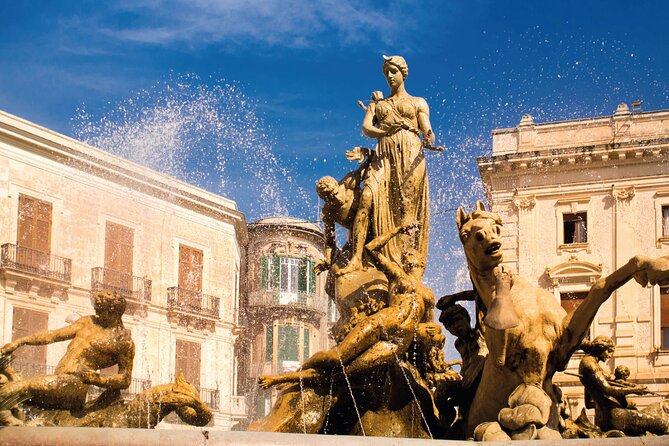
In the center of Piazza Archimede you’ll find the Fontana di Diana, created between 1906 and 1907 by Palermo sculptor Giulio Moschetti.
This fountain is the kind of place you can easily photograph and move past quickly, but the guide gives you context so it feels earned. It also gives you a nice break from walking, a little pause point in the middle of Ortigia’s swirl.
This stop is free and short. Use it like a reset button before you head toward the cathedral area.
Syracuse Cathedral on ancient foundations, what to expect and why it matters
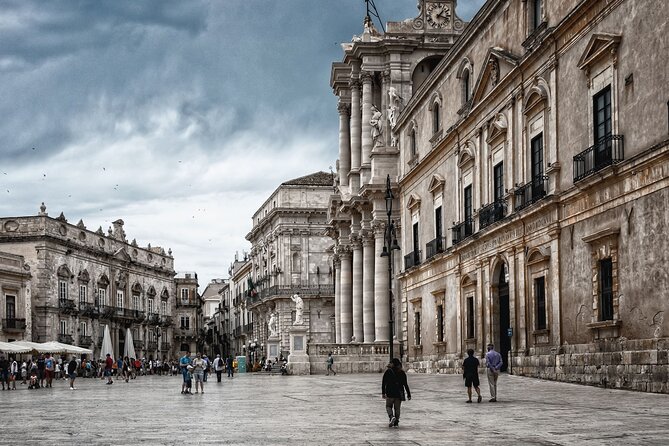
The Syracuse Cathedral, also known as the Cathedral of Syracuse, sits on foundations from an ancient Doric temple dedicated to Athena, built by the Greek-Siceliots in the 5th century BC.
The “why it matters” here is the continuity. You’re not just visiting a single religious building. You’re walking through a site that has been repurposed across centuries, with newer meanings built over older ones.
Admission is not included for this stop, so plan for possible entry fees depending on your time and the day’s opening conditions. Even without going deep inside, the location and the idea of layered foundations make it worth prioritizing.
Arethusa Spring, where poets and everyday Ortigia meet

Arethusa Spring, or Fonte Aretusa, is a fresh water spring located a short distance from the sea. It has inspired poets and writers for centuries, and it’s also known locally as a funtana re papiri, the fountain of papyrus.
This stop is free and quick, but it’s one of the most atmospheric parts of the route. You get a sense of why this location was special long before modern tourism labels took over.
It’s also a smart place to slow down. Even a 10-minute stop can feel longer because the spring ties together sea, myth, and city life in one compact spot.
Parco Archeologico della Neapolis, the big scale shift outside Ortigia
Once you move toward Neapolis, the city’s tone changes fast. The Archaeological Park of Neapolis covers about 240,000 square meters, and it’s one of the largest archaeological areas in the Mediterranean.
The tour sets aside about 1 hour 30 minutes here, and admission is not included. This is where you should plan your expectations. You’re not rushing a checklist. You’re taking in a whole landscape of ruins and understanding how massive ancient Syracuse really was.
Neapolis helps you appreciate the contrast with Ortigia. Ortigia can feel human-scaled and intimate. Neapolis is about grand spaces, engineering, and civic theater.
Greek Theatre of Syracuse, grandeur without needing a loud guide
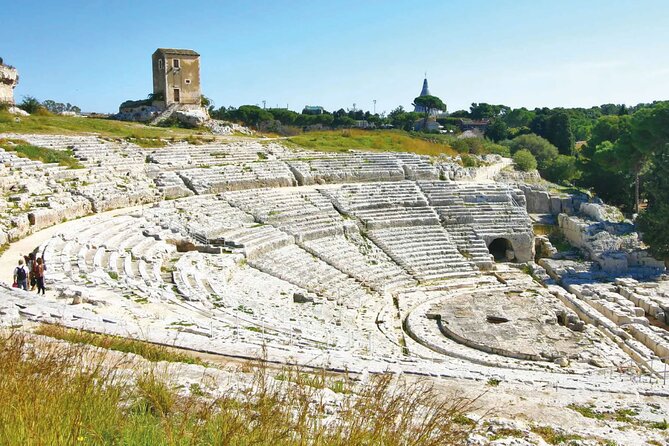
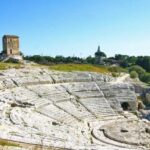
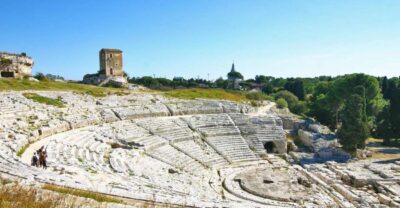
The Greek Theatre of Syracuse is remembered for its grandeur and is said to have been, together with the theatre of Athens, among the largest in ancient Greece.
This is a spot where good audio narration can help you “hear” the past even if there’s no performance happening. You’ll get a clear sense of scale and importance, which is hard to grasp if you just walk past seating rows and stage areas.
If you want a smoother visit, pause for a minute before moving on. Stand back enough to get the full shape, then come closer to see details. The audio timing helps you do that without guesswork.
The Ear of Dionysius at Latomie del Paradiso
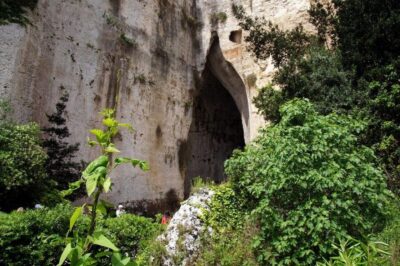
The Ear of Dionysius is the most famous cave of the Latomia del Paradiso, a set of limestone quarries. The caves were dug by stone quarrymen following limestone veins.
This stop feels different because you’re in a landscape shaped by labor and stone, not just architecture. The guide’s framing makes it easier to connect the site to the broader story of ancient Syracuse and its engineering-minded reuse of space.
Admission is not included for the Neapolis area overall, but the Ear of Dionysius is worth making time for. It’s one of those places where standing still and letting the guide’s description settle improves the whole experience.
Madonna delle Lacrime and Santa Lucia al Sepolcro, devotion at street level
Back in the realm of churches and city spirituality, you’ll end with two sanctuaries.
At Santuario Madonna delle Lacrime, the tour explains that the sanctuary was built after a miracle in 1953. An effigy of the Immaculate Heart of Mary, located in the home of the Iannusos, began to weep.
Then you reach Santuario di Santa Lucia al Sepolcro, located just outside the walls of Syracuse. It marks the site of the martyrdom and burial of Santa Lucia, the city’s patron saint.
Both of these stops are free, and they’re shorter in time. They work well as a “finish strong” sequence because they bring you back to human stories and local meaning, not only ancient stone.
Practical tips for smooth listening, navigation, and pacing
This is a smartphone-driven experience, so small technical choices affect comfort.
1) Download or pre-plan if internet is unstable. The guide needs internet connection to function, and cruise ports or city coverage can be uneven. If you can, prepare before you start your walk.
2) Use the audio through your phone speaker if headphones aren’t working well. If your audio cuts out, switching to speaker may help stability.
3) Keep Google Maps open in your pocket. The guide is connected to Google Maps, but having Maps ready helps if you need to quickly verify where you are before returning to the audio.
4) Expect a walking day on real streets. The route is accessible for many people including wheelchair and stroller users, but that doesn’t mean every turn will feel flat and easy. Go slow at street level, especially near busier market areas.
5) Don’t over-plan your day around exact stopping times. The whole point is flexibility. If you want a coffee in Ortigia’s shade, take it. You can always continue later from where you left off.
Who should book this Siracusa audio walk (and who might want something else)
This tour is a strong match if you want:
- To explore at your own pace through Ortigia and major Syracuse sights
- A guide that explains the why, not just the what
- Multi-language support (English plus Spanish, Italian, German, French)
- A structured route without the pressure of catching a group
It may not be the best fit if you dislike smartphone-based navigation or if you know you’ll have no reliable internet. Also, if you want deep Q and A, a live guide can still beat a digital narration.
If you’re traveling solo, this is especially practical because it avoids the “stop-and-go group shuffle” that can turn tight streets into a waiting game. If you’re traveling with someone slower, the audio-first structure helps you pause without awkward pacing negotiations.
Should you book this Siracusa Walking Tour with audio and written guide?
Yes, with two conditions. Book it if you like self-guided freedom, and if you can manage the smartphone requirement (internet and a working speaker or your own headphones). At about $7.84, the value is hard to ignore, especially because you’re getting both history and local food direction, not just a route.
I’d skip it if you need a staff member to manage everything, or if your phone will be unusable for any reason. But for most travelers who want a smarter, calmer way to see Ortigia and the Neapolis highlights, this is a very solid buy. It even has a strong track record, with a 4.8 rating and 97% recommending it.
FAQ
How long is the Siracusa walking tour?
The tour is about 4 to 5 hours (approx.).
What languages are included?
The audio and text are available in English, Spanish, Italian, German, and French.
Do I need headphones?
Headphones are not included. You can hear the audio through your smartphone speakers, or you can use your own headphones.
Do I need internet on my smartphone?
Yes. You’ll need a smartphone with an internet connection to use the digital guide. Activation instructions are included in your voucher.
Are entrance tickets included for the sights?
Some are free, while others are not included. The Syracuse Cathedral and the Parco Archeologico della Neapolis require admission tickets that are not included.
Is the tour wheelchair and stroller accessible?
Yes, the experience is wheelchair and stroller accessible.
What is the cancellation and refund policy?
You can cancel for a full refund if you cancel up to 24 hours in advance. If you cancel less than 24 hours before the start time, the amount paid is not refunded.
More Walking Tours in Syracuse

More Tours in Syracuse

More Tour Reviews in Syracuse
Not for you? Here's more nearby things to do in Syracuse we have reviewed







Syracuse & Ortigia Tours, compared.
 ★ 4.7Syracuse: Boat Trip of Ortigia Island and Sea CavesFrom $23937 reviews
 ★ 4.7Syracuse: Boat Tour with Captain Mirko, Snorkeling & CavesFrom $35746 reviews
 ★ 5.0Tour of the island of Ortigia and exploration of sea caves with baths.From $24668 reviews
 ★ 4.7Siracusa: Ortigia Boat Tour with Marine GrottoFrom $45617 reviews
 ★ 4.9Siracusa: Ortigia & Sea Caves Speedboat Tour with Swim StopFrom $34499 reviews
 ★ 5.0Boat tour of Ortigia Island and sea cavesFrom $24407 reviews
 ★ 4.6Catania: Syracuse, Ortigia, and Noto Tour with BrunchFrom $112404 reviews
 ★ 4.7Syracuse: Neapolis Archaeological Park Small Group TourFrom $26350 reviews
Browse the lists this tour appears in