
Reviewed · SYRACUSE & ORTIGIA TOURS
Ancient Syracuse: private guided tour of the Neapolis archaeological park
Syracuse hits different when you walk. This private guided tour threads you through the Neapolis archaeological park and the standout Greek and Roman sights, with a guide who connects the stones to how the city actually worked. I like the close-up access you get on a private walk, not a rushed bus-stop version. I also like how the story stays human, so you understand why each location mattered, not just what it was.
One catch: park admission tickets aren’t included (unless you choose a ticket option). That can mean a little extra time at the ticket desk, and in hot months it matters.
You’ll be out about 1 hour 30 minutes, typically with morning or afternoon departures, and it’s booked fairly far ahead on average, so planning wins here. Bring comfy shoes and expect some walking on ancient ground.
Key points before you go
- Private pacing at Neapolis: You can linger where you want, and ask questions as you go.
- The big Greek sites in one route: You’ll cover multiple headline stops without doing lots of figuring out.
- Teatro Greco may be partially covered: During performance season, views of the seating can be different.
- Ear of Dionysius is a top stop: It’s short, but the legend and setting make it memorable.
- Roman Amphitheater storytelling: You’ll hear the gladiator angle and how the space was used.
- Ticket-aware planning: The only real timing risk is park entry, since it’s not included.
Why the Neapolis route works so well
Syracuse’s ancient sites are not scattered randomly. They cluster in a way that makes a walking tour feel logical, not chaotic. Neapolis is the anchor, and from there the route naturally flows into the Greek theater scene and the later Roman setting. You get the sense of one city evolving, rather than separate monuments you just checklist.
What makes this tour feel practical is the mix of “you can see it” and “you can understand it.” Standing at the base of major structures is impressive, but the real value comes from having someone explain what you’re looking at while you’re still standing there. That’s how details stop being trivia and start turning into real picture-making: who sat where, what sound would carry, why a quarry mattered, and how Greek and Roman priorities overlapped.
And because it’s private, you don’t waste time on a rigid group rhythm. If your brain wants to slow down at the caves or jump ahead for the theater, you can usually do that with your guide’s help.
You can also read our reviews of more guided tours in Sicily


Price and value: what $108.24 buys you
At about $108.24 per person for a private, guided walk around major ancient highlights, the value is mostly in the “guide time.” The tour price covers a professional guide and the private walking format, not the park entrance ticket. So think of it like this: you’re paying for interpretation and pacing, while you handle admission.
Is it a good deal? For me, it can be, if you care about understanding what you’re seeing. At these sites, an audio guide can help, but it can’t answer follow-up questions like why a certain area was built, or how the city’s Greek and Roman identities show up in the stones. If you’re traveling with kids who ask nonstop questions, the private angle is especially useful.
One more note: the offer includes group discounts. If you have a small group in your travel party, it’s worth checking whether your booking can take advantage of that, because it can bring your per-person cost down without changing the experience style.
Getting there and planning your timing
The meeting point is Largo Anfiteatro, 2, 96100 Siracusa SR, Italy, and the tour ends back at the same place. That simplicity matters. You’re not coordinating a second pickup or playing transportation Tetris after your walk.
You’ll want to plan around ticket timing because the park admission for Neapolis is not included (again, unless you pick a ticket option). In practice, that means you should budget a bit of extra patience if there’s a line. One review highlighted a frustration where the lack of included entry created an avoidable delay in hot sun, so I’d treat this as a timing-first tour, not a “show up and glide” one.
Also, expect a warm-weather reality check. Syracuse can be hot, and this is a walking tour on archaeological terrain. Comfortable shoes are strongly recommended, and you’ll thank yourself for bringing water.
Stop 1 at Parco Archeologico della Neapolis: where the city shows its layers
This is the main event. Neapolis holds the concentration of important ancient monuments, and your guide uses the walk to stitch the sites into a story of Syracuse across eras. You’ll move through multiple features inside the park, and this part of the experience is where you’ll get the most “I get it now” moments.
A big reason to do this with a guide is that ruins are easy to misunderstand. Without context, you might just see columns, slopes, stonework, and cave-like spaces. With context, you start noticing how people moved, gathered, performed, and worked.
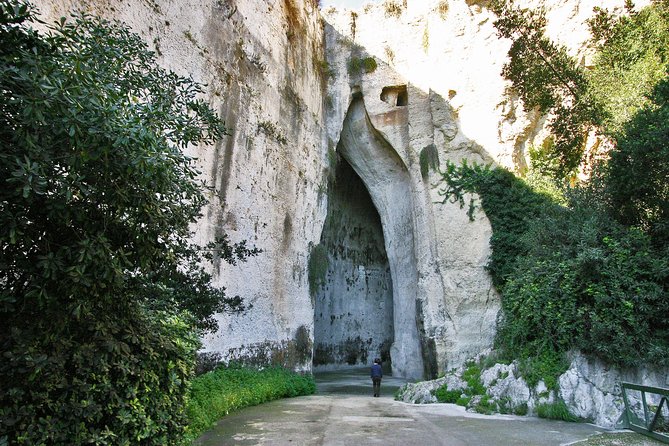
One highlight that keeps coming up is the caves. The acoustics are a thing here, and the setting can make simple sounds feel different. If you’re the kind of person who likes to try things once, this is one of those stops where it can feel naturally fun, not forced.
The practical drawback is time and heat: Neapolis is the longest part of the route, and because the ticket isn’t included, your best-case scenario is smooth entry and slow exploring, while a ticket line can compress your time. Plan early in your day when possible.
Teatro Greco: the Greek theater, sound, and the summer seating twist
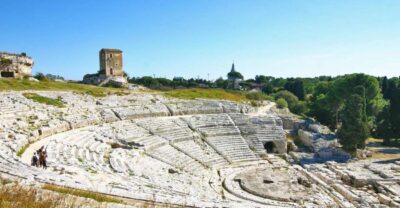
Next comes the Teatro Greco, often considered the most important ancient Greek theater in Sicily. Even if you’ve seen other theaters in Italy, this one carries extra weight because of its place in Syracuse’s Greek identity.
Your time here is short, about 40 minutes, and that’s part of the design. You get enough to take in the scale and understand what made this style of theater special. Your guide should help you connect the physical layout to the performances and the audience experience.
Here’s the seasonal thing you should not ignore: during performance season, usually spring and summer, the Greek theater is covered and only partially visible. That doesn’t mean you’ll see nothing. It means what you’re staring at might not match the postcard version of an open amphitheater. So if theater visibility is your number-one goal, time your visit carefully, or at least go in with eyes open.
A small practical tip from the same logic: bring an umbrella in warm months. It can help you stay comfortable through waiting moments and sun exposure.
You can also read our reviews of more private tours in Sicily



The Ear of Dionysius: legend in a short stop
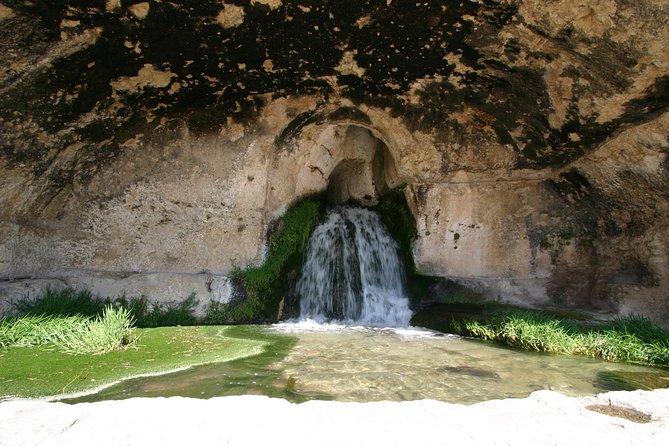
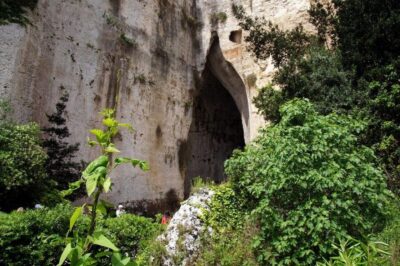
The Ear of Dionysius is a quick visit, around 15 minutes, but it’s exactly the kind of stop that can make a tour feel memorable. The structure has a reputation for sound and for the kind of story people love to repeat, and your guide should bring the legend into focus without turning it into a tourist gimmick.
What I like about pairing this with nearby theater is contrast. You go from a massive public stage setting to a more intimate, specific space, and the shift helps you understand how Greek Syracuse thought about performance, communication, and spectacle in different forms.
Because the visit is brief, it’s also a low-stress stop for families or anyone who doesn’t want to spend an hour in one area. You’ll see it, you’ll get the meaning, then you move on.
Roman Amphitheater di Siracusa and the stone quarries: gladiators and labor
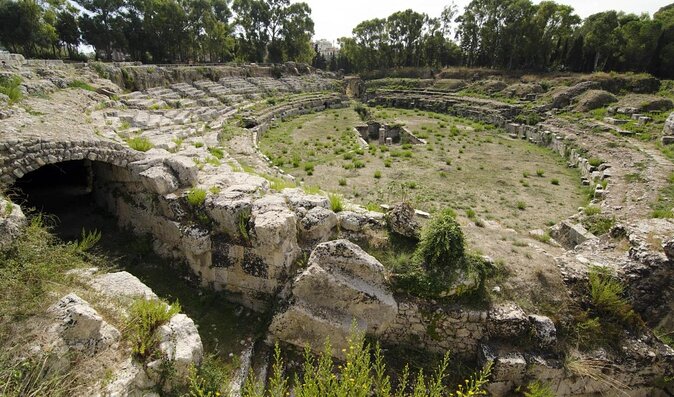
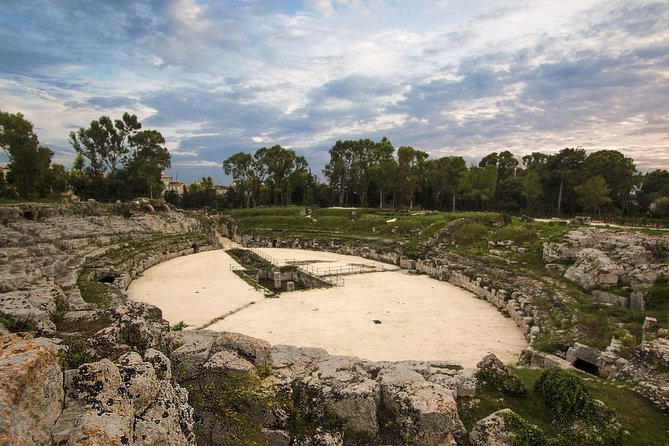
The route then shifts toward the Roman side with the Anfiteatro Romano di Siracusa. You’ll spend about 15 minutes here. The guide explains Roman gladiators and what the amphitheater was built for, helping you read the space as entertainment infrastructure, not just an old arena.
This stop is short, but it adds an important layer. Greek theater and Roman amphitheaters were both about crowd attention, but they served different tastes and used the built environment differently. Hearing the gladiator angle gives you a quick mental model for how Romans repurposed urban energy into their own spectacle style.
And then there are the ancient Greek stone quarries. They’re not listed with a set time, but they’re part of the walk, and they matter because they remind you these monuments didn’t fall from the sky. Quarrying shaped what got built, where materials came from, and how large-scale projects were possible. Even if your main interest is performance and theater, this adds the behind-the-scenes work.
What a private guide actually changes
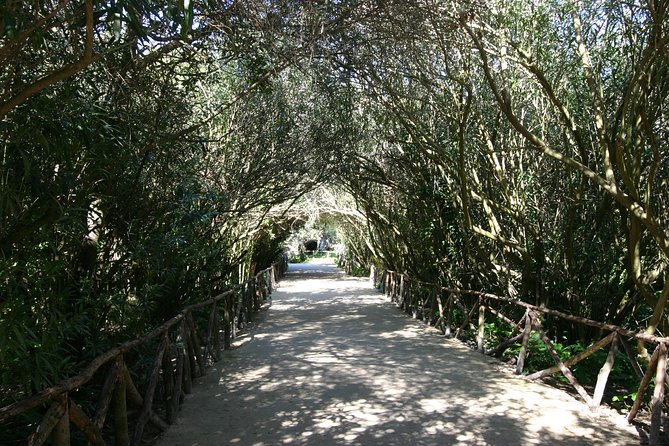
A private guide is not just about avoiding crowds. It changes how you experience the park.
First, you can ask questions that come from what you’re seeing in real time. That’s huge at archaeological sites, because the same structure can feel different once you understand its function. Second, you can adjust pace. If you want extra time at the caves because the acoustics feel cool, or if your group moves faster and you want to push toward the theater viewpoint, the tour can usually flow with less friction than a fixed-group schedule.
In this particular experience, guides like Eva and Martina come up in comments as strong fits for the job. Eva is often described as engaging, patient, and especially good with kids who love history. Martina also gets praised for being friendly and well-spoken, and for making the sites feel real even when summer conditions affect visibility. Whether your guide is one of these names or someone else, the goal is the same: clear explanations, good pacing, and answers that satisfy curiosity, not shut it down.
Who should book this tour
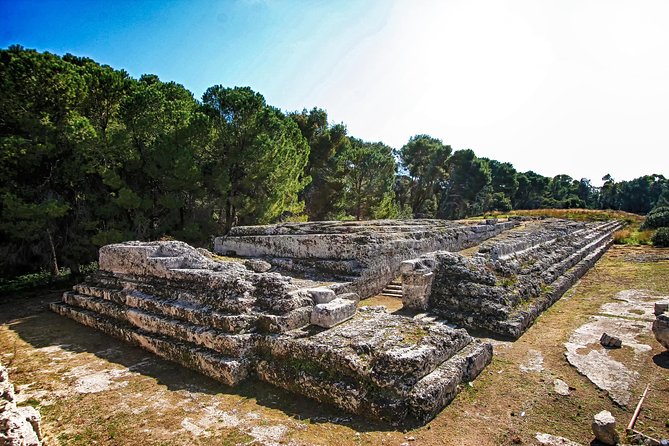
This is a great match if you want major Syracuse ruins without turning your day into logistics. I’d book it if you:
- Like history you can see and touch, not just read about
- Want a short, focused walk instead of a long all-day plan
- Travel with kids or anyone who asks lots of questions
- Care about understanding both Greek and Roman layers in one area
It may be less ideal if you’re extremely price-sensitive and also fully comfortable navigating the park admission on your own. Since entry to the park is not included, you’ll need to handle that piece regardless. If you hate ticket desk time, plan for it.
Practical tips to make the walk smoother
Here are the details that actually help on the ground:
- Wear comfortable walking shoes. Ancient surfaces can be uneven.
- Plan for park admission since it’s not included in the tour price.
- Bring water in warmer months, and consider sun shade.
- Bring an umbrella if you’re visiting during performance season, since the theater can be covered and sun exposure can still be intense nearby.
- Expect some partially covered views at Teatro Greco during the spring and summer performance period.
- Use the mobile ticket you’ll receive for the activity itself.
- If you rely on service animals, they’re allowed.
One more point: this experience is designed for good weather. If the day is foul, your best bet is to check your plans and be ready to adjust if offered a different date.
Should you book Ancient Syracuse, private guided tour of the Neapolis archaeological park?
Yes, I’d usually recommend it, especially if you want real understanding in a short time window. The tour’s strongest pull is the private guided format: you get multiple headline ancient stops in one route, and you’re not left trying to decode ruins by yourself.
Book it if you can handle one planning step: the Neapolis park admission ticket. If you’re the type who likes to avoid ticket lines, arrive with extra time and keep your expectations aligned.
If you can only choose one factor, choose this tour for the guide-led storytelling. If you mainly want photos of an uncovered amphitheater, then factor in the seasonal covering at Teatro Greco. With that in mind, this is a smart way to see Syracuse’s ancient core without wasting your day.
FAQ
How long is the private guided tour?
The duration is approximately 1 hour 30 minutes.
Is the tour private or shared?
It’s private. Only your group will participate.
Is the entrance fee to the Neapolis archaeological park included?
No. Admission tickets to the park are not included, except if you choose a Tour + Ticket option.
What sights are included in the tour?
You’ll visit Parco Archeologico della Neapolis, Teatro Greco, the Ear of Dionysius, the ancient Greek stone quarries, and the Roman Amphitheater of Syracuse.
Are there any admissions included for specific stops?
Teatro Greco and the Ear of Dionysius are listed as free, and the Roman Amphitheater stop is also listed as free. The Neapolis park admission is not included.
What departure times are available?
The tour offers morning or afternoon departure times for convenience.
Where do I meet the guide?
The meeting point is Largo Anfiteatro, 2, 96100 Siracusa SR, Italy, and the tour ends back at the meeting point.
Is the tour offered in English?
Yes, it’s offered in English.
Can I cancel for a full refund?
Free cancellation is available. You can cancel up to 24 hours in advance for a full refund.
Are service animals allowed?
Yes, service animals are allowed.
More Guided Tours in Sicily


More Tours in Sicily





More Tour Reviews in Sicily



Not for you? Here's more nearby things to do in Sicily we have reviewed










Syracuse & Ortigia Tours, compared.
 ★ 4.7Syracuse: Boat Trip of Ortigia Island and Sea CavesFrom $23937 reviews
 ★ 4.7Syracuse: Boat Tour with Captain Mirko, Snorkeling & CavesFrom $35746 reviews
 ★ 5.0Tour of the island of Ortigia and exploration of sea caves with baths.From $24668 reviews
 ★ 4.7Siracusa: Ortigia Boat Tour with Marine GrottoFrom $45617 reviews
 ★ 4.9Siracusa: Ortigia & Sea Caves Speedboat Tour with Swim StopFrom $34499 reviews
 ★ 5.0Boat tour of Ortigia Island and sea cavesFrom $24407 reviews
 ★ 4.6Catania: Syracuse, Ortigia, and Noto Tour with BrunchFrom $112404 reviews
 ★ 4.7Syracuse: Neapolis Archaeological Park Small Group TourFrom $26350 reviews
Browse the lists this tour appears in