
Reviewed · SYRACUSE & ORTIGIA TOURS
Classical Syracuse – Half day guided tour
Syracuse feels like two places at once. This half-day guided tour pairs the Neapolis Archaeological Park with the island heart of Ortigia, so you see the big ancient sights and then finish where locals still gather by the sea. I like that the guide keeps the story straight across Greek, Roman, and Christian-era landmarks, so you do not wander in circles trying to connect the dots.
Two things I would personally prioritize on this tour are the guided stop at major Neapolis landmarks like the Greek Theater and Latomie del Paradiso, and the walk into Ortigia to see the Temple of Apollo area, the Cathedral, and Santa Lucia alla Badia with its Caravaggio canvas. You also get a included visit to the Papyrus Oasis area, which adds a calmer pause in the middle of the day.
One consideration: admission tickets are not included, so you’ll want to budget for site entry in addition to the tour price. Also, this experience is weather dependent, so plan to be flexible if rain or poor conditions shake up timing.
Key takeaways before you go
- Private group up to 15 means you are not fighting for your turn every five minutes.
- UNESCO Neapolis (declared in 2005) gives you a concentrated hit of Greek and Roman ruins with context from a guide.
- Ear of Dionysius and Latomie del Paradiso are the kind of stops you remember, especially when someone explains what you are really looking at.
- Papyrus Oasis and Small Zoo break up the ruins with something different, and it is included.
- Ortigia walking route ends at Fonte Aretusa, so you finish with a lived-in Syracuse moment, not just stone monuments.
Neapolis to Ortigia: the half-day routing that helps you connect Syracuse
This tour is built around an idea that makes sense if you want understanding, not just photos. Neapolis is where the ancient city’s power shows up in stone, and Ortigia is where those eras leave a more intimate trail through churches, piazzas, and waterfront life. In about 3 hours 30 minutes, you get both, plus a guide who can point out what you might otherwise miss.
I like that the pacing includes a mix of spectacle and smaller, more meaningful stops. The big venues like the Greek Theater give you scale, while places like the Ear of Dionysius and the quarry area help you feel how people used the landscape.
The route also ends at Arethusa Spring, which is smart planning. Ending at Fonte Aretusa puts a natural emotional period at the end, because it is a visual payoff you can hold onto after all the ruins.
You can also read our reviews of more guided tours in Sicily

UNESCO Neapolis Archaeological Park: guided access across the core sights
Your main start point is Parco Archeologico della Neapolis at Via Luigi Bernabò Brea, 14, in Siracusa. From here, you get a guided visit that focuses on the center of the park’s most famous features, then keeps moving on foot.
Neapolis is a UNESCO site, declared in 2005, and that label matters because it signals a high density of significant structures in a relatively compact area. With a guide, you can spend your time learning what each location did, not only what it looks like today.
Also, note what this tour does not promise: you still need to handle admission tickets yourself for the sites. The time on the ground is guided, but entry costs are on you.
Greek Theater to Roman Amphitheater: what to look for beyond the obvious
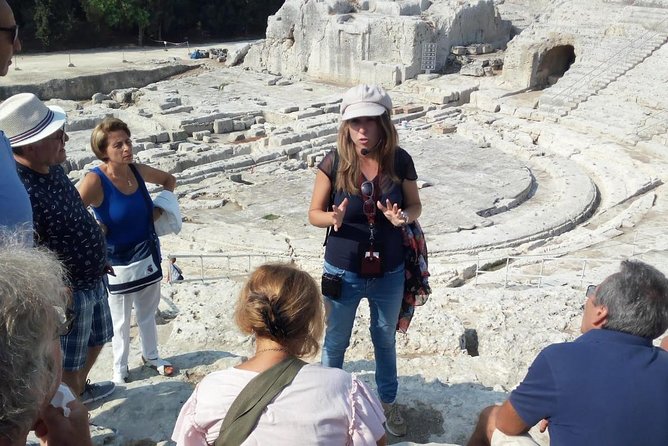
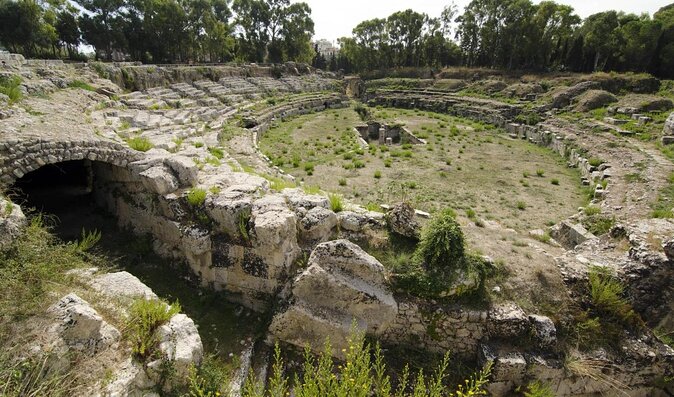
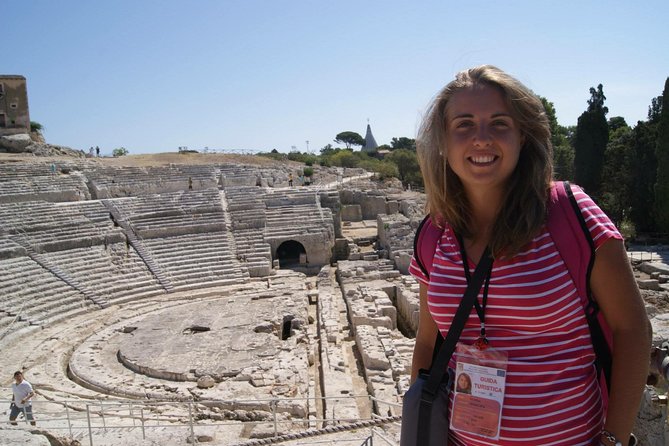
In Neapolis, you’ll visit the Greek Theater first in the lineup, then move through other major structures, including the Ara of Hieron II and the Roman Amphitheater. These places can feel like a list if you do not know the function behind them, so this is where having someone narrate the shift from Greek to Roman use helps.
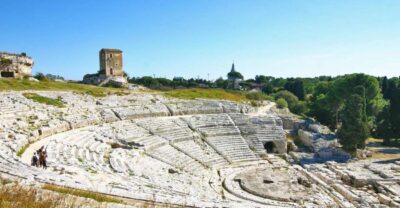
The Greek Theater is the anchor for scale. When you stand in the right viewing area, you can start to imagine how sound and crowd layout worked in the ancient world.
The Roman Amphitheater is a helpful contrast. Even if you have seen Roman ruins elsewhere, Syracuse has its own way of showing how later builders adapted earlier spaces. The guide’s job here is to keep those comparisons from becoming random facts.
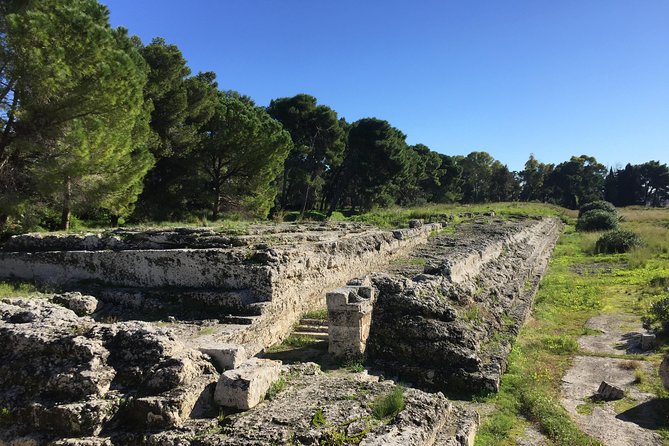
Ara of Hieron II is also worth paying attention to because it is not just another ruin. It connects to how religious and civic power were staged in public space.
A practical note: this is a guided walk through outdoor stone areas. You’ll want decent footwear, since uneven surfaces and steps are part of the park.
Latomie del Paradiso and the Ear of Dionysius: the stops people remember
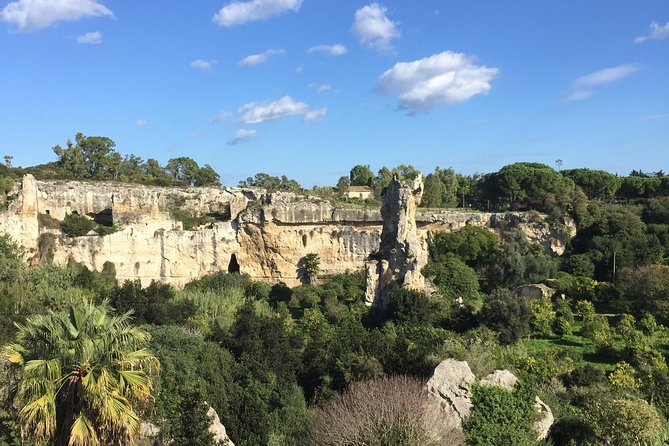
If I were picking the most unforgettable moments in this half-day, I would put Latomie del Paradiso and the Ear of Dionysius near the top. Latomie del Paradiso refers to quarry caverns, and the feeling you get is physical, not just visual. You are looking at a site shaped by human extraction, then repurposed by later uses over time.
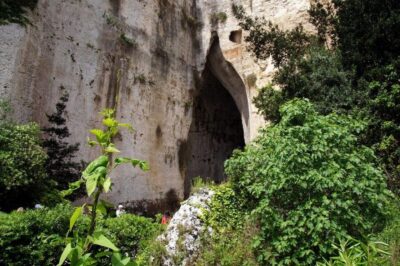
The Ear of Dionysius is one of those famous Syracuse details that can be disappointing if you only expect a gimmick. The magic is in understanding why the place gained its legend and what the structure is in real terms. With a guide, it’s much easier to see the logic behind the storytelling.
These parts of Neapolis also help you break out of a straight line of monuments. After you’ve looked at theaters and amphitheaters, the caves and quarry zones give you a different kind of atmosphere, and you start to grasp how the city’s life depended on its terrain.
Papyrus Corner: a cool pacing reset with Oasis and Small Zoo
Between the heavyweight ruins and the walk into Ortigia, you get a transfer on foot to Papyrus Corner. This part is built into the experience and it includes the Papyrus Oasis and the Small Zoo.
I like this stop because it changes the sensory rhythm. Instead of more stone and sun, you get greenery and water features that make the whole day feel less like a sprint. Even if you do not care about the animals, the setting is a pleasant contrast.
Because Papyrus Oasis and Small Zoo are included, you do not have to hunt for an extra paid detour. That matters when your time is limited and your budget is already thinking about ticket fees.


Ortigia by foot: Temple of Apollo area, Cathedral, and Santa Lucia alla Badia
After Neapolis, you shift to Ortigia, which is the historic center on the island. This is where Syracuse feels closer to present-day Italy, because the monuments are wrapped in streets, churches, and seaside atmosphere.
Your Ortigia highlights start at the Temple of Apollo area and continue through the Cathedral. Then you visit the Church of Santa Lucia alla Badia, where you can see a Caravaggio canvas.
What I like about this church stop is how it layers time. You go from ancient civic space to a more personal kind of sacred art and architecture. It is not just seeing buildings, it’s understanding how different eras reuse space and meaning in the same city.
One heads-up: admission tickets are not included here either, so plan for any entry fees tied to specific churches and sites. The tour gives the guided walk and interpretation, not a paid ticket bundle.
Fonte Aretusa ending: why finishing at the spring matters
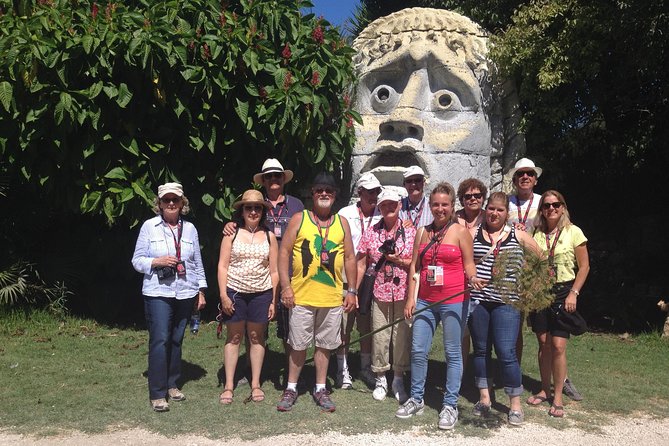
Your tour ends at Arethusa Spring (Largo Aretusa), which is the classic finish point for many Syracuse outings. Ending here is not random. Fonte Aretusa is a moment where the city’s natural story and human story meet in a way you can actually feel.
By the time you reach Arethusa, you will have already spent hours with stone theaters, quarries, and monumental altars. Having the final stop be a living spring at water level helps everything click into a complete Syracuse picture.
It also gives you options after the tour. You can keep walking around Ortigia on your own, grab a meal nearby, or just take your time soaking up the waterfront without a schedule tugging you onward.
Price and value: when $238.17 per group makes sense
The tour price is $238.17 per group (up to 15 people). That pricing structure is key to value.
If you are traveling solo, the group price can feel steep compared with per-person tours, unless you have flexibility and do not mind splitting costs with others. If you are a small group or a family chunk, it can be a solid way to buy guided time without paying separate rates for every adult.
Also, this is a private tour/activity, meaning only your group participates. For a place like Syracuse, where you can easily waste time figuring things out on your own, that guide time is the real product.
Just remember: tickets are not included, so the final cost depends on what you need to pay for site entry on the day. This is normal for historic parks and churches, but it does affect the budget math.
Timing, tickets, and practical tips that keep the tour smooth
This is a 3 hours 30 minutes experience, and it uses a mobile ticket. I would treat your first job as simple: have your mobile ticket ready on your phone and show up at the correct start address at Neapolis.
The meeting point is Neapolis Archaeological Park, Via Luigi Bernabò Brea, 14, and the ending point is Arethusa Spring, Largo Aretusa. Since transfers are listed as not included, you should plan your own way to get to the start.
The tour also requires good weather. If conditions are poor, you should expect a reschedule offer or a full refund, so it helps to book when you can flex your plans a bit.
Finally, this tour is described as suitable for most travelers and allows service animals. You’ll still want to think about walking comfort, because the sites are outdoors and involve uneven ground and steps.
Who should book this Classical Syracuse tour
This is a good fit if you want a guided sampler that hits the Syracuse essentials in one half-day. I think it works particularly well for first-time visitors who are short on time but still want more than a self-guided stroll.
It is also a good choice for people who like structure. With a guide keeping you on track through Neapolis and then into Ortigia, you get a coherent route rather than a grab bag of monuments.
If you already know you want to spend hours inside museums or you hate outdoor walking, you might feel rushed. This tour is focused on key points and transitions, not an all-day slow wander.
Should you book Classical Syracuse: the decision shortcut
Book it if you want to pair Neapolis and Ortigia with a guide, and you like the idea of ending at Fonte Aretusa. With a 4.9 rating and 98% recommended, the numbers suggest this format lands well when your priority is guided time and practical coverage.
Think twice if you are hoping for a full ticket bundle, because admission is not included and you’ll have to pay site entry yourself. Also book with a weather-aware mindset, since this experience depends on conditions.
If your plan is first-time Syracuse, this is one of the more efficient ways to build an accurate picture of the city in a single outing.
FAQ
How long is the Classical Syracuse guided tour?
The tour is about 3 hours 30 minutes.
How many people are in a group?
It is a private tour/activity, and the group size is up to 15 people.
What is the price for the tour?
The price is $238.17 per group (up to 15).
Do I need to buy tickets for the sites?
Admission tickets are not included.
Is the ticket mobile?
Yes, the tour uses a mobile ticket.
Where do I meet the guide?
The meeting point is Neapolis Archaeological Park, Via Luigi Bernabò Brea, 14, 96100 Siracusa SR, Italy.
Where does the tour end?
The tour ends at Arethusa Spring, Largo Aretusa, 96100 Siracusa SR, Italy.
What if the weather is bad?
If the experience is canceled due to poor weather, you’ll be offered a different date or a full refund.
Is there free cancellation?
Yes, you can cancel for a full refund up to 24 hours before the experience starts.
More Guided Tours in Sicily


More Tours in Sicily


More Tour Reviews in Sicily
Not for you? Here's more nearby things to do in Sicily we have reviewed







Syracuse & Ortigia Tours, compared.
 ★ 4.7Syracuse: Boat Trip of Ortigia Island and Sea CavesFrom $23937 reviews
 ★ 4.7Syracuse: Boat Tour with Captain Mirko, Snorkeling & CavesFrom $35746 reviews
 ★ 5.0Tour of the island of Ortigia and exploration of sea caves with baths.From $24668 reviews
 ★ 4.7Siracusa: Ortigia Boat Tour with Marine GrottoFrom $45617 reviews
 ★ 4.9Siracusa: Ortigia & Sea Caves Speedboat Tour with Swim StopFrom $34499 reviews
 ★ 5.0Boat tour of Ortigia Island and sea cavesFrom $24407 reviews
 ★ 4.6Catania: Syracuse, Ortigia, and Noto Tour with BrunchFrom $112404 reviews
 ★ 4.7Syracuse: Neapolis Archaeological Park Small Group TourFrom $26350 reviews
Browse the lists this tour appears in