
Syracuse looks different after dark. This guided walk through Ortigia by night strings together major landmarks and the smaller side streets that make the historic center feel lived-in. You get the bonus of evening sea breezes and light, which makes the whole stroll feel easier and more atmospheric.
Two things I really like: the focus on place-based history (you do not just look, you understand what you are seeing), and the way the guide keeps it practical and friendly. One thing to consider is that the experience depends on good weather, so you may need flexibility if conditions are poor.
Key highlights you can expect
- Ortigia’s night glow: sea breeze, evening lights, and a cooler walk through the historic center
- Temple of Apollo: a landmark from the early 6th century BC
- Giudecca and the Jewish quarter story: history tied to the neighborhood, not a fenced-off idea of ghetto life
- Piazza Duomo: one of Syracuse’s most evocative public squares, spanning around a thousand years
- Private group feel: only your group joins, with a max size of up to 15 people
Ortigia by night: why this evening walk is worth your time
Ortigia is the historic heart of Syracuse, and at night it feels like the city turns its volume down. Daytime can be hot and hectic. Evening gives you something better: the sea air that helps you breathe easier, and the warm lighting that makes old stone look softer and more dramatic.
What makes this tour work is that it is not just a sightseeing loop. You move from landmark to landmark, but the guide frames what you are seeing. That turns random streets into a story you can follow. You start at the Temple of Apollo, then thread through Ortigia’s lanes with stops that connect Greek Syracuse, Jewish community life in the Giudecca area, and the long sweep of the Piazza Duomo center.
You can also read our reviews of more guided tours in Sicily


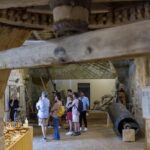
Start at the Temple of Apollo, then get your bearings fast
You meet at the Temple of Apollo area in Syracuse (addressed around 96100 Syracuse). It is a smart place to start because it instantly anchors the evening in deep time. Even before the walk really begins, the setting tells you this is not a casual stroll through tourist photos.
The tour is about 2 hours at a relaxed evening pace. That timing matters because you can actually enjoy the streets instead of rushing through them. And it is offered in English, which helps if you want the historical context without reading everything yourself.
One more value point: it is private, meaning only your group participates. With a max group size of up to 15, it stays intimate enough that questions make sense and the guide can respond without turning it into a lecture.
Ortigia after dark: sea-breeze comfort and a more human pace
The first stop is Ortigia itself, described as an islet that corresponds to one of Syracuse’s neighborhoods. Walking it at night changes the feel immediately. The historic center looks better under evening light, and you get that practical benefit in summer: the sea breeze helps take the edge off the heat.
This is where I think the tour earns its keep. You are not just collecting monuments. You are learning how the area is laid out, which makes the rest of your time in Syracuse easier. When you can picture where things sit relative to each other, you can come back later on your own and explore more confidently.
If you like quieter streets, this style of night walk helps. You tend to spend time in sections that feel away from the densest crowds, while still staying close to major sights.
The Temple of Apollo: an early 6th-century BC moment in stone
The Temple of Apollo is one of the oldest examples of a Greek stone temple, built at the beginning of the 6th century BC. That is the kind of fact that can sound abstract until you are standing in the right place. On this tour, it lands because the guide brings the meaning of the site into the walk, rather than dropping a date and moving on.
Why this matters for you: the Temple of Apollo is not just a background stop. It is your time marker for the entire evening. Once you see a Greek temple of that age, it becomes easier to understand why Syracuse’s later layers of culture show up where they do.
Possible drawback: if you are expecting a long, inside-the-temple visit, this is a walking tour focused on the streets and key points. The “big moment” is the setting and interpretation at the stop, not a museum-style experience.
Giudecca and the Jewish quarter: history told through narrow alleys
One of the most interesting parts of this tour is the stop connected to Syracuse’s Jewish community. The guide explains that this community was among the largest in the Mediterranean basin and lived in Giudecca, on Ortigia. The key detail is how the neighborhood worked socially: Giudecca was described as a district of Ortigia, not a ghetto.
Then comes the turn of history you do not want to rush past. The Jewish community was expelled in 1492, and it says they never returned to live in Ortigia. That is heavy information, but it is also what gives the walk depth. You are not just naming places. You are connecting streets to real lives, integration, and loss.
As you walk through the narrow alleys of the Jewish quarter area, you can feel how the urban layout supports stories like this. It is easier to grasp why certain communities formed where they did when you are physically moving through the spaces they inhabited.
This is also where a great guide matters. The tour is led by Italo Giordano, described as a passionate archaeologist and tour guide. From the tone of his approach, you can expect a guide who cares about explaining the “why,” not just the “what.”
You can also read our reviews of more evening experiences in Sicily


Piazza Duomo: Syracuse’s most evocative square, and why it lingers
Next you move to Piazza Duomo. This square is described as one of the most evocative and beautiful squares in Italy, with a history spanning about a thousand years.
I like how this stop acts like the evening’s emotional center. Squares are where cities show their identity, and Duomo in particular is the type of place where the architecture and the public life overlap. Even if you only see it briefly on the walk, you come away with a sense that this is not a random landmark. It is a long-running civic stage.
Why it works in a night tour: in the evening, a big square feels less like a photo-op and more like a lived space. The light changes the mood, and your brain has an easier time connecting the timeline.
The walk ends at Fonte Aretusa, so plan your next move
The tour finishes at Fonte Aretusa (also listed as 96100 Siracusa SR). Ending here is convenient because it keeps you near a lively part of Ortigia where you can keep exploring on your own once the guided portion is done.
I suggest a simple strategy: after the tour, take a few minutes to look back the way you came. When you have that bird’s-eye sense of the route, you tend to notice more the second time around, and it feels like you got more out of your night.
Price and value: $212.93 per group for up to 15 people
At $212.93 per group (up to 15 people), the value depends on your group size. If you are traveling with friends or family and you can split the cost, this is the type of tour where group pricing becomes a real advantage. You are paying for a private guide and a structured evening route, not just a generic walk.
Also, the guide is not “just a person who knows directions.” Italo Giordano is an archaeologist and tour guide, and the reviews for him point to a blend of warmth and real expertise. He also gives practical extras like a good restaurant recommendation after the walk, which can be surprisingly useful when you are trying to make the most of limited time in Sicily.
What kind of traveler this suits best
This is a great match if you want:
- A guided evening walk that connects major points on Ortigia with the stories behind them
- A history-focused stroll that still stays friendly and easy to follow
- A private experience where you can ask questions without feeling like a number in a large crowd
It might be less ideal if you are looking for a long sit-down experience, lots of indoor stops, or a tour that spends most of its time in museums.
If you are the type who likes to understand a city in layers, Ortigia at night hits that sweet spot. You get Greek anchors, neighborhood-level Jewish history centered on Giudecca, and then the Duomo square that stretches the timeline forward again.
Practical tips so your night goes smoothly
This is a walking tour, about 2 hours. Wear shoes you are comfortable in on older streets, especially if you are visiting in summer or around evening time when the ground can still be warm.
A couple more practical points from what is provided:
- It is offered in English
- A mobile ticket is used
- It is near public transportation
- Service animals are allowed
- Most travelers can participate
And the big one for planning: the experience requires good weather. If rain or poor conditions show up, you will be offered a different date or a full refund. So if you have a tight itinerary, build in some flexibility.
Should you book Ortigia by night?
Yes, if you want an evening in Syracuse that feels organized but not rigid. This tour earns its place because it ties together meaningful stops in Ortigia, not just a list of sights. Starting at the Temple of Apollo gives the right historical base, the Giudecca and Jewish quarter segment adds depth you will not get from a quick photo stop, and finishing around Fonte Aretusa sets you up to keep wandering afterward.
You should also book if you value a small private group feel and a guide who can translate archaeology and history into something you can actually follow on foot. If you are traveling in summer and want to reduce heat stress while still seeing the historic center at its best, night is when Ortigia pays you back.
FAQ
How long is the Ortigia by night guided tour?
It lasts approximately 2 hours.
Where does the tour start and where does it end?
The tour starts at the Temple of Apollo (96100 Syracuse) and ends at Fonte Aretusa (96100 Siracusa SR).
What is the price of this guided tour?
It costs $212.93 per group, for groups of up to 15 people.
Is the tour offered in English?
Yes, the tour is offered in English.
Is this tour private?
Yes. It is a private tour/activity, and only your group participates.
Do I need to print a ticket?
No. A mobile ticket is used.
Is confirmation provided quickly after booking?
You receive confirmation within 48 hours of booking, subject to availability.
What happens if the weather is bad?
This experience requires good weather. If it is canceled due to poor weather, you will be offered a different date or a full refund.
Is free cancellation available?
Yes. Free cancellation is available up to 24 hours in advance for a full refund.
More Guided Tours in Sicily

More Tours in Sicily


More Tour Reviews in Sicily

Not for you? Here's more nearby things to do in Sicily we have reviewed







Syracuse & Ortigia Tours, compared.
 ★ 4.7Syracuse: Boat Trip of Ortigia Island and Sea CavesFrom $23937 reviews
 ★ 4.7Syracuse: Boat Tour with Captain Mirko, Snorkeling & CavesFrom $35746 reviews
 ★ 5.0Tour of the island of Ortigia and exploration of sea caves with baths.From $24668 reviews
 ★ 4.7Siracusa: Ortigia Boat Tour with Marine GrottoFrom $45617 reviews
 ★ 4.9Siracusa: Ortigia & Sea Caves Speedboat Tour with Swim StopFrom $34499 reviews
 ★ 5.0Boat tour of Ortigia Island and sea cavesFrom $24407 reviews
 ★ 4.6Catania: Syracuse, Ortigia, and Noto Tour with BrunchFrom $112404 reviews
 ★ 4.7Syracuse: Neapolis Archaeological Park Small Group TourFrom $26350 reviews
Browse the lists this tour appears in