
Reviewed · SYRACUSE & ORTIGIA TOURS
Syracuse: Ortigia and Neapolis Guided Walking Tour
Syracuse layers itself fast. This guided walking tour strings together the big Greek and Roman highlights plus Ortigia’s limestone beauty in just three hours. You’ll see the city’s power signals in stone, from sacred temples to theater seats.
I especially love the way the route stitches together meaning, not just monuments. The Temple of Athena stop and the Cathedral of Syracuse connection help you understand how religions and empires reused the same places. I also like the small-group format and the headsets, which make it easy to hear your guide even in crowded corners.
One consideration: admission to the archaeological park is not included, so your final budget should include monument entry fees on top of the tour price. Also, it’s a walking tour, so bring comfortable shoes and expect some uneven ground.
Quick hits before you go
- Small private group (up to 5) keeps the pace friendly and questions easy to answer
- Headsets included so you can actually hear your guide on busy streets
- Temple of Athena gets a focused 30-minute stop, including a photo moment
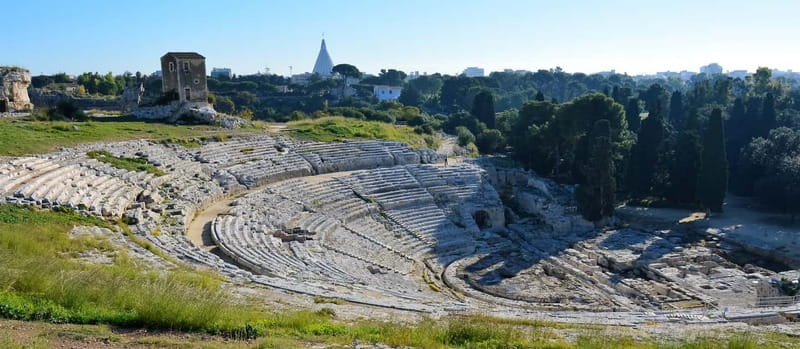
- Neapolis Archaeological Park covers the theaters plus the Paradise Latomia and the Ear of Dionysos
- Ortigia adds a maze of ancient streets and the feeling of walking in a living postcard
- Guides like Marcelo, Anna, Giuseppe, Laura, and Rosanna are consistently praised for energy and storytelling
Why Ancient Syracuse Works So Well in 3 Hours
Ancient Syracuse can feel like a lot. Greek ruins, Roman leftovers, and Christian architecture all overlap, and if you just “tour by postcard,” the connections slip through your fingers. This tour is built to help you make those links while you’re still standing in the middle of it.
You’ll start in the Neapolis area, then move through the sights that explain why Syracuse mattered in the Mediterranean. The big idea here is architecture as evidence: temples show beliefs, theaters show public life, and reused buildings show political and religious change.
You’ll also get the best kind of travel timing. Instead of spending half a day figuring out where to go next, you get a guided flow through the must-see anchors, with time to pause for photos and questions.
You can also read our reviews of more walking tours in Syracuse


Meeting at Neapolis: Where the Tour Starts and Why It Matters
You’ll meet at the ticket office area for the archaeological park: Biglietteria Parco Archeologico Neapolis, Via Luigi Bernabò Brea, 96100 Siracusa. The guide meets you at the ticket office with a sign for the local partner.
There’s also a second possible starting point listed: Tempio di Apollo. In practice, this matters because it can shorten the scramble when you arrive. If you’re navigating on your own, double-check your confirmed meeting details before you show up.
Since the tour ends back at the meeting point, plan your day around finishing where you started. It’s convenient if you’re using the same base for meals or transit after the tour.
The Temple of Athena Stop: Your First Big “How Syracuse Works” Moment
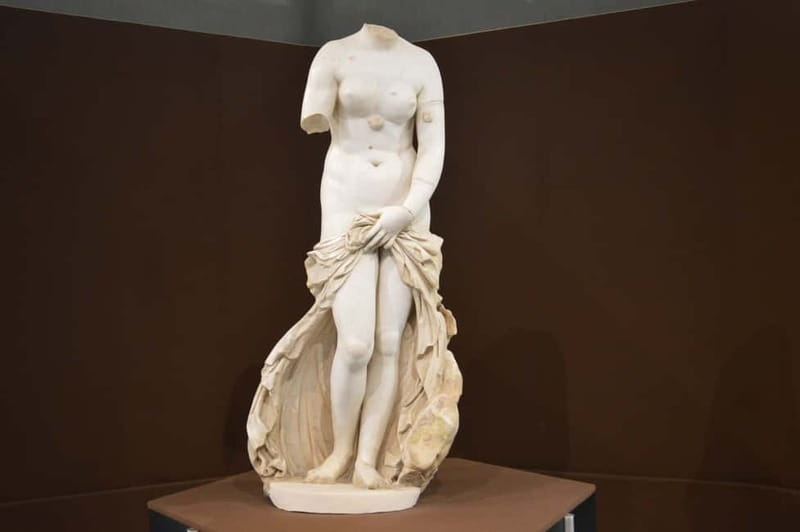
The Temple of Athena is the kind of stop that sets the tone. You’ll have a photo stop and guided visit, about 30 minutes, which is just enough time to get the story without turning it into a museum marathon.
Here’s what you should watch for: this site is part of the reason Syracuse has such a strong architectural thread from Greek rule into later eras. Even when later buildings rise on top, the original “why” remains readable in shape, placement, and symbolism.
Also, don’t rush the photo moment. The light in this part of Sicily can be flattering, and the temple area gives you a strong sense of scale. That scale is important later when you compare the theater spaces and the reused religious structures.
Cathedral of Syracuse: Where Pagan and Christian Architecture Share a Wall

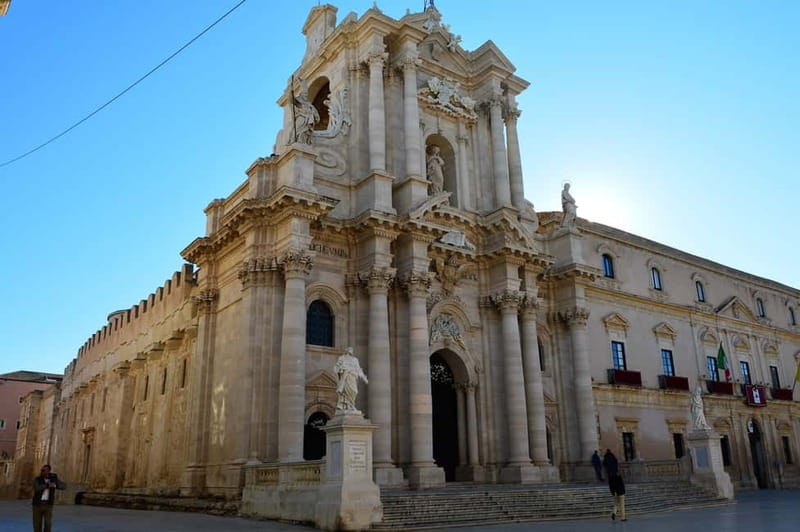
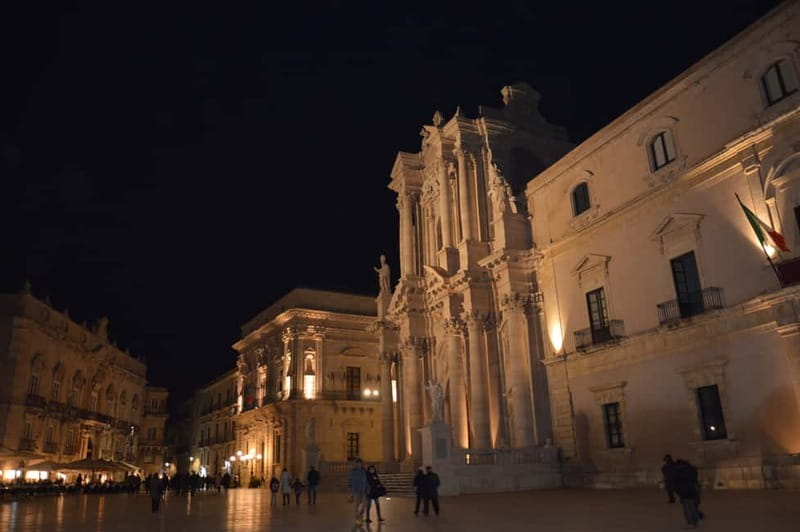
A highlight of the tour is seeing how the Cathedral of Syracuse connects to the old Temple of Athena. This is one of those places where the stones do the talking. The cathedral incorporates parts of the earlier pagan temple, so you’re not just looking at two separate eras. You’re looking at continuity and change in the same view.
The guide also explains the different architectural styles you can spot. That’s valuable because it trains your eye. Once you understand what to look for, you stop treating every façade as random decoration and start reading it like a timeline.
If you’re the type who likes “cause and effect” in history, this stop will feel satisfying. You’ll leave with a clearer sense of how Syracuse absorbed new beliefs without erasing the old city underneath.
Neapolis Archaeological Park: Theaters, Latomia, and the Ear of Dionysos
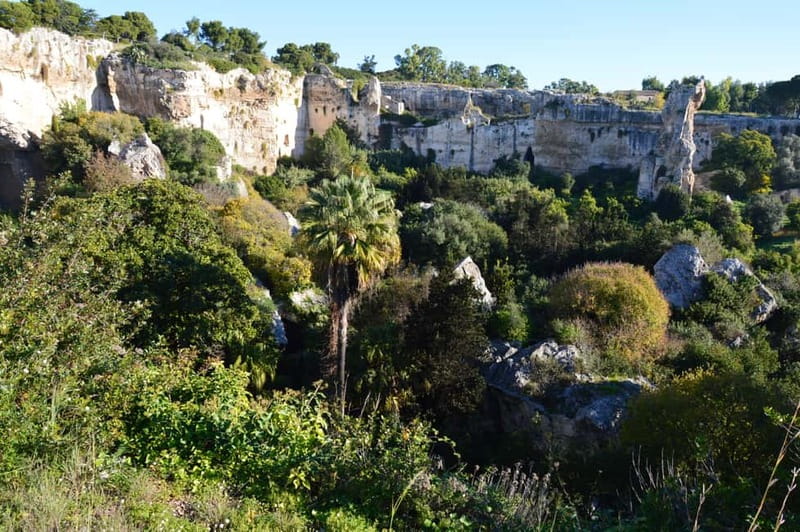
This is the heart of the tour for most people. The Neapolis Archaeological Park is where the city’s Mediterranean power shows up in public space.
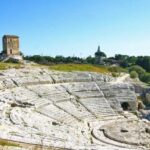
You’ll see the two ancient theaters, which is a big deal. Theater spaces were for more than entertainment. They were for civic identity, public speech, and communal life. Standing there helps you picture how Syracuse gathered people and broadcast ideas.
Then you’ll get two of the park’s most memorable stops:
- Paradise Latomia: This rocky area is known for its dramatic setting. Expect a different feel than the theaters, more enclosed and atmospheric.
- Ear of Dionysos: It’s a famous listening spot. Even if you’ve heard legends before, hearing the story in the place where the acoustics and symbolism come together is the point.
A nice bonus is the views toward the Ionian Sea from the Greek Theater. It helps you understand why Syracuse was so strategic and why people fought over it. You’re not just seeing a ruin. You’re seeing what it overlooks.
One practical note: this area can feel spread out, and the ground can be uneven. If you have mobility limits, it’s great that the tour is wheelchair accessible, but you should still factor in walking time between monuments and the pace of the group.
You can also read our reviews of more guided tours in Syracuse





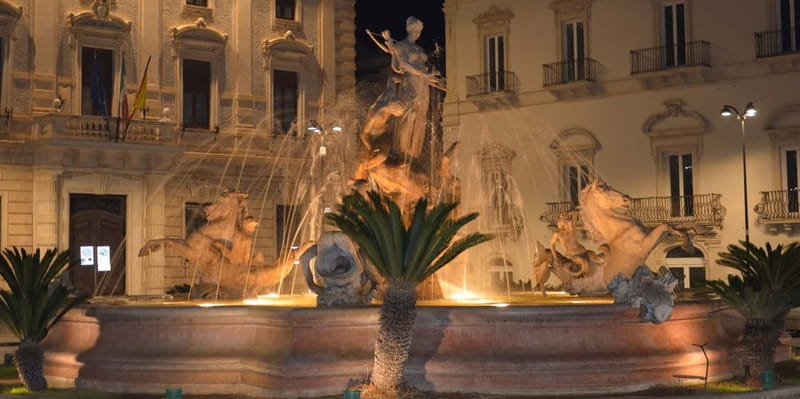
Ortigia Island Walk: Labyrinth Streets and Limestone Light

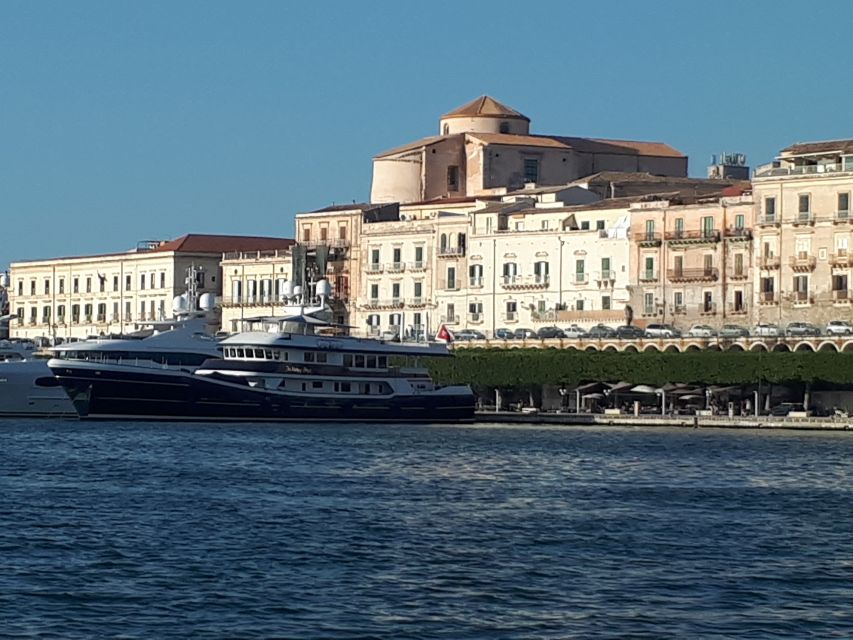
After the Neapolis stops, the tour brings you to Ortigia, the lime-white island that makes Syracuse look like it’s been dusted with light. Ortigia is where the city becomes more intimate. The streets feel older, tighter, and more “lived in,” even though the history is ancient.
You’ll enjoy a guided walk through the labyrinth of ancient streets. That phrase matters. Ortigia is not a straight-line sightseeing loop. It’s a place you experience by turning corners and letting your guide point out what’s tucked into the urban fabric.
This is also where the mood shifts from stone venues (theaters and temple zones) to daily life corridors. You’ll connect what you learned at Neapolis to how people moved through the city and built communities around these sacred and civic spaces.
There’s a small logistics detail you should keep in mind: some groups take a short taxi ride between the Neapolis area and Ortigia to keep the day comfortable. If that’s part of your schedule, don’t worry. It’s often a smart way to save energy for the walking that’s actually the fun part.
Guides Make or Break This Tour: Marcelo, Anna, Giuseppe, and Laura
The strongest pattern in the experience is guide quality. The best moments happen when your guide turns architecture into story and story into something you can picture.
For example, Marcelo is praised for covering Greek origins through later Roman, Arab, and Spanish occupations, with a focus on archaeology and lively enthusiasm. Anna and Laura also receive standout marks for engaging explanations and a friendly, personable delivery. Giuseppe gets mentioned a lot for making the sites come alive, answering questions patiently, and keeping energy up even when weather changes.
This matters because Syracuse is one of those places where details get tangled fast. A great guide helps you sort out what you’re seeing, why it matters, and how it fits into the bigger map of the Mediterranean.
Even better, this tour gives you the tools to ask questions. It’s private group style, and the included headset means your questions are heard instead of swallowed by street noise.
Skipping Ticket Lines, Still Paying Entrance Fees
Here’s the money piece you’ll want to understand up front.
The tour price is $317.20 per group (up to 5), running about 3 hours. That means your per-person cost depends on how full the group is. If you can fill five seats, the average drops. If it’s just a couple of people, you feel the premium more.
One key drawback for budgeting: entrance fees are not included. One important figure mentioned is about 13 euros per person for the archaeological park admission. Add that to your planning and you’ll avoid the surprise of a separate ticket desk.
The good news is that the tour includes skip-the-ticket-line support, plus a licensed guide and headsets. Those items help you spend more time on the monuments and less time stuck at check-in.
Value wise, this tour tends to be worth it when you want expert narration and an efficient route. If you prefer self-guided exploring and you’re comfortable piecing together sites on your own, you might compare cost against the ticketing and map work.
What You’ll Actually Do at Each Stage
To help you mentally pack the day, here’s how the flow typically feels:
- Meet at Neapolis ticket office and get your bearings quickly. Your guide is waiting with a sign.
- Temple of Athena for photos and a guided walk through the meaning of the structure.
- Cathedral of Syracuse for the architecture and religious blend story, including how the old temple and newer cathedral relate.
- Neapolis Archaeological Park for theaters, then the Latomia and Ear of Dionysos, plus time with sea views from the Greek Theater area.
- Ortigia for a guided walk through tight historic streets, ending back where you started.
The tour’s structure also supports families. The guide is set up to work with children of all ages and includes both parents and kids in the story.
Who Should Book This Tour (And Who Might Skip It)
You should book if:
- You want one guided route that connects Greek, Roman, and later layers of Syracuse.
- You like asking questions and having a guide respond clearly (headsets help a lot).
- You’re traveling with a small group and want a smoother day than joining a big bus tour.
- You care about architecture as evidence, not just as scenery.
You might skip if:
- Your priority is leisurely, unstructured wandering with no fixed stops.
- You’re trying to keep costs ultra-tight after adding monument entry fees.
- You don’t want any time in set viewing points like the Temple of Athena photo and guided segment.
Should You Book This Syracuse Ortigia and Neapolis Tour?
If your goal is to understand Syracuse quickly and walk away with the story in your head, I’d book it. The tour’s biggest strength is how it uses key anchors, like Temple of Athena, the cathedral connection, and the Neapolis theaters plus Ear of Dionysos, to teach you how the city changed without losing its identity.
Just budget realistically. Plan for the archaeological park admission on top of the tour price. Wear sturdy shoes, bring water, and give yourself permission to pause for photos and questions.
If you match this tour’s style, it’s a smart use of time in Sicily.
FAQ
How long is the Syracuse Ortigia and Neapolis guided walking tour?
The tour duration is about 3 hours.
What is the meeting point for the tour?
The tour meets at Biglietteria Parco Archeologico Neapolis, Via Luigi Bernabò Brea, 96100 Siracusa. Your guide will meet you at the ticket office with a sign for the local partner.
Is the archaeological park ticket included in the tour price?
No. Entrance fees to monuments are not included.
Does the tour include a guide and headsets?
Yes. It includes a licensed guide, plus headsets to help you hear the guide during the tour.
Can I skip the ticket line?
Yes, skip-the-ticket-line is included.
Is the tour private or shared with other groups?
It is a private group tour, with a group size up to 5.
What languages are available?
English, French, Italian, Russian, Spanish, and German.
Is the tour wheelchair accessible?
Yes, the tour is wheelchair accessible.
Can I cancel for a refund?
You can cancel up to 24 hours in advance for a full refund.
More Walking Tours in Syracuse

More Tours in Syracuse


More Tour Reviews in Syracuse
Not for you? Here's more nearby things to do in Syracuse we have reviewed







Syracuse & Ortigia Tours, compared.
 ★ 4.7Syracuse: Boat Trip of Ortigia Island and Sea CavesFrom $23937 reviews
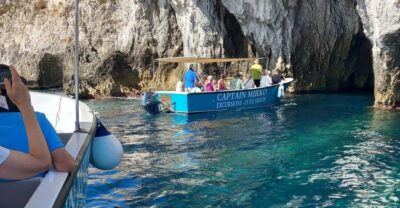 ★ 4.7Syracuse: Boat Tour with Captain Mirko, Snorkeling & CavesFrom $35746 reviews
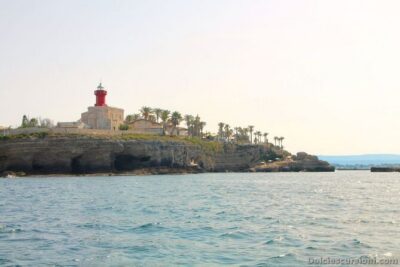 ★ 5.0Tour of the island of Ortigia and exploration of sea caves with baths.From $24668 reviews
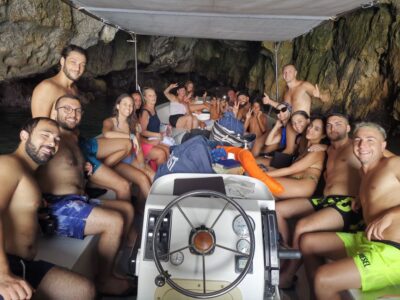 ★ 4.7Siracusa: Ortigia Boat Tour with Marine GrottoFrom $45617 reviews
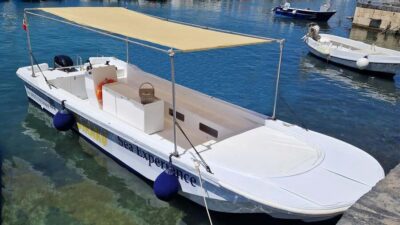 ★ 4.9Siracusa: Ortigia & Sea Caves Speedboat Tour with Swim StopFrom $34499 reviews
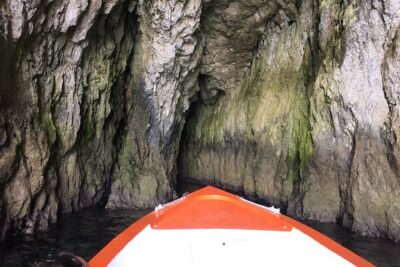 ★ 5.0Boat tour of Ortigia Island and sea cavesFrom $24407 reviews
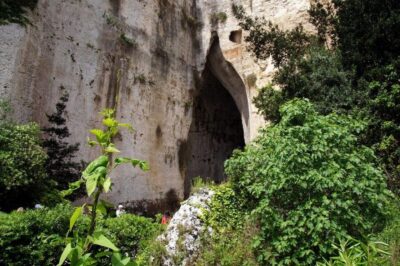 ★ 4.6Catania: Syracuse, Ortigia, and Noto Tour with BrunchFrom $112404 reviews
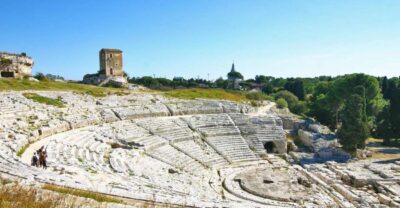 ★ 4.7Syracuse: Neapolis Archaeological Park Small Group TourFrom $26350 reviews
Browse the lists this tour appears in